
Wall Lights and Lamps
Wall lights make it possible to illuminate, decorate and optimise indoor and outdoor spaces with functional, efficient solutions adapted to every area of the home.


Our featured products from Wall Lights and Lamps
- -57%
Before £32.99
£14.19
Ref 98802
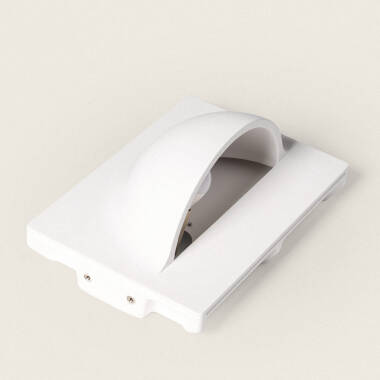
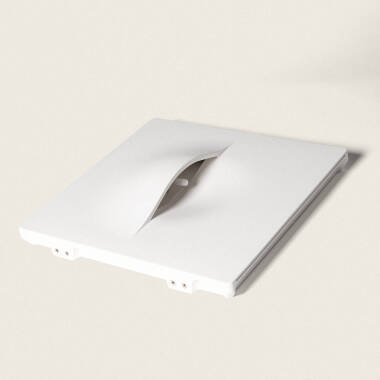
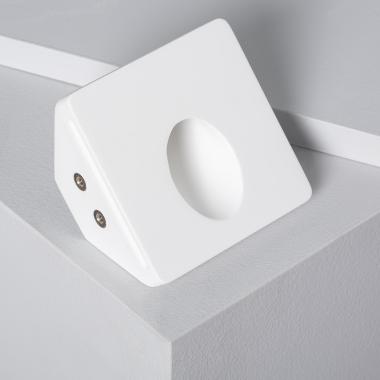
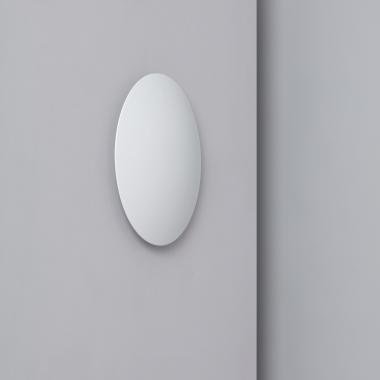
Wall Light Integration Plasterboard for E14 LED Bulb 283x283 mm Cut Out
White
In Stock, delivery in 24/48h
- -47%
Before £53.99
£28.39
Ref 101623
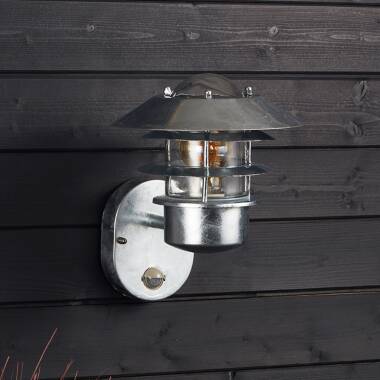
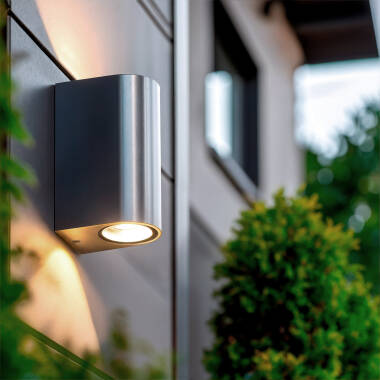
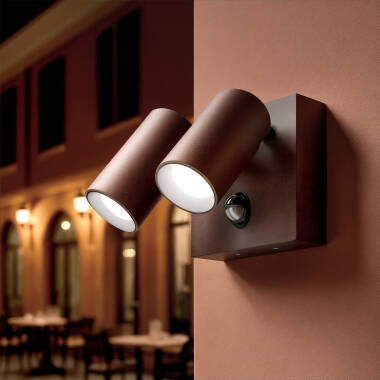
NewPROMOStage Outdoor Stainless Steel Wall Lamp with PIR Sensor
Silver
In Stock, delivery in 15-20 days
- -54%

Before £32.99
£15.29
bartonRef 113187
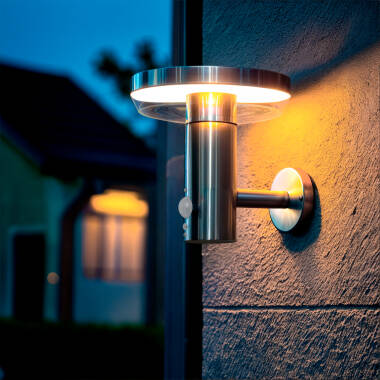
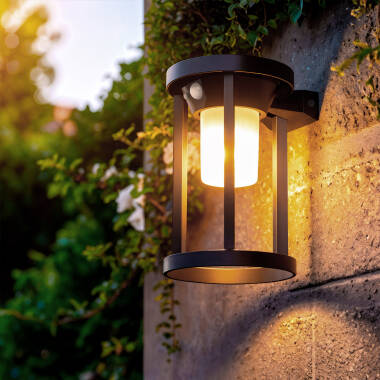
Barton 5W Stainless Steel Outdoor Solar LED Wall Light with Motion Sensor
Silver
In Stock, delivery in 15-20 days







Brands related to this category


About Wall Lights and Lamps
Wall lights are a highly versatile solution within decorative and functional lighting. They allow you to add light points without taking up usable floor or surface space, reinforce specific areas and create more comfortable atmospheres in living rooms, bedrooms, hallways, bathrooms, kitchens, terraces or outdoor entrances.
The defining feature of these lamps is that they are installed directly on the wall. This creates a cleaner visual layout, improves light distribution and makes it possible to work with very different heights, orientations and lighting effects. That is why they are used not only in homes, but also in hotels, restaurants, shops and contract projects where lighting forms part of the overall spatial design.
What are wall lights
Wall lights are luminaires designed to be installed vertically on a surface, usually through direct fixing and electrical connection. Their function may be decorative, ambient, functional or a combination of several uses.
In residential lighting, a wall light can be used to create soft light beside a sofa, provide reading light in a bedroom or improve visibility in a circulation area. In professional spaces, it is used to mark routes, illuminate mirrors, complement decorative walls or provide indirect light in reception and relaxation areas.
The key is to understand that not all wall lights illuminate in the same way. Some project light upwards and downwards, others direct it frontally, some include an adjustable arm and others use fabric shades, glass, plaster, wood or metal to modify the visual effect. This variety makes it possible to choose a solution adapted not only to the style of the space, but also to the real use of each area.
Advantages over other light points
One of their main advantages is that they free up space. In small rooms, narrow hallways or areas where it is not convenient to place a floor lamp or table lamp, a wall light allows you to add light without interfering with furniture or circulation.
They also help create layers of lighting. Instead of relying solely on a general ceiling light, wall lights allow secondary points to be introduced, making the atmosphere more comfortable. This combination is especially useful in living rooms, bedrooms and relaxation areas, where direct and uniform lighting can feel excessive in the afternoon or at night.
In addition, when well positioned, they can improve the architectural perception of the space. A wall illuminated with grazing light, a hallway with repeated light points or a staircase with lateral lighting gains depth, safety and decorative presence.
Types of wall lights by installation location
The first criterion for choosing correctly is knowing where the luminaire will be installed. A wall light for a bedroom does not have the same requirements as one placed on a façade, in a bathroom or in an outdoor circulation area.
Indoor wall lights
Indoor wall lights are designed for living rooms, bedrooms, hallways, entrance halls, staircases or decorative areas. In these spaces, visual comfort, design and integration with the style of the room are prioritised. They usually work with warm or neutral colour temperatures, between 2700K and 4000K, depending on the atmosphere you want to create.
Indoors, a wall light can act as ambient light, decorative light or a functional point. In a living room, it can accompany a main wall; in a bedroom, it can replace a bedside lamp; in a hallway, it can improve orientation without the need for very intense ceiling lighting.
The required output depends on the use. For ambient light, soft light flows of between 300 and 700 lumens per point are usually enough. For reading or specific tasks, it is advisable to approach 500–1000 lumens, always with suitable orientation to avoid annoying shadows or glare.
Outdoor wall lights
Outdoor wall lights must be prepared to withstand humidity, dust, rain and changes in temperature. In this case, it is advisable to check the IP rating. For covered areas, IP44 may be sufficient, while on exposed façades, terraces or gardens, IP65 is commonly preferred. This protection ensures greater reliability and reduces the risk of premature deterioration.
Outdoors, the priority is to combine resistance, safety and light suited to the use of each area. At a main entrance, the wall light should make it easier to identify doors, locks and steps. On a terrace, it can create a warmer and more welcoming atmosphere. In a circulation area, it should reinforce visibility without creating glare towards windows or nearby homes.
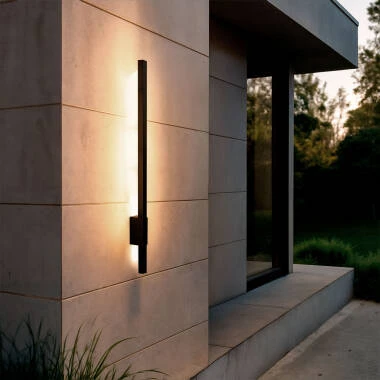
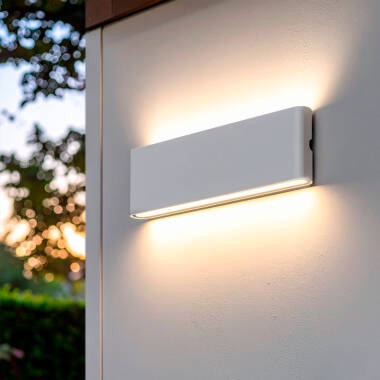
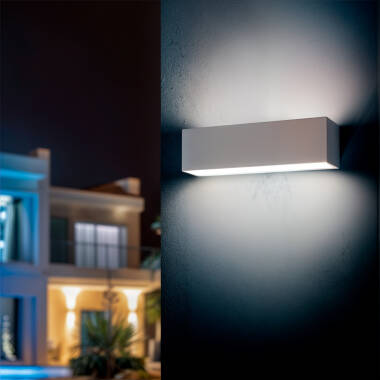
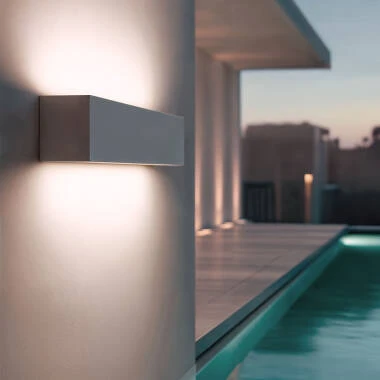
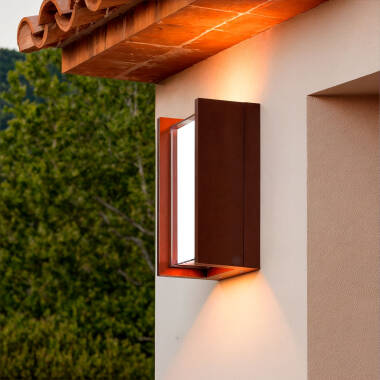
Models with direct downward light are very useful on façades and access points, while double-emission designs, with upper and lower light, provide a more decorative effect on the wall. For exposed spaces, corrosion-resistant materials and sealing gaskets are just as important as the design.
Solar wall lights
Solar wall lights add an additional advantage: they do not require a direct electrical connection. They work through a solar panel and internal battery, making them practical in gardens, on walls, along paths or in areas where running cabling would be complex.
For good performance, they should be installed in points with several hours of direct sunlight, and the night-time autonomy should be assessed, as it usually varies depending on battery capacity and operating mode. In circulation areas, models with a motion sensor allow energy to be conserved and the intensity to increase only when presence is detected. On terraces or decorative areas, continuous lower-power light may be more suitable, provided the battery can cover the expected hours of use.
Types of wall lights by technology and function
In addition to the installation location, it is worth analysing how the luminaire works and what type of light it provides. This decision influences consumption, maintenance, visual comfort and flexibility of use.
LED wall lights
LED wall lights are currently the most widely used option due to their efficiency, long service life and variety of designs. They incorporate integrated LEDs that allow very diverse models to be developed without the limitations of models that require bulbs.
The service life of an LED wall light is usually between 20,000 and 50,000 hours, depending on the quality of the chip, driver and thermal dissipation. In domestic use, this can be equivalent to many years of operation, especially in areas where the light is used only a few hours a day.
Adjustable and reading wall lights
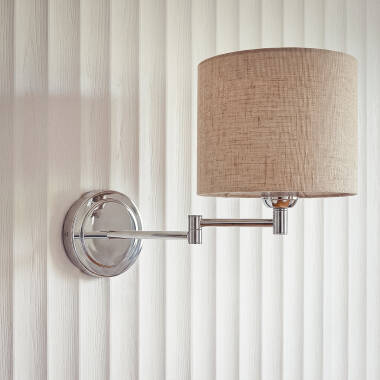
Adjustable wall lights allow the light to be directed towards a specific area. They are especially useful beside beds, desks, reading corners or areas where task lighting is needed without switching on the entire room.
In bedrooms, a reading wall light should be placed at a comfortable height in relation to the pillow, usually between 90 and 120 cm from the floor or slightly above the headboard, depending on the bed design. The key is for the light to reach the book or reading plane without shining directly into the eyes.
Models with an articulated arm offer greater precision, while compact designs with an adjustable head are more discreet. In both cases, a warm temperature of 2700K or 3000K is usually more pleasant for night-time use.
Wall lights for decorative lighting
When the main objective is to create atmosphere, the output should not be excessive. Light that is too intense can break the sense of comfort, especially in living rooms, bedrooms or circulation areas. In these cases, luminaires that filter the light, project it onto the wall or generate an indirect effect are preferred.
Designs with shades, opal glass, fabric, wood or plaster help soften the emission. Bidirectional wall lights are also common, projecting light upwards and downwards to create a very clean architectural effect.
Picture lights
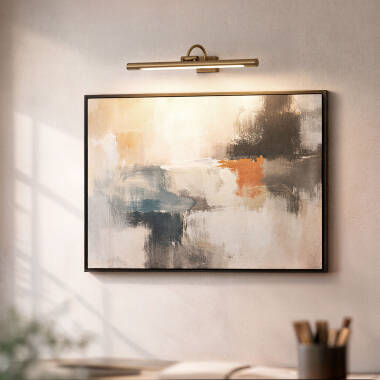
Picture lights are designed to illuminate artworks, prints, photographs or decorative elements without creating strong shadows or excessive reflections. They usually have an elongated format and controlled projection towards the wall.
For this use, it is important to choose a width proportional to the picture. As a reference, the wall light may occupy approximately between one third and one half of the width of the artwork. Colour temperature and the colour rendering index should also be considered. A CRI above 80 is suitable for general decorative use, while values close to 90 offer a more faithful perception of colours and nuances.
Decorative styles in wall lights
The style of the wall light directly influences the personality of the space. Although the lighting function is essential, the design is also important so that it fits with the rest of the elements in the room. Some of the most popular styles are:
Vintage wall lights
Vintage wall lights are usually inspired by classic designs, with aged finishes, visible shades, worked glass or decorative shapes. They work very well in warm environments, restaurants, entrance halls, bedrooms with character or living rooms where lighting with presence is desired.
In this style, the bulb often plays a more visible role than in other designs. That is why they are commonly combined with LED filament sources, which maintain a traditional appearance with much lower consumption than incandescent bulbs. To reinforce the atmosphere, warm temperatures from 2200K to 3000K usually fit better than neutral or cool light.
Industrial wall lights
Industrial wall lights are characterised by robust materials, metal finishes, functional lines and a more technical aesthetic. They fit well in open kitchens, lofts, spaces with exposed brick, natural wood or furniture with a professional-inspired look.
This type of wall light usually works well with direct or semi-direct light, especially when used in bar areas, dining areas, desks or reading corners. In residential interiors, it is advisable to balance its presence with warm materials to avoid a result that feels too cold. In commercial spaces, however, they can reinforce a more urban and resistant aesthetic.
Modern wall lights
Modern wall lights prioritise clean lines, geometric shapes and understated finishes. They are very common in contemporary homes, hotels and spaces where discreet integration with the architecture is desired.
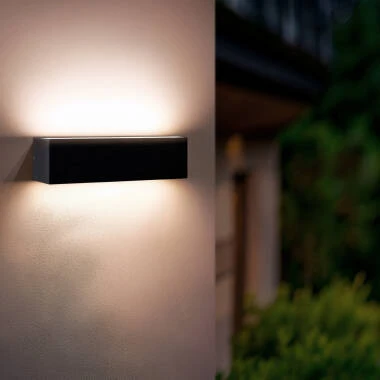
In this type of design, the light is often as important as the form itself. Many models use indirect light, double beams or grazing lighting to create visual effects on plain walls. They work especially well in hallways, contemporary living rooms, minimalist bedrooms and circulation areas where visual continuity is desired.
Nordic wall lights
Nordic wall lights combine simplicity, functionality and warmth. They usually use light tones, wood, white, natural fibres or soft shapes. They do not seek an excessive presence, but rather to blend into bright, calm and well-balanced spaces.
They are a good choice for bedrooms, living rooms and reading areas where pleasant light and a light design are desired. They combine well with warm colour temperatures, especially 2700K or 3000K, which reinforce the cosy feeling of the space.
Wall lights by room
Each room has different needs. Choosing a wall light based only on design can result in insufficient, uncomfortable or impractical lighting. That is why it is advisable to assess the real use of the space before deciding.
Kitchen wall lights
Kitchen wall lights must withstand frequent use and provide clear light. In kitchens, it is common to work with cool light to improve visibility in work areas, especially if the wall light is installed near worktops, breakfast areas or auxiliary zones.
In kitchens open to the living room, more functional light can be combined in the work area with decorative wall lights in a warm temperature in the dining area. It is also worth considering materials that are easy to clean, since steam, grease and daily use can affect fabric shades or very delicate finishes.
Living room wall lights
Living room wall lights usually fulfil an ambient or decorative function. They can be placed on both sides of a sofa, on a feature wall, next to a bookcase or near a reading corner. To create atmosphere, it is advisable to avoid excessive brightness and opt for warm light tones, between 2700K and 3000K.
If the living room has several lighting layers, wall lights help reduce dependence on the central light. In large living rooms, they can be combined with ceiling lights, floor lamps or indirect lighting to adapt the scene to different moments: watching television, receiving guests, reading or creating a more relaxed atmosphere at the end of the day.
Bedroom wall lights
Bedroom wall lights are a very practical alternative to bedside lamps. They free up space on the bedside table, make cleaning easier and provide a more orderly appearance. They can be installed on both sides of the headboard, with an integrated switch or independent connection for each user.
For reading, it is advisable to choose adjustable models or models with an arm. For ambience, designs with shades, indirect light or soft emission work better. An output equivalent to 400–700 lumens per side is usually sufficient for light reading or night-time use, provided the light is well directed.
Bathroom wall lights
Bathroom wall lights should be chosen taking into account humidity and proximity to the washbasin, shower or bathtub. In areas close to water, it is essential to check the IP rating and respect electrical safety zones.
Next to the mirror, the light should be uniform and avoid marked shadows on the face. The most advisable option is to place light on both sides of the mirror or use a well-diffused upper luminaire. For this use, a temperature of 3000K to 4000K is balanced, while a high CRI improves the rendering of skin tones and colours.
Hallway wall lights
Hallway wall lights help guide movement and provide warmer lighting than a continuous line of ceiling light. In narrow hallways, it is important to choose shallow models to avoid knocks and maintain comfortable circulation.
An approximate spacing of 2 to 3 metres between points can work in many domestic hallways, although it should be adjusted according to the luminous flux, beam angle and wall colour. Light surfaces reflect light better, while dark walls absorb more flux and may require higher output or less distance between luminaires.
Stair wall lights
Stair wall lights can become both a safety and decorative element. They are a good option for illuminating steps, landings and changes in level without causing glare.
Lighting between 100 and 200 lux is usually sufficient for safe circulation in homes, although in shared spaces a higher level may be required depending on regulations and use. It is also important to avoid harsh shadows on the steps, as they can make depth perception more difficult and increase the risk of tripping.
Most common materials and finishes
The material influences the aesthetics, resistance and the way light is perceived. A metal wall light with direct light does not create the same effect as one made of fabric, opal glass or rattan, as each finish modifies the atmosphere.
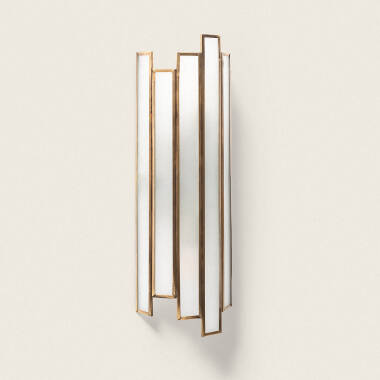
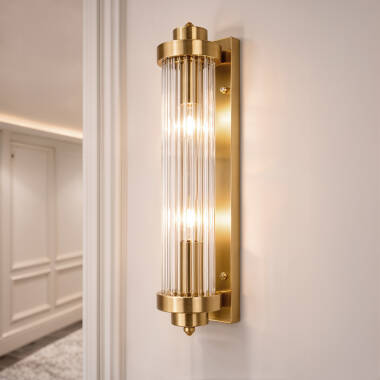
Gold wall lights
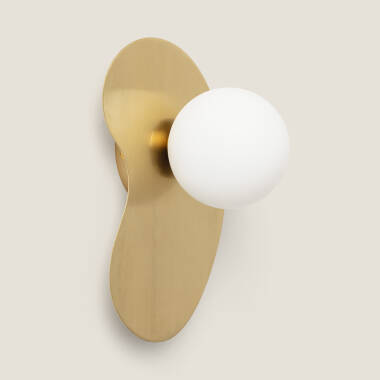
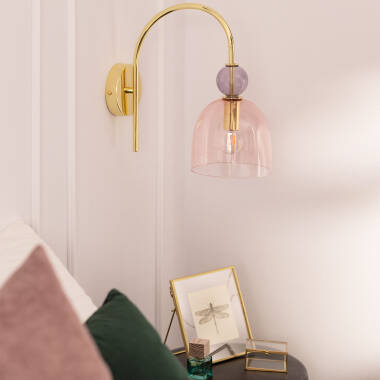
Gold wall lights add a warm and sophisticated touch. They work very well in living rooms, bedrooms, decorative bathrooms and spaces with details in brass, marble, dark wood or neutral tones.
Their finish usually stands out more than other colours, so it is advisable to balance them with the rest of the elements in the space. In a room with few metallic details, they can act as a focal point. In environments with gold taps, handles or profiles, they help reinforce visual continuity.
White wall lights
White wall lights are a discreet and easy-to-integrate option. On light-coloured walls, they can go almost unnoticed, especially if they have simple shapes or are made of plaster. They are common in minimalist interiors, hallways, bedrooms and areas where the lighting effect is intended to take priority over the luminaire.
They are also useful when a sense of visual spaciousness is desired. By creating less contrast than dark finishes, they fit well in small rooms, low ceilings or walls where too much visual weight should not be added.
Black wall lights
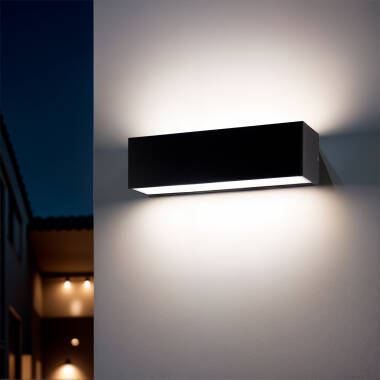
Black wall lights offer contrast and visual presence. They fit into modern, industrial, Nordic or contemporary styles, and combine well with wood, concrete, stone, matte white and warm tones.
In small spaces, a black wall light can work as a graphic detail without overloading the room. In larger rooms, it can be repeated at several points to create continuity with handles, taps, profiles or furniture.
Wooden wall lights
Wooden wall lights bring warmth and a more natural feel. They are suitable for bedrooms, living rooms, entrance halls and projects where the technical presence of lighting needs to be softened.
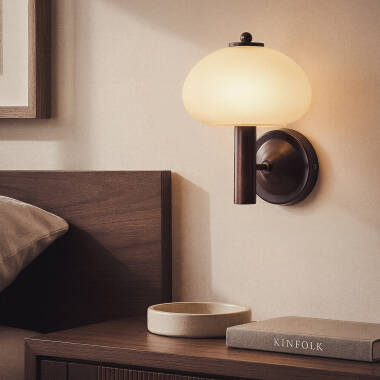
They combine especially well with warm light and walls in light tones. In Nordic, Mediterranean or updated rustic styles, wood allows the luminaire to be integrated in a gentler way, especially when accompanied by fabric shades, opal glass or simple shapes.
Glass wall lights
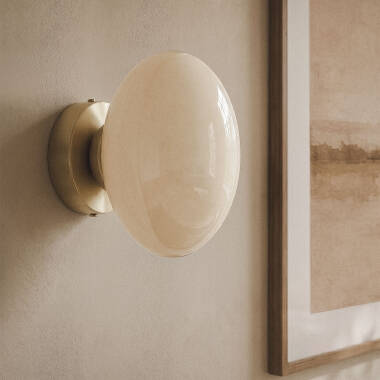
Glass wall lights allow you to play with transparency, diffusion and shine. Opal glass softens the light and reduces glare, while transparent glass gives the bulb more prominence.
In decorative designs, the glass finish can completely transform the perception of the luminaire. Ribbed, smoked or translucent glass not only affects the style, but also how the light is distributed on the wall and in the nearby surroundings.
Rattan wall lights
Rattan wall lights add texture and a handcrafted effect. They usually generate warm, filtered light with soft shadows that work very well in bedrooms, relaxed living rooms, covered terraces or Mediterranean and natural-style spaces.
As it is a more decorative than technical material, it is best used in areas where ambient light is prioritised over precision. If more visibility is needed, they can be combined with other general or functional light points.
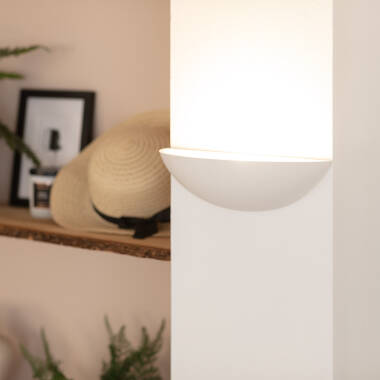
Plaster wall lights
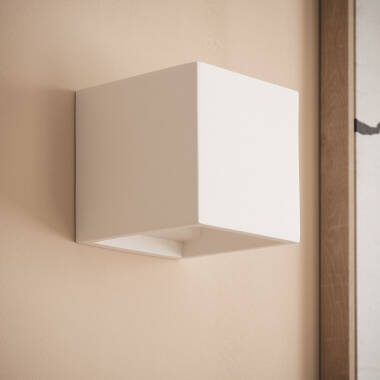
Plaster wall lights stand out for their architectural integration. They can be painted the same colour as the wall, creating a very clean and discreet effect. They are common in hallways, minimalist living rooms and projects where the light is intended to be the protagonist without the luminaire standing out too much.
This type of wall light works especially well with indirect light or double emission. As it is visually integrated into the wall, it allows repeated compositions to be created without overloading the space.
Fabric wall lights
Fabric wall lights offer soft and pleasant lighting. The shade filters the light, reduces glare and creates a warmer atmosphere. They are especially suitable for bedrooms, living rooms, hotels and relaxation areas where visual comfort is a priority.
Fabric modifies the perceived intensity and tone of the light, so it is advisable to choose suitable bulbs. In many cases, a temperature of 2700K or 3000K reinforces the cosy feeling and avoids light that is too cold inside the shade.
How to choose wall lights
Choosing well means combining technical, decorative and practical criteria. Design matters, but so do installation height, type of light, output, protection rating and ease of maintenance.
The first step is to define the main function. If the wall light is going to illuminate a circulation area, safety and uniformity take priority. If it is placed beside the bed, orientation and individual control matter. If it is installed outdoors, the IP rating and material resistance are essential. If it is placed in a bathroom, protection against humidity is a basic criterion.
Installation height and location
The installation height depends on the use and type of wall light. In hallways and living rooms, it is usually placed between 150 and 180 cm from the floor, although this may vary depending on ceiling height and luminaire design. This position allows the light to distribute well without being too low.
In bedrooms, reading wall lights are placed closer to the user, usually next to the headboard and at a comfortable height to direct the light towards the book or support area. On staircases, installation may be low if the goal is to mark the steps, or medium height if the wall and route are to be illuminated.
The distance between wall lights also influences uniformity. In long hallways, a separation of 2 to 3 metres can work in many cases, although it will depend on the luminous flux and beam angle. The important thing is to avoid dark areas between light points.
Output, lumens and colour temperature
Rather than looking only at watts, it is better to assess lumens. For ambient light, a wall light of 300 to 700 lumens may be sufficient. For reading or functional lighting, it is usually advisable to approach 500–1000 lumens per point. Outdoors, at entrances or in circulation areas, the level should be adapted to the distance and the degree of safety required.
Colour temperature also changes perception significantly. A 2700K light creates a warm and relaxed atmosphere. 3000K is a very balanced option for living rooms, bedrooms and decorative areas. 4000K provides neutral light suitable for bathrooms, kitchens, functional hallways and areas where greater clarity is needed.
Light direction and glare
A wall light can illuminate upwards, downwards, in both directions, frontally or through a diffuse shade. The choice should respond to the use. Upward light creates atmosphere and a sense of spaciousness; downward light improves visibility in a specific area; double emission creates a decorative effect on the wall.
Glare is an important aspect, especially in hallways, staircases and bedrooms. A poorly positioned luminaire or one with a light source that is too visible can be uncomfortable. To avoid this, it is advisable to choose opal shades, designs with diffusers, controlled optics or low-luminance bulbs.
IP protection and material resistance
Outdoors, in bathrooms and in damp areas, the IP rating is a decisive criterion. An IP20 wall light may be valid in a living room or bedroom, but it is not prepared for humidity or rain. In bathrooms and covered outdoor areas, higher protections are usually used, while on exposed façades it is advisable to opt for levels such as IP65 or higher.
Material resistance also matters. In outdoor areas, finishes must withstand solar radiation, humidity and temperature changes. In environments close to the sea, material choice should be even more careful due to salt corrosion.
Common applications of wall lights
Wall lights are used in many situations because they solve specific needs without completely modifying the lighting scheme. Their versatility makes them a useful solution for both new-build and renovation projects.
In homes, they help create more pleasant and functional atmospheres. In hotels, they provide reading light, wayfinding and design. In restaurants, they reinforce the atmosphere and allow intensity to be better controlled by area. In shops, they can highlight walls, products or routes without relying solely on ceiling spotlights.
Ambient lighting in living rooms and bedrooms
In living rooms and bedrooms, wall lights allow the general intensity to be reduced and a more enveloping light to be created. Placed beside side walls, headboards or relaxation areas, they provide comfort without invading the space.
This use is especially interesting when combined with dimming. A dimmable wall light allows the intensity to be adapted to different times of day, from functional light for tidying the room to soft lighting for watching television or relaxing before sleep.
Functional lighting in bathrooms, kitchens and reading areas
In bathrooms and kitchens, wall lights can reinforce areas where greater visual precision is needed. Next to the mirror, they help with shaving, make-up or personal care. In kitchens, they can support dining areas, breakfast areas or auxiliary walls.
For reading, orientation is key. The luminaire must illuminate the working plane without projecting annoying shadows or shining directly into the eyes. That is why articulated, adjustable or integrated-switch designs are especially practical.
Safety and orientation in passages, stairs and outdoor areas
In hallways, staircases and outdoor areas, lighting should help people move safely. A great deal of output is not always needed, but correct distribution is. A low, continuous light may be more useful than a very intense point placed in a poorly chosen area.
On façades, terraces and access points, wall lights also perform a deterrent and orientation function. If they include a motion sensor, they can switch on only when presence is detected, reducing consumption and increasing convenience at entrances, garages or gardens.
Frequently asked questions about wall lights
At what height should wall lights be installed?
In living rooms, hallways and entrance halls, they are usually installed between 150 and 180 cm from the floor. This height allows the light to be distributed comfortably and prevents the luminaire from being directly at eye level.
In bedrooms, if they are placed next to the headboard, the height can be adjusted to the real reading use. As a reference, they should sit slightly above shoulder height when the person is sitting in bed, allowing the light to be directed towards the book or support area.
How many lumens should a wall light have?
For ambient lighting, between 300 and 700 lumens per wall light is usually enough. For reading, bathrooms or more specific tasks, it is advisable to work between 500 and 1000 lumens, depending on the distance to the illuminated plane and the type of shade.
Outdoors, the amount of light will depend on the area. An entrance can work well with 600–1200 lumens, while a decorative terrace may require less if atmosphere is the aim. The important thing is to avoid excessively frontal light that causes glare.
What colour temperature is best for wall lights?
For living rooms, bedrooms and relaxation areas, 2700K or 3000K is most commonly used, as these temperatures create warm and comfortable light. In bathrooms, kitchens, functional hallways or work areas, 4000K provides more neutral and precise light.
In residential outdoor areas, 3000K is usually a balanced option because it provides good visibility without creating an overly cold effect. In technical or security areas, 4000K can be used if greater clarity is desired.
What IP rating does an outdoor wall light need?
For covered outdoor areas, such as porches or protected terraces, IP44 may be sufficient if there is no direct exposure to heavy rain. On façades, in gardens, at entrances or in more exposed areas, it is advisable to choose IP54, IP65 or higher.
In bathrooms, the IP rating should also be assessed according to the installation zone. Near the shower or bathtub, higher protection levels are required than on a wall away from water. In addition, the electrical safety zones indicated by regulations should always be respected.
Is a wall light with integrated LED or replaceable bulb better?
A wall light with integrated LED usually offers a more compact design, better optical control and greater efficiency. It is a good option when looking for a slim, modern luminaire or one with a very specific shape.
A model with a replaceable bulb offers more flexibility, as it allows the output, colour temperature or type of bulb to be changed easily. It can also be more practical in decorative designs where the bulb forms part of the aesthetic.
Can wall lights be used as the only lighting in a room?
Yes, but it must be planned correctly. In small rooms, hallways, bedrooms or ambient areas, several well-distributed wall lights can function as the main lighting. However, in kitchens, bathrooms or large living rooms, it is usually advisable to combine them with general lighting or support points.
The key is to calculate the total flux needed and avoid all the light coming from a single direction. A room lit only from the walls can feel very pleasant, but it needs a balanced distribution so as not to create excessive shadows.
What type of wall light should be chosen for a decorative wall?
To highlight a wall, indirect-light wall lights, double-emission models or designs that project defined beams upwards and downwards work very well. Models with decorative materials can also be used if the luminaire is intended to have visual prominence.
If the wall has texture, stone, brick or cladding, grazing light can enhance the relief. On plain walls, geometric or plaster designs help create a more architectural and discreet effect.