
Outdoor LED Flush Ceiling Lights
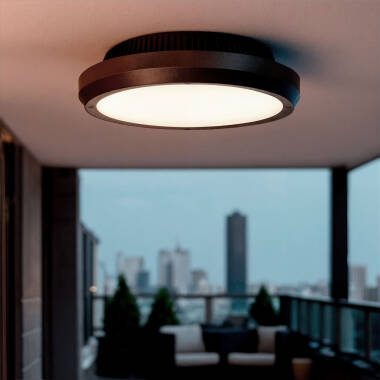
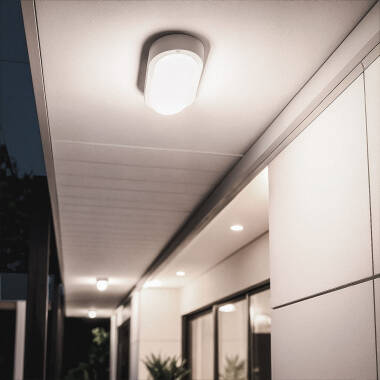
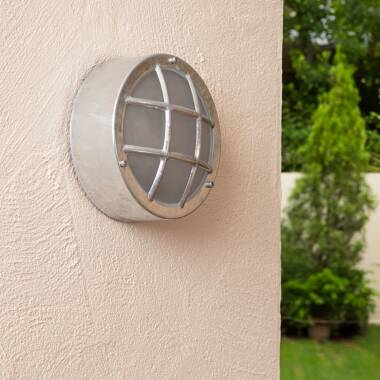
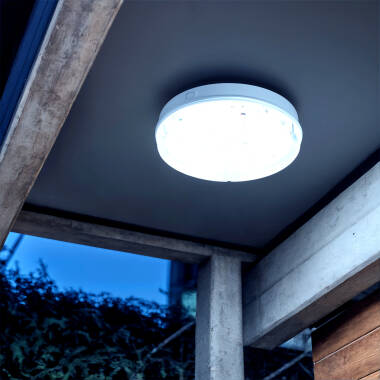
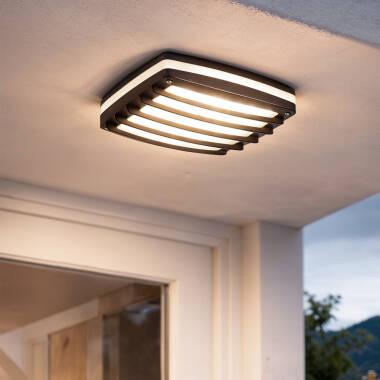
Outdoor LED flush ceiling lights provide even light across terraces, porches, entrances and garages, with housings designed to withstand humidity, dust and temperature changes.
Our featured products from Outdoor LED Flush Ceiling Lights
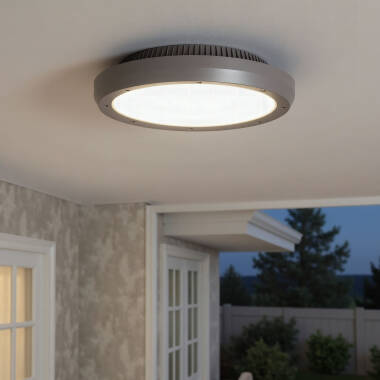
£26.49
- Voltage Range 220-240V AC
- Cap Code E27
- Max Wattage 40 W
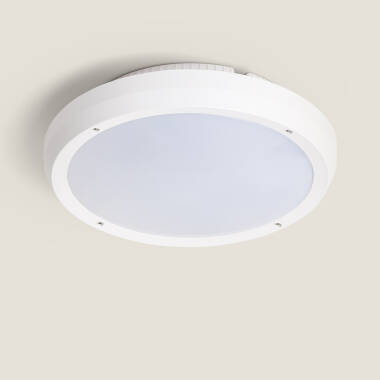
Essential
£26.99
- Voltage Range 220-240V AC
- Cap Code E27
- Max Wattage 40 W
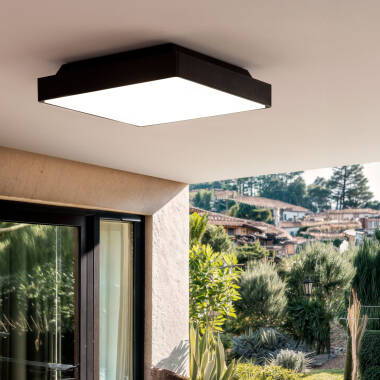
£46.99
- Voltage Range 220-240V AC
- Cap Code E27
- Max Wattage 40 W
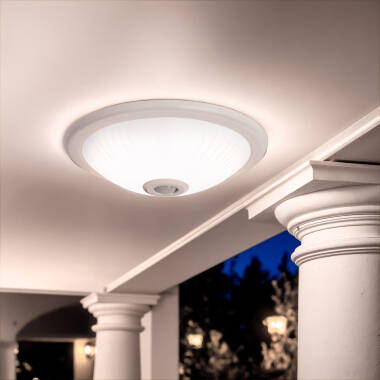
£17.69
Ref 108717
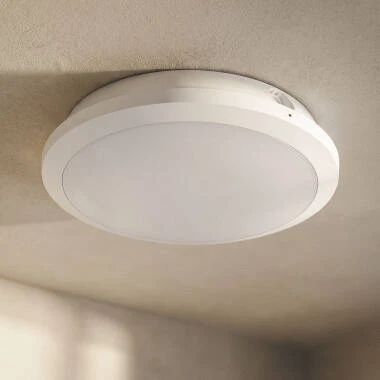
Round x2 E27 LED Ceiling Panel with PIR Movement & Twilight Sensor
In Stock, delivery in 24/48h
- Voltage Range 220-240V AC
- Cap Code E27
- Max Wattage 60 W




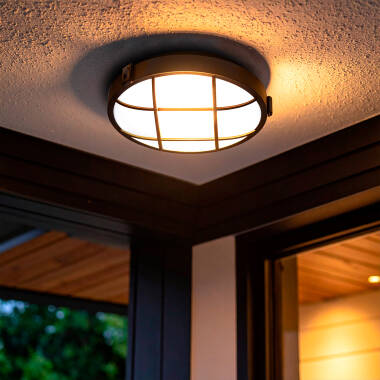
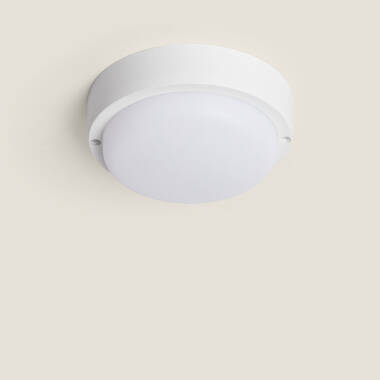


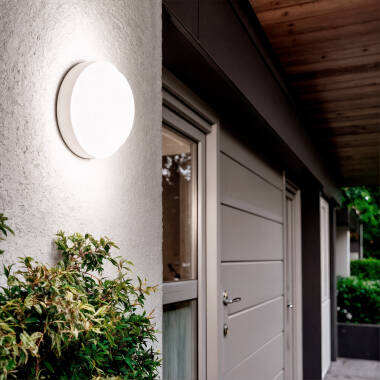
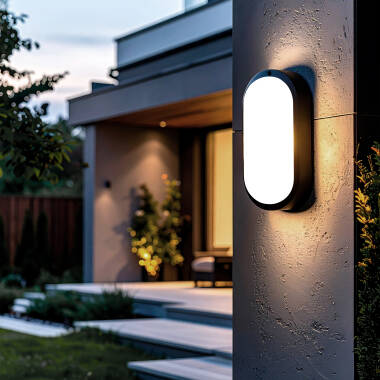
Brands related to this category


About Outdoor LED Flush Ceiling Lights
This type of flush ceiling lights is normally installed on ceilings, overhangs or horizontal surfaces and can illuminate open or partially covered areas. Choosing the right model involves more than checking wattage or luminous flux: water exposure, dust ingress, material resistance and expected ambient temperature must also be considered.
IP protection: which rating do you need
The IP rating indicates how effectively the enclosure prevents the ingress of solid objects and water. Its two digits must be interpreted separately: the first describes protection against dust and the second protection against moisture.
A flush ceiling light installed outdoors does not always require the same level of sealing. The requirement changes depending on whether it is located beneath a fully protected roof, on an open terrace or on a façade exposed to direct rain. The direction from which water may reach the fitting also matters, as a light installed under cover can still receive wind-driven splashes from the side.
IP44 for porches and covered areas
An IP44 flush ceiling light is protected against solid objects larger than 1 mm and against splashing water from different directions. This is a common level of protection for porches, covered terraces, enclosed balconies and sheltered entrances where rain does not directly reach the fitting.
This rating may be sufficient where there is a large overhang and the fitting is positioned well away from the outer edge. However, a covered area is not always a dry area. Wind can drive rain inwards and condensation can cause moisture to build up on cold or poorly ventilated ceilings.
Before installing an IP44 model, it is advisable to observe what happens during periods of heavy rain. If drops appear on the ceiling, damp marks develop or water is blown in from the sides, a higher level of protection is the safer option. The fitting should also be kept away from downpipes, gutters, sprinklers and areas cleaned with a hose.
IP65 or higher for direct weather exposure
IP65 provides complete protection against dust and resistance to water jets, making it ideal for open terraces, façades and entrances exposed to direct rain. IP66 offers greater resistance to powerful water jets and can be useful in industrial installations or areas exposed to severe weather, although it does not guarantee suitability for close-range pressure washing unless the manufacturer expressly approves it.
Final sealing depends on the entire installation; seals, covers and cable glands must be closed correctly, as unplanned drilling or incorrect assembly can compromise the IP65 protection.
Applications for outdoor LED flush ceiling lights
Outdoor flush ceiling lights provide even general lighting across covered surfaces, reducing shadows compared with concentrated spot lighting. The amount of light required varies according to the space: 50 to 100 lux for relaxation terraces and 100 to 200 lux for entrances, dining areas or work zones.
Terrace and porch
They act as the main light source. Colour temperatures of 2,700 or 3,000 K create warm environments for relaxing, while 4,000 K provides neutral light that is ideal for entrances or outdoor kitchens. To calculate luminous flux, multiply the surface area by the desired lux level; for example, a 12 m² porch at 100 lux requires between 1,500 and 2,000 lumens when losses from mounting height and diffusion are taken into account.
In elongated areas, it is advisable to distribute two smaller flush ceiling lights to improve uniformity and reduce shadows. To avoid glare in seating areas, models with an opal diffuser or a large light-emitting surface are preferable.
Gardens and pathways
They are used in covered structures such as pergolas or gazebos. On open pathways, they can be complemented by other types of lighting such as LED Bollard Lights. For pedestrian routes, an even level of 5 to 20 lux is sufficient; excessive light can cause glare and discomfort. To reduce light pollution, the light should be directed below the horizontal and warm colour temperatures of 2,700-3,000 K with a lower blue component should be prioritised.
Garage and circulation areas
In carports and covered access areas, they improve the visibility of obstacles and vehicles with a general lighting level of 100 to 150 lux. Models with a colour temperature of 4,000 K and a minimum CRI of 80 are recommended for accurate recognition of colours and signage.
It is advisable to distribute several light points to ensure a smooth transition from outdoors and reduce reflections in rear-view mirrors. In communal areas or passages with occasional traffic, automatic lighting systems that activate in advance as people approach are particularly suitable.
Outdoor lighting with presence detection
Motion detection allows the flush ceiling light to switch on only when someone enters its coverage area. This reduces operating hours in entrances, porches, garages and routes that remain empty for much of the night.
Flush ceiling lights with motion sensor may incorporate PIR or microwave technology. A PIR sensor responds to changes in thermal radiation and works well when it has a direct line of sight to the route. A microwave detector offers greater sensitivity and can detect small movements, although it requires careful adjustment to prevent activation by people or vehicles outside the intended area.
Outdoors, the position of the sensor has a particularly strong influence on performance. Branches, animals, temperature changes and traffic can cause unwanted activation. The range should be limited to the useful area and the sensitivity adjusted after several approach tests.
Dusk control prevents the fitting from switching on when there is sufficient natural light. A low threshold of around 3 or 10 lux reserves operation for night-time. Higher values of 30 to 50 lux allow activation at dusk or in porches that remain dark even during the day.
The switch-on time should cover actual use without remaining active unnecessarily. Between 30 and 90 seconds may be sufficient to cross a short entrance. In a garage, on a ramp or in an area where a door needs to be opened, 2 to 5 minutes is more practical.
Completing outdoor lighting
A flush ceiling light provides downward general lighting, but it does not always cover every requirement of a terrace, façade or garden. Combining different types of fittings makes it possible to illuminate routes, entrances, seating areas and architectural features without relying on a single high-output light point.
Outdoor wall lights are installed on walls and can project light downwards, upwards or in both directions. They are suitable for façades, doors, balconies and routes close to the building. Combined with a flush ceiling light, they help reduce vertical shadows and make it easier to identify faces, locks and signage.
For illuminating large surfaces, loading areas, courtyards or sports areas, LED floodlights can be used. Their optics allow the luminous flux to be directed towards a specific area and reach greater distances. They should be carefully aimed to prevent the light source from being directly visible from homes, roads or workplaces.
The lighting layout should be planned in layers. The flush ceiling light can provide ambient light beneath a covered area, wall lights can define entrances and façades, and floodlights can cover more distant areas or reinforce activity zones. This combination makes it possible to use moderate wattages for each fitting and achieve more balanced illumination.
Frequently asked questions about outdoor LED flush ceiling lights
These answers cover the main questions about water protection, wattage, colour temperature, installation and maintenance in outdoor spaces.
What IP rating should an outdoor flush ceiling light have?
IP44 can be used on fully covered porches and terraces where there is no direct exposure to rain. For open terraces, façades and areas reached by water, IP65 or higher is normally recommended. The choice should also take wind, condensation and cleaning methods into account.
Can an IP44 flush ceiling light get wet?
It can withstand splashing water from different directions, but it is not designed for continuous rain, water jets or immersion. It should be installed in a protected area. If there is a possibility of water reaching the fitting directly, IP65 is more appropriate.
How many lumens does a terrace need?
For ambient lighting, between 50 and 100 useful lumens per square metre can be used as a guide. A 15 m² terrace would therefore require approximately 750 to 1,500 useful lumens. If it is used for dining, cooking or carrying out tasks, it may be necessary to achieve between 100 and 200 lux in the main areas.
What colour temperature is best for outdoor use?
Between 2,700 and 3,000 K provides warm light suitable for terraces, gardens and porches. 4,000 K is appropriate for garages, entrances and functional areas. Very cool colour temperatures can increase contrast and create a less comfortable appearance in residential environments.
Can an outdoor flush ceiling light be installed on a wall?
Only if the manufacturer allows that mounting position. Many flush ceiling lights are designed for horizontal installation and their sealing may depend on that orientation. If a fitting is installed on a wall when it is not designed for it, water may collect around the seals or enter through the electrical connection.
How can water ingress through the cable be prevented?
The cable should enter through the intended point and be sealed with the corresponding gasket, cable entry or cable gland. The cable diameter must match the clamping range of the accessory. Drilling the housing elsewhere or leaving an oversized opening can compromise the IP rating.
How long does an outdoor LED flush ceiling light last?
The typical rated lifespan is between 25,000 and 50,000 hours, although this depends on temperature, humidity, driver quality and heat dissipation. Direct sunlight and operation in very hot environments can accelerate the ageing of components and seals.
Does an outdoor flush ceiling light need cleaning?
Yes. Dust, insects and dirt reduce light transmission through the diffuser and can affect heat dissipation. Cleaning should be carried out with the power supply switched off, using a damp cloth and avoiding abrasive products. Water jets should not be used unless the manufacturer expressly permits them.