
Smart LED Bulbs
Smart bulbs allow you to control lighting from your smartphone, voice assistants or automations, adding dimming, schedules and colour changes without replacing the light fitting.


Our featured products from Smart LED Bulbs
- -9%
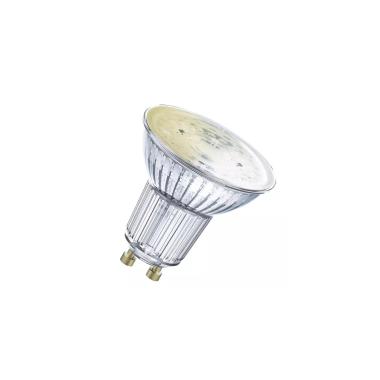

Before £12.69
£11.59
LedvanceRef 94011
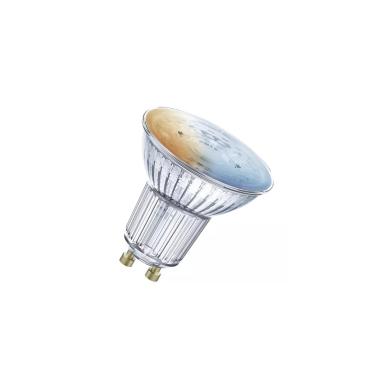
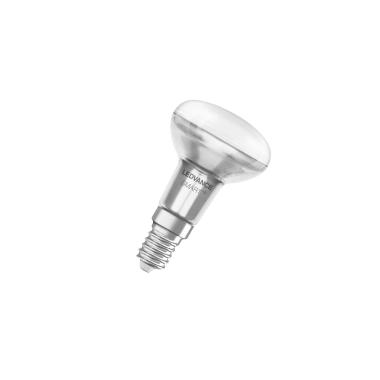
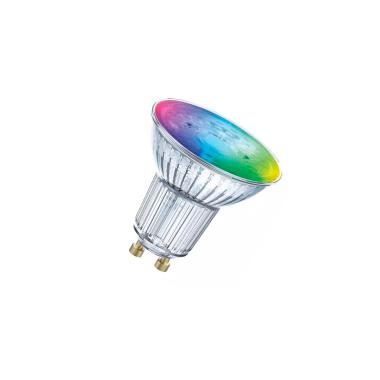
AdjustableGU10 WiFi Dimmable LED Bulb 4.9W PAR51 350 lm LEDVANCE Smart+
In Stock, delivery in 15-20 days
- Wattage 4.9 W
- Voltage Range 220-240V AC
- Lumen 350 lm
- -7%
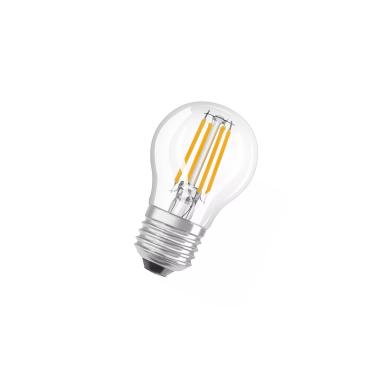
Before £15.89
£14.79
LedvanceRef 93637
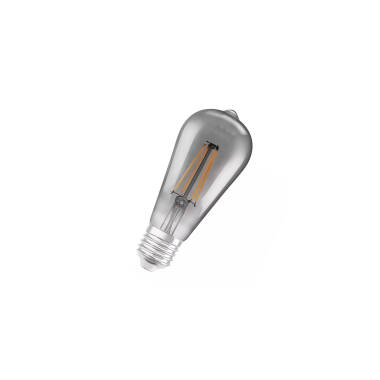
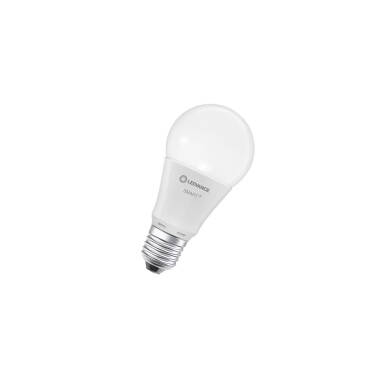
AdjustableE27 WiFi Dimmable Filament LED Bulb 4W P40 470 lm LEDVANCE Smart+
In Stock, delivery in 15-20 days
- Wattage 4 W
- Voltage Range 220-240V AC
- Lumen 470 lm
- -6%
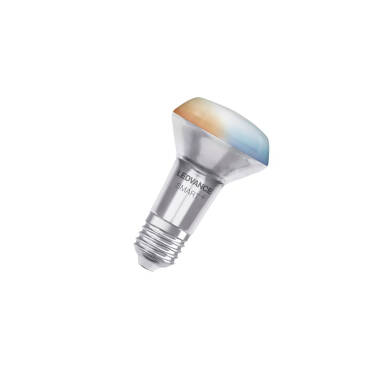
Before £17.99
£16.99
LedvanceRef 94092
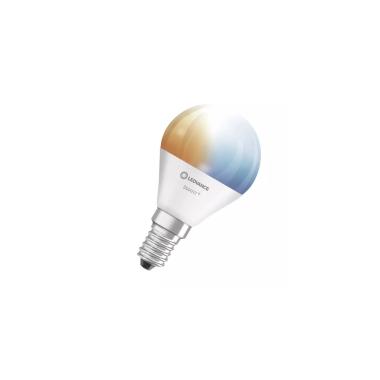
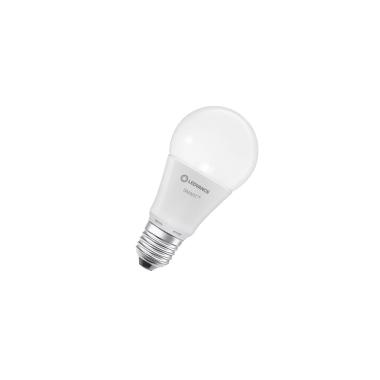
AdjustableE27 WiFi Selectable CCT LED Bulb 4.7W R63 345lm LEDVANCE Smart +
In Stock, delivery in 15-20 days
- Wattage 4.7 W
- Voltage Range 220-240V AC
- Lumen 345 lm
- -5%
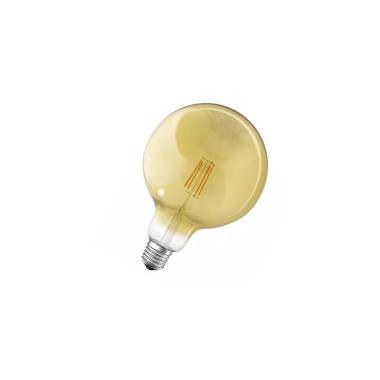
Before £19.49
£18.49
LedvanceRef 93708
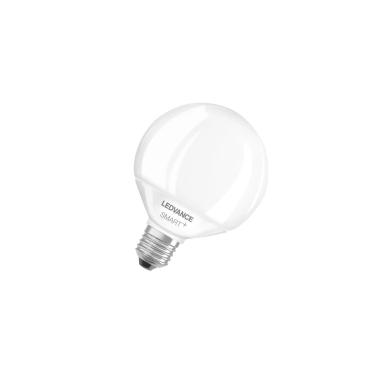
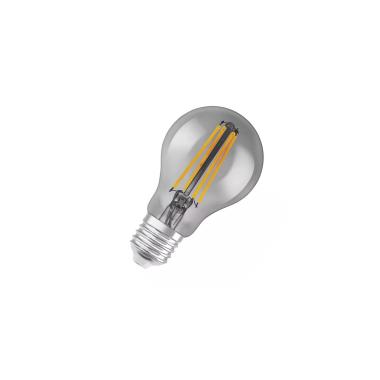
AdjustableE27 WiFi Dimmable Filament LED Bulb 6W G125 680 lm LEDVANCE Smart+
In Stock, delivery in 15-20 days
- Wattage 6 W
- Voltage Range 220-240V AC
- Lumen 680 lm




Brands related to this category


About Smart LED Bulbs
Among LED bulbs, this type of light source is useful when you want to modernise an existing installation while keeping the same lamp holder and adding more flexible control functions.
What are smart bulbs
Smart bulbs are LED light sources that incorporate control electronics and some form of connectivity. Unlike a conventional bulb, they are not limited to being switched on and off with a physical switch, but can be managed through an app, remote control, compatible assistant or home automation system.
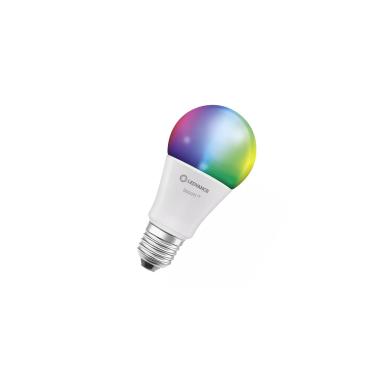
The basic function is usually remote switching, but many models also allow brightness adjustment, scheduling, scene creation or colour temperature changes. RGB or RGBW models can also change the colour of the light to create decorative atmospheres.
Their main advantage is that they make it possible to add smart control without replacing the entire light fitting. If the fitting uses a compatible base and the bulb physically fits, you only need to replace the existing light source and configure the corresponding connection.
How to choose a smart bulb
The selection should begin with the base. A smart bulb may offer advanced functions, but if it does not fit the lamp holder, it will not be compatible with the light fitting. The most common formats are E27, E14 and GU10, although other specific models are also available.
Smart E27 bulbs are common in ceiling lights, floor lamps, table lamps and fittings with a standard screw base. They make it possible to replace many traditional bulbs without modifying the installation.
Smart E14 bulbs are used in decorative lamps, wall lights, bedside fittings and compact designs. In this case, it is especially important to check the dimensions, as the smart electronics can slightly increase the size of the bulb.
Smart GU10 bulbs are designed for recessed or adjustable spotlights. In addition to the base, beam angle is also important here, as GU10 bulbs are normally used to direct light towards specific areas.
After the base, lumens should be considered. A smart bulb used for ambient lighting may need less luminous flux than a source intended for general lighting. For an auxiliary lamp, 400–500 lm may be enough, while a main bulb will often fall within a range of around 800–1,500 lm depending on the space and light fitting.
Colour temperature should also be checked. Warm white models, around 2700–3000 K, are suitable for living rooms, bedrooms and relaxed environments. Tunable white versions allow you to move from warm tones to neutral or cool whites, which is useful in spaces used for relaxing, working or carrying out visual tasks at different times.
Connectivity and control
Connectivity is one of the main differences between smart bulbs. Not all models connect in the same way or offer the same level of integration.
Wi-Fi bulbs usually connect directly to the router without requiring an additional bridge. They are convenient for small installations or for adding a few smart light points to a home. On the other hand, if many units are installed, they can increase the load on the home network.
Bluetooth bulbs allow nearby control from a smartphone and are usually easy to set up. They can be practical for a single room or a specific lamp, although their range is more limited.
There are also bulbs that work with specific home automation protocols and require a hub. This solution may be more suitable when a larger installation is required, with several light points, sensors, scenes and more complex automations.
Before choosing, it is worth checking which system will be used to control them. Some bulbs work with their own app, others can integrate with voice assistants, and others are designed for specific ecosystems.
Dimming, colour and scenes
One of the most common functions in smart bulbs is brightness adjustment. Instead of relying on a wall dimmer, the bulb itself electronically adjusts its luminous flux through the app or control system.
This distinguishes them from conventional dimmable bulbs, which require a compatible dimmer in the installation. With a smart bulb, dimming is usually handled internally and should not be combined with a traditional dimmer unless the manufacturer explicitly states that this is compatible.
Changing the colour temperature makes it possible to adapt the light to different uses. A warm scene may work well at night, while neutral or cool light may be more practical for working, studying or cooking. In many models, the range can extend approximately from 2700 K to 6500 K.
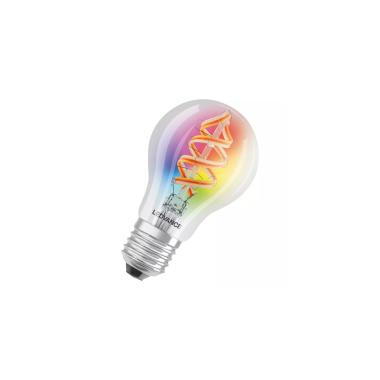
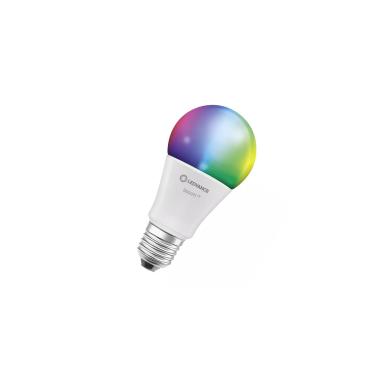
RGB bulbs add the option of creating decorative colours. This function is useful in bedrooms, leisure areas, shop windows, bars or environments where lighting forms part of the visual experience. For everyday use, it is worth checking whether the bulb also includes a true white channel in addition to RGB.
Scenes allow combinations of brightness, colour and temperature to be saved. For example, a reading scene might use neutral white at higher brightness, while a night scene could reduce the luminous flux and use a warm tone.
Installation and everyday use
Installing a smart bulb is usually straightforward, but there are some practical aspects worth keeping in mind. The bulb needs electrical power to maintain its connectivity. If it is switched off using the physical wall switch, it stops receiving power and will not respond through the app until the supply is restored.
For this reason, in many installations it is recommended to leave the switch on and control the bulb from a smartphone, assistant or automation. In areas where several people use the same room, this should be taken into account to avoid someone cutting the power and leaving the bulb offline.
The physical size should also be checked. Some smart bulbs are slightly bulkier than equivalent non-connected models because they contain additional electronics. This can be particularly relevant in small lamps, recessed spotlights or enclosed light fittings.
Heat dissipation also remains important. Although LED power consumption is low, the connectivity and control electronics also generate heat. In fully enclosed or poorly ventilated fittings, high temperatures can reduce service life.
Frequently asked questions
Do I need to replace the light fitting to use a smart bulb?
Not necessarily. If the light fitting has a compatible base, the bulb physically fits and the voltage is suitable, the existing light source can be replaced with a smart bulb.
Does a smart bulb work if I turn off the wall switch?
Not while it has no power. If the switch cuts the electricity supply, the bulb cannot receive commands from the app or maintain its connection.
Can I use a smart bulb with a wall dimmer?
In general, this is not recommended unless the manufacturer states that it is compatible. The smart bulb already adjusts its brightness internally, and an external dimmer may cause flickering or malfunctions.
Which smart bulb bases are most common?
The most common formats are E27, E14 and GU10. E27 is used in standard lamps, E14 in compact or decorative light fittings, and GU10 in recessed or adjustable spotlights.
Do smart bulbs consume power when switched off?
When they are switched off through the app, they continue to use a small amount of energy to maintain connectivity. This standby consumption is usually low, but it is still present.
What is the difference between RGB and tunable white?
RGB allows decorative colours to be created by combining red, green and blue. Tunable white allows the colour temperature to be adjusted between warm, neutral and cool white tones.
Can I control several smart bulbs at the same time?
Yes. Most systems allow you to create groups or rooms so that several bulbs can be controlled simultaneously.
Are smart bulbs suitable for outdoor use?
Only if both the bulb and the light fitting are designed for it. Outdoors, the IP rating of the complete installation should be checked, and the light source and connections should be protected against moisture, dust and rain.