
LED Flush Ceiling Lights
Flush ceiling lights provide uniform illumination, straightforward installation and formats suited to homes, retail premises and professional spaces, both in new-build projects and lighting renovations.


Our featured products from LED Flush Ceiling Lights
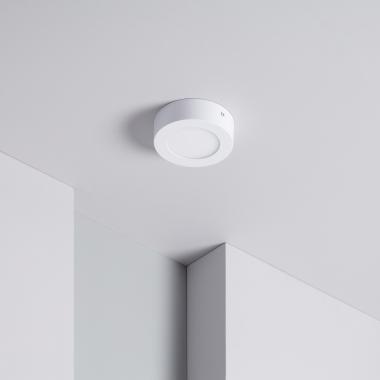
Essential
£4.29
 (6)
(6)- Wattage 6 W
- Voltage Range 220-240V AC
- Lumen 480 lm
3 options- -11%
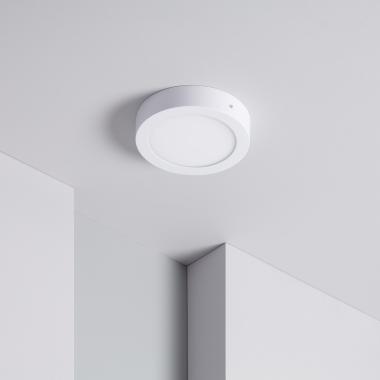
Essential
Before £5.29
£4.69
 (16)
(16)- Wattage 12 W
- Voltage Range 220-240V AC
- Lumen 880 lm
4 options 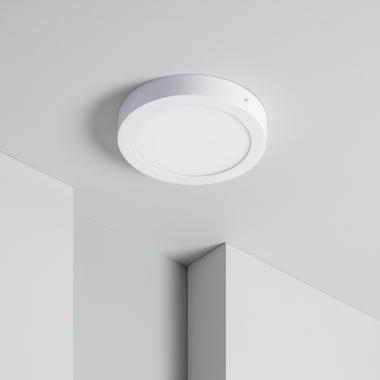
Essential
£6.29
(22)- Wattage 18 W
- Voltage Range 220-240V AC
- Lumen 1480 lm
3 options- -9%
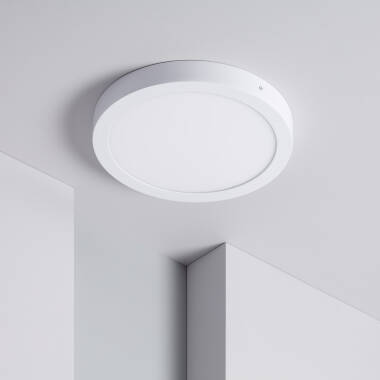
Essential
Before £11.49
£10.49
(60)- Wattage 24 W
- Voltage Range 220-240V AC
- Lumen 1900 lm
4 options








You may also be interested in
Brands related to this category


About LED Flush Ceiling Lights
A flush ceiling light is a compact light fitting installed directly onto the ceiling. Its design allows a room to be illuminated with a wide and even distribution of light. Without doubt, one of the most popular ceiling lighting solutions.
Types of flush ceiling lights
The shape, control system and level of protection determine where each flush ceiling light performs best. The following types make it possible to adapt the fitting to the design of the space, frequency of use and environmental conditions.
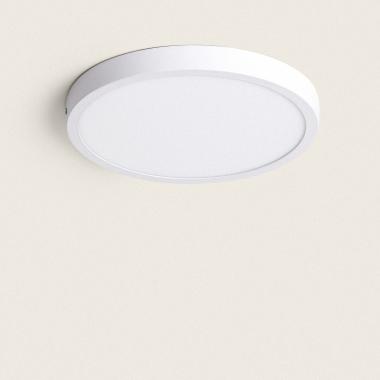
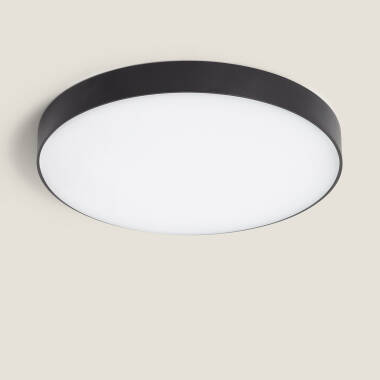
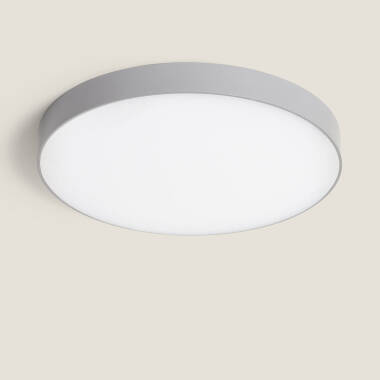
Round LED flush ceiling lights
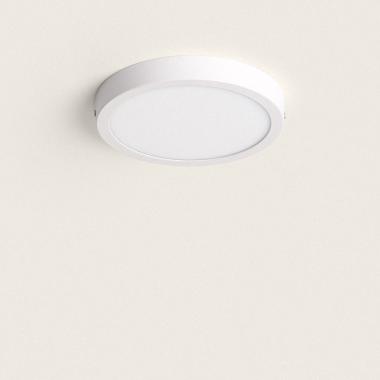
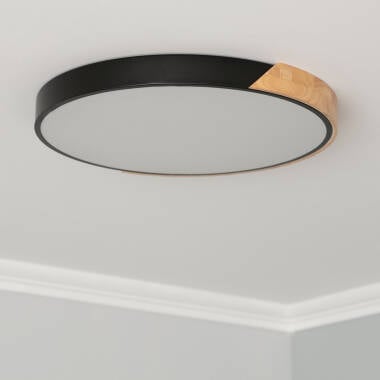
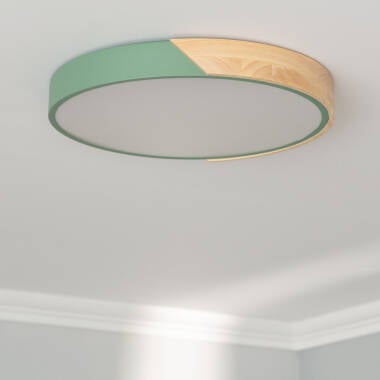
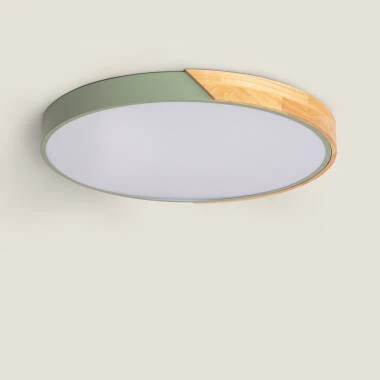
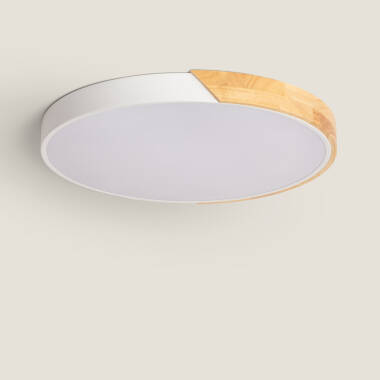
Round models soften the visual presence of the fitting and distribute light symmetrically around the central point. They are commonly used in bedrooms, hallways, bathrooms and smaller rooms. Round LED flush ceiling lights make it easier to replace traditional light fittings when a visually discreet and easy-to-match solution is required.
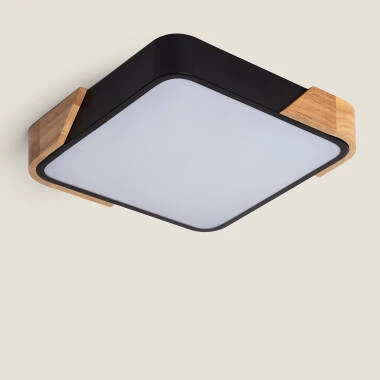
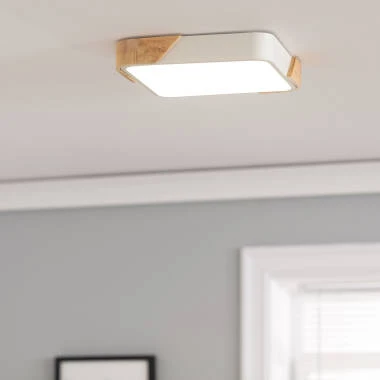
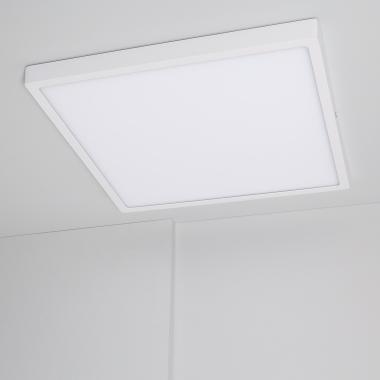
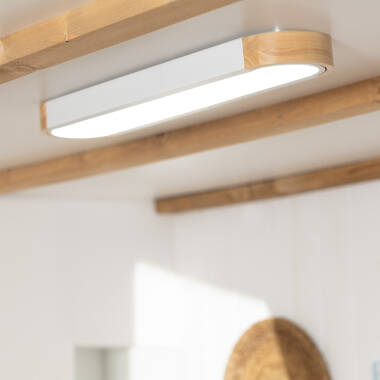
Rectangular and square LED flush ceiling lights
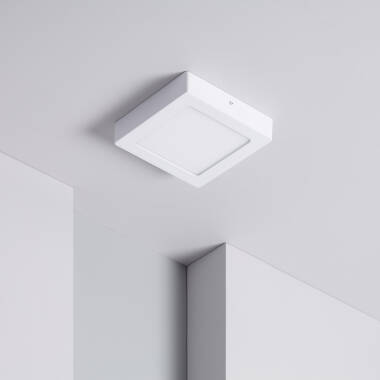
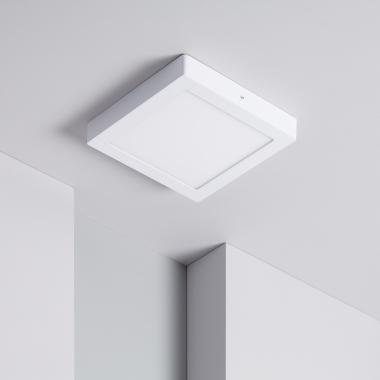
Geometric formats work particularly well in contemporary interiors and can complement the direction of corridors, worktops or tables. Rectangular and square LED flush ceiling lights also make it possible to cover elongated areas with a light output better aligned with the shape of the room, avoiding the concentration of all the light in a single central circle.
LED flush ceiling lights with motion sensor
These models incorporate presence detection so that they switch on only when movement is detected, a useful feature in communal entrances, garages, storage rooms and shared areas. LED flush ceiling lights with motion sensor may also include adjustment of the switch-on time and ambient light threshold, reducing unnecessary operating hours without keeping the area permanently illuminated.
Dimmable CCT LED flush ceiling lights
These allow the brightness, colour temperature or both to be adjusted. Dimmable CCT LED flush ceiling lights are suitable for multipurpose spaces: a room can operate at 4,000 K during tasks and switch to 2,700 or 3,000 K during periods of relaxation, provided that the dimming system and driver are compatible.
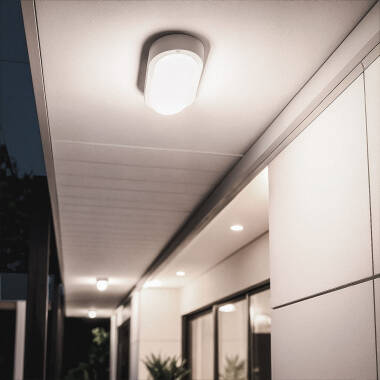
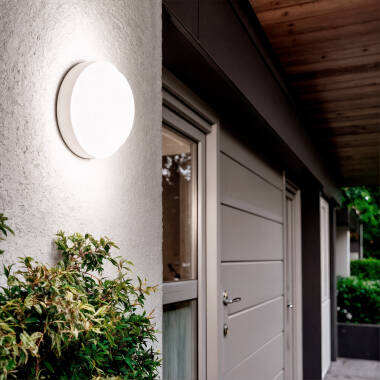
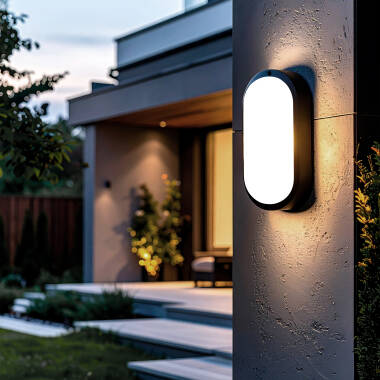
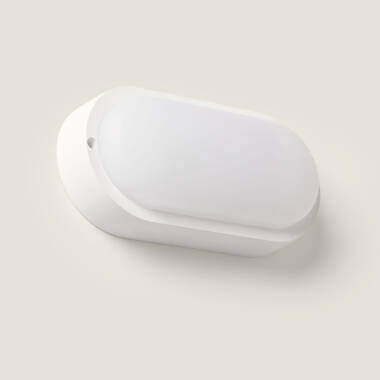
Outdoor LED flush ceiling lights
They are designed to withstand humidity, dust and temperature changes in porches, entrances, covered terraces or on façades. Outdoor LED flush ceiling lights should be selected according to their IP rating and actual level of exposure: IP44 may be sufficient under cover, while an area exposed directly to rain will normally require IP65 or higher.
Designer LED flush ceiling lights
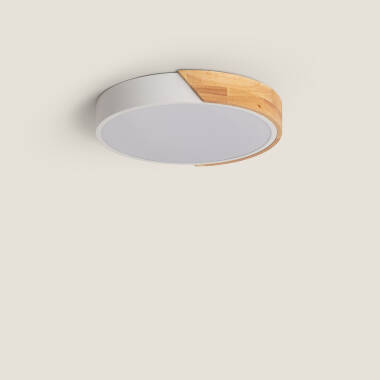
As well as providing illumination, they act as a visible element of the interior through their shapes, finishes and decorative compositions. Designer LED flush ceiling lights are suitable when the ceiling forms part of the overall interior design, but they should still meet functional criteria such as good light diffusion, an appropriate colour rendering index and accessible maintenance.
How to choose an LED flush ceiling light for each room
The choice should begin with the amount of light required and how each area is used. Floor area provides a useful starting point, but ceiling height, wall and furniture colours, the amount of natural light and the distribution of electrical points also have an influence.
Power in W versus lumens
Watts indicate electrical consumption, not the amount of light emitted. Flush ceiling lights should therefore be compared using luminous flux in lumens. Two 18 W models can deliver different results if one operates at 80 lm/W and the other at 120 lm/W: the first would provide around 1,440 lm and the second approximately 2,160 lm.
As a project reference, general domestic lighting is usually between 100 and 200 lux, equivalent to around 100 to 200 useful lumens per square metre. A 12 m² room may require approximately 1,500–2,400 lm, while a kitchen or work area may need around 300–500 lux on the surfaces where tasks are carried out. These figures should be adjusted to account for losses, ceiling height and surface reflectance.
Colour temperature
Colour temperature is expressed in kelvin. Between 2,700 and 3,000 K produces a warm light suitable for bedrooms, living rooms and relaxation areas. At around 4,000 K, the light appears neutral and helps improve the perception of cleanliness and detail in kitchens, bathrooms, offices and retail premises. Colour temperatures of 5,000–6,500 K are cooler and should generally be reserved for applications where a very white appearance or a stronger sense of alertness is required.
Consistency is just as important as the value selected. Mixing 3,000 K and 4,000 K within the same room creates visible differences, particularly on white ceilings. In connected spaces, it is advisable to maintain a common colour temperature or create a deliberate transition. CCT models allow several colour temperatures to be selected during installation or by remote control, but it is advisable to establish a consistent setting for everyday use.
Living rooms and bedrooms
For living rooms, flexible lighting adapted to the size of the room is recommended, preferably by dividing the space into several independent circuits for areas such as the seating area, dining area and circulation zones. This makes it possible to control the light level according to the activity. Visual comfort should be prioritised by avoiding direct light sources above sofas, where people frequently look upwards, making opal diffusers particularly important. Versatility is key in these spaces; flush ceiling lights for living rooms that allow the brightness and colour tone to be adjusted make it easier to move between functional lighting for tasks and a softer atmosphere for relaxing.
In bedrooms, the main objective is to create a restful environment, so priority should be given to comfortable, well-diffused light with as little direct illumination as possible, avoiding flat-looking spaces. If the flush ceiling light for bedrooms is visible from the bed, an opal diffuser and effective glare control are essential.
In both cases, an ambient lighting level of 100–150 lux is recommended, together with warm colour temperatures of 2,700–3,000 K. Flush ceiling lights can be combined with other layers of light, such as reading lamps or indirect lighting, for a more complete lighting scheme.
Kitchens and bathrooms
Kitchens require accurate perception of colours, surfaces and food, so cooler light and a colour rendering index of at least 80 are common reference values. General lighting provided by flush ceiling lights for kitchens may be around 200–300 lux, while worktops and food preparation areas should reach approximately 500 lux with the support of dedicated task lighting.
When choosing a flush ceiling light for bathrooms, protection against water is important in addition to the required light level. IP44 may be used outside the areas most exposed to water, while locations close to the shower or bath may require higher ratings.
Hallways, entrances and circulation areas
These areas usually operate effectively at around 100–150 lux, but require uniform lighting so that steps, changes in level and obstacles can be clearly identified. Sensors are useful where movement through the area is brief and frequent. A hold time of 30 seconds to 3 minutes is generally sufficient for normal passage, while in communal entrances or landings it may be advisable to extend this period to prevent the light switching off while someone is waiting.
Offices, shops and professional spaces
At workstations and customer service areas, lighting should allow people to read, identify products and use screens without distracting reflections. General lighting levels are usually between 300 and 500 lux, with 4,000 K providing a balanced option. A high CRI is especially useful in fashion, food retail, hairdressing and any activity where colour perception influences a decision or the quality of the service.
When to choose a flush ceiling light
A flush ceiling light is particularly suitable when the ceiling is made from concrete, hollow-core blocks or another structure without sufficient void space for recessed fittings. It is also practical in renovation projects because the existing electrical point can be reused and marks or holes left by the previous fitting can be covered. In general, it can be a good alternative to downlights and LED panels.
Compared with a recessed spotlight, a flush ceiling light does not require a hole to be cut in the ceiling or work to be carried out on a suspended ceiling. This simplifies installation and makes it especially suitable for renovations or solid ceiling surfaces.
LED panels, on the other hand, are primarily intended for large surface areas and grid-based suspended ceiling systems, with common formats of 60 × 60 cm or 120 × 30 cm. Their large light-emitting surface reduces shadows and glare, which is why they are frequently used in offices, classrooms and work areas. A flush ceiling light takes up less space, adapts better to domestic rooms and small retail premises and can be installed without an accessible suspended ceiling.
Installing a flush ceiling light
Surface mounting is the most common way of installing an LED flush ceiling light in homes, offices and commercial spaces. This system allows the fitting to be secured directly to the ceiling using a base or mounting plate, providing stable support and accessible electrical connections.
With this type of installation, the flush ceiling light is attached to a structure screwed to the ceiling substrate, whether concrete, plasterboard or timber. The key is to ensure a secure fixing capable of supporting the weight of the complete fitting while keeping it perfectly level. Before installation, the electrical supply must be switched off at the main consumer unit and the connection point checked to confirm that it is not live.
The wiring is normally concealed inside the base of the flush ceiling light, allowing a clean installation with no visible components. It is important to respect the internal space intended for the driver or transformer and avoid forcing or compressing it, as this could affect heat dissipation and shorten the service life of the equipment.
General steps for installing a flush ceiling light
- Switch off the electrical supply at the main consumer unit and verify that there is no voltage at the lighting point
- Mark the fixing points for the base of the flush ceiling light on the ceiling, ensuring correct alignment
- Drill the ceiling using the correct drill bit for the material (concrete, plasterboard, timber, etc.)
- Fit the appropriate wall plugs or fixings for the ceiling substrate and the weight of the fitting
- Screw the base or mounting plate of the flush ceiling light to the ceiling, ensuring that it is firmly secured and level
- Make the electrical connection inside the terminal block, correctly connecting live, neutral and earth where applicable
- Fit the body of the flush ceiling light onto the base and secure it using the manufacturer’s system, such as screw fitting, pressure fitting or a locking mechanism
- Restore the electrical supply and check that the fitting operates correctly
IP and IK protection: when does it matter?
IP and IK ratings describe different types of protection. The IP rating indicates the resistance of the enclosure to solid objects and water, while the IK rating describes its resistance to mechanical impact. They should be considered when the light fitting is installed in bathrooms, outdoor areas, industrial environments, garages, communal areas or spaces accessible to the public.
In an IP code, the first digit refers to protection against the ingress of solids and dust, while the second refers to water. IP20 is common in dry, protected indoor environments. IP44 provides protection against solid objects larger than 1 mm and against splashing water from different directions, so it may be suitable for bathrooms or covered porches depending on the exact location. IP65 indicates dust-tight protection and resistance to water jets and is a common reference for exposed outdoor locations.
The rating should not be considered in isolation. An IP65 light fitting installed in direct rain must retain that level of protection at the cable entry, seals and screws as well. Incorrect drilling or an improperly tightened cable gland can compromise the watertightness of the entire assembly. In saline or industrial environments, or where cleaning chemicals are used, the compatibility of the materials with corrosion and chemical agents should also be checked.
The IK classification ranges from IK00 to IK10. It is usually less relevant in a private home, but in garages, communal entrances, changing rooms, educational facilities or sports areas it may justify the use of more impact-resistant enclosures. An IK08 rating withstands an impact energy of 5 joules and provides a reasonable reference for areas where accidental knocks or tampering may occur.
Frequently asked questions about LED flush ceiling lights
These answers address common questions about sizing, colour, dimming, maintenance and installation, with criteria that apply to both homes and professional spaces.
How many lumens does an LED flush ceiling light need?
For general domestic lighting, an initial estimate of between 100 and 200 lm per square metre can be used. A 10 m² room would therefore require approximately 1,000–2,000 lm, depending on how the room is used, its colours and ceiling height. Kitchens, offices and work areas generally require more, at around 300–500 lm/m² on the relevant working plane. The final calculation should take account of losses and the distribution of the light fittings.
What LED wattage replaces a flush ceiling light with traditional bulbs?
The comparison should be made in lumens, not watts. Two older 60 W bulbs could together provide around 1,400–1,600 lm. An efficient LED flush ceiling light may achieve the same luminous flux with around 14–20 W, although the exact figure varies according to efficiency. The declared luminous flux should therefore be compared rather than relying on equivalences based only on power consumption.
Is a 3,000 K or 4,000 K flush ceiling light better?
3,000 K provides warm, comfortable light suitable for living rooms, bedrooms and hospitality environments. 4,000 K produces a neutral appearance that makes it easier to perceive detail in kitchens, bathrooms, offices and retail premises. Neither option is universally better: the correct choice depends on the activity and on colour consistency with the other light fittings in the space.
Can any LED flush ceiling light be dimmed?
No. The flush ceiling light must be specifically stated as dimmable, and the dimmer must be compatible with LED technology and with the minimum connected load. An incorrect combination can cause flickering, irregular switching or noise. In professional systems, the driver protocol and control system must also be compatible, for example phase-cut dimming, 0–10 V or DALI.
How long does an LED flush ceiling light last?
The typical rated service life is between 25,000 and 50,000 hours, but this does not mean that the light fitting will switch off immediately when that figure is reached. It normally refers to a gradual reduction in light output. Heat, voltage surges and frequent switching cycles can shorten its lifespan; good ventilation and suitable electrical protection help preserve performance.
Can an LED flush ceiling light be installed in a bathroom?
Yes, provided that the IP rating and installation position are compatible with the relevant bathroom protection zone. IP44 is commonly used as a reference outside the areas most exposed to water, while locations close to a shower or bath may require higher levels of protection and specific requirements relating to extra-low voltage or minimum distances. Applicable regulations and professional installation always take precedence over general recommendations.
Can a single flush ceiling light illuminate an entire room?
It can in small or regularly shaped rooms, provided that it delivers the necessary lumens and has a sufficiently wide beam angle. In elongated rooms, spaces with high ceilings or rooms divided into separate functional areas, two light points will provide better uniformity. It is also advisable to complement the flush ceiling light with reading, worktop or task lighting to avoid relying on a single overhead light source.