
LED Flush Ceiling Lights with Motion Sensor
LED flush ceiling lights with sensors automate switching in circulation areas, entrances and auxiliary spaces, reducing unnecessary energy use and improving safety while people move through the area.
Our featured products from LED Flush Ceiling Lights with Motion Sensor
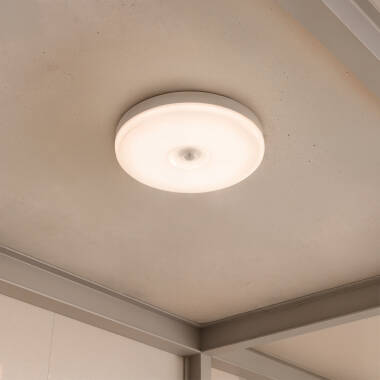
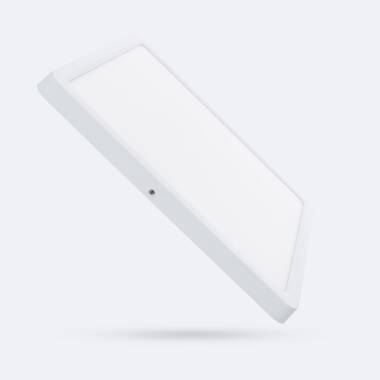
Advanced
£10.99
 (11)
(11)- Wattage 12 W
- Voltage Range 220-240V AC
- Lumen 960 lm

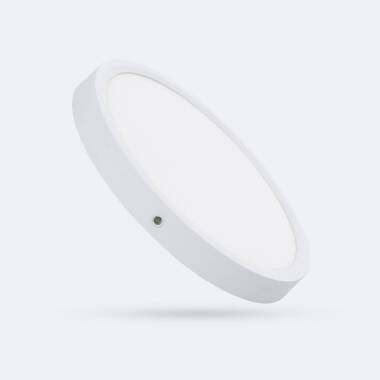
Advanced
£14.99
 (9)
(9)- Wattage 18 W
- Voltage Range 220-240V AC
- Lumen 1440 lm
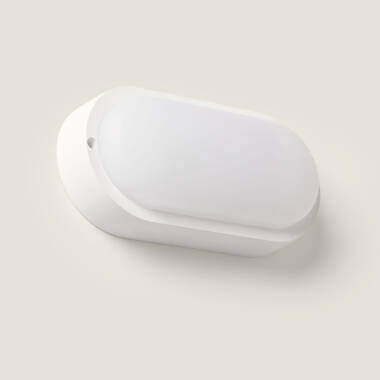
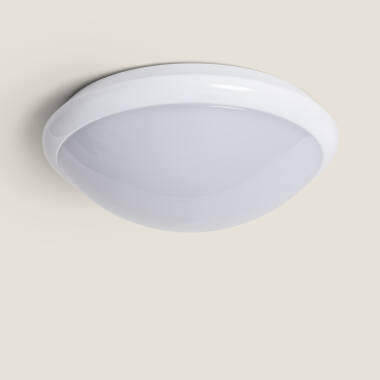
Advanced
£14.99
Ref 77360
Oval Outdoor 25W LED Bulkhead with Motion & Twilight Sensor 94x198mm IP65 White
In Stock, delivery in 15-20 days
- Wattage 25 W
- Voltage Range 220-240V AC
- Lumen 2000 lm
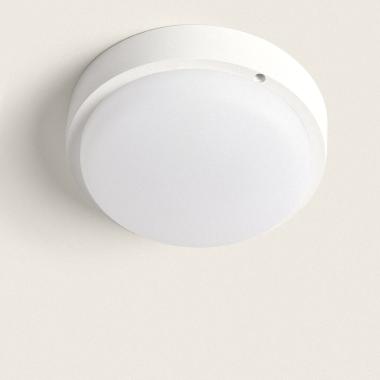
Advanced
£16.99
(5)Ref 77364
Oval Outdoor 25W LED Bulkhead with Motion Sensor Ø175 mm IP65 White
In Stock, delivery in 24/48h
- Wattage 25 W
- Voltage Range 220-240V AC
- Lumen 2000 lm





Brands related to this category


About LED Flush Ceiling Lights with Motion Sensor
This type of flush ceiling lights combines general lighting and automatic detection in a single fitting. When presence is detected within the coverage area, the light switches on for a programmed period and switches off again once no further activity is detected. This avoids having to search for switches in the dark and is especially practical in places where use is brief, intermittent or difficult to predict.
How an LED flush ceiling light with sensor works
The sensor controls the power supply or lighting level of the flush ceiling light according to changes detected in its surroundings. Its final behaviour depends on the detection technology, coverage angle, installation height and configured settings.
When a person enters the monitored area, the detector sends a signal to the driver to switch on the LED module. The flush ceiling light remains active for the set period and restarts the countdown each time new movement is detected. This prevents the light from switching off while activity continues within the space.
The range stated by the manufacturer is usually measured under controlled conditions and may vary in a real installation. The position of the flush ceiling light, walls, doors, ambient temperature and direction of movement all affect performance. A sensor may detect a person crossing its field from the side more easily than someone moving directly towards it.
The most commonly used sensor types are:
- PIR passive infrared sensor: Detects changes in heat emitted by people or animals without emitting a signal of its own. It works best indoors where there is a clear thermal contrast, has a range of 4 to 8 metres and does not detect through walls, which helps prevent activation from adjacent rooms. Its effectiveness may decrease in very warm environments or near heat sources.
- Microwave or radar sensor: Emits electromagnetic waves and detects movement even through lightweight materials. It offers greater sensitivity and range, typically 6 to 10 metres, but may cause unwanted activation if not adjusted correctly. It is ideal for garages, warehouses and stairways because it remains stable even when temperatures change.
- Dusk sensor and day/night mode: Measures ambient light so that the flush ceiling light only activates when it is sufficiently dark. It works together with the motion sensor and can be adjusted in lux to define the switching threshold. Some models offer day or night modes to adapt operation to the lighting conditions of the surrounding area.
Advantages of flush ceiling lights with motion detectors
Automatic switching adapts energy consumption to the actual use of the space. In a circulation area used for only a few minutes, keeping the lighting on for several hours results in unnecessary energy use. The sensor reduces this operating time and prevents the light from being left on accidentally.
The final saving depends on wattage, number of activations and hours of use. An 18 W flush ceiling light operating for ten hours a day consumes around 65.7 kWh per year. If the detector reduces effective operation to one hour a day, annual consumption falls to approximately 6.6 kWh. The difference is particularly significant in communal buildings, garages and properties with numerous light fittings.
Automatic switching also improves safety. The light activates before or as the user enters, making it easier to identify steps, obstacles, locks and changes in floor level. At outdoor entrances, sudden activation can also increase the perception of surveillance.
Another advantage is component integration. By combining the detector and the fitting in a single unit, less wiring is required than in an installation with a separate sensor. The ceiling retains a cleaner appearance and replacing existing light points becomes easier, provided that a permanent power supply is compatible with the system.
Where to install flush ceiling lights with motion sensors
They work best in places where presence is occasional and lighting is needed immediately. The position should allow the sensor to monitor the normal route without unnecessarily detecting movement in adjacent spaces.
- Garage, storage room and basement: in garages, the sensor should detect both people and vehicles, with sensitivity adjusted to prevent activation from outside the intended area; in storage rooms, hold times of 3 to 10 minutes are recommended to prevent the light switching off during use; in basements and utility rooms, humidity and dust should be considered, with IP44, IP54 or IP65 selected according to exposure.
- Hallways, stairways and communal areas: in hallways, short hold times of 30 seconds to 2 minutes are commonly used and several light points may be required; on stairways, detection should cover both access points and avoid blind spots; in communal buildings, automation should be balanced with sufficiently long operating times for users with reduced mobility.
- Communal entrances and outdoor access areas: at entrances and porches, they improve visibility as users approach and can be combined with a dusk sensor; for outdoor use, outdoor LED flush ceiling lights with IP44 are recommended in covered areas and IP65 in exposed locations; sensitivity should be adjusted to avoid activation caused by traffic, wind or animals.
Sensor settings: switch-on time, sensitivity and range
The settings allow the flush ceiling light to be adapted to the shape and use of the space. Correct configuration helps prevent premature switch-off, delayed detection and activation caused by irrelevant movement.
The switch-on time determines how long the light remains active after the last detection. In a hallway, 30 to 90 seconds may be sufficient. On a stairway, in a communal entrance or in a garage, 2 to 5 minutes is usually more appropriate. Storage rooms and occasionally used work areas may require 5 to 10 minutes.
Sensitivity determines the minimum level of movement required to activate the system. A high setting increases responsiveness but also raises the risk of false detections. Initial commissioning should begin at a medium setting and then be adjusted after checking performance along different routes.
The range is the maximum detection distance. It is not always advisable to use the full available coverage. On a small landing, limiting the range to 2 or 3 metres may prevent the flush ceiling light from activating because of movement on another floor. In a large garage, a range of 6 or 8 metres may be required to anticipate the user’s arrival.
The dusk level should also be adjusted. If the flush ceiling light activates during the day, the threshold may be set too high or the sensor may be receiving less ambient light than the rest of the space. If it does not switch on at dusk, the lux value may need to be increased slightly.
Sensor and dimming
Combining detection and dimming makes it possible to maintain a courtesy light and increase the brightness when movement is detected. Instead of remaining completely off, the flush ceiling light can operate at 10% or 20% brightness and rise to 100% during movement.
This system is useful in garages, communal entrances, residential buildings, hotels and hallways where it is preferable not to leave the area completely dark. After a period without presence, the fitting returns to the reduced level or switches off after a second programmed period.
Not all models support this function. To use it, the sensor, driver and LED module must be designed for coordinated dimming. Connecting an external dimmer to a flush ceiling light with a sensor does not guarantee compatibility and may cause flickering or interfere with detection.
Dimmable CCT LED flush ceiling lights add brightness or colour temperature control options, but it is important to check whether these settings can be combined with the sensor. On some fittings, dimming is controlled by remote control, switch, 0-10 V signal or DALI protocol, while others only allow a fixed level to be selected during installation.
Frequently asked questions about LED flush ceiling lights with sensors
The most common questions concern detection range, energy consumption, unexpected activation and compatibility with switches or pets.
Does the sensor use electricity when the light is off?
Yes. It requires a small amount of power to remain active. Standby consumption is usually below 1 W, although this depends on the model. Even taking this into account, the system can reduce overall consumption by preventing a light fitting from remaining switched on for long periods when nobody is present.
Which sensor is better, PIR or microwave?
PIR provides more controlled detection and does not usually detect through obstacles, making it suitable for rooms, landings and storage areas. Microwave sensors are more sensitive and can detect small movements or movement through lightweight materials. They are useful in garages and complex spaces, but require more careful adjustment to avoid false activation.
Why does the flush ceiling light switch on when nobody is there?
It may be triggered by excessive range, movement in an adjacent area, animals, doors, vehicles or moving objects. Sudden temperature changes can also affect PIR sensors. The solution is to reduce sensitivity, adjust the detection range, redirect the detection area or change the position of the fitting.
Why does it switch off while someone is still there?
The detector only restarts the timer when it registers movement. If the person remains still, the timer may expire. Increasing the switch-on time or sensitivity usually resolves the issue. In spaces where people carry out static tasks, a more sensitive presence detector may be preferable.
Can a flush ceiling light with a sensor be switched on manually?
It depends on the internal circuitry. Some models allow forced switching through a rapid sequence at the wall switch, while others only operate in automatic mode. This feature must be stated explicitly in the specifications and cannot be assumed for all flush ceiling lights.
Do pets activate the sensor?
Yes, if they enter the detection area and generate a strong enough signal. The likelihood increases with larger animals, highly sensitive sensors or fittings installed at low height. Reducing the range and avoiding aiming the detector towards the floor can reduce activation, although it cannot guarantee complete exclusion.
Can it be installed outdoors?
Yes, provided that the flush ceiling light has the appropriate IP rating and is designed for the expected temperatures and environmental conditions. IP44 can be used in covered and protected areas; for direct rain, dust or cleaning with water, IP65 is generally more appropriate.
How long should it remain switched on?
In hallways, 30 to 90 seconds is usually sufficient. For stairways, communal entrances and garages, periods of 2 to 5 minutes are common. In storage rooms, setting 5 to 10 minutes can be practical. The time should cover the complete route without keeping the light on for much longer after the area has been vacated.