
E14 LED bulbs
E14 LED bulbs use a narrow, compact screw base, commonly found in decorative lamps, wall lights, table lamps and lighting points where space is limited.


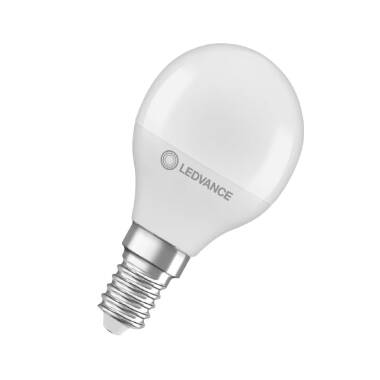
Our featured products from E14 LED bulbs
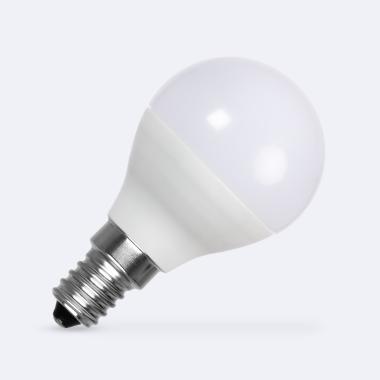
Essential
£1.19
 (7)
(7)- Wattage 4 W
- Voltage Range 220-240V AC
- Lumen 360 lm
3 options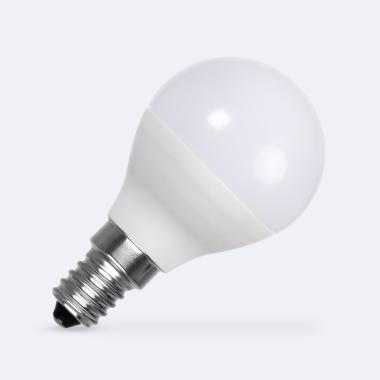
Essential
£1.19
 (34)
(34)- Wattage 6 W
- Voltage Range 220-240V AC
- Lumen 550 lm
3 options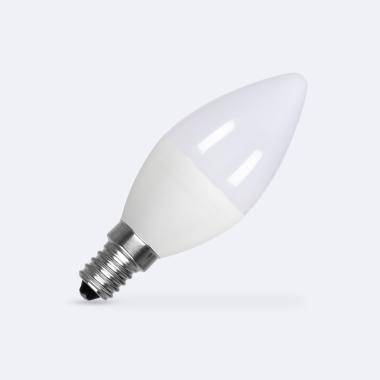
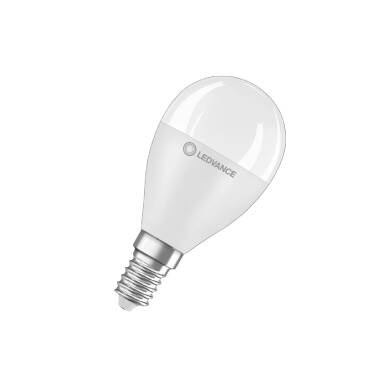
Essential
£1.05
(25)- Wattage 5 W
- Voltage Range 220-240V AC
- Lumen 480 lm
3 options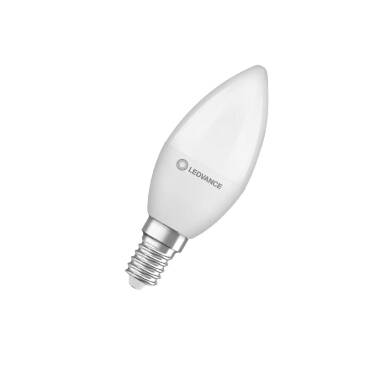
£2.19
LedvanceRef 93499
E14 LED Bulb OSRAM 4.9W C37 470 lm Parathom Value Classic 4052899326453
In Stock, delivery in 15-20 days
- Wattage 4.9 W
- Voltage Range 220-240V AC
- Lumen 470 lm
3 options





Brands related to this category


About E14 LED bulbs
Within LED bulbs, the E14 format stands out for allowing compact designs without giving up different light levels, colour temperatures, decorative shapes or functions such as dimming and smart control.
E14 or E27: how to know which one you need
E14 and E27 belong to the same family of Edison screw bases and both use a threaded connection, so they can look similar at first glance. The key difference is the diameter: E14 measures approximately 14 mm, while E27 measures around 27 mm.
The number indicates the nominal diameter of the thread, so an E14 is much narrower than an E27. They are not interchangeable: an E14 does not fit into an E27 lamp holder, and an E27 cannot be screwed into an E14 holder.
If you still have the old bulb, it is easy to identify them without tools. The E14 has a narrow thread, similar in width to a finger, while the E27 is clearly wider, comparable to the base of a standard bulb or a large bottle cap.
The type of light fitting can also help: E14 is common in small lamps, wall lights and chandeliers, while E27 is used more often in ceiling lights, floor lamps and pendant lights. Even so, checking the base directly is always the most reliable method.
Finally, E14 only defines the screw base: the bulb body can vary significantly, and some decorative models can even be larger than certain compact E27 bulbs.
E14 LED bulb shapes
The small size of the E14 base allows it to be used in light fittings with limited space without restricting the variety of available shapes, whether functional or decorative.
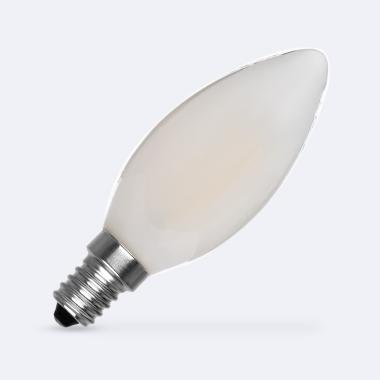
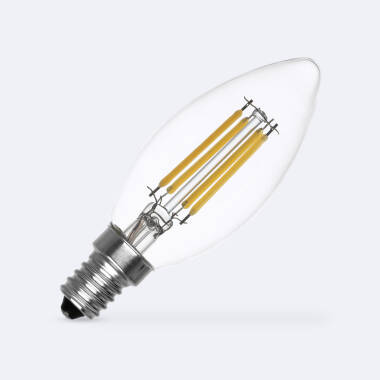
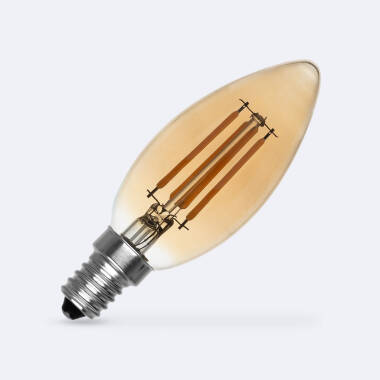
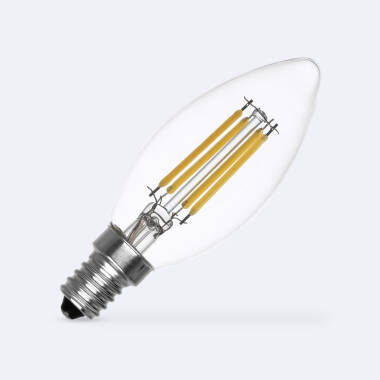
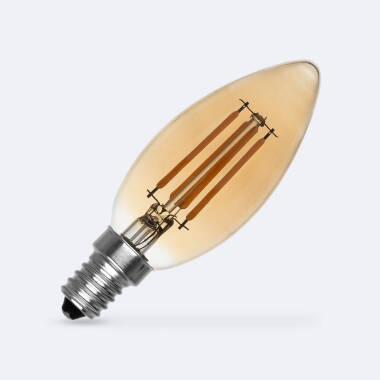
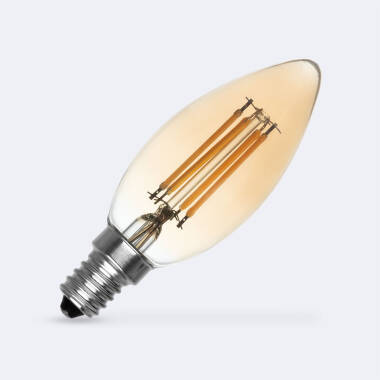
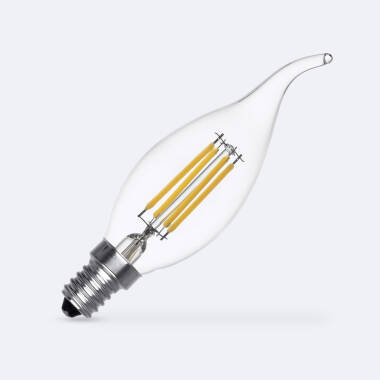
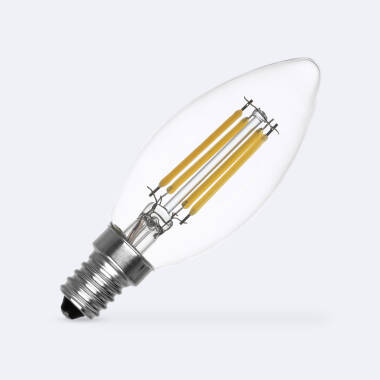
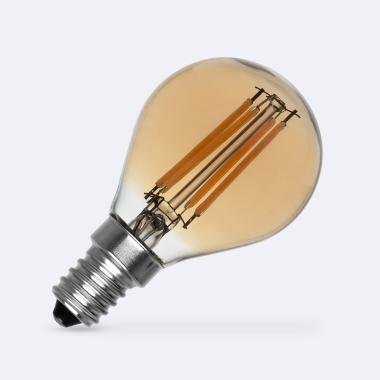
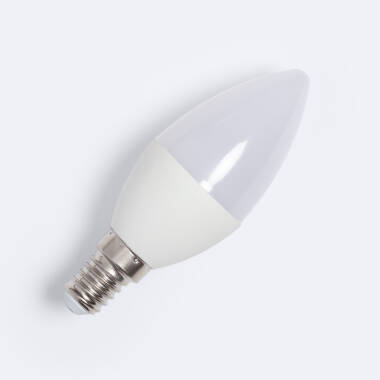
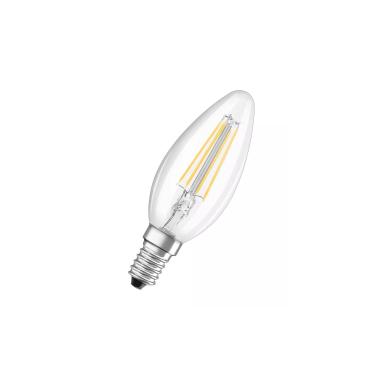
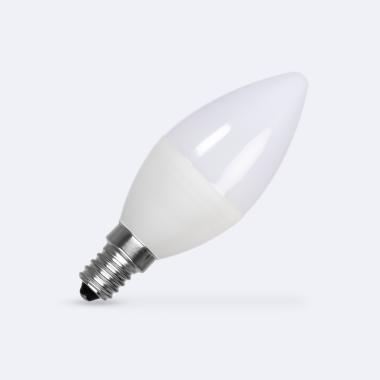
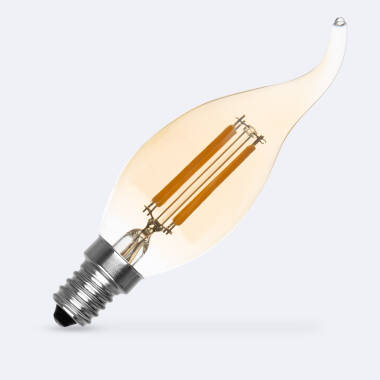
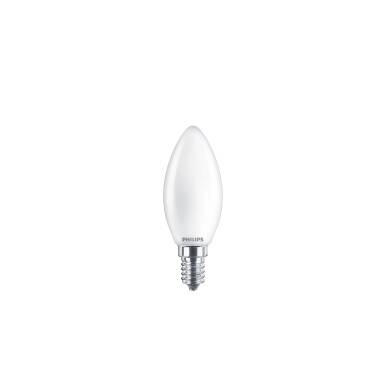
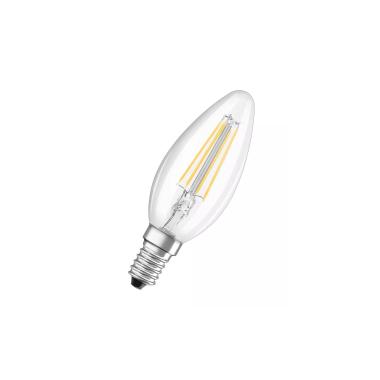
Candle bulbs are the most common. Their narrow, elongated design fits well in chandeliers, classic wall lights and visible light fittings, with straight finishes or flame-shaped designs.
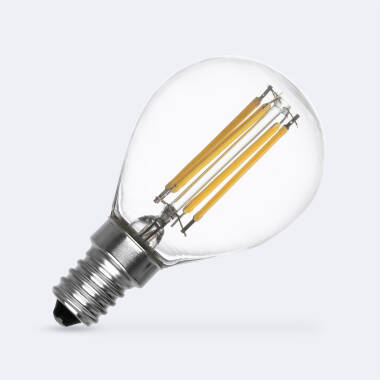
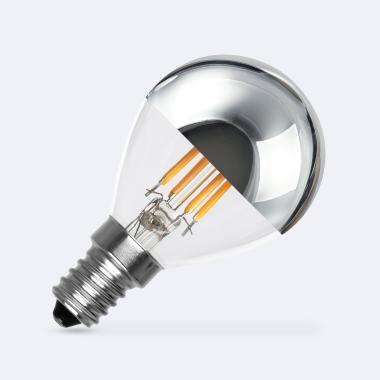
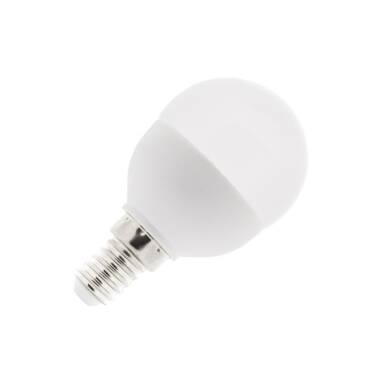
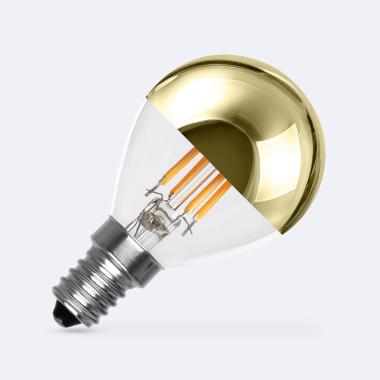
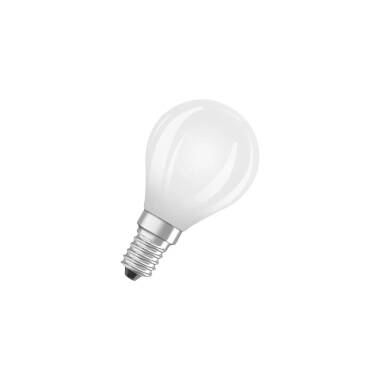
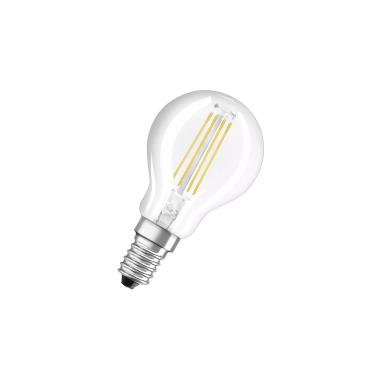
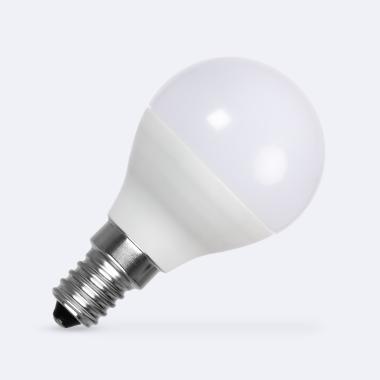
Globe-shaped bulbs are compact and rounded, making them ideal for table lamps, small ceiling lights or string lights where internal space is limited.
E14 tubular bulbs have a long, narrow shape designed for light fittings with a small diameter or vertical configurations.
There are also larger globe models designed for open or decorative light fittings where the bulb itself forms part of the design.
Finally, some E14 bulbs use a standard shape, although more compact than E27 versions, providing broad light distribution and working well when hidden behind shades.
When replacing a bulb, it is important to check not only the base but also the shape and dimensions, as a compatible E14 bulb may still not fit if the bulb envelope is too large for the light fitting.
How to choose your E14 LED bulb
Once the base has been identified, the light should be chosen by lumens rather than watts. E14 bulbs are commonly used for decorative or supplementary lighting, although some models can also be suitable for general lighting. In decorative settings, values between 250 and 500 lm are common. If several bulbs are used, their luminous flux is added together; for example, six 400 lm bulbs provide approximately 2,400 lm in total.
Colour temperature affects the atmosphere: 2700 K is warm, 3000 K is slightly more neutral and 4000 K is more functional. The beam angle varies depending on the bulb design and affects how the light is distributed within the fitting.
CRI should be at least 80 for good colour rendering and above 90 when greater accuracy is required. If dimming is used, the bulb must be compatible with an LED dimmer, as not all E14 bulbs are dimmable.
Wattage equivalence for E14
Older E14 incandescent bulbs were chosen by wattage, but with LED it is more accurate to look at lumens.
As a reference, a 25 W incandescent bulb provided around 200–250 lm, an amount that can now be achieved with a very low-consumption E14 LED bulb. A 40 W bulb typically produced around 400–500 lm, a level that many E14 LED bulbs reach with approximately 4–6 W. To replace 60 W models, it is common to look for around 700–800 lm, although the exact wattage can vary depending on the manufacturer.
In light fittings with several bulbs, it is useful to consider the total luminous flux. For example, a five-arm chandelier with five 40 W incandescent bulbs consumed around 200 W in total. Replacing them with E14 LED bulbs producing around 470 lm and using approximately 5 W each maintains a similar level of illumination with total consumption close to 25 W.
Even so, equivalence is not purely numerical. The type of bulb, whether filament, opal or clear, and the light fitting itself influence how the light is distributed, so it is advisable to keep a similar configuration if the aim is to reproduce the original effect.
Types of E14 LED bulbs
In addition to different shapes and wattages, the E14 base is available with specific functions for controlling brightness, changing colour, automating switching or enhancing the decorative appearance of the light fitting.
Dimmable E14 LED bulbs
Dimmable E14 LED bulbs allow the brightness to be reduced or increased using a compatible dimmer, making them particularly useful in living rooms, bedrooms and dining areas.
Dimming allows the same light fitting to be used for brighter functional lighting or to create a softer atmosphere. However, it is necessary to check both that the bulb is dimmable and that the dimmer works correctly with LED technology.
This is especially important with E14 bulbs because their wattages are usually low. Several 4 or 5 W bulbs may represent a much lower electrical load than the old incandescent bulbs they replace, and some older dimmers require a minimum load to operate stably.
Smart E14 LED bulbs
Smart E14 LED bulbs incorporate connectivity systems that allow the lighting to be controlled through an app, scheduled operation or compatible automation systems.
They are useful for turning a conventional lamp with an E14 lamp holder into a connected lighting point without replacing the light fitting itself. Depending on the model, they may support dimming, scheduling, colour temperature adjustment or scene creation.
To maintain remote control, the physical switch normally needs to remain on so that the bulb continues receiving power.
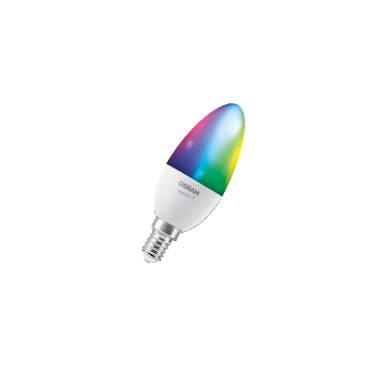
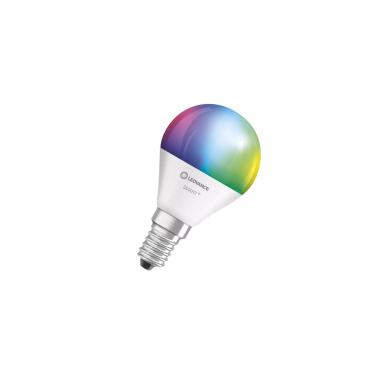
RGB E14 LED bulbs
RGB E14 LED bulbs can generate different colours by combining red, green and blue channels. Their compact format makes them easy to integrate into decorative or ambient lamps where an E27 bulb would be too large.
In addition to checking the available colours, it is worth reviewing how the bulb produces white light. Versions with dedicated white channels can provide more natural functional lighting than those that create white solely by combining RGB.
E14 LED filament bulbs
E14 LED filament bulbs are especially common in candle and globe shapes. The visible filaments imitate the appearance of older incandescent lamps and allow broad distribution of the luminous flux.
They work well in chandeliers, wall lights and transparent light fittings where the bulb forms part of the design. Versions between 2200 and 2700 K provide an especially warm appearance, while clear bulb envelopes offer a more traditional look than opal finishes.
Philips E14 LED bulbs
Philips E14 LED bulbs include different configurations for both general and decorative lighting, with options in different shapes, colour temperatures and performance levels.
When choosing between different E14 models, luminous flux, dimensions, colour temperature and dimming compatibility remain key factors whenever dimming is required. Using the same screw base guarantees the physical connection, but it does not mean that all bulbs provide the same performance or lighting behaviour.
Frequently asked questions
The main questions about E14 usually arise when replacing small incandescent bulbs or checking whether a particular format will fit correctly inside a compact light fitting.
What does E14 mean on a bulb?
The letter E identifies the Edison screw system, while the number 14 indicates that its nominal diameter is approximately 14 mm. It is a narrower screw base than E27.
Can I replace an E14 halogen or incandescent bulb directly with LED?
Yes, provided the new bulb uses an E14 base, is compatible with the installation voltage and has suitable dimensions for the light fitting. To obtain a similar amount of light, it is better to compare the lumens of both sources rather than relying only on watts.
Are all E14 bulbs small?
The base always remains approximately 14 mm in diameter, but the bulb body can vary significantly. E14 bulbs are available in candle, globe, tubular and other shapes.
For that reason, the fact that a bulb is E14 does not guarantee that it will fit inside every light fitting with that lamp holder.
Can an E14 provide as much light as an E27?
The size of the base does not directly determine the number of lumens. There are E14 bulbs with high luminous flux and low-power E27 bulbs. However, the smaller space available in many E14 bulbs limits heat dissipation, so very high-output models are more common in larger formats.
Do E14 bulbs work at 230 V?
Many E14 bulbs used in Spain are designed to operate directly on a 220–240 V mains supply, but the base itself does not determine the voltage. The value stated on the bulb itself or in its specifications should always be checked before installation.
Why does an E14 LED bulb not fit even though the base is correct?
This is usually due to the size of the bulb envelope or the electronics. An LED bulb can be longer or wider than the old light source it replaces, especially in certain high-power or smart designs. In narrow glass shades and enclosed light fittings, it is advisable to check the full dimensions before choosing the model.
Can I use a dimmable E14 bulb with any dimmer?
No. The bulb must be dimmable and the dimmer must be compatible with LED and with the total connected load. This is especially important when a lamp uses several low-power E14 bulbs, as their combined load may fall below the minimum dimmer load required by some older dimmers.
Which E14 shape is best for a chandelier?
Candle bulbs are the most common because their narrow shape fits well on small arms and in light fittings where the light source remains visible. If the bulb forms part of the appearance of the chandelier, filament models with warm light between 2200 and 2700 K can closely reproduce the look of traditional incandescent candle bulbs.