
G24 LED bulbs
G24 bulbs are compact light sources designed for recessed light fittings that traditionally used fluorescent technology and can now be upgraded to more efficient LED versions. Their pin-based format allows for straightforward installation in downlights, offices and professional spaces.
Our featured products from G24 LED bulbs
- -12%
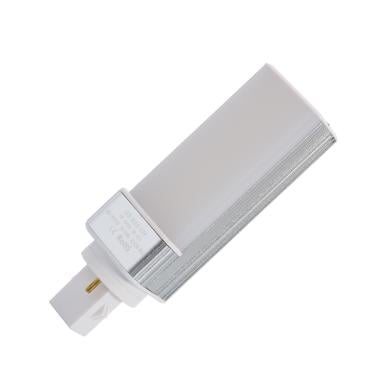
Essential
Before £7.69
£6.79
- Wattage 7 W
- Voltage Range 220-240V AC
- Lumen 700 lm
3 options - -10%
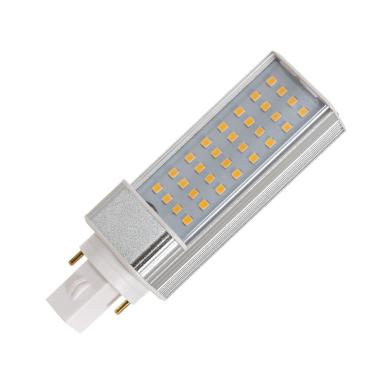
Essential
Before £6.79
£6.09
 (5)
(5)- Wattage 7 W
- Voltage Range 220-240V AC
- Lumen 700 lm
3 options 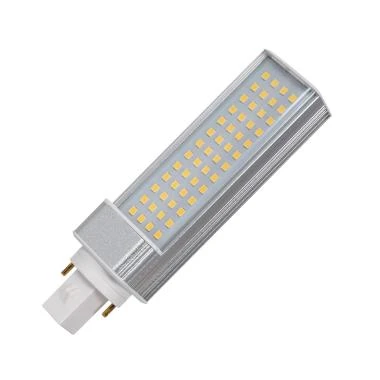
Essential
£9.49
 (4)
(4)- Wattage 12 W
- Voltage Range 220-240V AC
- Lumen 1209 lm
2 options- -48%
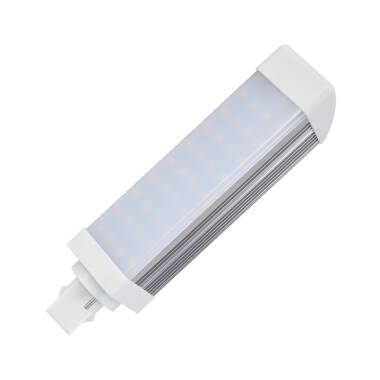
Before £7.89
£4.09
- Wattage 9 W
- Voltage Range 220-240V AC
- Lumen 907 lm
2 options




You may also be interested in
Brands related to this category


About G24 LED bulbs
LED bulbs help reduce energy consumption and adapt lighting to different needs through a range of bases, wattages, colour temperatures and formats suited to each light fitting.
G24 LED bulbs for replacing compact lamps
G24 LED bulbs are an alternative to many compact fluorescent lamps that have been used for years in professional installations. These traditional light sources were especially common in recessed light fittings because they provided relatively uniform lighting in a compact format.
LED technology makes it possible to retain a similar format while reducing the wattage required to achieve an equivalent luminous flux. It also eliminates the warm-up period characteristic of some fluorescent lamps and allows almost full light output to be reached from the moment they are switched on.
When upgrading an installation, however, it is not enough for the new light source to look similar. The G24 family includes different connections, so it is essential to check the exact base before replacing the existing lamp.
What is a bulb with a G24 base?
The term G24 identifies a family of bases used mainly in compact fluorescent lamps and their LED equivalents. It is characterised by pins that are inserted directly into a specific lamp holder.
Characteristics of the G24 connection system
Unlike screw bases, a G24 bulb connects through metal contacts located on its base. The system allows the light source to be inserted compactly into the lamp holder, making it particularly suitable for ceiling light fittings and downlights.
The G24 designation does not describe a single universal connection. The number of pins, their position and certain physical elements of the base may vary to prevent an incorrect lamp from being installed.
For this reason, when replacing an existing light source, it is advisable to check the full reference marked on the previous lamp or on the lamp holder itself.
G24 base variants and types
This family includes two-pin and four-pin variants. Common connections include G24d and G24q, each with different subtypes associated with their design and electrical characteristics.
Two-pin versions have traditionally been used in installations where part of the starting system was integrated into the lamp itself. Four-pin versions usually operate with external auxiliary equipment and have a different electrical architecture.
This distinction is particularly important with LED technology. Two bulbs may have a similar external shape but still be incompatible with the same lamp holder or power supply system.
Where are G24 LED bulbs used?
G24 light sources are mainly found in professional installations where compact lighting and prolonged operation were required. When switching to LED, many of these light fittings can continue to be used provided compatibility is checked correctly.
Downlights and recessed light fittings
One of the most common applications is recessed ceiling downlights. Compact G24 lamps made it possible to provide relatively broad general lighting without using large bulbs.
LED versions can maintain this type of application with lower energy consumption. They also provide instant light and allow a choice between different colour temperatures.
In these downlights, it is advisable to check the available internal space, as some LED bulbs include heat sinks or electronic housings with dimensions that differ from those of the original fluorescent source.
Offices and commercial spaces
G24 installations are also common in offices, shops, reception areas and customer-facing spaces. In these environments, lighting may remain switched on for eight or more hours a day, so energy efficiency can have a significant impact on accumulated consumption.
A colour temperature of around 4,000 K is commonly used in offices and workspaces because it provides a neutral appearance. In shops or reception areas, around 3,000 K may be preferred when a visually warmer atmosphere is desired.
Common areas and professional buildings
Corridors, staircases, entrance halls and common areas in buildings may also use G24 light fittings. These are spaces where the number of light points is often high, making maintenance particularly important.
Replacing lamps less frequently reduces the number of maintenance interventions required and can be especially useful in installations with long operating hours or difficult access.
How to choose a compatible G24 LED bulb
Compatibility is the most important factor when selecting a G24 LED bulb. The external appearance of the lamp does not guarantee that it can be installed correctly in the existing system.
Identify the correct base type
The first step is to check the full reference of the previous bulb. It is also advisable to check any additional number associated with the base, as this may indicate physical differences that affect the position of the guides and how the bulb fits into the lamp holder.
Number and arrangement of pins
Two-pin and four-pin variants are not directly interchangeable. In addition to the number of contacts, their position and the shape of the base may also differ.
A bulb that does not fit easily should not be forced into place. If the pins or guides do not align, the wrong variant is probably being used.
Wattage and luminous flux
Once the connection has been confirmed, the next step is to determine how much light the installation requires. Lumens are the most useful reference for comparing the new source with the previous one.
For example, if the existing lamp provides around 1,200 lumens, it is advisable to look for an LED alternative with a similar output, taking into account any losses caused by the reflector or diffuser in the light fitting.
A significant reduction in wattage does not necessarily have to result in less light if the new bulb offers greater efficiency.
Colour temperature
Colour temperature directly affects the perception of a space. Between 2,700 and 3,000 K, the light has a warm appearance suitable for hotels, reception areas and certain shops.
Around 4,000 K provides neutral lighting commonly used in offices, corridors and workspaces. Higher colour temperatures produce a cooler appearance and should be selected with the rest of the installation in mind.
G24 LED bulbs and ballast compatibility
Fluorescent G24 light fittings often include auxiliary equipment, so this must be checked before installing an LED source. There are G24 LED models designed for direct connection to 230 V and others that are compatible with certain types of ballast.
Models for direct connection
Some G24 LED bulbs are designed to connect directly to the 230 V mains supply. To install them, the existing ballast must be removed or bypassed in accordance with the connection diagram provided by the manufacturer.
This configuration removes the auxiliary equipment from the installation, but it requires changes to the wiring of the light fitting. Any modification must be carried out with the power supply disconnected and, where appropriate, by qualified personnel.
Ballast-compatible models
Other G24 LED bulbs are designed to operate with certain ballasts without requiring their removal. Depending on the model, they may be compatible with electromagnetic ballasts (EM), electronic ballasts (HF/ECG) or several power supply systems.
Compatibility must always be checked before installation, as not every G24 LED bulb can be used with every ballast. Incompatible equipment may cause flickering, difficulty starting, unstable operation or prevent the lamp from working altogether.
The manufacturer's technical data sheet should clearly state whether the bulb requires direct connection to 230 V, whether it is compatible with an electromagnetic ballast (EM), an electronic ballast (HF/ECG), or whether it supports more than one connection system.
How to replace a G24 bulb correctly with LED
Before replacing the lamp, the full reference of the existing light source should be identified and the number of pins checked. The type of power supply used by the light fitting and the specifications of the LED alternative should then be reviewed.
If the new light source is compatible with the installed auxiliary equipment, replacement can be relatively straightforward. If it requires direct connection, the circuit will need to be modified so that the bulb is powered according to its electrical connection diagram.
The dimensions of the LED body should also be checked. A downlight may have enough space for a fluorescent lamp but may not accommodate an LED alternative with a wider or longer heat sink.
Finally, it is advisable to check the luminous flux, colour temperature and light distribution to avoid a final result that differs significantly from the original installation.
Frequently asked questions about G24 LED bulbs
Are all G24 bases the same?
No. G24 identifies a family of connections that includes different variants. There are two-pin and four-pin models, as well as differences in the geometry and position of certain elements of the base. For this reason, a bulb simply described as G24 should not automatically be considered compatible with every lamp holder in this family.
How do I identify which G24 I need?
The most reliable method is to check the full reference marked on the bulb being replaced. The identification on the lamp holder or the light fitting documentation can also be consulted. In addition to the reference, it is advisable to count the pins and check their arrangement.
Does the ballast need to be removed to install a G24 LED bulb?
It depends on the specific model. Some G24 LED bulbs are designed to operate with certain ballasts, while others require direct power and therefore require the auxiliary equipment to be removed or bypassed. The decision should always be based on the connection diagram specified for the new bulb.