
RGB LED Bulb
RGB and selectable-colour bulbs allow you to change the light colour to create decorative atmospheres, customised scenes or visual effects without replacing the light fitting.
Our featured products from RGB LED Bulb
- -7%

Before £15.89
£14.79
OSRAMRef 93984
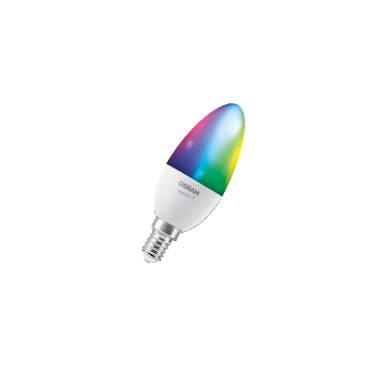
AdjustableRGBE14 WiFi RGBW Dimmable LED Bulb 4.9W B40 470 lm LEDVANCE Smart+
In Stock, delivery in 16-21 days
- Wattage 4.9 W
- Voltage Range 220-240V AC
- Lumen 470 lm
£16.89
LedvanceRef 94083
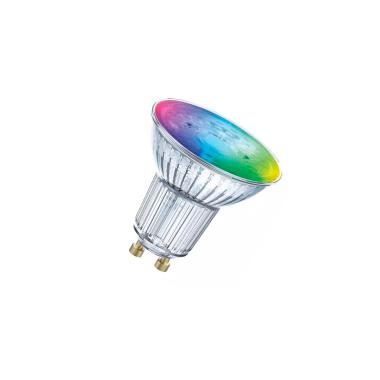
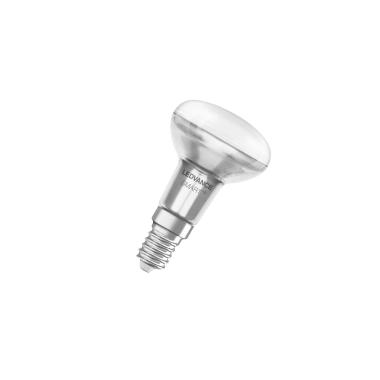
AdjustableRGBGU10 WiFi RGBW LED Bulb 4.9W PAR51 350 lm LEDVANCE Smart+
In Stock, delivery in 15-20 days
- Wattage 4.9 W
- Voltage Range 220-240V AC
- Lumen 350 lm
- -7%
Before £15.89
£14.79
LedvanceRef 93997
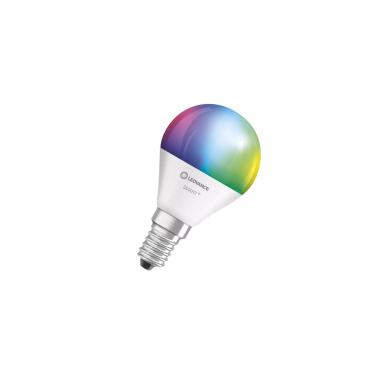
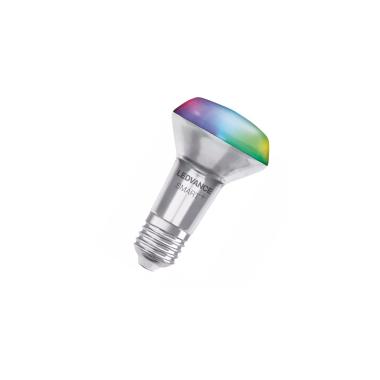
CCTAdjustableRGBE14 WiFi RGBWW LED Bulb 4.9W P46 470 lm LEDVANCE Smart+
In Stock, delivery in 16-21 days
- Wattage 4.9 W
- Voltage Range 220-240V AC
- Lumen 470 lm
£15.89
LedvanceRef 93781
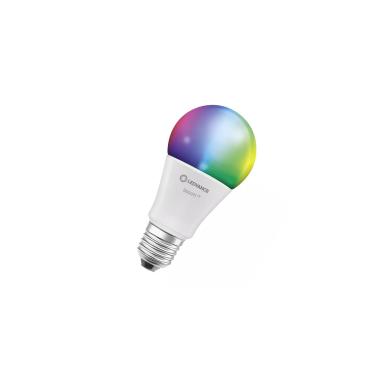
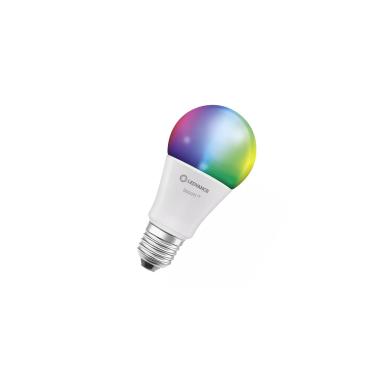
AdjustableRGBE27 WiFi RGBW Dimmable LED Bulb 9W A60 806 lm LEDVANCE Smart+
In Stock, delivery in 15-20 days
- Wattage 9 W
- Voltage Range 220-240V AC
- Lumen 806 lm




Brands related to this category


About RGB LED Bulb
Among LED bulbs, this type of light source combines low energy consumption with colour control, offering everything from vivid colours to adjustable whites depending on the model and control system.
What are RGB and selectable-colour bulbs
RGB bulbs incorporate red, green and blue LED diodes. By combining these three channels, they can generate a wide variety of decorative colours, from saturated tones to softer blends for ambient lighting.
The term selectable colour can include RGB, RGBW or bulbs with adjustable colour temperature. A pure RGB bulb mixes red, green and blue to create colour, while an RGBW bulb adds a true white channel, allowing for more natural white light.
There are also bulbs with selectable white or adjustable CCT, capable of changing between warm, neutral and cool light. In these cases, the aim is not so much to create decorative colours as to adapt the white colour temperature to different times of day.
This difference is important because an RGB bulb does not always replace a conventional white bulb effectively. If it will be used as the main light source, it is advisable to choose models with a true white channel or sufficient luminous flux in white mode.
RGB, RGBW and adjustable white: practical differences
RGB bulbs are mainly designed for decorative lighting. They allow you to create colours for bedrooms, leisure areas, shop windows, bars, events or corners where light forms part of the visual atmosphere.
RGBW bulbs add an independent white channel. This improves everyday use because white light does not depend solely on mixing colours, but comes from a dedicated LED. The result is usually more comfortable for reading, moving around the room or using the bulb as general lighting.
Bulbs with adjustable white operate at different colour temperatures. Depending on the model, they may range, for example, from 2700 K to 6500 K. Warm light works well in the evening or in relaxed environments, while neutral or cool light may be more practical for tasks, kitchens, desks or work areas.
In spaces where the bulb will be decorative, RGB may be sufficient. If it will be used every day as the main light source, RGBW or adjustable white with good lumen output in white mode should be prioritised.
Types of RGB bulbs by base
The base is the first compatibility criterion: the bulb must fit the light fitting and operate at the correct voltage.
- RGB E27 bulbs: the most common in ceiling lights, table lamps, floor lamps and decorative shades. Their size makes it easier to integrate connectivity and provide high luminous output.
- RGB E14 bulbs: suitable for decorative lamps, bedside lamps and compact wall lights. Their dimensions should be checked, as they may be slightly larger than a conventional E14 bulb.
- RGB GU10 bulbs: designed for recessed or adjustable spotlights. Their beam angle allows light to be directed towards walls, corners or specific products.
It is also important to check the control system: remote control, app, Bluetooth, Wi-Fi or home automation integration.
How to choose an RGB bulb
The choice depends on how the bulb will be used. For ambient lighting, prioritise the range of colours, available scenes and control system. If the bulb will also be used as the main light source, it is important to check the lumens available in white mode, as luminous output can vary depending on the selected colour.
It is also important to distinguish between RGB and RGBW models. RGB bulbs generate white light by combining the red, green and blue channels, while RGBW bulbs incorporate an independent white channel, which is generally more suitable for everyday lighting. Adjustable-white models allow the colour temperature to be changed from warm to neutral or cool tones depending on the time and activity.
Installation and compatibility
Installation is usually straightforward when the correct base and supply voltage are used. However, RGB bulbs contain more electronics than a basic LED bulb, so they may be slightly bulkier.
In enclosed fittings or those with narrow shades, diameter, length and ventilation should be checked. High temperatures can reduce the life of the electronics and affect colour or connection stability.
If the bulb works with a remote control, there must be line of sight or sufficient range depending on the system used. With Wi-Fi or Bluetooth models, coverage also matters: a bulb located far from the router or inside a metal fitting may have a less stable connection.
When several RGB bulbs are installed in the same room, it is worth checking whether they can be grouped. Group control allows colour and brightness to be changed simultaneously, preventing each light point from remaining at a different colour.
They should also not be combined with conventional dimmers unless compatibility is explicitly stated. The internal dimming of an RGB bulb is managed by its own electronics; an external dimmer may cause flickering, switch-offs or loss of settings.
Common uses of RGB bulbs
RGB bulbs are mainly used to create different atmospheres. In living rooms and bedrooms, they allow you to switch from white light for everyday use to softer colours for watching a film, relaxing or creating more decorative indirect lighting.
In teenagers’ rooms and gaming areas, colours allow the space to be personalised without installing LED strips or additional light fittings. In these cases, the ability to save scenes or change brightness from a smartphone or remote control is often particularly useful.
In hospitality, shop windows and small retail spaces, an RGB bulb can help adapt the atmosphere according to the time, a promotion or an event. With GU10 spotlights, colour can be directed towards walls, corners or specific products.
They are also useful for parties, home events or multipurpose spaces where the atmosphere needs to be changed quickly. However, if the bulb will be the only light source in the space, it should have a sufficiently bright and comfortable white mode.
Frequently asked questions
Can an RGB bulb be used as the main light source?
It can, provided it offers enough lumens in white mode and has a true white or adjustable-white mode. If it only mixes red, green and blue, the white light may appear less natural.
What is the difference between RGB and RGBW?
RGB combines red, green and blue to create colours. RGBW adds an independent white channel, improving the quality of white light.
Can I use an RGB bulb with a wall dimmer?
Generally, no. Brightness is normally adjusted from the remote control, app or the bulb’s internal system. An external dimmer may cause problems unless compatibility is explicitly stated.
Which RGB bulb bases are most common?
The most common are E27, E14 and GU10. E27 is used in standard lamps, E14 in compact light fittings and GU10 in recessed or adjustable spotlights.
Do RGB bulbs remember the last colour?
It depends on the model. Some retain the last setting used, while others return to a default mode when switched on.
Do RGB bulbs use more energy?
Not necessarily. Energy consumption depends on the wattage and selected brightness level. In colour mode or at reduced brightness, they may consume less than when operating at 100% in white mode.
Can several RGB bulbs be controlled together?
Yes. Many systems allow groups to be created so that the colour, brightness or scenes of several bulbs can be changed at the same time.
Are RGB bulbs suitable for outdoor use?
Only if both the bulb and light fitting have suitable protection for outdoor use. The IP rating of the complete installation should be checked and the connections protected against moisture and rain.