
Indoor wall lights
Indoor wall lights are a practical solution for lighting rooms without taking up space on the floor or on furniture. They are used both to create atmosphere and to reinforce specific areas, adding an extra light point that improves the functionality and aesthetics of the space.
Our featured products from Indoor wall lights
- -57%
Before £32.99
£14.19
Ref 98802
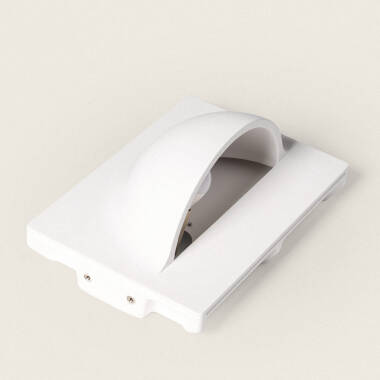
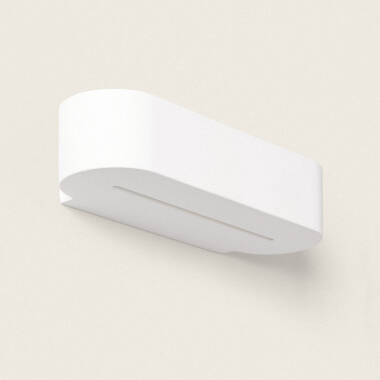
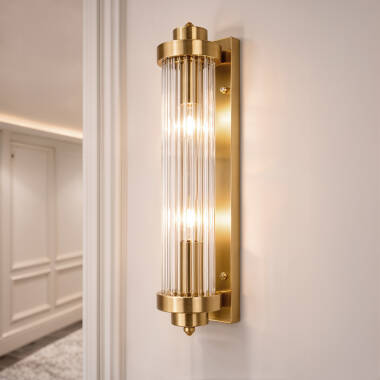
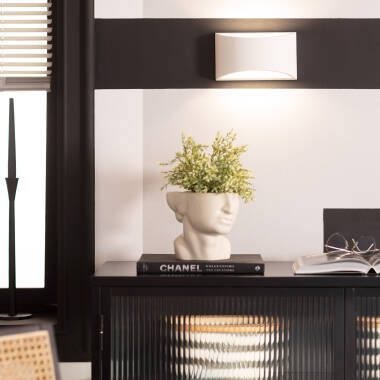
Wall Light Integration Plasterboard for E14 LED Bulb 283x283 mm Cut Out
White
In Stock, delivery in 24/48h
- -31%
Before £70.99
£48.99
Ref 98799
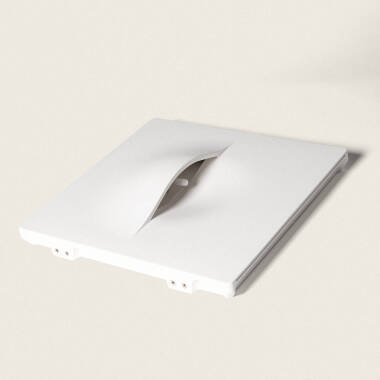
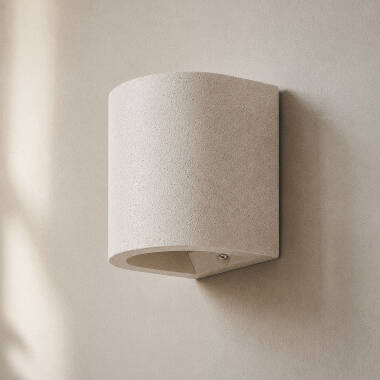
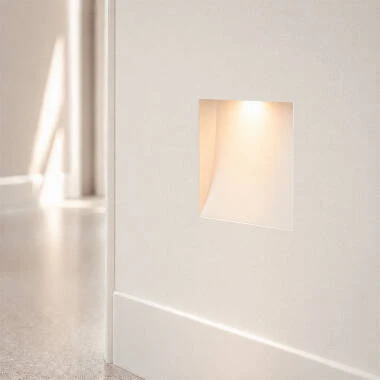
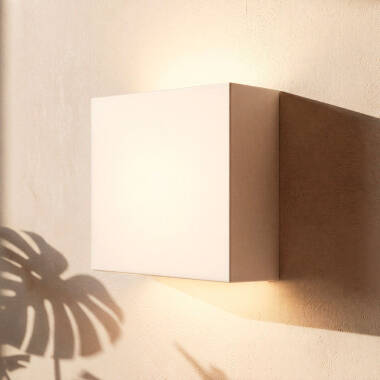
Plaster-In Integrated Wall Light for G9 Bulb 403x403mm Cut Out
White
In Stock, delivery in 24/48h
£33.89
Ref 98857
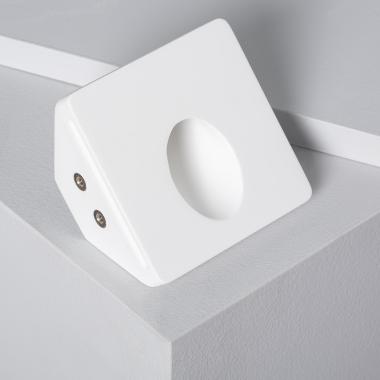
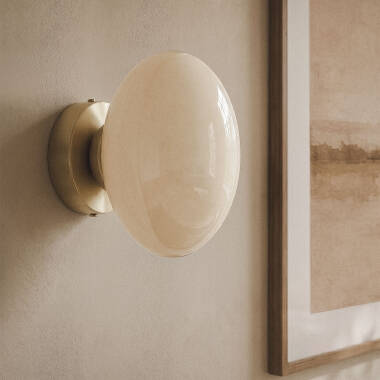
Plaster-In Integrated 2W LED Wall Light 103x100 mm Cut Out
Warm White 2700K
In Stock, delivery in 15-20 days
- -12%
Before £41.99
£36.99
Ref 6260
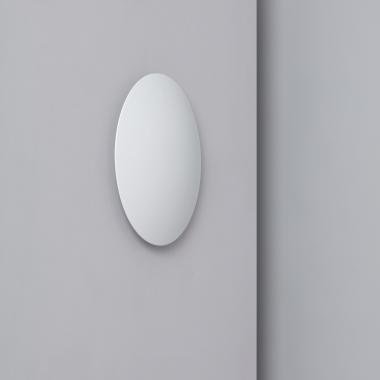
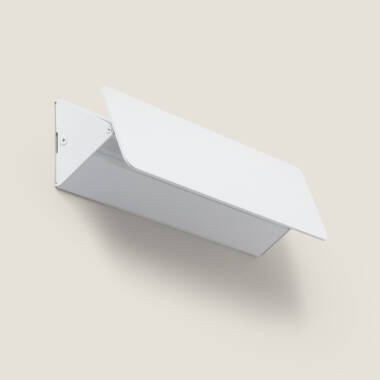
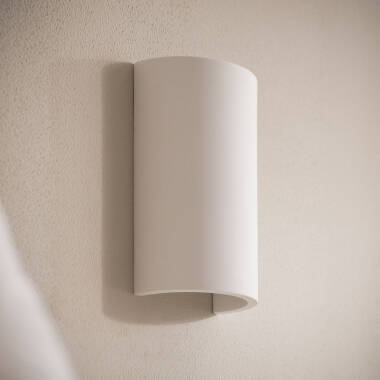
AluminiumIris 18W Aluminium LED Wall Lamp White
Warm White 3000K
In Stock, delivery in 15-20 days




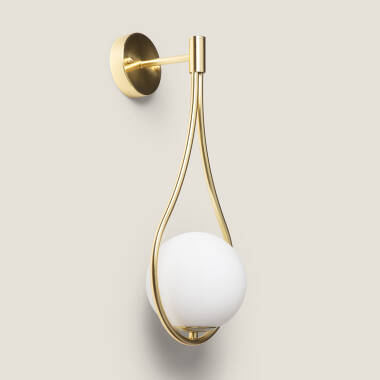
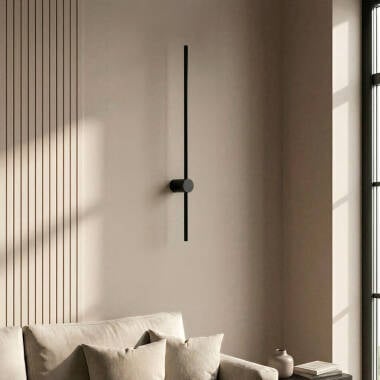
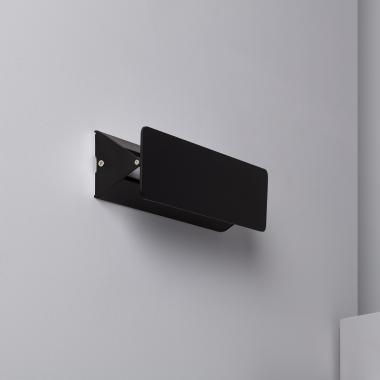
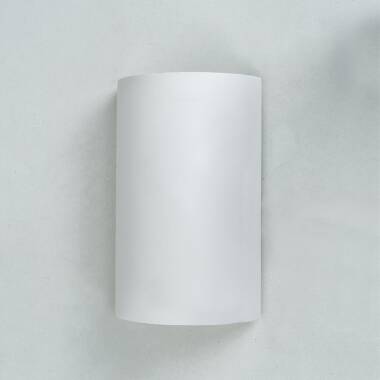
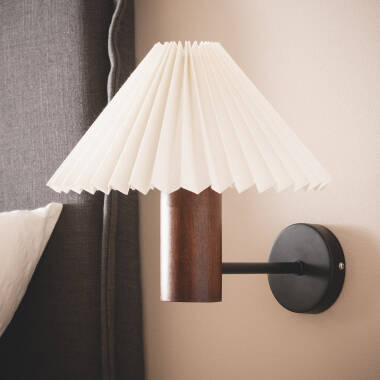
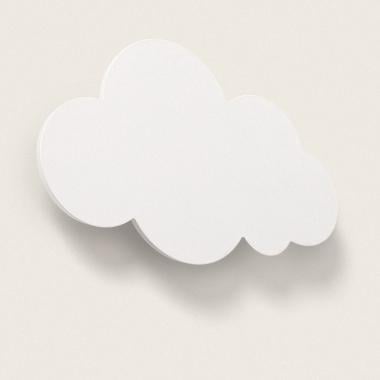
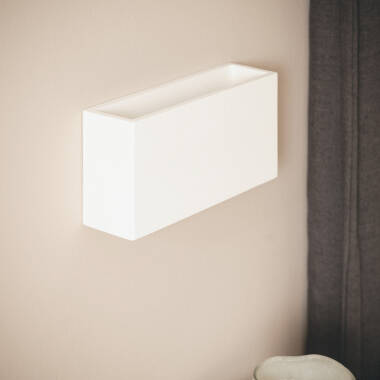
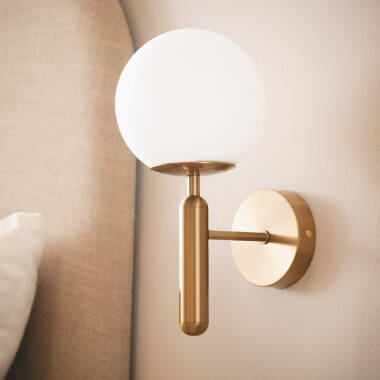
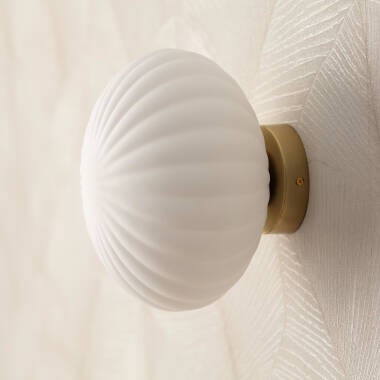
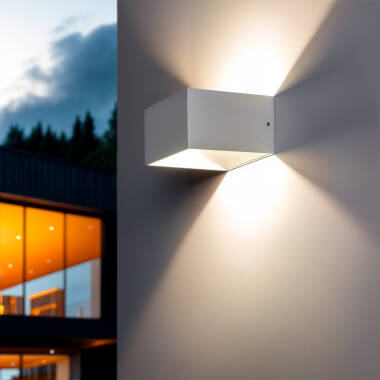
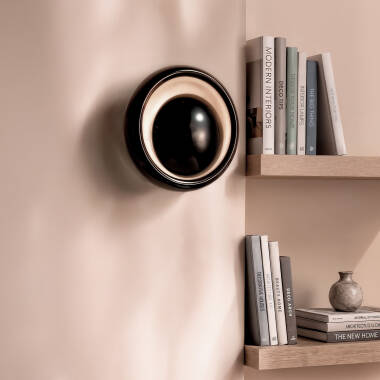
You may also be interested in
About Indoor wall lights
Unlike general-purpose wall lights, indoor models are designed to blend into the décor and provide comfortable lighting.
They do not require protection against weather conditions like outdoor wall lights, but they should adapt well to the use of each room, taking into account factors such as intensity, colour temperature and light direction.
What are indoor wall lights
Indoor wall lights are luminaires designed to be installed on walls inside homes or professional spaces. Their function can be ambient, decorative or functional, depending on the model and its location.
They are used as a complement to the main lighting or as an independent light point in specific areas. They help distribute light better within a room and avoid relying solely on a central source on the ceiling.
They also help improve the perception of the space. Well-placed side lighting can make a room feel more welcoming, balanced and visually more interesting.
Decorative and functional purpose
A wall light does not only illuminate; it also forms part of the design of the space. Some models stand out for their aesthetics, while others prioritise functionality, such as adjustable or reading models.
There are options with shades, indirect light, bidirectional emission or adjustable heads. Each type responds to a specific need, so it is important to define the intended use before choosing.
Types of lighting
Indoors, wall lights can provide different types of light:
- Ambient light: soft and diffused, designed to accompany the general lighting.
- Focused light: more concentrated, suitable for reading or specific tasks.
- Indirect light: projected towards the wall or ceiling to create a more uniform effect without glare.
Types of indoor wall lights
The variety of wall lights makes it possible to adapt them to different styles and needs. Not all models serve the same purpose, so it is advisable to choose according to the use and the space.
Decorative wall lights
They are mainly used to create atmosphere and add an attractive visual element. They are common in living rooms, bedrooms and entrance halls.
They can incorporate materials such as fabric, glass, metal or wood, which influence both the design and the way the light is diffused.
Adjustable wall lights
They allow the light to be directed towards a specific area. They are especially useful in bedrooms, reading areas or workspaces.
Their main advantage is that they offer greater precision without the need to illuminate the entire room.
Indirect light wall lights
They project light towards the wall or ceiling, creating softer lighting. They are suitable for creating relaxed atmospheres and avoiding glare.
They work well in living rooms, hallways or bedrooms.
Picture lights
Picture lights are designed to illuminate decorative elements such as paintings or photographs. They usually have an elongated format and directed light.
For a good result, it is important to adjust the size of the wall light to the element you want to highlight.
How to choose indoor wall lights
Choosing a suitable wall light means taking into account both the design and the quality of the light. It is not enough for it to fit aesthetically; it must also perform its function correctly.
Light intensity
Lumens indicate the amount of light emitted by the wall light. For ambient lighting, between 300 and 700 lumens is usually sufficient. For reading or tasks, a higher level may be necessary.
Colour temperature
Colour temperature influences the feel of the space:
- 2700K–3000K: warm light, ideal for living rooms and bedrooms.
- 4000K: neutral light, more suitable for functional areas.
Light direction
The way the light is projected affects visual comfort. Models with a diffuser or shade reduce glare, while adjustable models allow greater control.
Type of light source
Wall lights can incorporate integrated LED or use replaceable bulbs. The former are usually more compact and efficient, while the latter offer greater flexibility.
Indoor wall lights by room
Each space has different needs, so the choice of wall light should adapt to its use.
Living room
Living room wall lights are used to create atmosphere or complement the main lighting. They can be placed next to the sofa, on decorative walls or in transition areas within the space. In addition to their aesthetic function, they help balance the general light and avoid excessive contrasts between illuminated and dark areas.
In large living rooms, it is advisable to combine several wall lights distributed strategically to create more enveloping lighting. They can also be used to highlight specific elements such as pictures, shelves or wall coverings. Choosing a warm colour temperature, between 2700K and 3000K, helps create a welcoming and comfortable atmosphere.
Bedroom
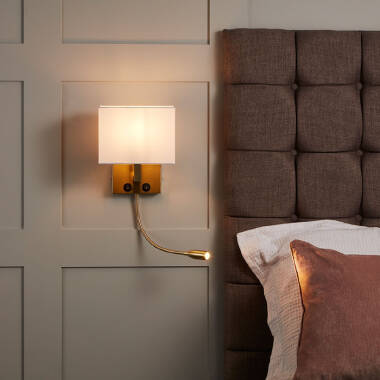
Bedroom wall lights are an alternative to bedside lamps, as they free up space and provide a more orderly look. Adjustable models are especially useful for reading, as they allow the light to be directed without disturbing the other person.
There are also options with an integrated switch or dimming, which makes everyday use easier. In bedrooms, it is important to choose warm light that supports rest. In addition, the installation height should adapt to the headboard and the position of use to ensure comfort and functionality.
Hallways and entrance halls
In circulation areas, wall lights help distribute light and improve orientation. It is advisable to choose compact models with soft light to avoid glare, especially in narrow spaces.
Correct distribution of wall lights along the hallway makes it possible to create a more pleasant and safer visual route. They can also be used to add decorative character to entrance halls, creating a more carefully considered first impression of the home. Indirect or diffused light is usually the most suitable for this type of space.
Stairs
On indoor staircases, wall lights can improve visibility and safety. Indirect or grazing light usually offers good results, as it illuminates the steps without creating harsh shadows.
Wall lights can be installed at mid-height or close to the floor, depending on the desired effect. On long staircases, it is advisable to maintain a regular distribution to ensure uniform lighting. Motion sensors can also be incorporated for greater convenience and energy efficiency.
Bathrooms and mirrors
In bathrooms, it is important to choose models suitable for damp areas, with the corresponding IP protection rating. The lighting should be uniform and avoid shadows on the face, especially around the mirror.
To achieve good facial lighting, it is advisable to place wall lights on both sides of the mirror or use a well-diffused upper luminaire. A colour temperature between 3000K and 4000K is usually the most suitable, as it offers a balance between comfort and visibility. In addition, a good colour rendering index helps colours be perceived more faithfully.
Materials and finishes
The material influences both the design and the quality of the light:
- Fabric: provides soft, warm light, ideal for creating welcoming atmospheres in living rooms and bedrooms. It also helps reduce glare and adds an elegant decorative touch.
- Metal: offers a more defined and modern aesthetic, perfect for contemporary or industrial styles. It usually directs light better, making it suitable for functional or focused lighting.
- Glass: allows good light diffusion, creating more uniform lighting. Depending on the finish, opal, transparent or smoked, it can soften or intensify the lighting effect.
- Wood or fibres: add warmth and texture to the space, fitting very well in natural or Nordic-style atmospheres. They can also create interesting shadow effects if the design allows it.
Installation and location
Correct installation is key to achieving a good result, both functionally and aesthetically. The position, height and the way wall lights are integrated into the space directly influence lighting quality and visual comfort.
Before installation, it is advisable to plan the location taking into account the furniture, circulation points, ceiling height and the use of each area. It is also worth considering the type of electrical connection, the location of switches and the possibility of incorporating dimming systems.
Height
Generally, wall lights are placed between 150 and 180 cm from the floor, although this measurement may vary depending on the use and type of luminaire. In circulation areas such as hallways or entrance halls, this height allows good light distribution without causing glare.
In bedrooms, the height should adapt to the headboard and the intended use. If the wall light is used for reading, it should be placed at a height that allows the light to be directed comfortably towards the book without disturbing the other person. In this case, it is usually positioned slightly above shoulder level when sitting in bed.
On staircases or in areas where more decorative or wayfinding lighting is desired, wall lights can be installed at a lower height to create grazing light effects or mark routes.
Distribution
The distance between wall lights depends on the size of the space, the luminous flux of each luminaire and the effect you want to achieve. In hallways, a spacing of between 2 and 3 metres usually provides balanced lighting, although it can be adjusted according to light intensity and wall colour.
In living rooms and bedrooms, distribution usually responds more to decorative and compositional criteria. For example, placing two wall lights on either side of a sofa, headboard or mirror helps create symmetry and visual order.
It is also important to take into account the direction of the light. Wall lights with indirect or bidirectional emission can be spaced further apart, while models with more focused light may require closer placement to avoid dark areas.
Switching control
It is advisable to place switches in an accessible way that is coherent with the use of the space. In bedrooms, for example, it is common for each wall light to have its own switch or for there to be independent control on each side of the bed.
In hallways and staircases, two-way switching systems allow the light to be turned on and off from different points, improving convenience. Presence sensors can also be incorporated to automate switching in circulation areas.
Dimming is a very interesting option in living rooms and bedrooms, as it allows the lighting to be adapted to different times of day. The same wall light can provide a more intense light for specific tasks or soft lighting to create atmosphere.
Frequently asked questions
How many lumens does a wall light need?
It depends on the use. For ambience, between 300 and 700 lumens is usually enough. For reading, more may be needed.
What colour temperature should I choose?
For interiors, the most common choice is warm light, 2700K–3000K. Neutral light is reserved for more functional areas.
Can they be used as the main light?
Yes, in small spaces or by combining several light points. In large rooms, it is better to complement them with general lighting.
What is the difference compared with outdoor wall lights?
Indoor wall lights do not need protection against humidity or weather conditions, while outdoor models require greater resistance and sealing.