
Modern Wall Lamps

Pendant
Show All

Table
Show All

Floor
Show All

Wall
Show All

Ceiling
Show All


Our featured products from Modern Wall Lamps
- -40%
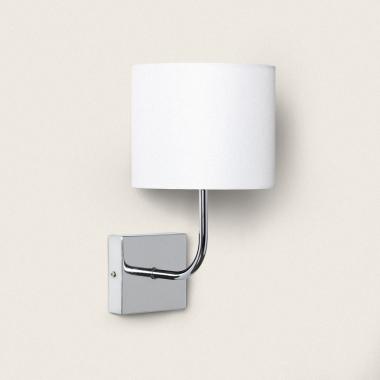
Before £21.19
£12.69
- -54%
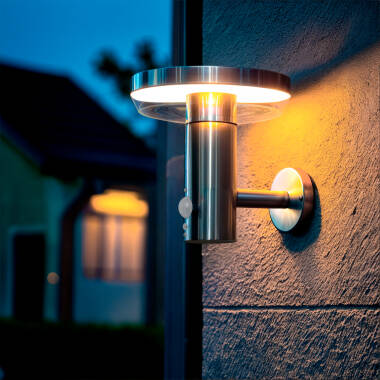

Before £32.99
£15.29
bartonRef 113187
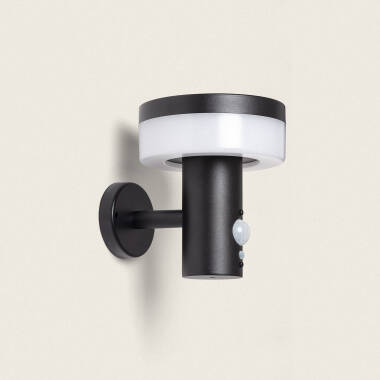
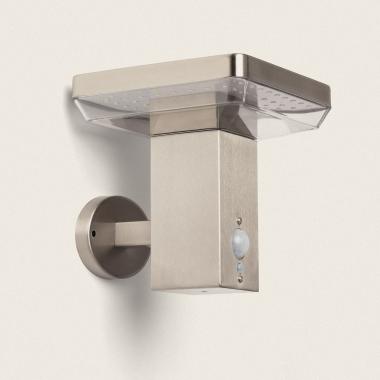
Barton 5W Stainless Steel Outdoor Solar LED Wall Light with Motion Sensor
Silver
In Stock, delivery in 15-20 days








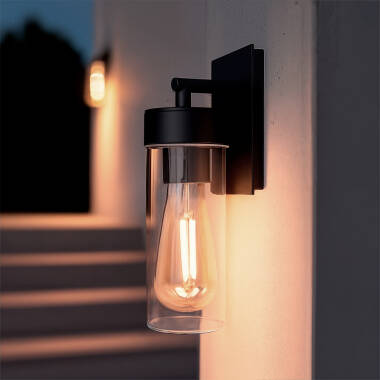
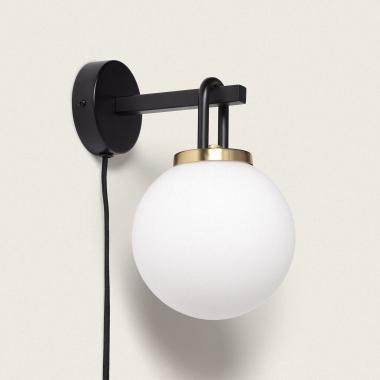
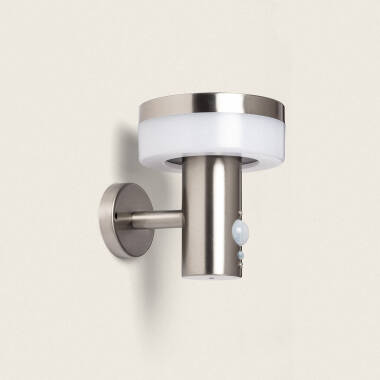
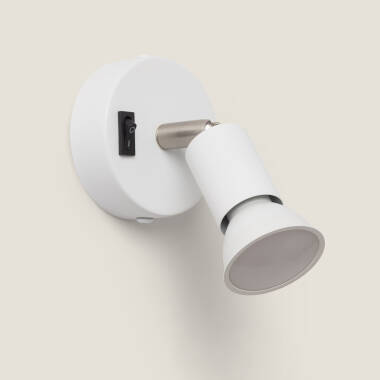
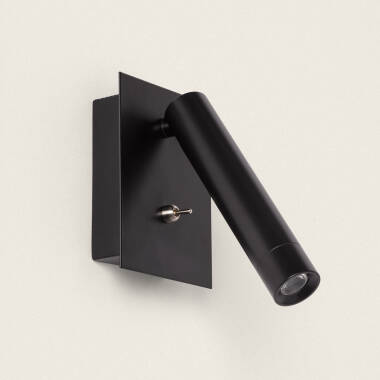
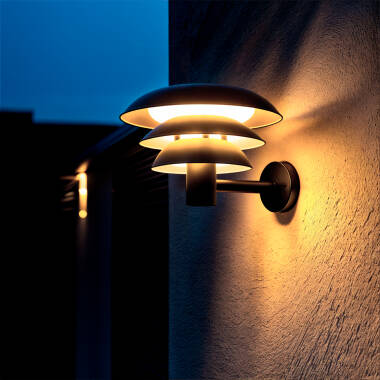
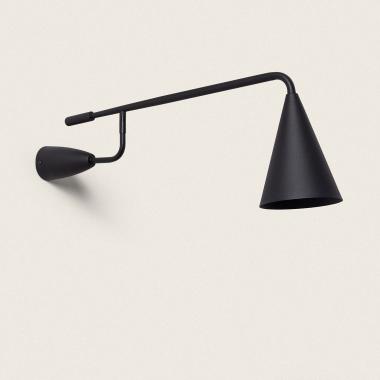
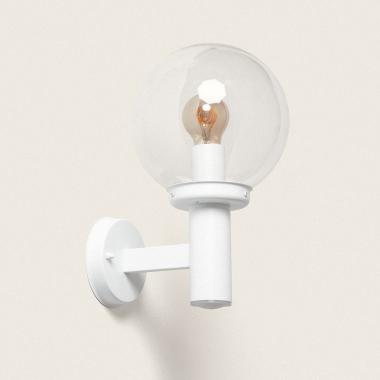
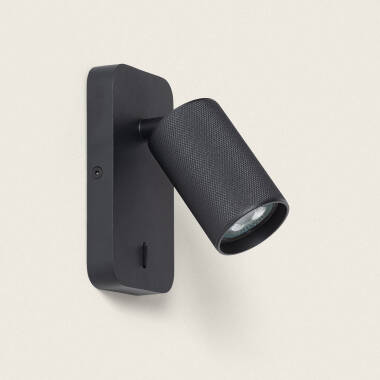
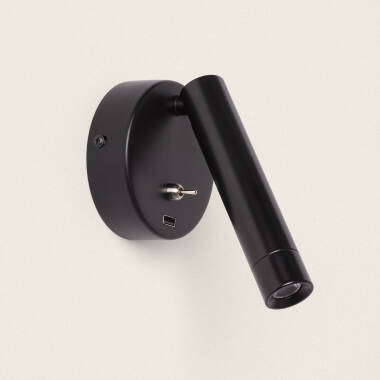
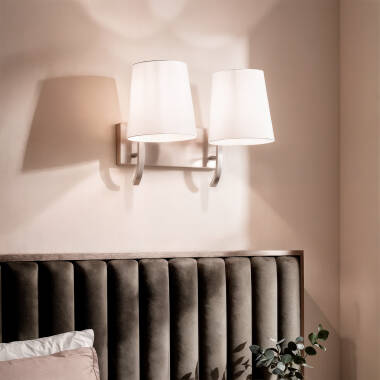
You may also be interested in
About Modern Wall Lamps
This type of luminaire is very useful when you need to add light without taking up space on furniture. Within the selection of wall lights, modern designs stand out for their simple lines, discreet finishes and ability to adapt to different rooms with a clean result.
What characterises modern wall lights?
Modern wall lights are not only designed to decorate, but also to provide comfortable, efficient light that is well integrated into the space.
Contemporary designs that are easy to integrate
A modern wall light usually stands out for the simplicity of its lines. This type of design makes it easy to use in very different interiors. In a room with furniture featuring straight lines, the wall light can maintain aesthetic continuity. In a space with warmer materials, it can add a sense of visual order. The key is that its design does not depend on ornaments, but on proportion, finish and the way it projects light.
Simple shapes for a more balanced décor
Formal simplicity does not mean a lack of personality. In modern lighting, a well-proportioned shape can have more impact than an overloaded design.
Visual balance depends on the relationship between the wall light, the wall and the nearby elements. On a headboard, for example, two symmetrical luminaires help organise the composition.
Finishes also influence this sense of balance. Light tones integrate better into bright walls, while dark finishes create contrast. Satin metals, opal glass or matte surfaces make it possible to add texture without breaking the sobriety of the overall look.
Functional lighting with decorative value
A modern wall light should provide useful light, but also improve the perception of the space. A wall luminaire can visually enlarge a room if it projects light upwards, create depth if it illuminates a side wall, or provide comfort if it generates soft indirect light.
In modern interiors, lighting is increasingly designed in layers. General ceiling lighting can provide basic visibility, but wall light points make it possible to create more pleasant atmospheres adapted to each moment. A living room may need more brightness during the day and lower light at night. A bedroom may require spot light for reading and soft light for resting.
That is why, in addition to the design, it is worth paying attention to colour temperature, luminous flux, beam angle and dimming options. For ambient use, between 100 and 300 lumens per point may be enough. For a functional area, it may be necessary to reach between 500 and 800 lumens, as long as the light is well distributed and does not shine directly into the eyes.
Where to place modern wall lights
Modern wall lights can be used in many areas of the home, but their location should respond to a specific function. They are not placed in the same way when they are used for reading, illuminating a mirror, marking a route or creating ambience.
Modern wall lights for contemporary living rooms
In contemporary living rooms, modern wall lights help create more flexible lighting. They can be placed next to the sofa, on a side wall, etc. Their function is to complement the main light and allow softer scenes during the afternoon or evening.
When installed on a wall near the television, it is advisable to avoid direct beams towards the screen. In these cases, designs with indirect light or upward and downward emission work better. Warm light at 2700 K is usually suitable for creating ambience without altering the colours of the furniture too much.
If the living room has a very refined aesthetic, shallow models help maintain a clean image. On the other hand, if the wall needs a decorative point, a more voluminous design can be chosen, provided the luminaire does not compete with the rest of the furniture.
Modern wall lights for bedrooms and headboards
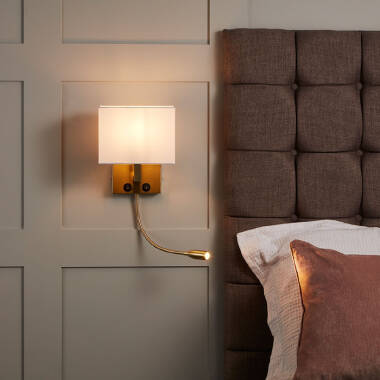
In bedrooms, modern wall lights are especially useful beside the headboard. They free up space on bedside tables and provide close light for reading, resting or night-time use. They also help create an ordered composition when installed symmetrically on both sides of the bed.
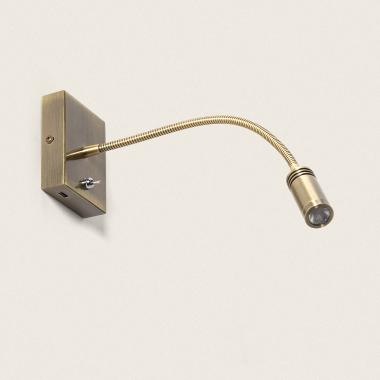
For reading, it is advisable to choose adjustable models or designs with a directed beam. The light should reach the book or the area of use without lighting the whole room or disturbing the other person. In this case, a flow of between 300 and 500 lumens per point can work well if the beam is correctly focused.
If the aim is to create ambience, wall lights with indirect or diffuse light are preferable. A temperature of 2700 K is comfortable in bedrooms because it encourages a more relaxed atmosphere.
Modern wall lights for hallways and passage areas
In hallways and passage areas, modern wall lights make it possible to illuminate routes without overloading the ceiling. They are a very practical solution in long corridors, entrance areas and transition zones between rooms.
The depth of the luminaire is important. In narrow spaces, it is advisable to choose compact designs that do not protrude too much from the wall. The height should also be considered to avoid knocks and glare. As a general reference, the centre of the wall light is usually placed between 150 and 170 cm from the floor, although this measurement should be adjusted to the design and width of the passage.
The light should be sufficient to move around safely, but it does not necessarily need to be intense. In a domestic hallway, support lighting between 100 and 150 lux can be comfortable. If several consecutive points are installed, it is preferable to distribute them regularly to avoid dark areas and excessive contrasts.
Modern wall lights for bathrooms and dressing rooms
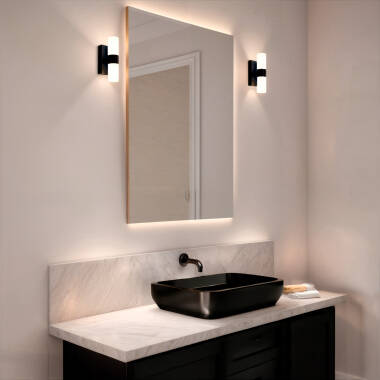
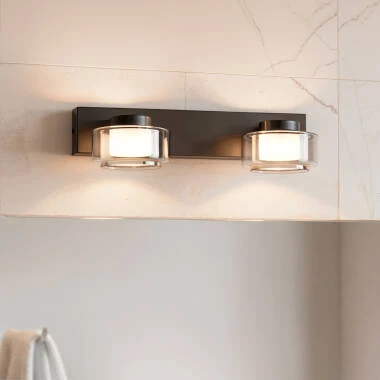
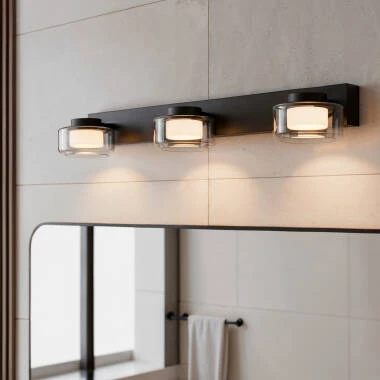
In bathrooms and dressing rooms, modern wall lights should combine aesthetics and functionality. In the mirror area, the light should allow the face to be seen clearly and without harsh shadows. For this reason, models placed on both sides of the mirror or in a linear format above it are usually more effective than a light located only on the ceiling.
For tasks such as shaving, applying make-up or getting ready, a colour temperature between 3000 K and 4000 K can provide good clarity. If the bathroom has a more relaxed approach, 3000 K is usually a good balance between functionality and warmth. A high colour rendering index is also recommended, preferably CRI 90 or above, to better perceive skin tones, clothing and finishes.
In wet areas, it is essential to check the IP protection rating according to the location of the light point. Near the washbasin, IP44 or higher may be recommended if there is a risk of splashing. In dressing rooms, on the other hand, the priority is usually uniform, well-distributed light with good colour rendering.
Modern wall lights for staircases
On staircases, modern wall lights fulfil both a practical and decorative function. They help mark the route, improve safety and accompany the architecture of the space. They can be placed on the side wall, on landings or on long flights where ceiling light does not reach evenly.
The lighting should avoid harsh shadows on the steps. Models with indirect light, grazing emission or controlled downward beams can work very well. On indoor staircases, a temperature of 3000 K usually provides enough clarity without feeling cold.
When several wall lights are installed, the distance between them should maintain visual continuity. On long flights, approximate spacing of 2 to 3 metres may be suitable, although this depends on power, height and beam spread. It is also advisable to avoid models that protrude too much, especially on narrow staircases.
Modern wall lights according to finish and material
The finish and material influence both the aesthetic integration and the type of light that is perceived. In modern designs, smooth surfaces and neutral tones are common because they allow clean and balanced lighting.
White wall lights for modern and discreet lighting
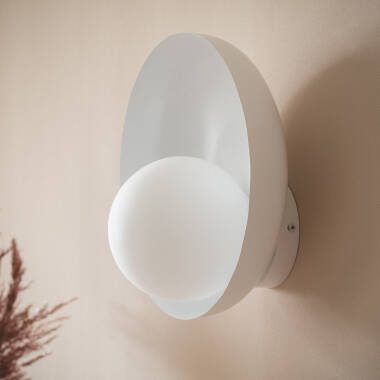
White wall lights are a very suitable option when looking for a light visual presence. On light walls, they allow the luminaire to integrate discreetly and keep the focus on the light rather than the object. This is useful in hallways, bedrooms, bathrooms and rooms where an ordered image is desired.
White also helps reflect light better. In models with indirect emission, it can enhance a softer distribution over the wall or ceiling. That is why it works well in small interiors or spaces with little natural light, where a dark finish could create more contrast than desired.
In modern décor, white does not have to feel cold. Combined with warm light at 2700 K or 3000 K, off-white walls or light wood, it offers a clean yet comfortable result. The key is to choose well-proportioned designs and avoid pieces that are too bulky if discretion is the goal.
Plaster wall lights for integrating light
Plaster wall lights are a very interesting solution when you want the luminaire to become part of the wall. Their finish allows very clean visual integration and, in many cases, they can be painted the same colour as the surface on which they are installed.
This type of wall light fits especially well in minimalist interiors, hallways, spaces with smooth walls and bedrooms where architectural lighting is desired. Since they do not stand out through material contrast, the focus falls on the light they project. Many models work with indirect emission or with beams upwards and downwards, creating decorative effects without the need for eye-catching pieces.
They are also useful when you want to maintain continuity on a long wall. Because they remain visually integrated, they allow several points to be placed without overloading the space. However, it is important to take care with the installation and paint finish so that the join with the wall looks clean.
Glass wall lights for more elegant light
Glass wall lights bring a lighter and more elegant aesthetic within modern décor. Glass can be transparent, opal or textured, and each finish changes the way the light is perceived.
Opal glass is useful when a softer and more homogeneous emission is desired. It reduces the direct view of the light source and helps avoid glare. That is why it works well in bedrooms, bathrooms, hallways and areas where the luminaire is at eye level.
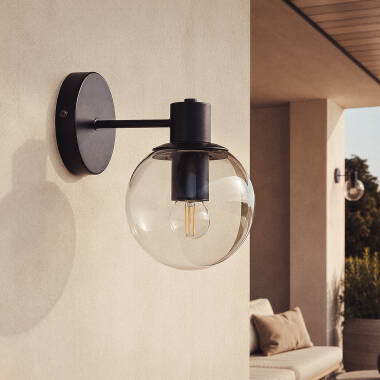
Transparent or textured glass has a more decorative value. It can add shine, texture and a more sophisticated visual effect, although it is advisable to choose suitable bulbs if the source remains visible. In these cases, opal bulbs or low-luminance bulbs help maintain visual comfort.
What type of light to choose for a modern wall light
The choice of light determines the final result of the wall light. The same luminaire can create a completely different effect depending on colour temperature, intensity and beam direction.
Warm light to create comfortable atmospheres
Warm light is recommended in resting areas. A temperature of 2700 K creates a cosy atmosphere and is suitable for ambient lighting. If a slightly clearer but still comfortable light is desired, 3000 K can be a good option.
In modern wall lights, warm light helps soften very straight designs or cold materials. It also improves the perception of wood and matte finishes.
It is advisable to avoid overly cool temperatures in resting areas, as they can create a less comfortable feeling. A 4000 K light can be useful in functional areas, but in living rooms and bedrooms it is usually less pleasant when used as ambient lighting.
Neutral light for functional or passage areas
Neutral light can be suitable in bathrooms, dressing rooms, hallways, staircases and areas where greater visual clarity is needed. A temperature from 3000 K to 4000 K makes it easier to recognise details and obstacles without creating an excessively cold feeling.
In hallways and staircases, the priority is to move around safely. Soft neutral light can improve the visibility of floors, doors and changes in level. In bathrooms and dressing rooms, it helps the face, clothing and finishes to be perceived better, especially if the luminaire has a good colour rendering index.
However, the choice should remain coherent with the rest of the home. If all rooms use warm light, introducing very neutral points can create an abrupt transition. In these cases, 3000 K is usually a balanced option between comfort and functionality.
Direct, indirect or decorative light depending on use
The direction of the light is one of the most important aspects of a modern wall light. Direct light is suitable for reading, support over a surface or areas where precision is needed. It should be well oriented to avoid glare.
Indirect light is more comfortable in living rooms, bedrooms and hallways. By being projected onto the wall or ceiling, it creates softer lighting and reduces contrasts. It is a good option when the wall light is used as ambient light or when a relaxed atmosphere is desired.
Decorative light, meanwhile, is used to create visual effects. It can generate vertical beams, wash a wall, highlight textures or add a point of architectural interest. In these cases, the power does not need to be very high; what matters is that the beam is well controlled and that the effect is coherent with the space.
How to choose modern wall lights according to the space
Choosing a modern wall light well means analysing the wall, the function of the light, the installation height and the relationship with the rest of the luminaires. A suitable design should integrate into the room and offer comfort in everyday use.
Size, proportion and depth of the wall light
The size should relate to the wall and the nearby elements. On a large wall, a wall light that is too small may lose presence. In a narrow area, a model that is too bulky may be uncomfortable or visually heavy.
Depth is especially important in hallways, staircases and passage areas. In these spaces, it is advisable to choose compact designs that do not protrude too much. In living rooms or bedrooms, greater presence may be acceptable if the wall light accompanies a headboard or a decorative wall.
It is also important to consider whether a single piece or several will be installed. When several points are placed on the same wall, the repetition should look intentional. Maintaining the same height, spacing and light temperature helps create a more ordered composition.
Recommended installation height
As a general reference, wall lights are usually installed between 150 and 170 cm from the floor to the centre of the luminaire. This height works well in living rooms, hallways and entrance areas, as long as the design does not cause glare or interfere with passage.
In bedrooms, the height depends on the use. Normally, the light point can be placed approximately between 95 and 120 cm from the floor, adjusting it to the height of the bed and the position for reading, watching TV, etc. If the luminaire is ambient, it can be placed slightly higher to distribute the light better.
In bathrooms, the installation should respond to the position of the mirror. If two side points are installed, it is advisable to place them approximately at face height to reduce shadows. If an upper horizontal wall light is installed, it should distribute the light evenly over the face and not only over the top part of the mirror.
Compatibility with the rest of the lighting
A modern wall light should not be chosen in isolation. It needs to work together with the general lighting, decorative lamps and natural light. If the room already has plenty of ceiling light, the wall light can focus on creating ambience. If the space is dark, it may need a more practical function.
It is also advisable to maintain consistency in colour temperature. Mixing 2700 K with 4000 K in the same room can create a disordered feeling, unless there is a clear functional reason. In living rooms and bedrooms, it is advisable to keep all main points between 2700 K and 3000 K. In bathrooms or dressing rooms, slightly more neutral light can be used.
Frequently asked questions about modern wall lights
What colour temperature is best?
For resting areas, warm light at 2700 K or 3000 K is usually the most recommended. It provides comfort and integrates well with domestic materials such as wood, textiles and walls in neutral tones. For more functional areas, light from 3000 K to 4000 K can work if more clarity is needed.
Can modern wall lights replace ceiling light?
In some small spaces they can act as the main lighting, but they usually work better as complementary light. In living rooms and bedrooms, they help create ambience, while in hallways or staircases they can cover passage lighting if they are well distributed. For comfortable general lighting, a resting room may need around 100 to 150 lux. In task areas, it may be necessary to work between 300 and 500 lux on the surface of use.
Which finish is easiest to integrate into modern décor?
White, matte, opal or wall-matching finishes usually integrate most easily. They are suitable when you want the luminaire to go unnoticed and the focus to fall on the light. If contrast is desired, dark or metallic finishes can be chosen, but they should be balanced with other elements in the space. The important thing is for the wall light to match the aesthetic of handles, taps, frames or furniture.
Is it better to choose direct or indirect light?
It depends on the use of the light point. For mirrors or specific areas, direct light is more effective. For living rooms, hallways or night-time ambience, indirect light is usually more comfortable because it reduces contrasts and avoids glare. In many interiors, the best solution is to combine both. A wall light can provide direct light when needed, while other indirect points help create softer and more balanced lighting.