
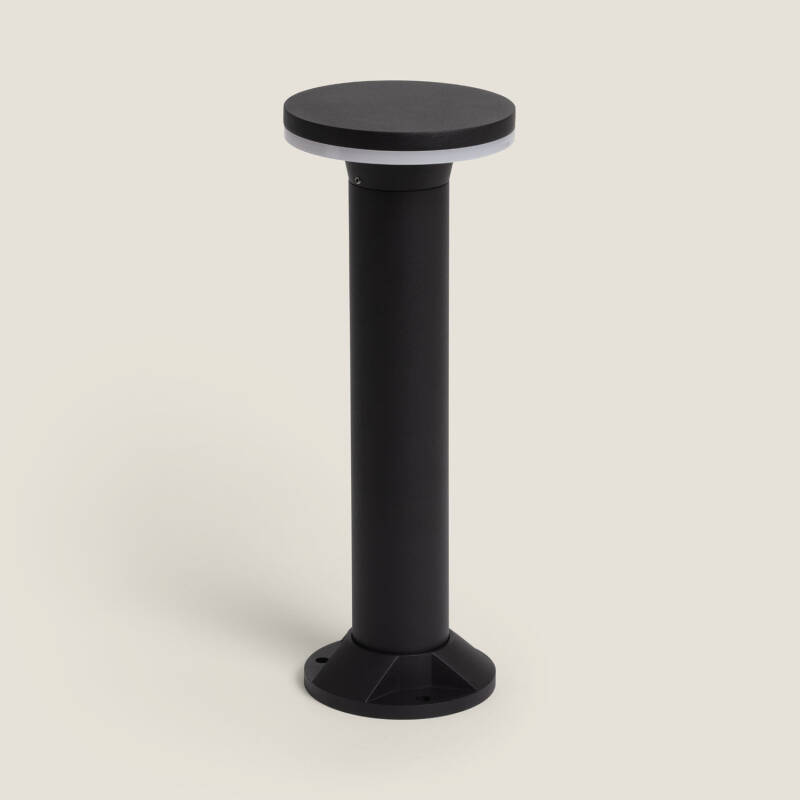
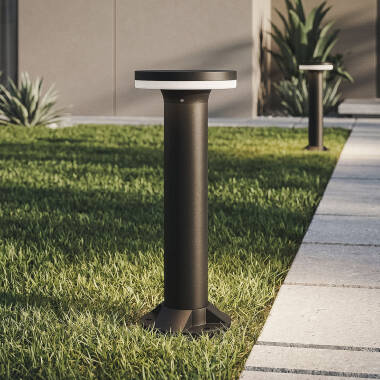
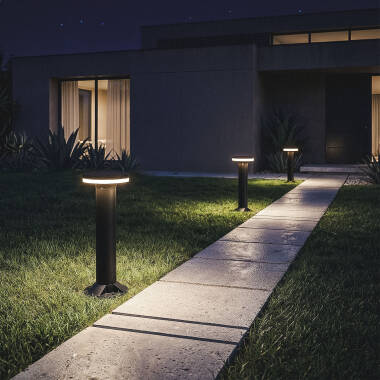
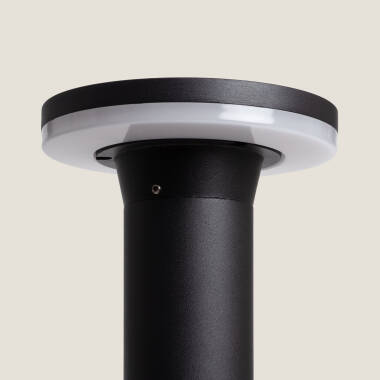
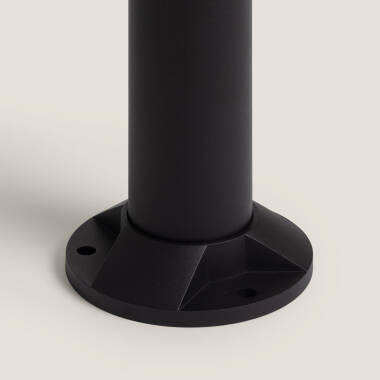
LED Bollard Lights illuminate gardens, paths and entrances with low-consumption vertical light, useful for marking routes and creating safe environments.
£64.99
LegacyRef 113558
Black
In Stock, delivery in 15-20 days
£41.99
IsobaRef 113294
Black
In Stock, delivery in 15-20 days
£41.99
IntiRef 6186
Daylight 5000K
In Stock, delivery in 24/48h
Brands related to this category


About LED Bollard Lights
These luminaires are one of the most recognisable solutions within LED Path lights. Their vertical format makes it possible to mark paths, define passage areas and provide ambient lighting in gardens, terraces or residential entrances.
LED Bollard Lights are especially useful when visible and well-distributed lighting is needed along a route. They are installed directly on the ground and raise the light point to improve the readability of the space.
They are commonly used in gardens, footpaths, home entrances, pedestrian routes and building access areas. In addition to providing visibility, they help organise the route and create a sequence of light that guides the user intuitively. In outdoor areas with vegetation or changes in level, this vertical reference is very practical.
LED technology makes it possible to work with reduced consumption and a long service life. In many residential uses, wattages between 5 W and 15 W are sufficient to illuminate passage areas comfortably, provided the luminous flux, height and light distribution are well chosen. In installations with many points switched on for several hours a day, this efficiency helps reduce consumption and maintenance.
The main difference between LED Bollard Lights and other systems is that they help mark the path in a visible and orderly way. As the bollard protrudes from the ground, it helps identify the path even before the light reaches the surface.
On residential footpaths, a line of bollards can mark the route from the entrance to the home. In residential communities and hotels, they help guide users towards communal areas or car parks. This light marking reduces the feeling of disorientation in large areas and improves the perception of order.
The height of the light point influences coverage. A low bollard illuminates closer to the ground and creates a discreet atmosphere; a taller one increases reach and improves visibility on wide paths or in areas with vegetation. In many residential gardens, heights of 40 to 80 cm offer a suitable balance between visual presence and comfort.
The spacing between bollards should be adapted to the luminous flux and the layout of the route. On narrow paths, a distance of approximately 2 to 4 metres can provide continuity without excessive light. In more open areas or with higher-power models, the spacing can be increased, always avoiding dark sections that interrupt the readability of the path.
LED Bollard Lights improve visual safety because they help identify obstacles, edges, changes in level, etc.
Safe lighting does not mean installing very powerful luminaires. In passage areas, moderate and uniform light usually works better than very intense points separated by dark areas. The user needs to see the route of the path, detect possible obstacles and perceive the limits of the space without glare.
At entrances with steps or slopes, placement must be planned more carefully. Bollards should be positioned so that they mark changes in level without creating shadows that hide the edge of the step. If the section is complex, it may be advisable to combine bollards with Step lights or support spotlights to reinforce critical points.
There are also models equipped with a motion sensor that activate only when they detect presence. This option can be interesting in private entrances or areas where the aim is to reduce energy consumption while maintaining good visibility when needed.
In addition to their practical function, LED Bollard Lights add decorative value. Their shape, finish and type of light influence the appearance of the garden, both when switched on and off. For this reason, it is advisable to choose models that fit the style of the surroundings, not only the amount of light required.
In contemporary gardens, bollards with straight lines and dark finishes usually integrate well with gravel surfaces or structured vegetation. In more natural spaces, discreet designs, neutral tones or finishes that do not compete with plants, wood or stone may work better. The key is for the luminaire to accompany the design without becoming an excessive visual element.
Colour temperature also affects the atmosphere. In gardens and terraces for residential use, warm light from 2700 K to 3000 K is usually more pleasant, because it respects the perception of vegetation better and creates a comfortable atmosphere. In communal entrances or more functional passage areas, neutral light at 4000 K can improve the readability of the space without feeling as cold as higher temperatures.
On large terraces, bollards can define areas without the need for physical barriers. Placed next to vegetation zones and changes in paving, they help separate relaxation or circulation areas. This decorative and organisational function makes them a useful tool for projects where lighting forms part of the design of the space.
Bollards, commonly known as LED Bollard Lights, should be chosen taking into account their height, type of emission, protection rating and the resistance of their materials:
The height of the bollard determines the lighting coverage and the visual presence of the luminaire.
Height should be chosen together with luminous flux. A low bollard with too many lumens can create intense and uncomfortable light points. A tall bollard with insufficient flux can fall short on wide paths. In many outdoor uses, the balance between height, beam angle and wattage is more important than choosing the brightest model.
Light distribution defines how the bollard actually illuminates. Some models emit light in 360 degrees, creating radial lighting around the luminaire. Others direct the flux downwards, to one side or through controlled openings that reduce glare.
In decorative gardens, it may be interesting to combine bollards with controlled light with other lighting points. The bollard guides movement, while spotlights or point luminaires highlight trees or walls. This prevents the bollard from having to fulfil every function and creates more balanced lighting.
LED Bollard Lights must be prepared to withstand rain, dust, moisture and temperature changes. The IP protection rating is the first detail worth checking. In semi-covered areas, IP44 may be sufficient if the luminaire does not receive direct water, but for exposed gardens and paths, IP65 or higher is recommended.
Material resistance is also important. Treated aluminium, stainless steel suitable for outdoor use and treated glass are common in bollards designed for weather exposure.
Impact resistance, indicated by the IK code, may be relevant in communal areas, gardens with frequent maintenance or routes where bicycles or machinery may pass. A bollard installed next to a path is more exposed to impacts than a wall luminaire, so the robustness of the body and base directly affects its service life.
Choosing the right bollard requires analysing the size of the area, the width of the path, the presence of vegetation, the level of traffic and the atmosphere to be created. A small garden does not need the same type of bollard as a communal entrance or a wide path in a professional space.
The decision should combine technical and aesthetic criteria:
Low bollards are a suitable option for residential gardens, small paths and areas where discreet lighting is desired. Their reduced height makes it possible to mark the route without creating an excessive visual presence during the day.
In gardens with low vegetation or narrow paths, models from 30 to 50 cm can provide soft light close to the surface. If they are placed regularly, they help guide movement without turning the garden into an overlit space.
It is important to prevent plants from blocking the light emission. In areas with shrubs or fast-growing vegetation, it is advisable to leave enough distance between the bollard and the plant mass. It may also be advisable to choose slightly taller models if the surroundings are expected to change over time.
Taller bollards are recommended for wide paths, communal areas, professional passage areas and spaces where more extensive coverage is needed. By raising the light point, they can illuminate a larger surface and improve visibility at a greater distance.
On wide paths, a bollard of 60 to 100 cm can offer better distribution than a low model. This height helps the light reach the centre of the route instead of remaining limited to the edges. It also helps the luminaire remain visible during the day, which is useful in areas with traffic.
At building entrances or garage access points, it may be advisable to choose robust designs. The priority should be to illuminate the surface without dazzling users or projecting light towards nearby windows. In these cases, neutral light at 4000 K may be suitable if greater perception of detail is desired, although in residential settings warm light is still a very valid option.
The spacing between bollards can increase when height and luminous flux are higher. Even so, it is not advisable to leave dark sections on main routes.
The type of light of an LED bollard should be chosen according to the atmosphere and function of the space. Warm light, between 2700 K and 3000 K, is the most recommended in gardens and residential areas. It provides a comfortable feel and combines well with vegetation and natural materials.
Neutral light, around 4000 K, offers a clearer perception of the surroundings and may be suitable for communal entrances, garage areas or professional spaces.
Cool light, above 5000 K, is used less in garden bollards because it can create an atmosphere that feels too technical and less welcoming. It may make sense in specific security applications or spaces where more intense visibility is prioritised, but it is not usually the most balanced option for residential areas.
In addition to models with integrated LED, there are bollards that work with replaceable bulbs, normally with standard caps. This option makes it possible to replace the light source when necessary or choose different colour temperatures according to the user’s preferences.
There are also bollards that incorporate a solar panel and integrated rechargeable battery. These models can be an interesting alternative in gardens where there is no nearby electrical installation or when a quick solution is needed to illuminate with low energy consumption.
LED Bollard Lights work very well as the main orientation lighting, but many outdoor spaces need to combine different luminaires to solve each area correctly.
Combining bollards with other systems makes it possible to create different layers of light according to the needs of each space:
Recessed deck lighting is a very useful complement to LED Bollard Lights when the aim is to add upward light or highlight specific elements. While the bollard provides a vertical reference and guides the route, the ground light works from a low position to illuminate façades, trees or garden details.
On paths, ground lights can reinforce specific points, such as steps or changes of direction. On façades, they make it possible to create upward lighting effects that bollards cannot achieve with the same precision. In gardens, they help give prominence to plants or trees without relying solely on passage lighting.
The combination should be planned to avoid excessive light. If the bollards already illuminate the route correctly, the ground lights should not compete with them, but rather complement the overall scheme.
Garden Step Lights make it possible to direct light towards plants, paths or decorative elements of the outdoor landscape. They are a flexible solution when specific areas need to be highlighted without installing a permanent vertical luminaire such as a bollard.
Unlike bollards, which usually maintain a fixed position and a more stable orientation function, garden spotlights allow the beam to be adjusted and the lighting to be adapted to the vegetation. This is useful in gardens that change as plants grow or in areas where the lighting effect is intended to vary according to the season.
In a balanced project, bollards can mark the main path and garden spotlights can add depth around it. For example, a path lit with bollards can be complemented with spotlights directed at trees, hedges or low walls. This creates an outdoor space that is safer and more visually attractive.
In residential gardens and small paths, bollards from 30 to 50 cm usually offer discreet lighting close to the ground. For wide paths, models from 60 to 100 cm provide greater coverage and visibility. The choice depends on the width of the route, the presence of vegetation and the required light level.
On paths, a spacing of approximately 2 to 4 metres usually works well to achieve visual continuity. If the bollard is taller or has greater luminous flux, the distance can be increased. In areas with steps or changes in level, it is advisable to reduce the spacing to improve safety.
For gardens, entrances and paths exposed to rain or irrigation, it is advisable to choose bollards with IP65. In semi-covered areas, IP44 may be sufficient if the luminaire does not receive direct water. In addition to the IP rating, it is worth checking materials, seals, screws and base stability.
In gardens and residential routes, wattages between 5 W and 10 W are usually sufficient if the light distribution is efficient. In wide entrances or professional-use areas, wattages from 10 W to 40 W can be used. More than watts, it is advisable to assess the lumens, bollard height and beam direction.
Warm light from 2700 K to 3000 K is the most recommended for gardens, terraces and residential areas because it creates a more comfortable atmosphere. Neutral light at 4000 K may be suitable on paths or in professional spaces where greater detail perception is needed. Cool light is used less in gardens because of its more technical effect.
They can cause glare if the LED source remains visible or if the luminous flux is excessive for the installation height. To avoid this, it is advisable to choose models with downward emission or controlled optics. On paths and seating areas, visual comfort should take priority over intensity.