
Path lights
LED path lights allow different areas to be illuminated safely, with low energy consumption and a carefully integrated aesthetic in gardens, entrances, terraces and walkways.


Our featured products from Path lights
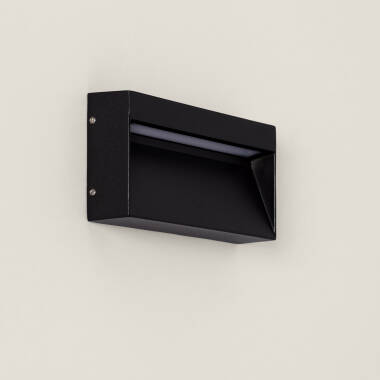
£31.79
Ref 5355
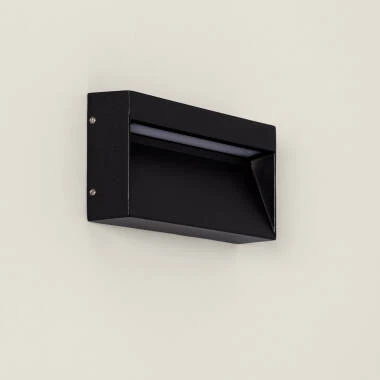
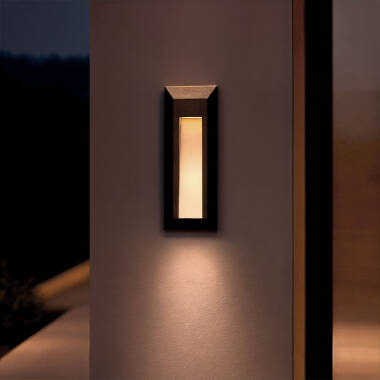
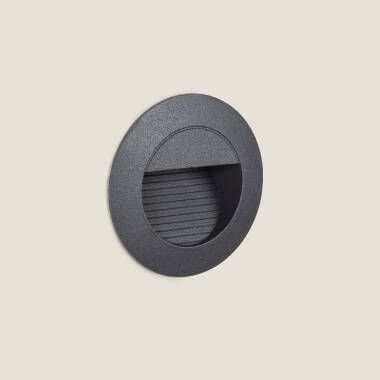
AluminiumColumbia 6W Outdoor Aluminium Surface Mounted LED Wall Light Black
Warm White 3000K
In Stock, delivery in 24/48h
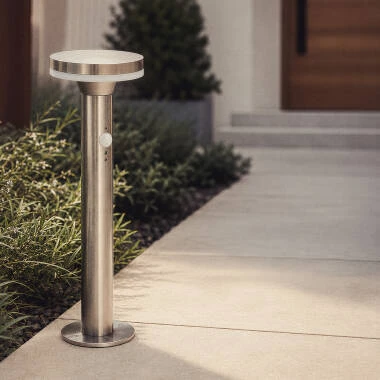

£56.99
Ref 6184
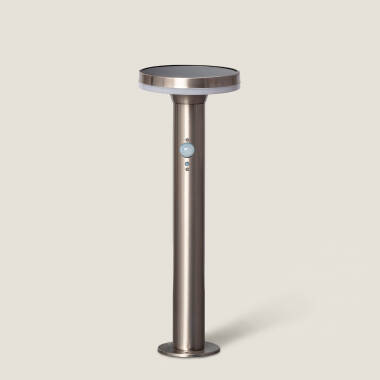
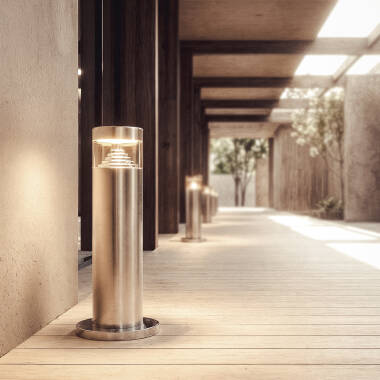
Helios 6W Stainless Steel Solar LED Bollard with PIR Motion Detector 45cm
Cool White 4000K
In Stock, delivery in 15-20 days
Premium
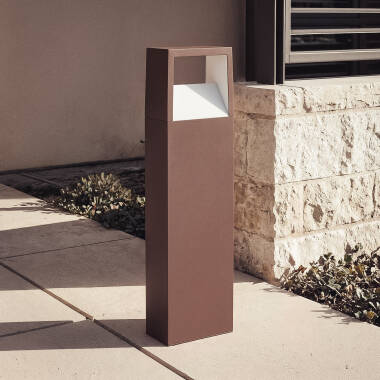
£79.99
SheffieldRef 114698
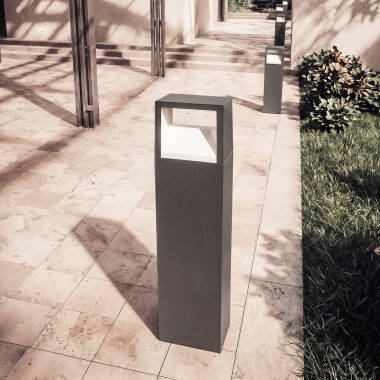
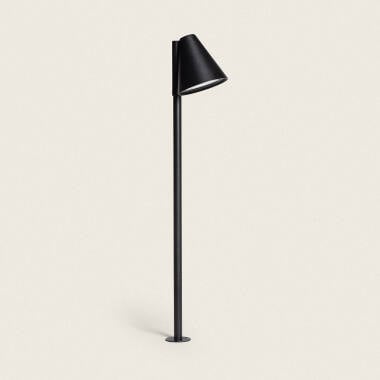
AluminiumSheffield 9W Outdoor Aluminium LED Bollard 50cm
Oxide
In Stock, delivery in 15-20 days
- -49%
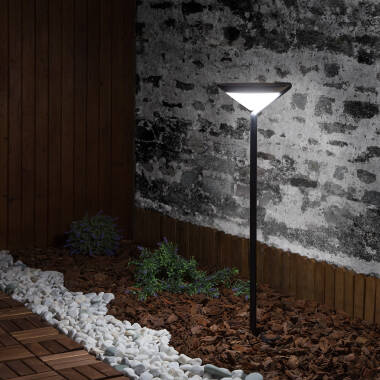
Before £76.99
£38.99
Ref 6268
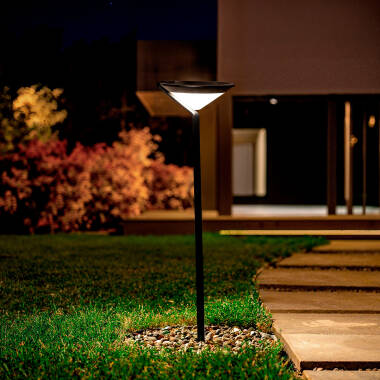
AluminiumYuma Big Solar LED Bollard with Radar Motion Detection 80cm
Daylight 5000K
In Stock, delivery in 15-20 days





Brands related to this category


About Path lights
LED lighting fulfils a practical function, but it also influences the perception of space, safety and visual comfort. A well-chosen LED path light guides the route, defines areas and helps create more pleasant environments without the need to install high-power luminaires.
What are LED path lights?
LED path lights are luminaires designed to mark or illuminate outdoor and indoor areas using controlled light, usually installed at a low or medium height. Their purpose is to provide visibility where it is needed.
LED path lights work with more contained light beams and distributions designed to prevent glare. This feature is important in gardens, residential communities, hotels, restaurants and detached homes, where the light needs to support the use of the space without becoming intrusive. In many cases, lighting of between 100 and 400 lumens per point may be enough to guide movement, while access areas or entrances may require higher levels when greater visibility is needed.
The use of LED technology helps reduce energy consumption compared with traditional halogen or fluorescent solutions. An LED path light can operate with common wattages of 3 W, 6 W or 10 W, depending on its size and function, while maintaining good luminous efficiency. In addition, its service life is usually between 20,000 and 50,000 hours, reducing replacement frequency and making maintenance easier in installations with many luminaires.
Outdoors, it is also essential to assess protection against dust and moisture. For areas exposed to rain or temperature changes, it is advisable to choose path lights with a minimum protection rating of IP44 in semi-covered spaces and IP65 or higher when the luminaire is fully exposed to the weather. If it is installed in busy areas or where it may receive knocks, it is also recommended to check the impact resistance rating, indicated by the IK rating.
Types of LED path lights
There are different types of LED path lights depending on the installation point, the direction of the light and the effect you want to achieve. Each format responds to a specific need, so it is worth analysing the environment before choosing:
Pillar Lights for entrances and walls
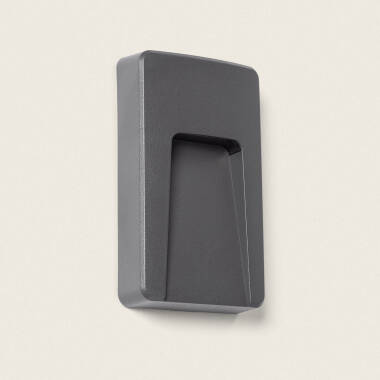
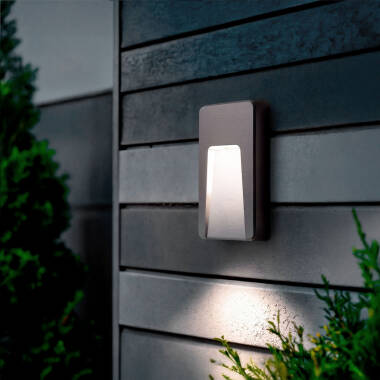
Pillar Lights are installed on pillars or low walls, making them highly practical for access areas, home entrances and stairways next to side walls. As they are raised above ground level, they can project light further than a recessed path light or a low light point.
This type of luminaire is common in residential communities, raised terraces and entrances with boundary walls. Its main advantage is that it uses an existing structure to install the light point without needing to place posts or additional elements on the paving. In addition, as it is positioned on a wall, it reduces the risk of accidental knocks while people move through the area.
From a technical point of view, it is advisable to choose models with a weather-resistant body and to consider the light distribution. Some models emit light through 360 degrees, which is useful for ambient lighting in open areas, while others project the light downwards or sideways, concentrating the illumination on specific routes. At home entrances, a warm light of 3000 K usually creates a welcoming impression, while in frequently used access areas, neutral light can provide greater clarity.
Recessed deck lighting to illuminate paths and façades
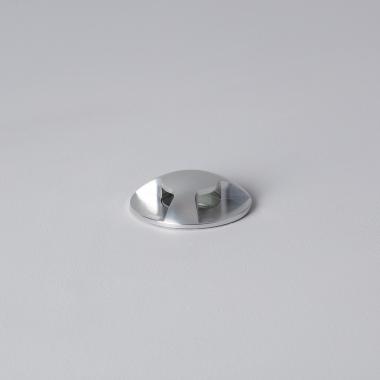
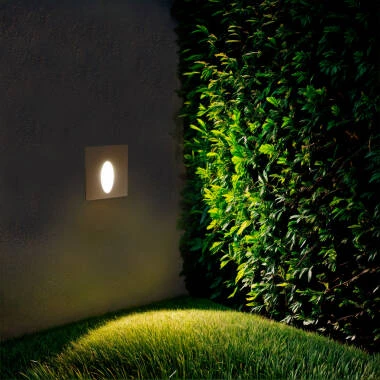
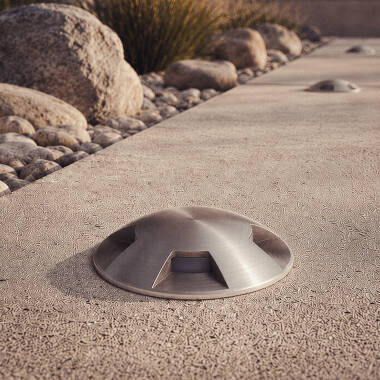
Recessed deck lighting is installed recessed or semi-buried in the paving.
When placed along a route, it helps guide movement without taking up visual space. In narrow access areas or paths, this solution keeps the area clear and avoids obstacles.
On façades and walls, recessed deck lighting can create very defined vertical lighting effects. A narrow beam can accentuate columns and textures, while a wider beam washes large surfaces evenly. In decorative applications, warm colour temperatures between 2700 K and 3000 K usually respect natural materials better and create a more pleasant atmosphere.
Installation requires attention to drainage. As the spotlight is in contact with the paving or ground, it must have suitable water protection, but it also needs a base that prevents water accumulation. In walkable areas, it is also necessary to check whether the model can withstand foot traffic or loads, as not all recessed spotlights are designed to support heavy pedestrian traffic or occasional vehicle passage.
Step lights for functional and decorative lighting
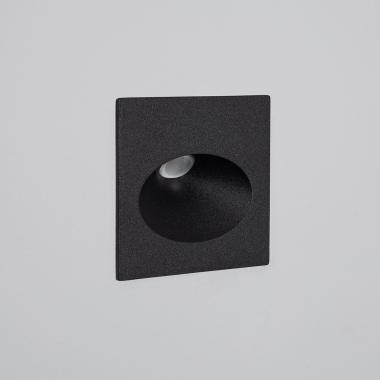
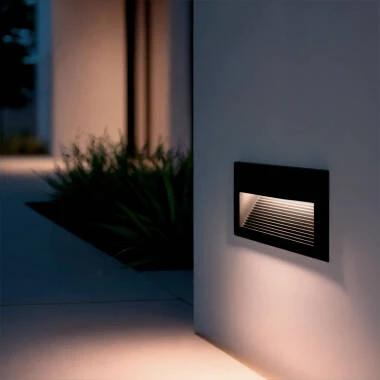
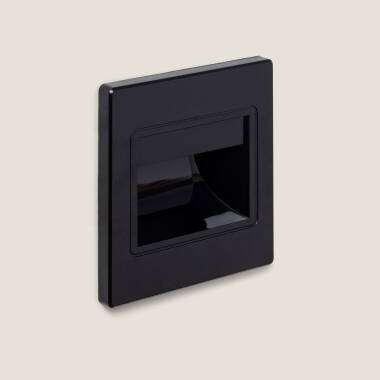
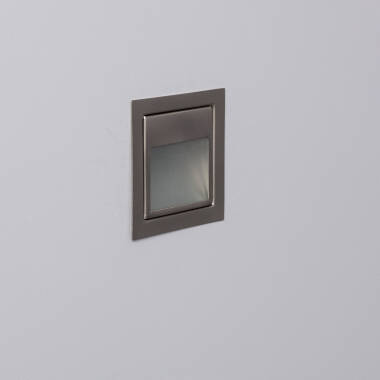
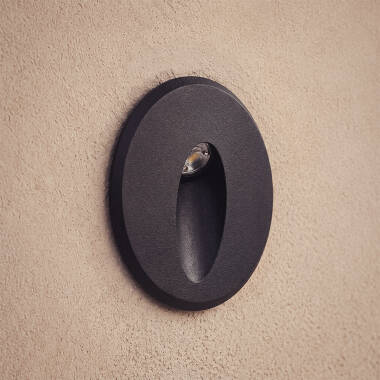
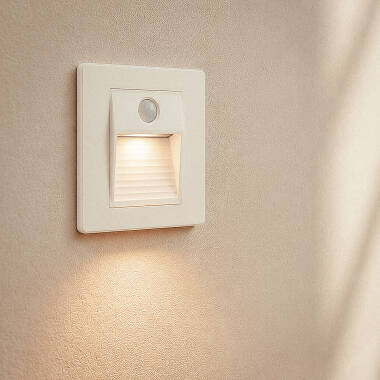
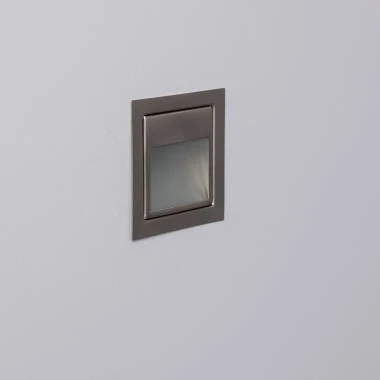
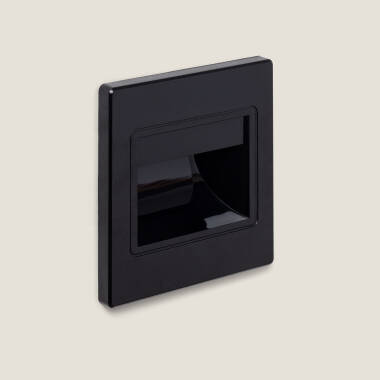
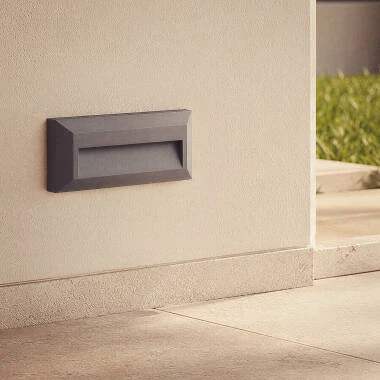
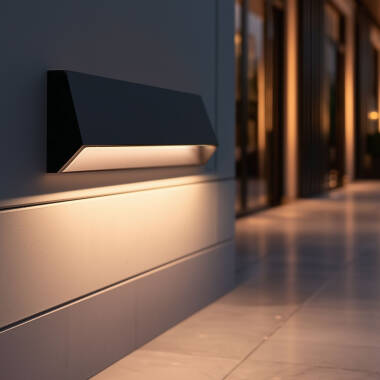
Step lights are fixed to vertical surfaces such as façades, stair sides or terrace walls. They are a very versatile option because they provide light without occupying floor space and can work both as orientation lighting and as a decorative feature.
In residential settings, they are often used in porches, side access areas and corridors. In commercial spaces, they help maintain continuous lighting along routes. Their wall installation makes maintenance easier and prevents interference with furniture or pedestrian movement.
To choose correctly, it is worth considering the installation height. If they are placed too high, they can behave more like wall lights than orientation path lights. If they are installed too low, they should have good mechanical resistance and a distribution that avoids uncomfortable shadows. In many passage areas, an approximate height of between 40 and 80 cm allows the floor to be lit effectively without creating intrusive light.
Outdoor LED Path lights
Outdoor LED Path lights are specifically designed to illuminate areas exposed to the weather, such as garden paths, home entrances, patios, terraces or pedestrian routes. Their main function is to provide comfortable and safe orientation light, helping to mark the way without creating excessive illumination.
Unlike other more decorative formats, outdoor LED path lights are usually chosen for their resistance and their ability to maintain continuous lighting in open spaces. They can be installed beside paths or in access areas where visibility needs to be improved at night.
For this type of installation, it is advisable to choose models with a suitable protection rating against rain, dust and moisture. In fully exposed areas, the recommended option is to choose path lights with IP65 or higher protection, while in porches or semi-covered terraces a lower rating may be sufficient if the luminaire does not receive direct water.
LED Bollard Lights for gardens and walkways
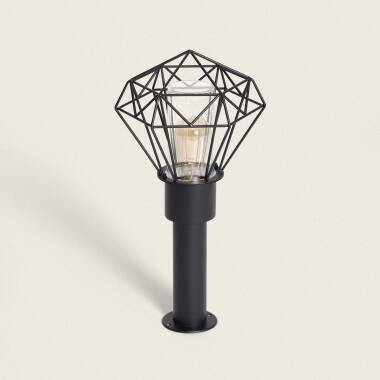
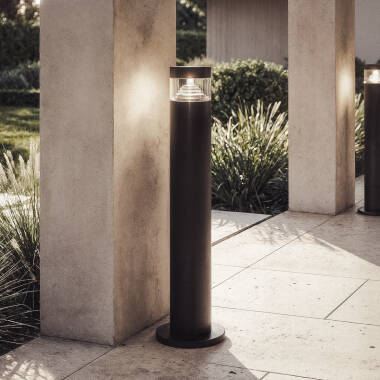
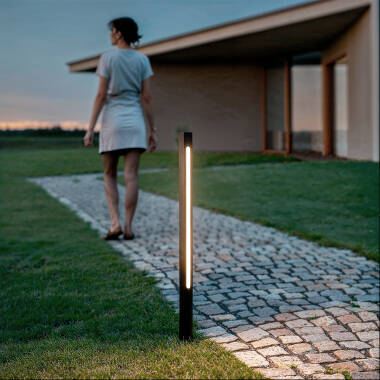
LED Bollard Lights are vertical luminaires of low or medium height designed to be installed on the ground. They are commonly used in gardens, pedestrian paths, building entrances and outdoor areas where continuous orientation lighting is required.
Unlike a recessed or wall-mounted path light, the bollard has a physical presence in the space. This can be an advantage when you want to visually define a route or reinforce the organisation of an area. In large gardens, for example, a line of bollards helps guide movement from the entrance to the home.
Height is one of the most important criteria. Low bollards, around 30 to 50 cm, create a more discreet light close to the ground. Models from 60 to 120 cm provide greater coverage and are more visible, so they can work better in access areas and communal zones. If the luminaire is close to plants, it is important to prevent vegetation from blocking the light beam or creating excessive shadows on the path.
In installations with several bollard lights, it is important to keep the colour temperature and height consistent. Mixing warm and neutral tones along the same route can create an uneven impression. For gardens and relaxation areas, 3000 K is usually a balanced choice, as it provides good visibility while preserving a warm atmosphere. In professional transit areas, 4000 K may be more functional.
Garden Step Lights to highlight plants and paths
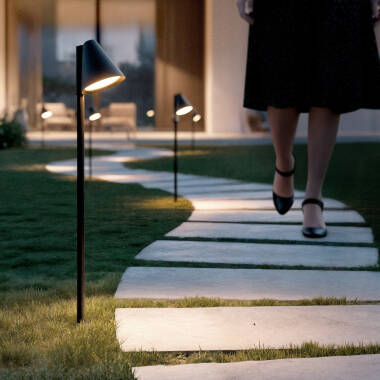
Garden Step Lights are designed to illuminate specific elements of the outdoor landscape, such as plants, trees, paths, low walls and similar features. They can be installed with a spike or on a base, depending on the type of ground and the desired effect.
Their main value lies in their adjustability. Unlike a conventional path light, which usually provides a more stable and repeated light, a garden step light allows the beam to be directed towards a specific point. This makes it a suitable solution for highlighting the texture of a tree or creating visual depth in a garden at night.
On paths, garden step lights can be used as complementary lighting, provided the beam is not aimed directly at the line of sight. A low, crossed orientation helps mark the path without causing glare. For plants and shrubs, it is advisable to adjust the distance to avoid harsh shadows or overexposed areas caused by excessive light. A light that is too close can create very strong contrasts, while a greater distance softens the effect and improves integration.
The beam angle determines the result. A narrow angle, for example between 15 and 30 degrees, is useful for accentuating trunks, vertical plant forms or upright elements. A wider angle, of 60 degrees or more, makes it possible to illuminate masses of vegetation, rockery areas or small groups of plants. In residential gardens, moderate wattages are usually sufficient; excessive intensity can reduce naturalness and increase energy consumption without improving the visual experience.
It is also important to consider wiring and protection against moisture. In areas with automatic irrigation, the lights must be prepared for frequent splashes and temperature changes. If they are installed with a spike, it is advisable to plan a stable location and avoid points where the ground becomes waterlogged.
Differences between Garden Step Lights and LED Bollard Lights
Garden step lights and LED bollard lights can coexist in the same project, but they do not perform exactly the same function. The bollard organises the route and provides recognisable, stable light. The garden step light, on the other hand, works in a more targeted and adjustable way, highlighting specific elements of the landscape.
On a main path, bollard lights usually provide a clearer reading of the route because the user can easily identify where to move and perceive the limits of the space. Garden step lights, by contrast, can accompany that route by illuminating nearby plants or walls, but they do not always replace pathway lighting if the path requires continuity.
Their visual presence during the day is also different. A bollard forms part of the design even when it is switched off, so it is worth choosing a finish that is consistent with the surroundings, while a garden step light usually remains more discreet. From a lighting point of view, the bollard usually emits a more open and controlled light towards the ground, while the garden step light allows the direction and angle to be adjusted.
Technical criteria for choosing LED path lights
This luminaire must withstand variable environmental conditions and provide lighting suited to the real use of the space.
IP rating and outdoor installation
The IP rating indicates protection against the ingress of dust and water. On a covered terrace or porch, IP44 may be valid if the luminaire does not receive direct rain. In gardens, paths or exposed areas, it is advisable to choose IP65 or higher. This protection improves safety against rain and ambient moisture.
In ground spotlights or recessed luminaires, the IP rating is even more important because contact with accumulated water may be greater. However, a high protection rating does not replace correct installation. Drainage, watertight connections and the use of suitable outdoor materials are essential to prevent electrical faults or corrosion.
Colour temperature and visual comfort
Colour temperature should be chosen according to the atmosphere and function. In gardens, terraces and relaxation areas, warm tones between 2700 K and 3000 K help create a more comfortable environment and reduce the sensation of intense artificial light. In entrances, car parks or professional-use routes, neutral light at 4000 K can improve the visibility of obstacles or steps.
Colour temperatures should not be mixed without a clear reason. A path lit at 3000 K and a façade at 4000 K can work if the aim is to differentiate areas, but a random combination can produce an inconsistent result. For residential projects, keeping the same colour temperature across the entire family of path lights usually provides greater visual coherence.
Wattage, lumens and light distribution
Wattage indicates energy consumption, but lumens indicate the amount of light emitted. With LED path lights, it is not always best to choose the model with the highest lumen output. Excessive light can cause glare, invade relaxation areas or create light pollution. To mark paths, moderate values such as 100-300 lm are usually sufficient; for main entrances or areas with steps, it may be necessary to increase the luminous flux.
Light distribution is as important as quantity. A luminaire with downward emission can illuminate the ground better with less wattage than a path light that emits light in all directions. In small gardens, controlled light prevents the space from feeling saturated. In large areas, a more open distribution can reduce the number of points required.
Materials and impact resistance
The materials must withstand moisture, solar radiation and temperature changes. Treated aluminium and stainless steel suitable for outdoor use are common options in LED path lights.
Impact resistance, indicated by the IK rating, is useful in busy spaces, communal areas and public zones. A path light installed next to a walkway may receive accidental knocks, so a robust body and stable fixing increase the durability of the installation.
When to choose a pillar light instead of a ground or wall path light
The choice between a pillar light, a ground path light or a wall path light mainly depends on the available surface, the direction of the light and the type of route. When there is a wall or pillar next to the area to be illuminated, a pillar light is usually a clean and efficient solution because it raises the light point without adding elements to the passage.
In open paths or landscaped areas without nearby walls, a ground light or bollard offers greater freedom of placement. It allows the route to be marked from both sides and the distance between luminaires to be adapted to the path layout. On pedestrian paths, an approximate spacing of 2 to 4 metres between points can work well, although the real distance will depend on the luminous flux, the luminaire height and the level of darkness in the environment.
Wall path lights are preferable when the route runs alongside a façade or vertical wall. In these cases, they avoid occupying floor space and reduce the risk of impacts. They are also suitable for stairs, ramps and side corridors, where light directed towards the paving improves safety by identifying changes in level.
Frequently asked questions about LED path lights
What wattage does an LED path light need?
To mark paths or passage areas, many LED path lights work correctly with wattages between 3 W and 10 W, provided they have efficient light distribution. At main entrances, on walls or in areas where more visibility is needed, models from 10 W to 15 W can be used. More than wattage, it is worth checking lumens and beam angle, because two luminaires with the same watts can deliver very different results.
What IP rating should an LED path light have?
In gardens and exposed outdoor areas, it is recommended to choose path lights with IP65 or higher. This level of protection offers greater safety against rain, irrigation and dust. In semi-covered spaces, such as porches or protected terraces, IP44 may be sufficient if the luminaire does not receive direct water.
Is warm or neutral light better for LED path lights?
Warm light, between 2700 K and 3000 K, is usually the most suitable option for gardens, terraces, patios and residential areas because it creates a comfortable atmosphere and reduces the feeling of harsh lighting. Neutral light, around 4000 K, is useful in entrances, car parks, residential communities or professional spaces where greater perception of detail is required.
How many metres apart should LED path lights be installed?
On pedestrian paths, an approximate spacing of 2 to 4 metres between path lights usually provides balanced orientation, although the real distance depends on height, lumens, beam angle and the colour of the paving. A light surface reflects more light than a dark surface, so it may require fewer points. In areas with steps or changes in level, it is advisable to reduce the spacing to improve safety.
Can LED path lights be used as main lighting?
They can be used as main lighting in gardens, small terraces or outdoor and indoor orientation areas, but they do not always replace higher-output luminaires in areas that require high visibility. Their main function is to mark routes and provide controlled light. In large areas, they are usually combined with other light points.
What is the difference between an LED path light and a wall light?
An LED path light is usually installed at a low or medium height and is designed to guide movement or illuminate specific areas of the ground. A wall light is normally installed on a wall at a greater height and provides more general or decorative lighting on façades and terraces. In practice, the two can complement each other, as the wall light provides the main light and the path light improves the readability of the route.