
Round LED Downlights
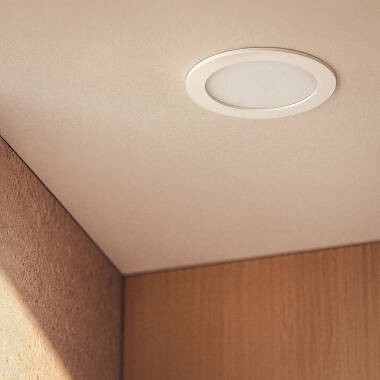
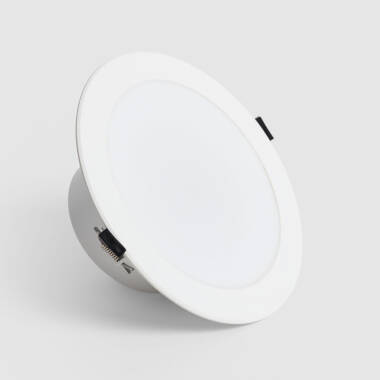
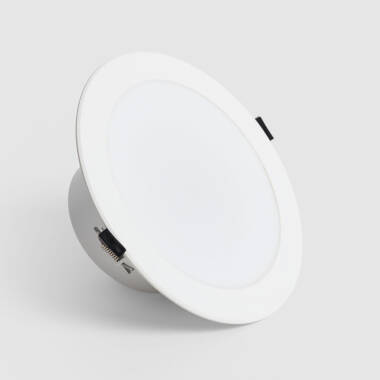
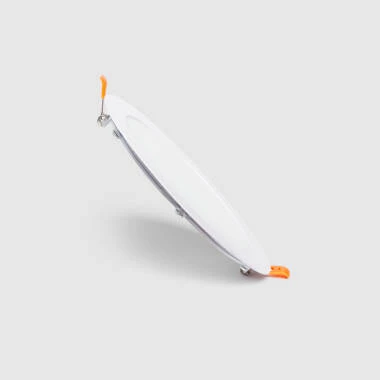
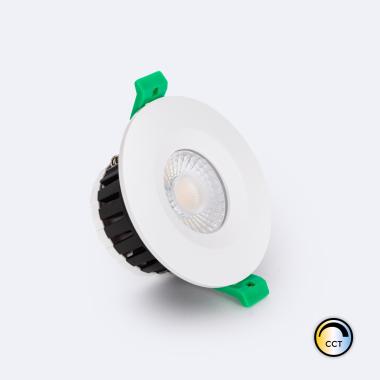
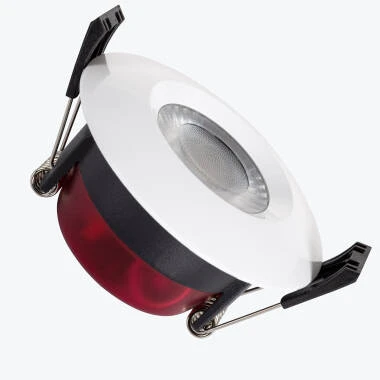
Round LED downlights provide versatile, discreet and efficient recessed lighting, suitable for creating uniform general light in homes, shops and professional spaces.
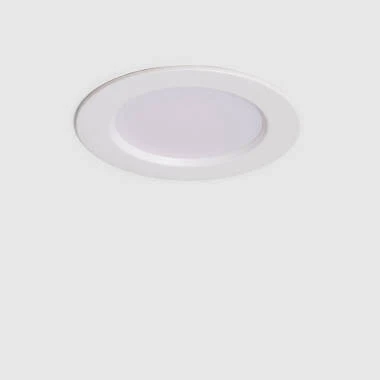
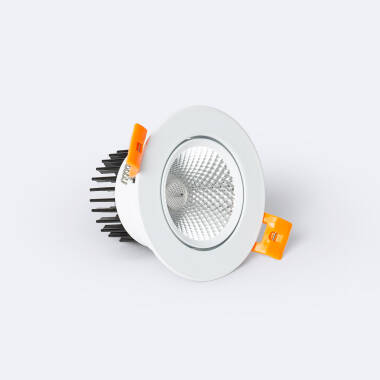
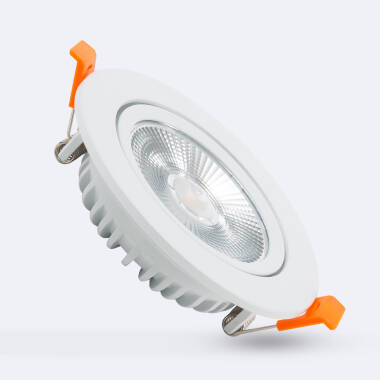
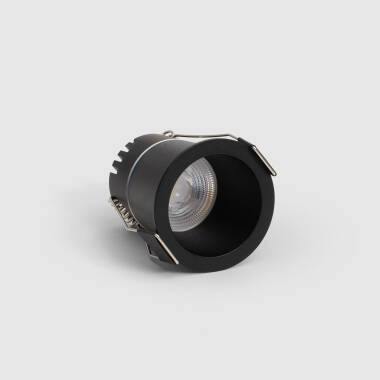
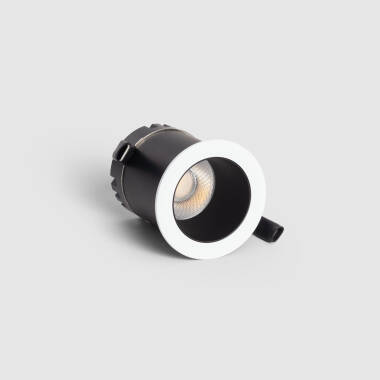
Our featured products from Round LED Downlights
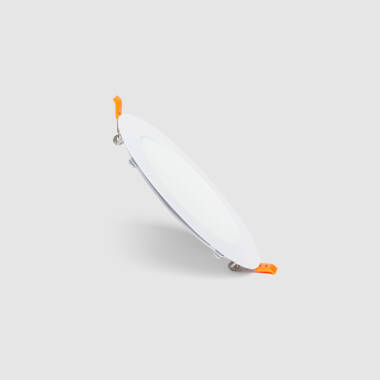
Essential
£2.49
 (44)
(44)- Wattage 6 W
- Voltage Range 220-240V AC
- Lumen 600 lm
3 options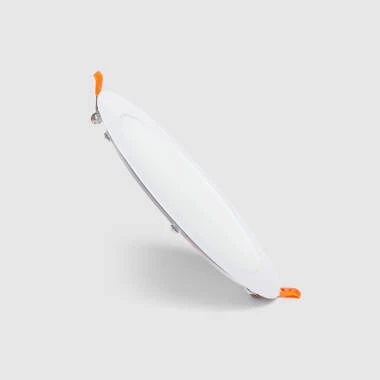
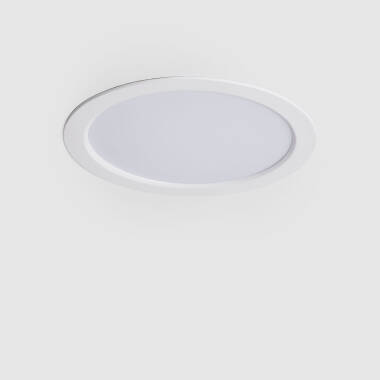
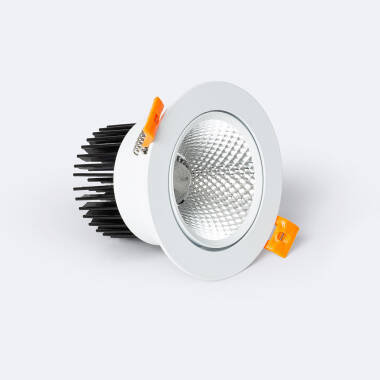
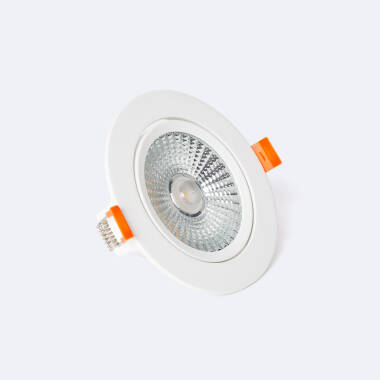
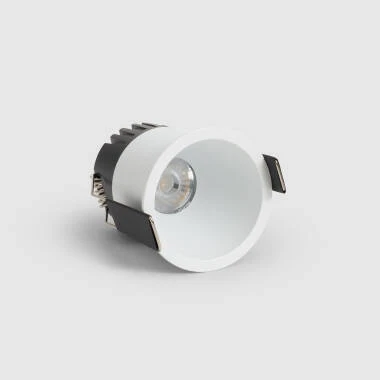
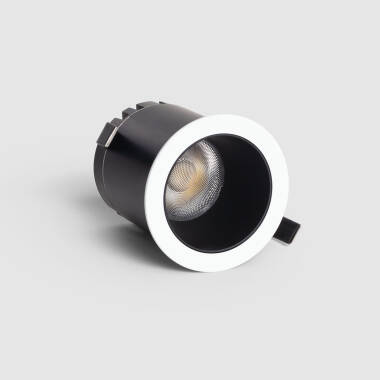
Essential
£3.69
(47)- Wattage 12 W
- Voltage Range 220-240V AC
- Lumen 1200 lm
3 options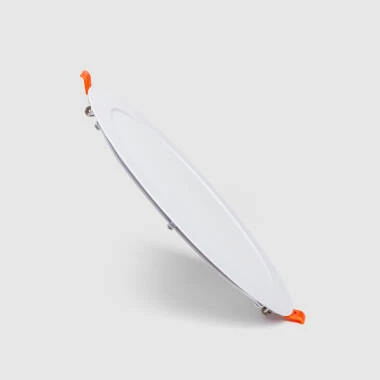
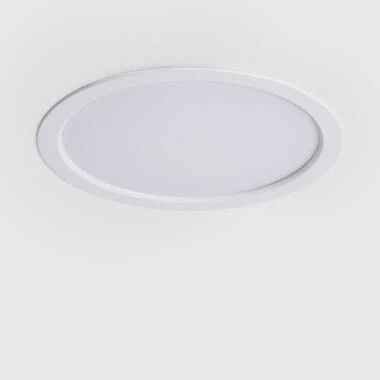
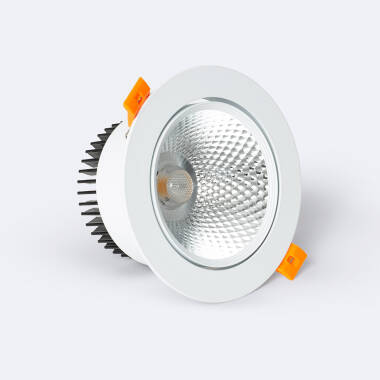
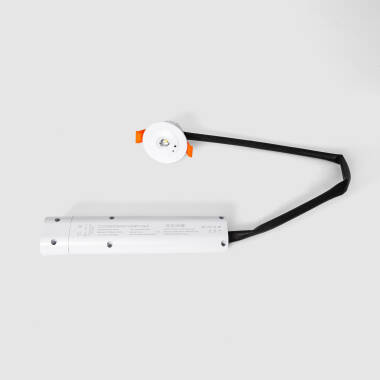
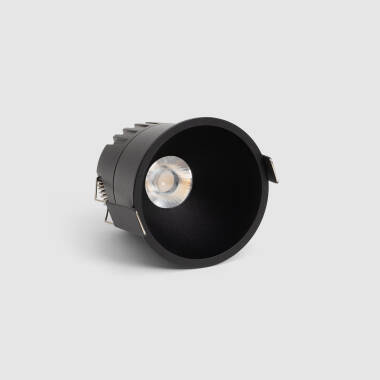
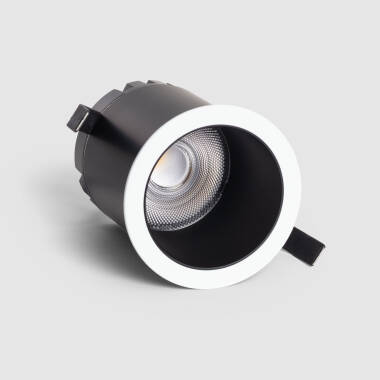
Essential
£3.99
(9)- Wattage 15 W
- Voltage Range 220-240V AC
- Lumen 1500 lm
4 options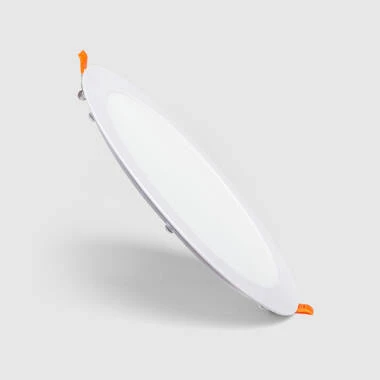
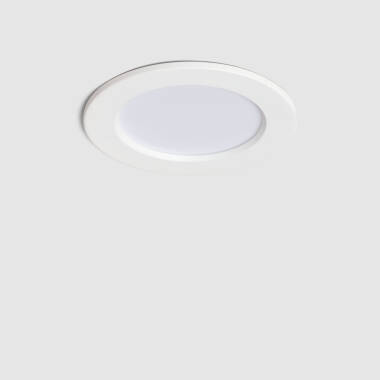
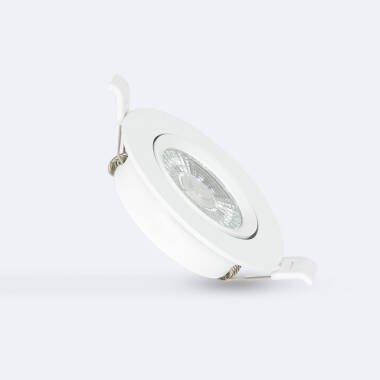
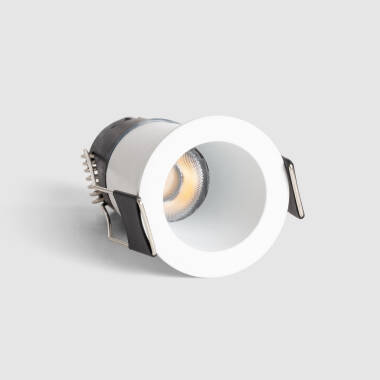
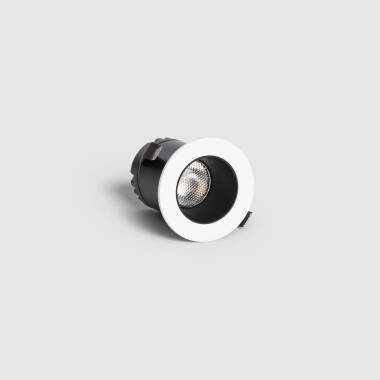
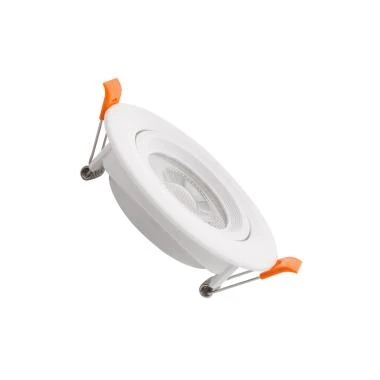
Essential
£4.19
(97)- Wattage 18 W
- Voltage Range 220-240V AC
- Lumen 1800 lm
4 options





You may also be interested in
Brands related to this category


About Round LED Downlights
Round downlights are the most common format within recessed LED lighting. Their circular design integrates easily into suspended ceilings, renovations and replacements of old fittings, making them a practical solution for both domestic installations and professional projects.
Their main advantage is versatility. They can be used in bathrooms, living rooms, kitchens, corridors, offices, hotels, shops or common areas, adapting wattage, colour temperature, beam angle and protection rating to the real use of each space.
Characteristics of round downlights
Round downlights stand out for their simple integration, wide variety of sizes and ability to provide general lighting without visually overloading the ceiling.
Within the family of LED downlights, round models are the most widespread because they adapt to almost any decorative style and to a large number of installation openings. Their round shape is neutral, balanced and easy to combine with other ceiling elements, such as detectors, ventilation grilles, speakers or sprinklers.
Technically, a round downlight projects light downwards from a point recessed into the ceiling. It can incorporate an opal diffuser for softer lighting, more controlled optics to direct the beam, or designs with a recessed bezel to reduce glare. This variety allows them to be used both for general lighting and in areas where more precise light is needed.
In homes, wattages between 6W and 18W are commonly used, with approximate outputs from 500 to 1,800 lumens depending on the model. In offices, shops or circulation areas with higher lighting requirements, higher-output versions can be used or more points installed to achieve suitable lighting levels.
The round format also makes it easier to replace old fittings. Many fluorescent or halogen downlights used round cut-outs, so it is easier to find an LED model compatible with the existing opening. In renovations, this compatibility reduces building work, avoids modifying the suspended ceiling and allows the installation to be updated with much lower energy consumption.
Another important feature is the variety of finishes. White models integrate into light-coloured ceilings and are more discreet. Black, aluminium, nickel or chrome finishes can be used when a more visible contrast or a more decorative aesthetic is desired. In technical or professional spaces, a clean design that is easy to maintain and has clear technical documentation is usually prioritised.
From a lighting perspective, the round shape favours a very natural visual perception of the light point. When the downlight has a homogeneous diffuser and a wide angle, the light is distributed softly, avoiding marked shadows and creating a comfortable lighting base for everyday use.
Fixed and adjustable round downlights
Fixed round downlights are the most common option for general lighting. They project light steadily downwards and make it possible to create an even distribution when installed with suitable spacing. They are common in bathrooms, living rooms, corridors, kitchens, offices and communal areas.
In residential ceilings of 2.4 to 2.7 metres, models with beam angles between 90° and 120° usually work well to cover the surface without creating excessive contrast. If the ceiling is higher or more intensity is needed over a specific area, it may be advisable to choose a more controlled angle or increase the luminous flux.
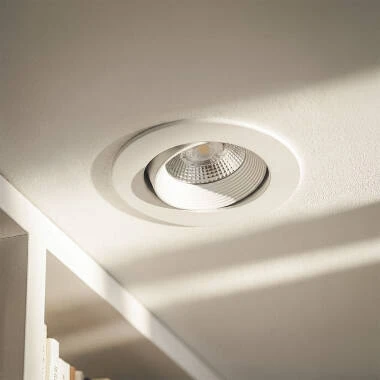
Adjustable round downlights allow the beam to be tilted towards a specific point. They are useful for lighting walls, pictures, shelves, reading areas, counters or decorative elements. They are also practical when the installation point does not exactly match the area you want to illuminate.
In living rooms, adjustable models help create layered lighting. Fixed downlights can be used for soft general light, with adjustable points added towards a wall, bookcase or reading area. In shops, they make it possible to direct light towards products, shop windows or displays without relying solely on general lighting.
The direction should be planned carefully to avoid glare. If the beam is aimed towards the user’s usual line of sight, it can create visual discomfort, especially in rest or work areas. In these cases, it is advisable to choose models with well-controlled optics, recessed bezels or low-glare designs.
Sizes and cut-out diameters
The cut-out diameter is one of the most important specifications when choosing a round downlight. It indicates the size of the opening required in the ceiling to install the fitting. In new builds, it can be defined from the project, but in renovations it is often determined by the existing points.
Small models may require cut-outs of 60, 70, 75 or 90 mm, common in circulation areas, accent points or installations where minimal visual presence is desired. Medium formats, between 120 and 180 mm, are very common in homes for general lighting. Large models, of 200 mm or more, are used when greater luminous flux is needed or when replacing old large-diameter downlights.
The cut-out diameter should not be confused with the external diameter. A downlight may need a 150 mm cut-out and have a visible bezel of 170 mm or 180 mm. This difference allows it to cover the opening and ensure a correct finish on the ceiling. In replacements, measuring only the visible part of the old fitting can lead to errors, so it is advisable to remove the unit or check the real opening.
Recessed depth also influences the choice. Shallow downlights are suitable for suspended ceilings with limited available height, while adjustable or higher-power models usually need more space to house the body, heat sink and driver.
The fixing system is usually based on side springs, which hold the fitting against the suspended ceiling. For a secure fit, the cut-out must respect the range indicated by the manufacturer and the ceiling material must be sufficiently firm.
Where to install round downlights
Round downlights can be installed in practically any room where integrated, orderly and functional lighting is required.
Their neutral aesthetic makes them work well in homes, commercial premises, hotels, offices, residential buildings and public-use spaces. They can be placed regularly to create uniform general light or combined with other systems to reinforce specific areas.
Bathrooms
In bathrooms, the round bathroom LED downlight is one of the most commonly used options due to its simple integration and ability to distribute light cleanly. In this room, it is important to choose the appropriate protection rating against humidity and splashes. In areas away from the shower, IP44 may be sufficient, while in more exposed areas IP65 is usually recommended, always respecting the applicable electrical zones.
The colour temperature in bathrooms is usually between 3000K and 4000K. A 3000K light provides a warmer feel, while 4000K improves clarity for tasks such as shaving, applying make-up or cleaning. It is also advisable to consider a CRI equal to or higher than 80, especially if the ceiling light is complemented with mirror lighting.
Living rooms and dining rooms
In living rooms, the round LED downlight for the living room makes it possible to create discreet general lighting without interfering with decorative lamps, wall lights or LED strips. Its circular design integrates easily into plasterboard ceilings and helps maintain a clean aesthetic, especially when white models with a slim bezel are chosen.
In this room, warm temperatures of 2700K or 3000K are usually used. Lighting levels can range between 150 and 250 lux for general use, although it is advisable to combine ceiling light with ambient points if the living room is used for watching TV, reading or entertaining guests. Dimmable models provide flexibility and prevent the light from feeling excessive during moments of rest.
Kitchens
In kitchens, this format works well for general light, especially when distributed so that it does not cast shadows over the worktop. For food preparation areas, it is advisable to reach 300–500 lux and use a colour temperature of 4000K if a clearer and more functional perception is desired.
Other rooms and uses
In corridors and hallways, round downlights guide circulation without taking up visual space. Regular spacing creates continuity and avoids dark areas. Very high levels are not usually required: between 100 and 150 lux can be enough to move around comfortably.
In offices and workspaces, round downlights can be used as long as glare is controlled and good uniformity is achieved. Neutral 4000K light and a minimum CRI of 80 are usually suitable for administrative tasks, waiting rooms or reception areas.
In shops, hotels and restaurants, they provide general lighting with a discreet visual presence. In these cases, it may be useful to combine fixed downlights with adjustable ones to create accent zones, highlight products or reinforce points of interest without overcrowding the ceiling.
How to choose your round downlight
Choosing the right round downlight involves checking its lighting performance, dimensions and installation conditions.
Luminous flux is key: in homes, between 600 and 1,200 lumens is usually enough, adjusting the number of points according to the space. Wattage indicates consumption, but it is best to focus on lumens and efficiency (lm/W) to compare correctly.
Colour temperature should be adapted to the use: 2700K–3000K for warm environments such as living rooms or bedrooms, and 4000K for work areas such as kitchens or bathrooms. A minimum CRI of 80 is also important, or higher if greater colour fidelity is required.
The beam angle influences light distribution: wide for general lighting and narrower for accents. In addition, it is necessary to check the cut-out diameter, the IP rating according to the environment and whether dimming is required.
Finally, product quality is essential: a good driver and correct thermal dissipation ensure reliable long-term operation.
Frequently asked questions
What is the difference between a round and a square downlight?
The main difference is aesthetic and relates to integration with the ceiling. A round downlight is more neutral and versatile, so it fits well in almost any room. A square downlight provides a more geometric aesthetic and is often used in spaces with straight lines or a more architectural design. In terms of lighting, both can offer similar results if they have the same flux, wattage, optic, colour temperature and driver quality. The external shape alone does not determine the amount of light.
Are round downlights better for renovations?
In many renovations, yes, they are more practical, because many older recessed fittings used round cut-outs. This makes it easier to find LED models compatible with the existing opening and reduces the need to modify the suspended ceiling. Even so, the real cut-out diameter and available depth should always be measured before choosing the new downlight.
What cut-out diameter do I need?
It depends on the model and the available opening. Small cut-outs can range from 60 to 90 mm, medium ones from 120 to 180 mm, and large ones above 200 mm. In replacements, measuring the visible bezel of the old fitting is not enough. It is advisable to check the real ceiling opening, because the external diameter is usually larger than the cut-out diameter.
What colour temperature should I choose for round downlights?
For living rooms and bedrooms, 2700K or 3000K provide warm and comfortable light. For bathrooms, kitchens and work areas, 4000K provides greater clarity. For garages, storage rooms or technical spaces, 5000K can be used if a cooler light is desired. The important thing is to maintain consistency within the same room or visual area. Mixing temperatures without planning can create an uneven result.
Can I install round downlights in the bathroom?
Yes, provided they have the appropriate IP rating for the area. In areas away from splashes, IP44 may be sufficient, while near a shower or bath IP65 is recommended, in accordance with the applicable electrical regulations. It is also advisable to choose a suitable colour temperature and CRI, especially if the bathroom is used for make-up, shaving or personal care.
How many round downlights do I need in a living room?
It depends on the surface area, the output of each fitting and the desired lighting level. As a reference, a living room may require between 150 and 250 lux for general lighting. For example, a 20 m² living room with a target of 200 lux needs around 4,000 useful lumens. If each downlight provides 800 lm, around five points could be installed, adjusting the layout according to furniture and usage zones.
Are adjustable round downlights recommended?
Yes, when light needs to be directed towards a specific area. They are useful for highlighting walls, pictures, shelves, reading areas or products in shops. For general lighting, fixed models usually provide a simpler and more uniform distribution. In many spaces, combining both types works well.
What beam angle is best?
For general lighting, angles between 90° and 120° are usually the most comfortable. For accent or decorative lighting, narrower angles between 24° and 60° can be used. In low ceilings, a narrow angle can create overly marked light areas. In high ceilings, a wide angle can disperse the flux too much.
Can round downlights be dimmed?
Yes, provided the model is dimmable and the dimmer is compatible with LED. If a non-dimmable downlight is connected to a dimmer, flickering, buzzing or operating faults may occur. Dimming is especially useful in living rooms, bedrooms, hotels, restaurants and spaces where the light intensity needs to be adapted to the atmosphere.
How long does a round LED downlight last?
The usual service life is between 25,000 and 50,000 hours, depending on the quality of the LED, driver and thermal dissipation. In a home with 4 hours of daily use, 25,000 hours is equivalent to more than 17 years of theoretical operation. In shops, offices or communal areas with many hours of use, it is advisable to choose models with good thermal management and reliable components to maintain performance in the long term.