
LED bulbs
LED bulbs have become the most widely used option for replacing traditional lighting thanks to their low energy consumption, reliability and the wide variety of formats available for virtually any space.


Our featured products from LED bulbs
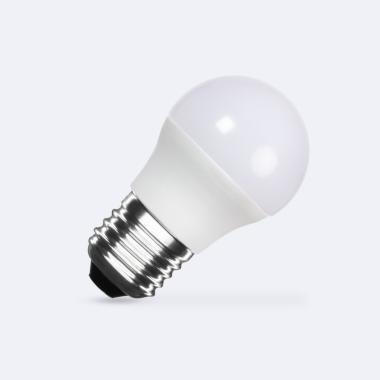
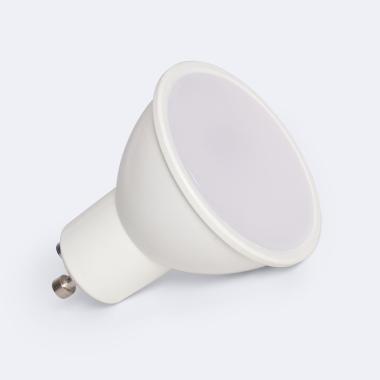
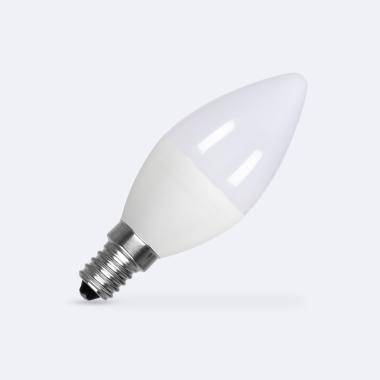
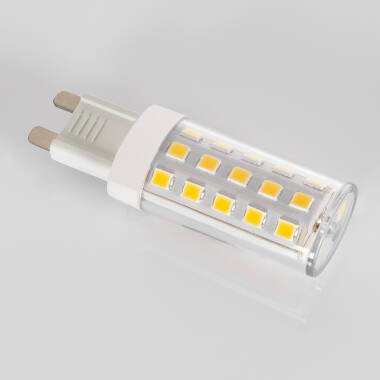
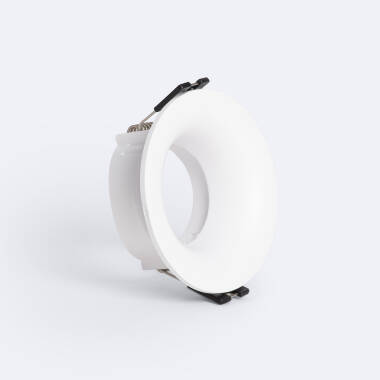
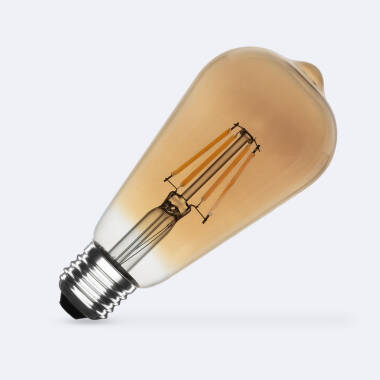
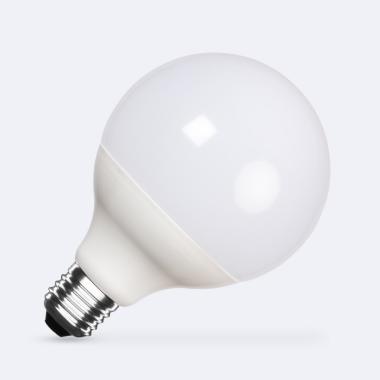
Essential
£1.05
 (47)
(47)- Wattage 6 W
- Voltage Range 220-240V AC
- Lumen 550 lm
3 options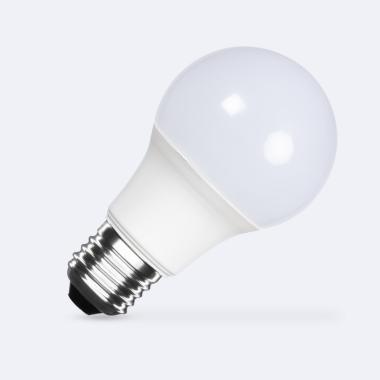
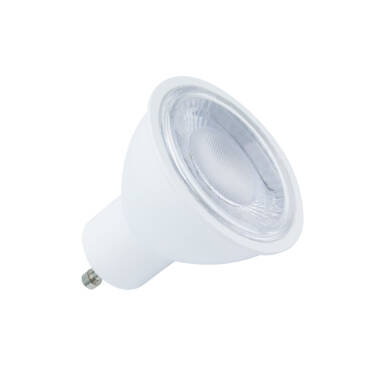
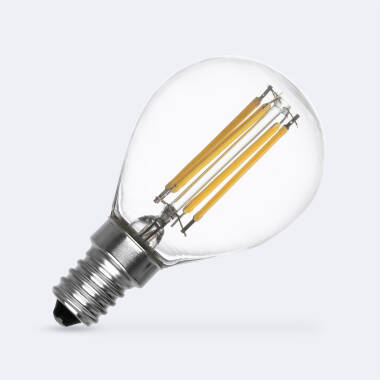
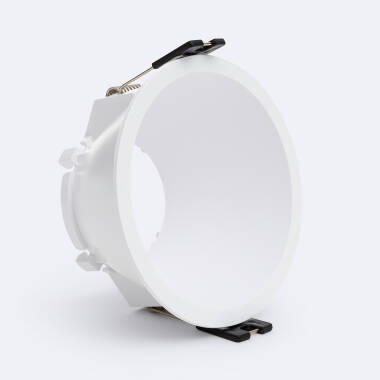
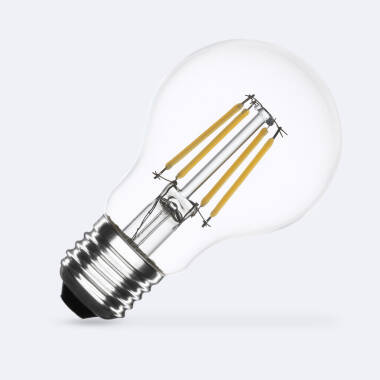
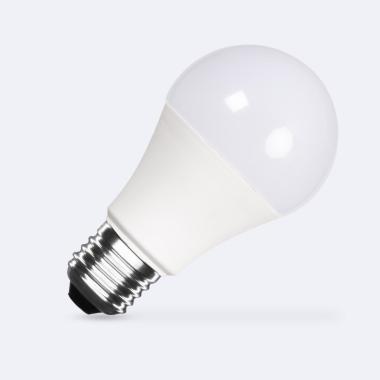
Essential
£1.19
 (11)
(11)- Wattage 5 W
- Voltage Range 220-240V AC
- Lumen 470 lm
3 options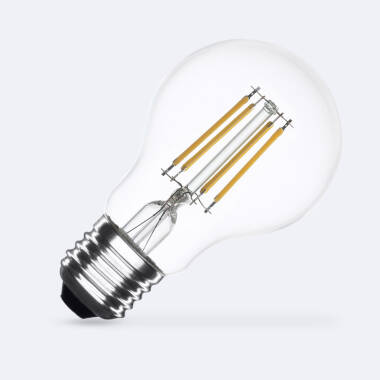
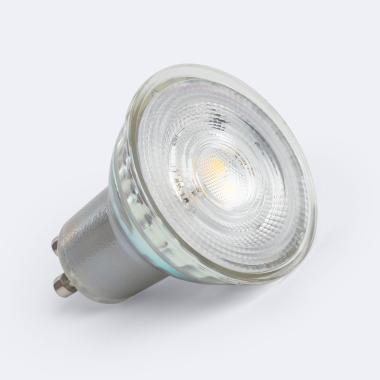
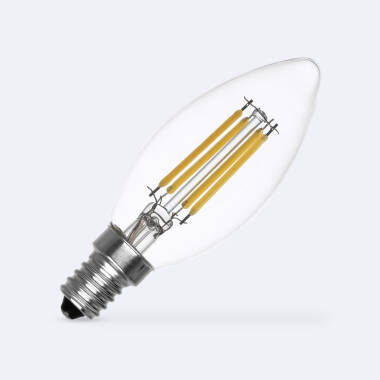
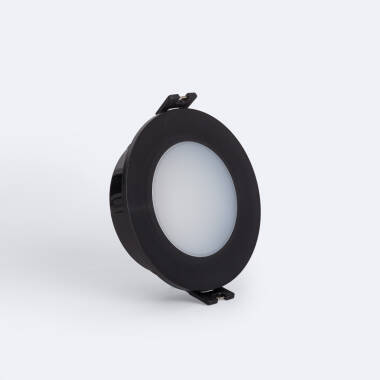
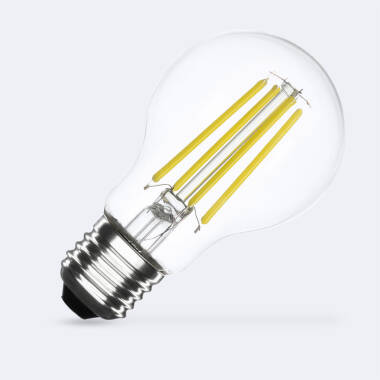
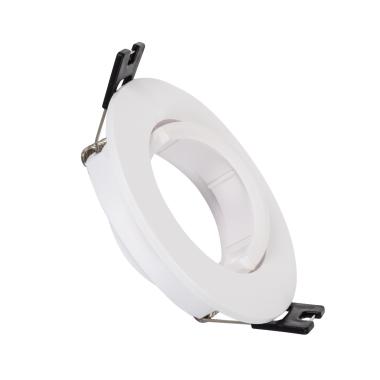
Essential
£1.37
- Wattage 6 W
- Voltage Range 220-240V AC
- Lumen 720 lm
2 options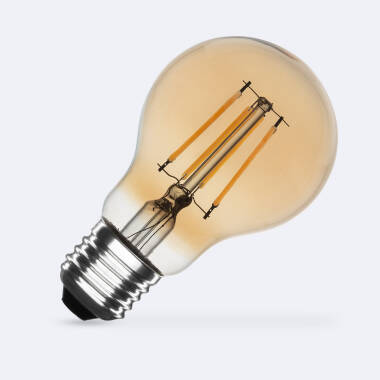
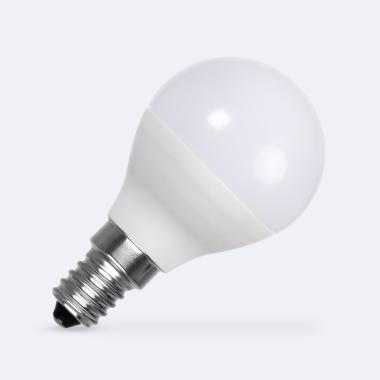
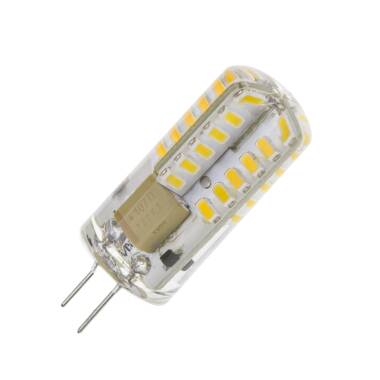
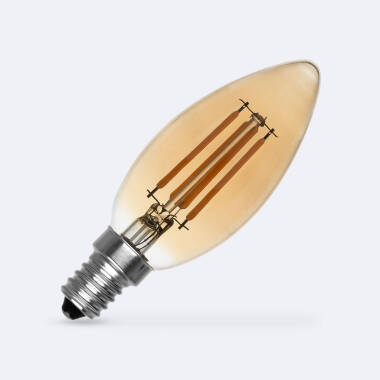
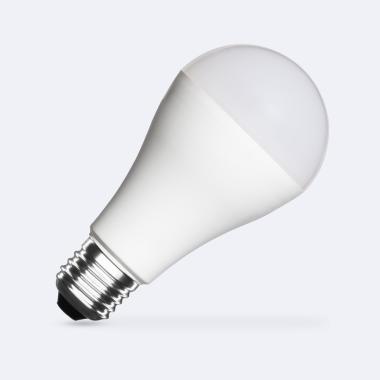
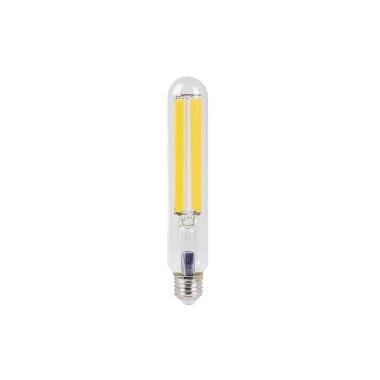
Essential
£1.79
(4)- Wattage 6 W
- Voltage Range 220-240V AC
- Lumen 600 lm
2 options






Brands related to this category


About LED bulbs
Choosing the right LED bulb is not simply a matter of finding a wattage equivalent to that of a conventional lamp. The base, luminous flux, light distribution, colour, supply voltage and dimming capability determine whether a bulb will physically fit and, above all, whether it will provide the expected lighting. Understanding these parameters makes it easier both to replace existing lamps directly and to design new residential, commercial, industrial or outdoor lighting installations.
How to choose the right LED bulb
Before replacing a lamp or choosing an LED bulb, it is advisable to check several technical parameters, since two models with the same base can deliver very different results in terms of light output, colour or distribution.
The base is the first point to check because it determines both physical and electrical compatibility. E27 and E14 are the most common for domestic use, while GU10, GU5.3, G9, G4 and R7S correspond to specific connection systems and applications.
Light output is measured in lumens (lm), not watts. An 8 W bulb can produce anywhere from around 700 to more than 1,000 lm depending on its efficiency, so wattage indicates energy consumption rather than actual light output. As a reference, around 470 lm is approximately equivalent to a 40 W incandescent bulb, around 800 lm to a 60 W incandescent bulb, while values above 1,500 lm are used for more powerful general lighting, always depending on the optics and surrounding environment.
Colour temperature defines the atmosphere: 2200–3000 K provides warm light for homes and hospitality environments, 4000 K gives a neutral white suitable for workplaces and retail, while 5000 K and above produces a cooler, more technical light. CRI, or colour rendering index, indicates how accurately colours are reproduced. Values above 80 are suitable for general use, while values above 90 are recommended in spaces where colour accuracy is critical, such as retail or display areas.
The beam angle determines how the light is distributed. Narrow angles of 24°–36° concentrate the beam for accent lighting, while 60°–100° or more provide broader coverage. Standard bulbs can exceed 200° for general lighting.
In outdoor or damp areas, it is essential to check the IP rating of the bulb whenever it is exposed, in order to ensure suitable resistance to dust and water for the installation environment.
LED bulbs by base
The base defines the physical connection and, in many cases, is also associated with a particular supply voltage or type of light fitting. Identifying it correctly helps avoid incompatibilities and makes it easier to directly replace halogen, compact fluorescent or incandescent lamps.
| Socket | Connection type | Voltage | Replaces | Typical use |
|---|---|---|---|---|
| E27 | 27mm coarse screw | 220-240V | Standard incandescent | Living room, ceiling, industrial |
| E14 | 14mm fine screw | 220-240V | Candle, spherical | Lamps, wall lights, bells |
| E12 | 12mm Fine Thread | 110-240V | Candlestick | Markets with American Standard |
| E40 | Giant 40mm screw base | 220-240V | Sodium vapor, metal halide | Street lighting, industrial buildings |
| GU10 | 10mm Swivel Bayonet | 220-240V | Halogen Dichroic | Recessed Spotlights |
| GU5.3 / MR16 | Bi-pin 5.3 mm | 12V | Halogen Dichroic | Bulbs with transformer |
| MR11 | Bi-pin 4 mm (GU4) | 12V | Dichroic mini | Showcases, shop windows |
| G53 (AR111) | Bi-pin 53mm | 12V/230V | AR111 halogen | Retail, museums |
| G9 | Bi-pin capsule 9 mm | 220-240V | Halogen capsule | Wall lights, designer lamps |
| G4 | Bi-pin capsule 4 mm | 12V | Halogen mini | furniture, reading |
| B22 | 22 mm Bayonet | 220-240V | UK Standard Incandescent | United Kingdom, Ireland |
| R7S | Linear double contact | 220-240V | Linear halogen | Projectors, uplights |
| S14D | Linear with double center contact | 220-240V | Linestra | Mirrors, decorative lighting |
| G12 | Bi-pin 12mm | 220-240V | Metal halide | Lane, retail |
| G24 | 2 or 4 pins | 220-240V | compact PL | Downlights, offices |
Swipe the table to see all columns and rows.
Edison screw bases
Screw bases use a simple twist-in fixing system. The letter E refers to the Edison system and the number indicates the approximate diameter of the thread in millimetres.
- E27 bulbs use the standard 27 mm screw thread and are one of the most widespread formats in ceiling lights, table lamps, wall lights, flush ceiling lights and decorative fittings. They are available in everything from compact bulbs to high-lumen models.
- E14 bulbs use a narrower 14 mm screw thread and are common in small lamps, wall lights, table lamps and decorative fittings where available space is limited.
- E12 bulbs have a screw thread of approximately 12 mm and are found mainly in specific fittings or installations originating from markets where this format is more common. Before installation, both the diameter and the rated voltage of the fitting should be checked.
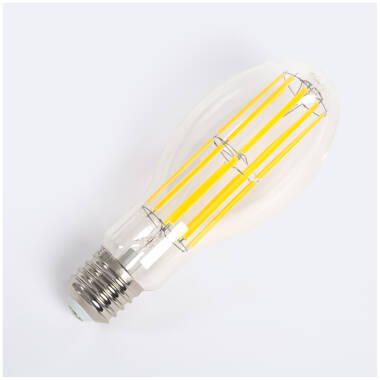
- E40 bulbs use a large-diameter screw thread designed for larger and more powerful lamps. They are common in certain professional and industrial applications, large spaces and lighting systems where a high luminous flux is required.
Bases for reflector and dichroic bulbs
Reflector and dichroic bulbs concentrate or control the distribution of the luminous flux through their own geometry and optics. They are especially common in recessed lighting, track systems, shop windows and accent lighting.
- GU10 bulbs feature two contacts with a twist-lock connection and usually operate directly at mains voltage. They are very common in recessed spotlights and compact projectors.
- GU5.3/MR16 bulbs use two pins spaced 5.3 mm apart and are commonly associated with low-voltage MR16 lamps. When switching to LED, compatibility with the existing transformer and the voltage specified by the manufacturer must be checked.
- MR11 bulbs are reflector bulbs with a smaller diameter than MR16 and are used in compact fittings, display cabinets, decorative lighting and applications where a concentrated beam is required in a small format.
- G53 AR111 bulbs use a large-diameter reflector format that is common in commercial and architectural lighting. Their broad optical surface allows the beam to be controlled and accent lighting to be created from larger fittings.
Bi-pin capsule bases
Capsule formats are characterised by their compact size and by connections using closely spaced pins or contacts. They are common in compact light fittings where a conventional bulb would take up too much space.
- G9 bulbs feature two loop-shaped contacts and are used in decorative lamps, wall lights, flush ceiling fittings and compact luminaires. When replacing a halogen capsule, it is especially important to check the diameter and length of the LED model.
- G4 bulbs use two pins spaced 4 mm apart and are common in small low-voltage fittings, such as decorative lighting, furniture, caravans, boats and certain technical lighting systems.
Bayonet bases
Bayonet bases are secured by inserting the bulb and giving it a slight twist to lock the side contacts into place. Although their prevalence varies by country and type of installation, they are still used in many types of equipment.
B22 bulbs make it possible to upgrade fittings with this system without changing the lamp holder. When choosing them, it is advisable to check not only the base but also the bulb diameter, overall length and the available space inside closed shades or diffusers.
Linear and special bases
In addition to the most common domestic formats, there are connections designed for linear lamps, decorative fittings and professional equipment. In these cases, it is particularly important to match both the base and the original dimensions.
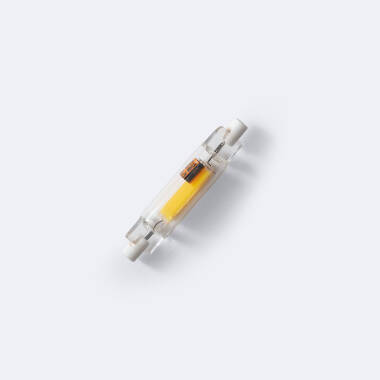
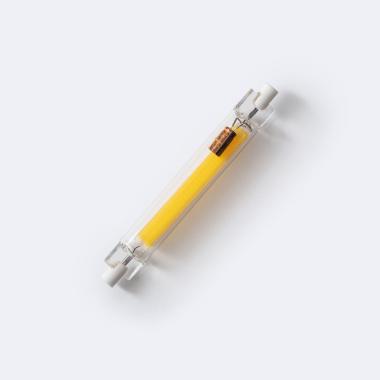
- R7S bulbs have a linear format with a contact at each end. They are used as replacements for linear halogen lamps in projectors, wall lights, floor lamps and other fittings. The length must be checked, as several standard sizes are available.
- S14d bulbs are used especially in decorative linear fittings and mirror lighting systems. Their connection and geometry allow them to be integrated as a visible part of the design.
- G12 bulbs use a specific base traditionally found in certain discharge lamps and professional fittings. LED alternatives can be used to upgrade some installations, provided that both electrical and dimensional compatibility are correct.
- G24 bulbs are found in many fittings originally designed for compact fluorescent lamps. When converting to LED, it is essential to check the exact base variant and whether the installation requires the existing control gear to be retained, modified or removed.
12V and 24V LED bulbs
For low-voltage installations, 12V/24V bulbs are designed for vehicles, boats, solar systems, furniture and technical lighting where 230 V is not used. It is worth noting that not all models operate on direct current: DC, AC and dual-compatible versions are available, so the technical data sheet should always be followed.
LED bulbs by type and application
In addition to the base, the construction of a bulb may be designed for an aesthetic purpose, specific environmental conditions or a particular professional application. Choosing the format according to the intended use makes it possible to take better advantage of the light distribution and the durability of the product.
LED filament bulbs
Filament bulbs visually reproduce the structure of traditional incandescent lamps using small visible LED filaments inside a clear, amber or opal envelope.
Their main advantage is a very wide light distribution. Unlike LED designs where the diodes are concentrated on a board, the filament can emit in different directions and, in certain formats, achieve a distribution approaching 300°. This is useful in open lamps, glass fittings or installations where the bulb itself remains visible.
They also make it possible to combine LED technology with traditional shapes such as globe, candle, pear or standard bulb forms. Warm versions, generally around 2200 to 2700 K, are common in decorative lighting, hospitality settings and environments where a tone close to incandescent light is desired.
LED bulbs for street lighting
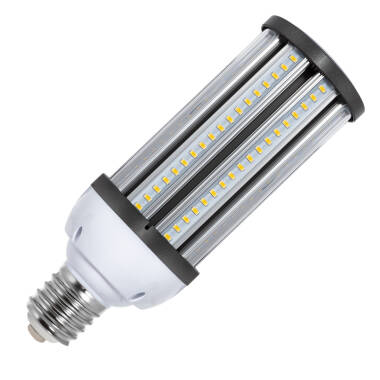
Street light bulbs allow certain existing fittings to be upgraded to LED technology without necessarily replacing the entire luminaire body.
In this type of application, luminous flux, light distribution and thermal management are important. High-power bulbs can generate several thousand lumens and require enough space to dissipate heat correctly. It must also be checked that the geometry of the existing fitting does not block the light output or trap heat around the electronics.
In outdoor installations, protection against water and dust should also be assessed across the complete assembly of the street light fitting, optical enclosure and bulb. Replacing the light source must not compromise the original sealing of the luminaire.
LED bulbs for industrial use
Industrial bulbs are designed for installations requiring higher luminous flux, long operating hours or formats capable of replacing traditional high-power lamps.
They are used in warehouses, workshops, industrial buildings, large spaces, technical installations and certain professional light fittings. In these environments, luminous efficacy, measured in lm/W, is particularly important because even small differences in efficiency can translate into significant energy consumption when there are dozens or hundreds of light points.
Operating temperature also requires attention. LEDs lose performance and age more quickly when they operate at excessive internal temperatures, so effective heat dissipation is especially important in high-power bulbs or enclosed fittings.
Submersible LED bulbs
Submersible bulbs are designed for applications where the light source operates underwater or in permanent contact with water, such as certain swimming pools, fountains and decorative water features. They should not be confused with a conventional bulb that is simply protected from rain, as the protection rating required for immersion is higher than that normally used for outdoor fittings.
Low-voltage systems are also common in swimming pools and other aquatic areas for electrical safety reasons. The bulb selection should form part of the complete installation design, including the transformer, wiring, sealing and electrical protection measures.
LED bulbs with advanced functions
The electronics built into LED bulbs make it possible to add functions that go beyond simple on/off operation. These options are useful when the aim is to adjust the atmosphere, automate schedules or change the colour without installing completely new lighting systems.
- Smart bulbs can include connectivity for controlling switching, brightness, schedules or scenes from an app, compatible assistant or automation system. Depending on the model, communication may use Wi-Fi, Bluetooth or other protocols.
- Dimmable bulbs allow the luminous flux to be adjusted to suit the required lighting level. Compatibility with the dimmer is essential to avoid flickering, an excessively limited dimming range or unexpected switch-off at low brightness levels.
- RGB bulbs incorporate LEDs of different colours that can produce multiple shades. Some models combine RGB with warm-white or cool-white channels so the same light source can be used both for coloured ambient lighting and for functional white lighting.
Advantages of LED bulbs over other technologies
LED bulbs represent a major improvement over traditional lighting technologies such as halogen, incandescent and energy-saving fluorescent lamps. Their main advantages include the following:
- Efficiency and low energy consumption: They stand out for their very low energy use. Compared with energy-saving bulbs, they can reduce energy consumption by up to 50%, significantly lowering electricity costs.
- Long service life and no maintenance: They offer high durability and require no maintenance. Their service life is considerably longer than that of other technologies and is commonly around 50,000 operating hours.
- Sustainability and safety: They do not use toxic substances such as mercury and are recyclable, making them a more environmentally friendly alternative.
- Wide design versatility: LED technology is extremely versatile and can be manufactured in almost any shape. This provides a broad range of formats beyond traditional globe, candle or tube bulbs.
- High cost-effectiveness: Thanks to their low energy consumption, long service life and currently affordable prices, they represent an efficient investment that can pay for itself quickly.
Frequently asked questions
The most common questions when choosing an LED bulb usually relate to actual light output, energy consumption, service life and compatibility with the existing installation. Checking these factors helps avoid incorrect replacements and makes it easier to compare products using objective criteria.
How many lumens should an LED bulb have?
The required luminous flux depends on the application and the size of the space. An auxiliary lamp will often work well with 400–500 lm, while general lighting usually requires between 800 and 1,500 lm or more. These figures do not correspond directly to lux, because the actual illuminance on a surface depends on distance, beam angle, the position of the fitting and the reflective conditions of the surrounding environment.
What LED wattage is equivalent to a conventional bulb?
There is no exact watt-for-watt equivalent because lumens are the key factor. A 6–8 W LED bulb typically produces around 700–800 lm, approximately equivalent to a 60 W incandescent bulb, although the visual result may vary depending on the optics and light distribution.
How long does an LED bulb last?
Service life can range from 15,000 to more than 50,000 hours depending on quality and design, but it also depends on factors such as operating temperature, ventilation, switching cycles and the internal electronics. Under average conditions of use at four hours per day, 25,000 hours is equivalent to more than 17 years, although enclosed or poorly ventilated environments can significantly reduce this lifespan.
What colour temperature should I choose?
2700–3000 K is recommended for warm environments such as living rooms or bedrooms, while 4000 K is common in kitchens, offices and retail spaces because of its neutral white light. Above 5000 K, the light becomes cooler and is useful in technical environments. Colour temperature does not affect the quantity of light emitted, only how that light is perceived.
Can an LED bulb flicker?
Yes. Flickering can be caused by low-quality drivers, incompatibility with dimmers, unsuitable transformers or residual current in the installation. It is especially common when replacing halogen lamps if the dimmer or transformer is not designed for the low load of LED technology.
Can LED bulbs be installed in enclosed light fittings?
Only if the model is designed for this purpose and there is enough space to dissipate heat. Although LEDs produce less heat than many other technologies, their electronics are sensitive to overheating, which can shorten their service life in poorly ventilated fittings.
What CRI is recommended for an LED bulb?
A CRI above 80 is suitable for general lighting, while values above 90 are recommended when colour accuracy is important. This index does not measure the quantity of light but rather how accurately colours are reproduced under the light source.
Does frequent switching reduce LED lifespan?
LEDs tolerate frequent switching very well and perform significantly better in this respect than fluorescent lamps, which are more affected by repeated on/off cycles.