
RGBW and RGB LED strips
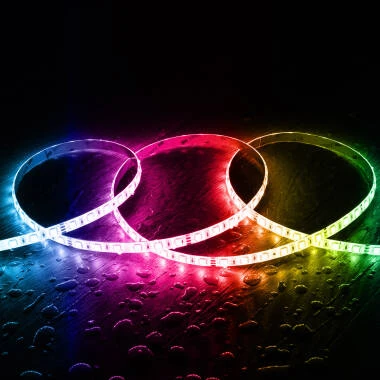
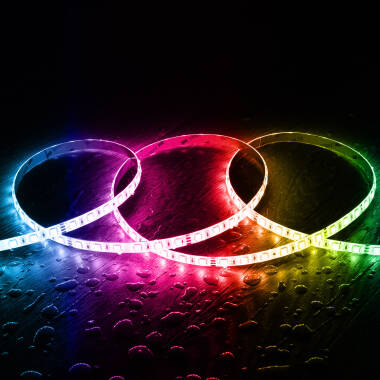
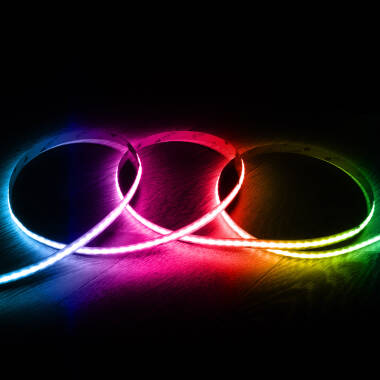
RGB LED strips are designed to provide decorative and dynamic lighting, capable of adapting to different environments, moments and uses. Thanks to the combination of red, green and blue diodes, they allow a wide range of colours to be created and deliver visual effects that go far beyond conventional white lighting.
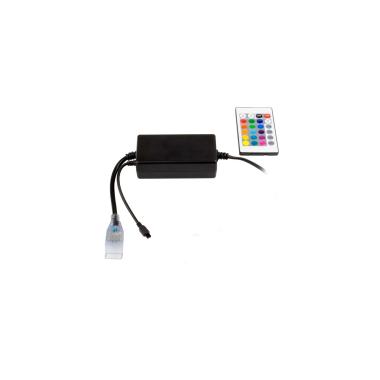
Our featured products from RGBW and RGB LED strips
- -51%
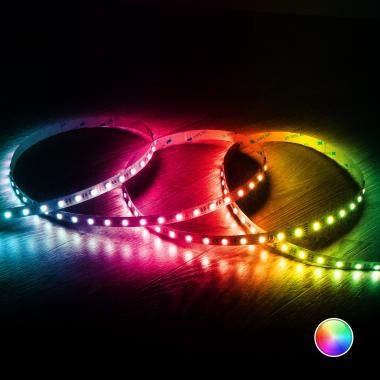
Essential

Before £37.99
£18.49
 (1)
(1)Ref 108165
AdjustableNew5m 24V LED Strip SMD in RGBW 60LED/m 10W/m 12mm Wide Cut at Every 10cm IP20
In Stock, delivery in 24/48h
- Voltage Range 24V DC
- Cut Points 10 cm
- Type Of Dimming Controller
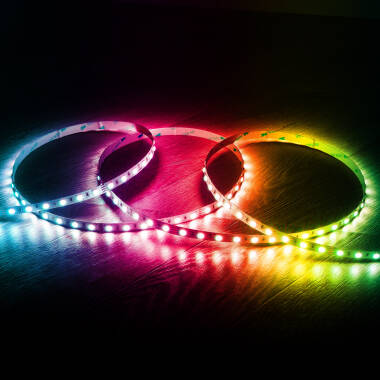
Essential
£14.97
 (3)
(3)Ref 108159
Adjustable5m 24V LED Strip SMD in RGB 60LED/m 10W/m 10mm Wide Cut at Every 10cm IP20
In Stock, delivery in 24/48h
- Voltage Range 24V DC
- Cut Points 10 cm
- Type Of Dimming Controller
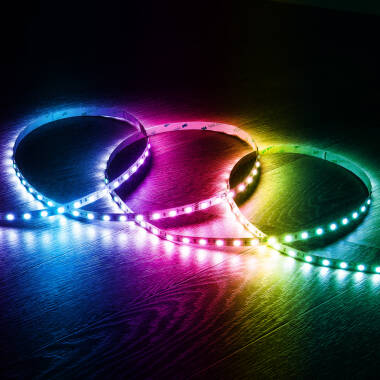
Essential
£10.59
 (2)
(2)Ref 107593
Adjustable5m 12V LED Strip SMD in RGB 60LED/m 9W/m 10mm Wide Cut at Every 5cm IP20
In Stock, delivery in 24/48h
- Voltage Range 12V DC
- Cut Points 5 cm
- Type Of Dimming Controller
- -23%

Before £116.99
£89.99
Ref 109841
Solar30m 24V DC Outdoor Solar LED Strip SMD2835 60LED/m 12mm Wide Cut at Every 100cm IP65
In Stock, delivery in 16-21 days
- Voltage Range 24V DC
- Cut Points 100 cm
- IP Rating IP65






Brands related to this category


About RGBW and RGB LED strips
This type of strip is used in both residential and professional settings, especially when the goal is to create ambience, highlight specific elements or visually transform a space without the need for structural changes.
What is an RGB LED strip?
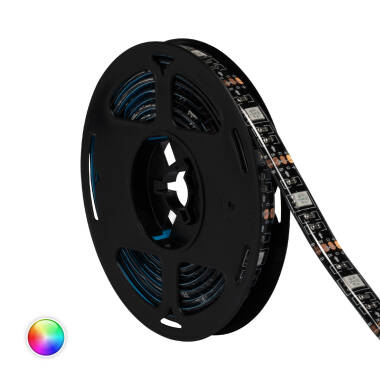
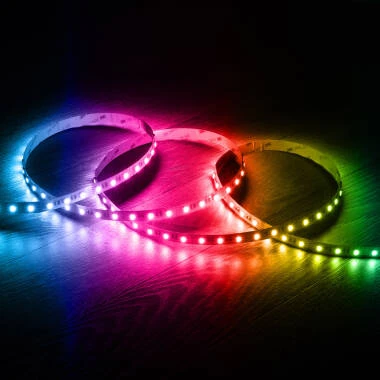
This type of LED strip is characterised by the integration of red, green and blue LEDs. By combining these three colours, it is possible to achieve a wide variety of tones, from vibrant colours to softer effects, allowing the lighting to be fully customised.
RGB LED strips are controlled using specific controllers that make it possible to select colours, adjust brightness and activate different lighting modes or scenes.
What are RGB LED strips used for?
RGB LED strips are mainly used in applications where aesthetics and customisation are a priority. They are commonly found in ambient lighting for living rooms, bedrooms and leisure areas, as well as in commercial spaces, shop windows, bars, restaurants and events.
They are also used to highlight architectural elements, create visual effects on ceilings, walls or furniture, and give a space a distinctive visual identity.
Control and customisation of RGB lighting
One of the main advantages of RGB LED strips is the ability to control the lighting precisely. Using remote controls, mobile apps or smart systems, users can change the colour, adjust the brightness and select different dynamic effects.
In this context, smart wifi LED strips stand out, as they allow lighting to be managed from a smartphone or via voice assistants, making it easy to create scenes and automate switching on and off.
Dimmable RGB LED strips and brightness control
In addition to colour changes, many RGB strips allow brightness adjustment. Dimmable LED strips make it possible to adapt the light output to each moment, ranging from soft decorative lighting to a more intense effect depending on the situation.
This capability improves visual comfort and expands the everyday use possibilities of RGB lighting.
Differences between RGB LED strips and their variants
Beyond the standard RGB system, there are different variants that extend lighting possibilities, especially when better white light quality or more advanced effects are required. These options maintain colour lighting while adding extra features that make them more versatile depending on the project type and intended use.
RGBW LED Strips
RGBW LED strips incorporate an independent white LED in addition to the red, green and blue LEDs. This allows all RGB colour options to be retained while also providing a purer, brighter and more natural white light.
The main advantage of this configuration is that white light does not depend on RGB mixing, significantly improving its quality when more functional lighting is required.
RGBWW LED Strips
RGBWW LED strips add two white channels: warm white and cool white. In addition to RGB colours, they allow the selection of warm whites, cool whites or intermediate combinations.
This variant offers greater control over the atmosphere of a space and is particularly suitable for environments where comfort, versatility and adaptable white lighting are important.
RGB-CCT LED Strips
RGB-CCT LED strips combine the RGB system with an adjustable white colour temperature channel. This makes it possible to fine-tune white light across a wide range, from warm tones to cooler whites, using a single control system.
Their main advantage is flexibility, as they allow both colour lighting and adjustable white light without the need to duplicate systems.
RGBIC or Addressable LED Strips
RGBIC LED strips, also known as addressable LED strips, allow each LED to operate independently. This makes it possible to create advanced dynamic effects such as gradients, animations, rainbow transitions or moving patterns.
This type of strip is mainly used in decorative projects, gaming setups, events or spaces where visual impact and dynamic effects are the main focus.
Common applications of RGB LED strips
RGB LED strips are easily integrated into a wide variety of spaces. They are widely used for indirect lighting in living rooms and bedrooms, in furniture, shelving and display cases, as well as in decorative and ambient lighting projects.
In professional environments, they are used to attract attention, reinforce a brand’s visual identity or create distinctive atmospheres in events and commercial spaces.
Installation and basic considerations
Installing RGB LED strips requires careful selection of the controller and ensuring compatibility with the desired control system. In addition, proper planning of the layout and power supply location ensures a clean and functional result.
A well-executed installation allows all the possibilities of RGB lighting to be enjoyed safely and reliably.
How to choose the right RGB LED strip
To select the most suitable RGB LED strip, it is important to consider the intended use, the desired level of control and the type of atmosphere you want to create. It is also important to assess whether high-quality white light is needed, in which case RGBW options may be more appropriate.
Defining these aspects from the outset simplifies the selection process and ensures a result that meets the project’s expectations.
Creative and customisable lighting with RGB LED strips
RGB LED strips offer a highly creative and flexible lighting solution, ideal for transforming spaces and adapting them to different moments and needs. Thanks to their colour options, dimming capabilities and smart control, they allow unique environments to be designed in both homes and professional settings.
Exploring the options in this category helps you find the RGB LED strip that best suits each project, combining aesthetics, functionality and ease of use.
Frequently asked questions about RGB LED strips
Can RGB LED strips produce white light?
Yes, RGB LED strips can generate white light by mixing red, green and blue. However, this white is more suitable for decorative use. If a more natural and functional white is required, RGBW or RGBWW variants are a better option.
Is it possible to change colour and brightness independently?
Yes. In most RGB systems, both colour and brightness can be adjusted independently, allowing a wide variety of atmospheres to be created and adapted to different moments or uses.
What is the difference between RGB and RGBIC?
The main difference is that in RGBIC strips, each LED can be controlled independently. This allows advanced dynamic effects, animations and transitions that are not possible with traditional RGB strips, where all LEDs display the same colour at the same time.
Are RGB LED strips only for decoration?
Although their main use is decorative and ambient, RGB LED strips can also be used as supplementary lighting in spaces where the aim is to enhance the atmosphere or highlight specific elements, especially when combined with variants that include white light.
Can RGB LED strips be integrated into smart systems?
Yes. Many RGB LED strips are compatible with smart control systems, allowing them to be managed from a smartphone, used to create customised scenes or integrated into automations alongside other lighting elements.
Can RGB LED strips be used outdoors?
Yes, RGB LED strips can be used outdoors provided they are designed for that purpose and have the appropriate protection rating against moisture, rain and dust. In such installations, it is especially important to choose products suitable for outdoor use and to secure all connections properly to ensure safe and long-lasting operation.