
LED Panels 60x60cm
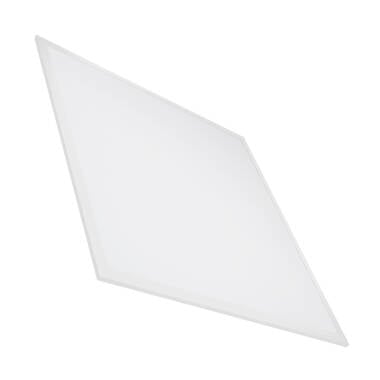
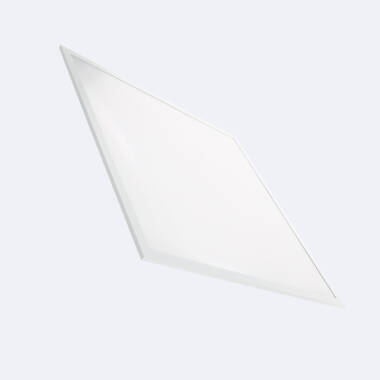
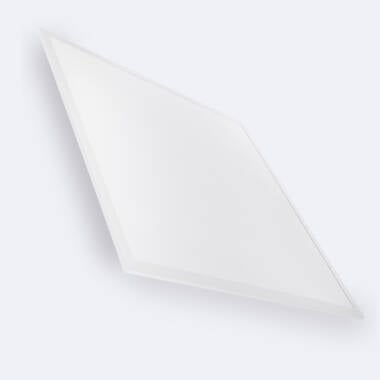
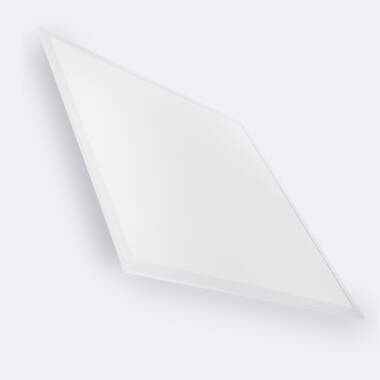
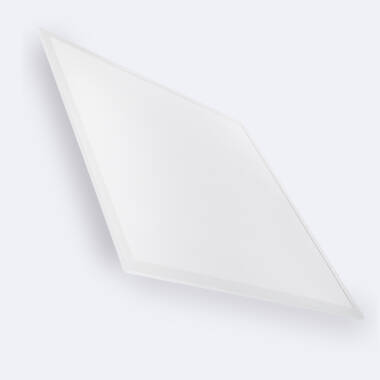
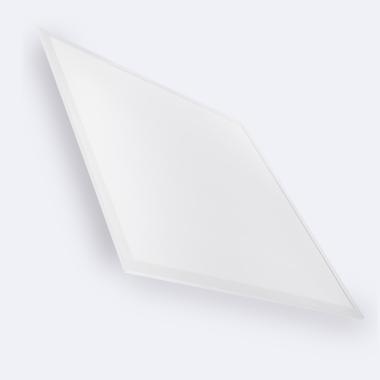
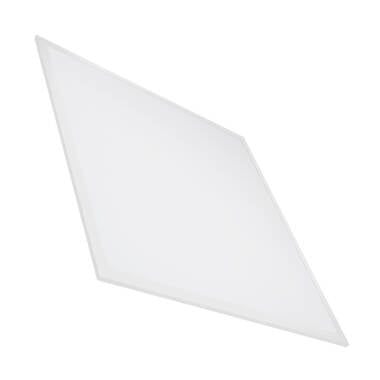
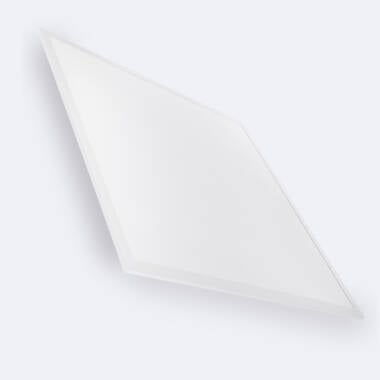
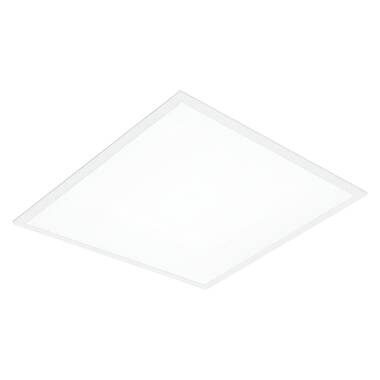
600x600 mm LED panels are the most widely used solution in offices, retail spaces and rooms with suspended ceilings thanks to their simple installation, uniform lighting and high energy efficiency.


Our featured products from LED Panels 60x60cm
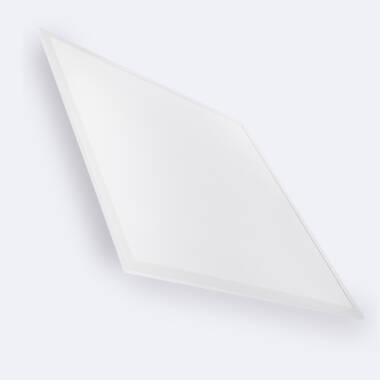
Advanced
£11.59
 (34)
(34)- Wattage 40 W
- Voltage Range 220-240V AC
- Lumen 4000 lm
6 options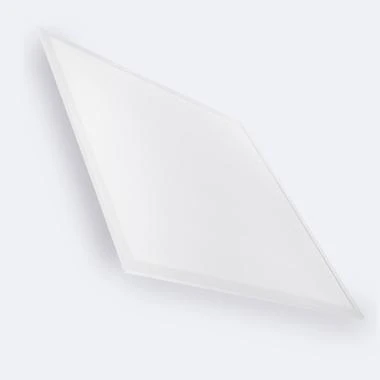
Advanced
£10.59
(15)- Wattage 42 W
- Voltage Range 220-240V AC
- Lumen 4200 lm
6 options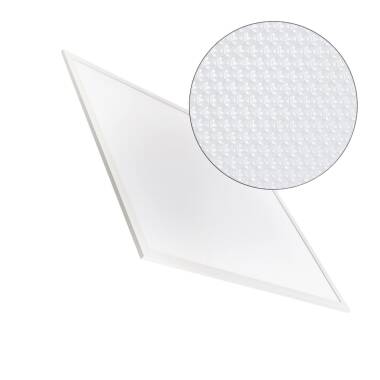
Advanced
£15.89
Ref 92840
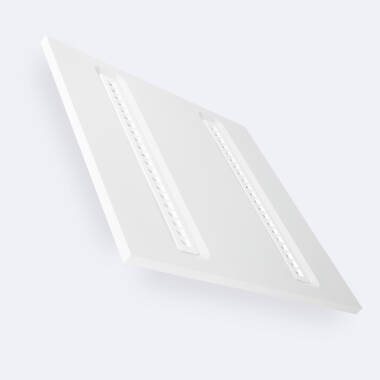
Aluminium600x600mm 40W Microprismatic UGR17 LED Panel 4000lm PHILIPS Certadrive
In Stock, delivery in 15-20 days
- Wattage 40 W
- Voltage Range 220-240V AC
- Lumen 4000 lm
5 options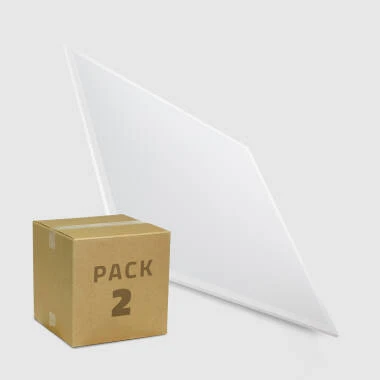
£17.99
- Wattage 40 W
- Voltage Range 220-240V AC
- Lumen 4800 lm








Brands related to this category


About LED Panels 60x60cm
600x600 LED panels have become the standard format in technical indoor lighting. Their size matches the most common grid used in modular suspended ceilings, making them easy to integrate into offices, classrooms, healthcare centres, retail spaces and all types of professional environments.
In addition to easy installation, they stand out for providing homogeneous lighting, low consumption and a clean appearance that fits both corporate projects and modern domestic installations. Today, recessed, surface-mounted, suspended and dimmable versions are available, with different levels of visual comfort depending on the intended use.
Why is the 600x600 LED panel the most widely used?
Among the different formats of LED panels, the 600x600 mm size has become the most widespread option in both new installations and renovation projects.
Its popularity is mainly due to its compatibility with standard modular ceilings, the balance between luminous surface and available power, and the ease of achieving uniform lighting without using a large number of luminaires.
In addition, the 600x600 format offers a wide range of available models, from basic solutions for general use to professional panels with UGR<19 designed for offices and intensive workspaces.
Compatibility with modular suspended ceilings
The main reason why this format has become a standard is its direct compatibility with demountable suspended ceilings. 600x600 mm ceiling tiles are one of the most common grid sizes used in offices, educational centres, clinics and commercial buildings. This makes it possible to replace a ceiling tile directly with the LED panel without modifying the existing structure, while also making it easier to renovate old fluorescent luminaires without working on the suspended ceiling itself.
In addition to modular ceilings, 600x600 panels can also be installed in plasterboard ceilings using recessed kits, or used as surface-mounted or suspended solutions when there is no suspended ceiling.
Luminous efficiency and energy savings
Another factor that explains the success of this format is its energy efficiency. A modern 600x600 LED panel usually operates with power ratings between 36W and 48W, generating approximately 3,600 to 5,500 real lumens depending on the model and efficiency.
This makes it possible to replace old fluorescent luminaires of 72W or even higher while maintaining similar lighting levels with much lower consumption.
In offices and buildings with many luminaires, energy savings are usually between 40% and 60%, especially when replacing old systems with T8 fluorescent tubes.
Maintenance is also significantly reduced. While fluorescent luminaires require periodic tube and ballast replacement, many current LED panels are designed to operate for 50,000 to 70,000 hours L80.
The improvement is not limited to consumption. LED panels provide more uniform lighting, with no visible flicker and better glare control, which is especially important in spaces with computers or prolonged use.
Types of 600x600 LED panel by installation
Although the format is always the same, 600x600 LED panels can be installed in different ways depending on the type of ceiling and the desired finish.
Today, recessed, surface-mounted and suspended solutions are available, adapting to both professional and residential spaces.
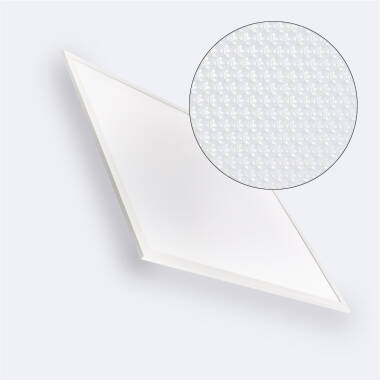
Recessed 600x600 LED panel
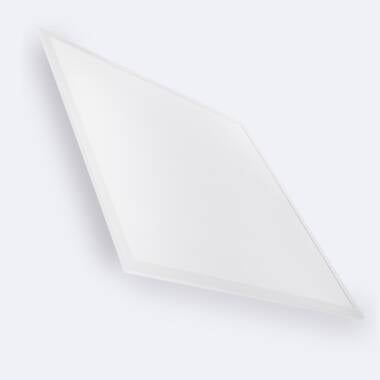
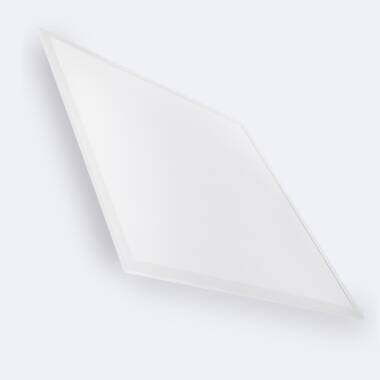
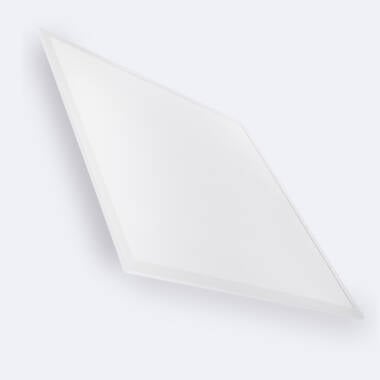
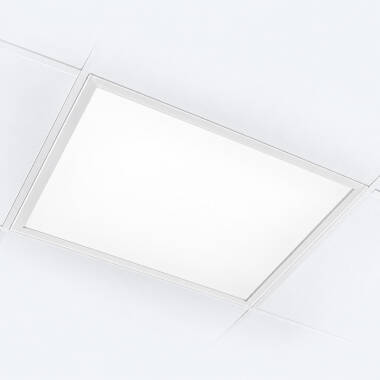
Recessed installation is the most common option in offices, educational centres and commercial spaces with modular suspended ceilings. The panel is fully integrated into the ceiling grid, providing a clean and uniform finish where the luminaire almost disappears visually.
In addition to aesthetic integration, this system favours homogeneous light distribution and helps reduce the visual impact of the ceiling in large spaces.
It is also one of the most efficient solutions from an installation and maintenance point of view, as access to the driver and luminaire is simple from the suspended ceiling itself.
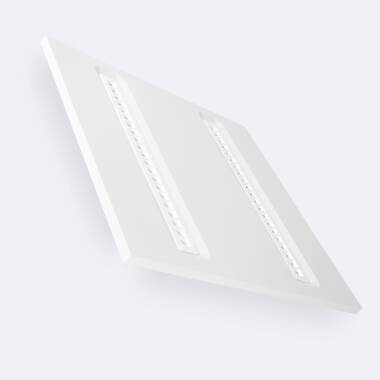
In professional projects, UGR<19 panels are commonly used in recessed installations to improve visual comfort in offices and work areas.
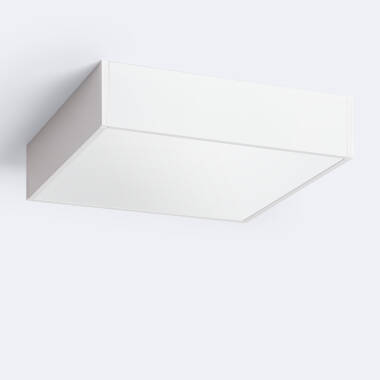
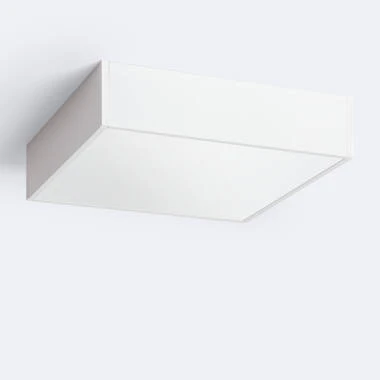
Surface-mounted 600x600 LED panel
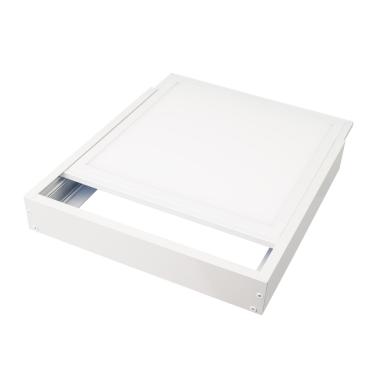
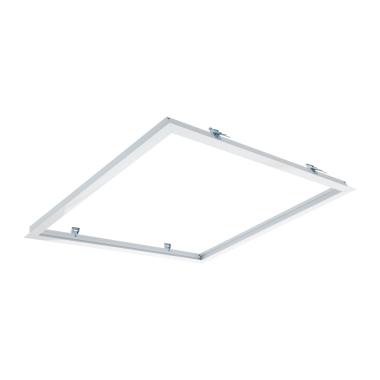
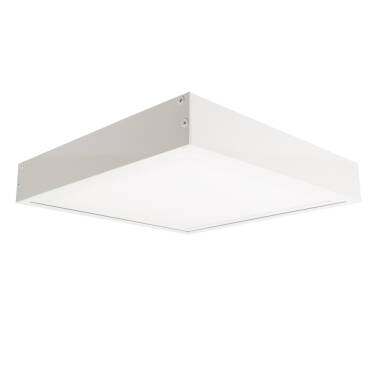
When there is no modular suspended ceiling, 600x600 LED panels can be installed using surface frames fixed directly to the ceiling.
This system is very useful in kitchens, corridors, homes, retail premises or renovation projects where major work to create a suspended ceiling is not desired.
Although the panel remains slightly separated from the ceiling, the result still offers a modern appearance that is much cleaner than many conventional luminaires.
Surface-mounted installation also makes it possible to take advantage of the uniform lighting typical of LED panels even in spaces where ceiling lights or linear luminaires were traditionally used.
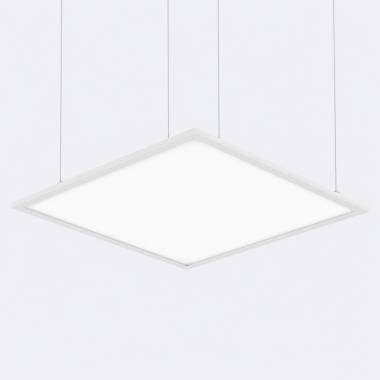
Suspended 600x600 LED panel
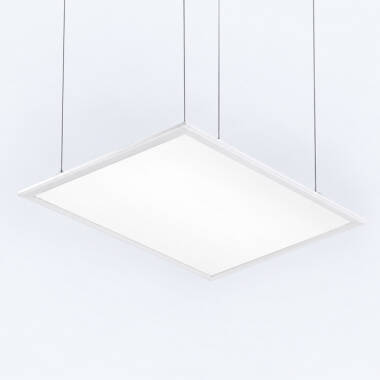
Suspended installation using steel cables is a widely used solution in modern offices, coworking spaces, meeting rooms and open spaces with high ceilings.
Suspended panels bring the light source closer to the work plane, improving visual comfort and reducing the feeling of excessive height in certain rooms.
In addition to the functional component, this type of installation also has significant aesthetic value. The luminaire appears to float visually, creating a lighter and more contemporary finish.
In modern corporate spaces, suspended panels are often combined with dimming systems to adapt the lighting according to the use of the space or the available natural light.
Which 600x600 LED panel do you need?
Although the 600x600 format is standard, not all panels offer the same performance. Choosing the right power, colour temperature and level of visual comfort is essential to achieve suitable lighting.
It is also worth assessing factors such as ceiling height, hours of use, the presence of screens and the type of activity carried out in the space.
How to choose the power according to the space
The power required depends mainly on the lighting level needed and the surface area of the space. In offices, classrooms or workspaces, levels between 300 and 500 lux on the work plane are usually recommended. A 36W–40W 600x600 LED panel usually generates around 4,000 lumens, enough to cover approximately 8 to 12 m² depending on height and distribution.
For example, a 24 m² office can be correctly illuminated with three 4,000-lumen panels distributed evenly to achieve levels close to 400 lux.
In auxiliary spaces, corridors or circulation areas, lower levels can be used and, therefore, lower-power panels may be sufficient.
It is also important to consider the actual efficiency of the panel. Two models with the same power can provide very different amounts of light depending on the quality of the LED chips and the driver.
In large spaces where the aim is to reduce the number of luminaires, it may also be worth considering larger formats such as 1200x600 mm LED Panels, which can provide a larger luminous surface and higher flux levels.
Cool, neutral or warm light: which one to choose
Colour temperature directly affects visual perception and the feel of the space. In offices, educational centres and professional spaces, 4000K is the most common option because it offers a comfortable balance between visual comfort, naturalness and visibility.
Cool light, usually above 5000K, can also be used in technical offices, areas with little natural light, call centres, laboratories or spaces where a greater sense of clarity, attention and visual precision is required.
3000K, on the other hand, generates warmer and more welcoming lighting, commonly used in homes, hotels, restaurants or areas where a more relaxed atmosphere is desired.
In addition to colour temperature, it is also worth paying attention to the colour rendering index or CRI. For most indoor applications, CRI>80 is recommended, while in shops, retail spaces or areas where colour is important, CRI>90 may be worth considering.
In offices and spaces with computers, it is also advisable to choose low-glare panels (UGR<19), as they help reduce reflections and visual fatigue during long working days.
The right combination of power, colour temperature and glare control makes it possible to create spaces that are more comfortable, efficient and truly adapted to daily use.
Frequently asked questions about 600x600 mm LED panels
Why is the 600x600 format the most widely used?
Because it matches one of the most common grid sizes used in demountable suspended ceilings in offices, educational centres and commercial buildings. This makes it possible to directly replace ceiling tiles or old fluorescent luminaires without modifying the existing structure, greatly simplifying lighting renovations.
How many 600x600 LED panels do I need for an office?
It depends on the surface area, installation height and conditions of the space. As a reference, a 600x600 LED panel of around 4,000 lumens, considering an approximate utilisation coefficient of 0.7 and a maintenance factor of 0.8, can cover around 5–7 m² to achieve about 400 lux in offices. As a result, a 40 m² office usually requires approximately 6–7 well-distributed panels to achieve uniform lighting.
What ceiling height is suitable for 600x600 LED panels?
They work especially well in ceilings between 2.4 and 3.5 metres high, which are the most common dimensions in offices and indoor spaces. In very high ceilings, it may be advisable to increase the luminous flux or use suspended systems to bring the light closer to the work plane.
Are all 600x600 panels suitable for suspended ceilings?
Although the size is standard, compatibility depends on the installation system: in suspended ceilings with a T-bar grid, they usually fit directly, while in continuous plasterboard or plaster ceilings they need a surface, suspension or clip kit in order to be installed.
What does UGR<19 mean in a 600x600 panel?
It means that the panel offers low glare and is designed for workspaces with computers. The UNE-EN 12464-1 standard recommends working with a UGR value below 19 in offices to reduce reflections and visual fatigue, which is especially important during long working days in front of screens.
Is a 600x600 LED panel better in backlight or edgelight?
Edgelight panels distribute light using a lateral optical guide and usually offer a slimmer and lighter design. Backlight models place the LED chips directly at the rear, which improves efficiency, uniformity and thermal management.
How much does a 600x600 LED panel weigh?
Most models weigh less than 2 kg. This weight allows them to be easily installed in suspended ceilings, surface-mounted or suspended installations using the right accessories.
What maintenance does a 600x600 LED panel need?
Maintenance is minimal compared with traditional fluorescent luminaires, and many models offer service lives of 50,000 hours or more. In offices with daily use of 10 hours, this can be equivalent to more than 13 years of operation before reaching 80% of the initial luminous flux.