
LED Motion Sensor Floodlight Series
Motion sensor floodlights are an efficient, safe and practical lighting solution for both outdoor and indoor areas. This type of floodlight combines powerful illumination with a presence sensor that activates the light only when movement is detected, optimising energy consumption and improving security.
Featured ranges


Our featured products from LED Motion Sensor Floodlight Series
- -4%
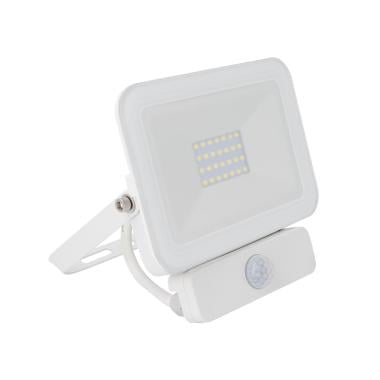
Essential
Before £23.89
£22.89
 (12)
(12)Ref 4738
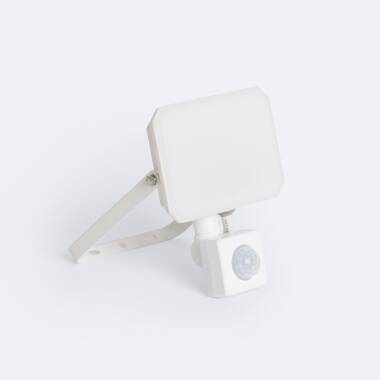
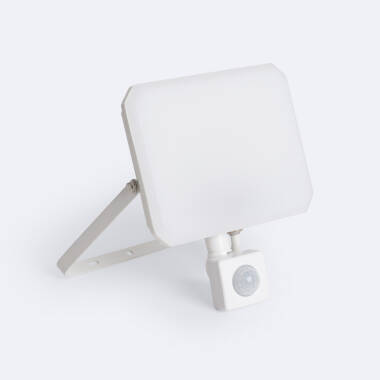
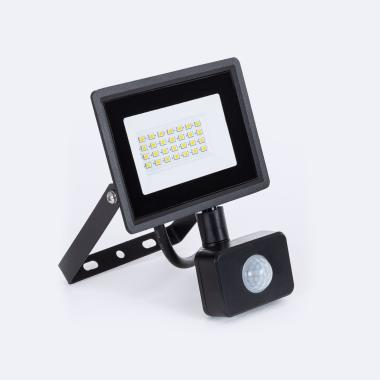
AluminiumNewSlim 20W LED Floodlight 120lm/W IP65 with PIR Motion Sensor
In Stock, delivery in 15-20 days
- Wattage 20 W
- Voltage Range 220-240V AC
- Lumen 2400 lm
- -5%
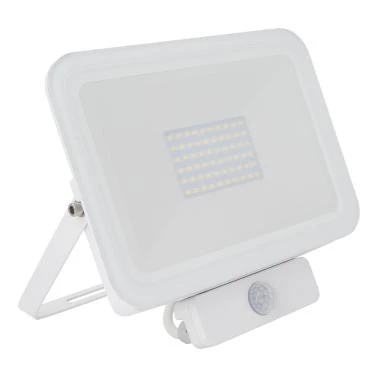
Essential
Before £32.99
£31.29
(6)Ref 4739
AluminiumSlim 50W LED Floodlight 120lm/W IP65 with PIR Motion Sensor
In Stock, delivery in 24/48h
- Wattage 50 W
- Voltage Range 220-240V AC
- Lumen 6000 lm
- -9%
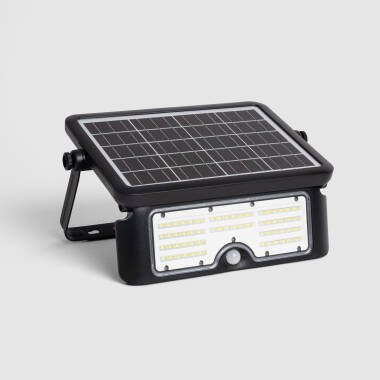

Before £24.39
£22.19
Ref 177729
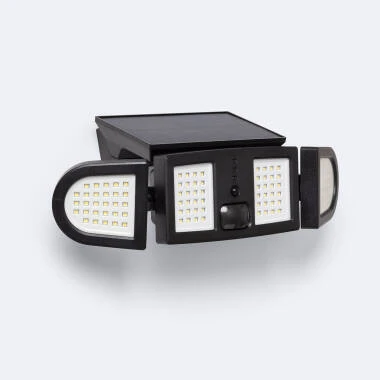
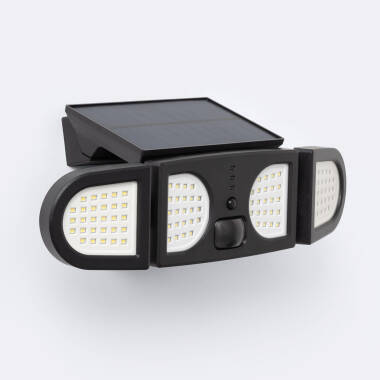
AluminiumSolarSolar LED Streetlight with PIR & Motion Sensor IP65
In Stock, delivery in 24/48h
- Wattage 7 W
- Voltage Range 12V DC
- IP Rating IP65
- -10%
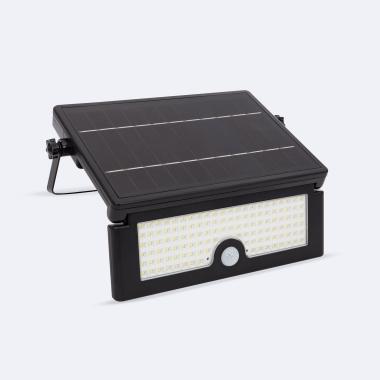

Before £47.99
£42.99
Ref 106367
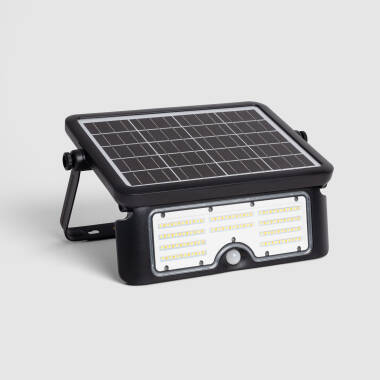
Solar 10W LED Floodlight IP54 with PIR Motion & Twilight Sensor
In Stock, delivery in 24/48h
- Wattage 10 W
- Voltage Range 220-240V AC
- Lumen 1600 lm





Brands related to this category


About LED Motion Sensor Floodlight Series
Within the LED floodlights range, motion-sensor models stand out for their ability to respond automatically to activity in the space, providing light only when it’s needed and reducing unnecessary electricity use.
Floodlights with an integrated motion sensor
Integrating a presence detector into an LED floodlight automates switching on and off. These systems detect changes in the environment—such as people or vehicles passing by—triggering the light instantly.
This type of lighting is especially useful for access points, gardens, garages, patios, façades and walkways, where it isn’t necessary to keep the light on continuously, but instant lighting is needed when there’s activity.
Motion detector vs presence sensor: what’s the difference?
Although the terms are often used interchangeably, there are some nuances.
A motion detector typically reacts to clearer, broader movement, while a presence sensor is more sensitive and can detect subtle movement, even at short range.
With LED floodlights, both systems fulfil the same practical function: switching the light on when presence is detected, improving convenience and energy efficiency.
Advantages of LED floodlights with a presence sensor
Using LED floodlights with a motion sensor offers multiple benefits compared with traditional lighting systems:
- Energy savings, as they switch on only when movement or presence is detected.
- Greater deterrent security against unwanted intrusions.
- Automatic switching without the need for wall switches.
- Long service life thanks to LED technology.
- Reduced maintenance and lower electricity consumption.
These advantages make them a popular choice for both domestic and professional environments.
Common applications for motion sensor floodlights
Motion sensor floodlights suit a wide range of uses, both outdoors and indoors.
Outdoor lighting for homes
At home, motion sensor floodlights are especially useful in areas where you come and go frequently, or where you want to improve security without keeping the light on all the time.
- Access points and entrance doors: the presence sensor turns the light on as you arrive, making it easier to open the door and improving visibility around the entrance.
- Gardens and paths: they provide light only when someone passes by, helping to avoid dark spots and improving orientation without increasing constant consumption.
- Terraces, patios and porches: ideal for automatic switching when the area is in use, with practical, convenient everyday lighting.
- Façades and perimeters: by detecting movement or presence near the property, they act as a deterrent and increase the feeling of security.
Because they focus on efficiency and convenience at home, the most popular residential LED floodlights are those that include a motion sensor—especially when the goal is to automate outdoor lighting and optimise consumption.
Garages and walkways
In garages, corridors, storerooms or shared areas, motion-sensor floodlights provide very practical automatic lighting—especially in spaces where light is needed only for a few minutes. The motion sensor switches the floodlight on when you enter and keeps visibility while there’s movement, preventing the classic “I’ve left the light on” and significantly reducing electricity consumption.
Beyond efficiency, they also improve safety and comfort. In a garage or shared access, instant light makes manoeuvring and moving around easier, while in corridors, stairs or storage rooms, presence-based switching removes reliance on wall switches—particularly useful when your hands are full or ambient light is low.
Installations without access to mains power
For locations where a conventional electrical installation isn’t possible, there are solutions such as battery-powered LED floodlights, which include a motion sensor and operate автономously—ideal for temporary or hard-to-reach areas.
Sensor settings and parameters
Most motion-sensor floodlights can be configured to fine-tune their behaviour and adapt to the environment. Correct settings make the difference between a comfortable, efficient installation and one that turns on when it shouldn’t—or turns off too soon.
- On-time after detection: defines how long the light stays on after detection. For quick walkways, a short time may be enough, while in garages, entrances or patios a longer delay helps avoid unexpected switch-off if movement stops for a few seconds.
- Motion sensitivity: adjusts how easily the floodlight triggers. Higher sensitivity detects people sooner, but if there’s vegetation, animals or nearby traffic, lowering it can reduce unwanted activations.
- Ambient light threshold: indicates from what light level the sensor allows switching on. This prevents activation in full daylight and ensures the floodlight works only when it adds value—at dusk or in areas with limited natural light.
- Detection range and angle: define the area “covered” by the sensor. Correct adjustment helps cover just the intended zone—such as an access point or a section of path—and prevents triggering due to movement outside the useful area.
With these settings, the floodlight can respond precisely to each use case, improving the experience, reducing consumption and avoiding unwanted activations.
Design, power and energy efficiency
In addition to the presence sensor, it’s important to choose the right LED floodlight based on power, beam angle and the required luminous flux. Good design ensures effective lighting without glare and with optimised consumption.
Combining LED technology with a motion sensor makes these floodlights a highly efficient solution from both an energy and cost perspective.
Reliability and resistance for outdoor use
Motion sensor floodlights are designed to withstand demanding conditions, especially outdoors. Robust housings, high protection ratings and durable components ensure reliable operation in rain, dust and temperature changes.
This makes them suitable for continuous, long-term use in both residential and professional settings.
Frequently asked questions about motion sensor floodlights
What’s the difference between a presence sensor and a motion detector?
The main difference is sensitivity. A presence sensor detects more subtle movement, while a motion detector responds to more obvious movement.
Do motion sensor floodlights use more energy?
No—quite the opposite. Because they switch on only when movement or presence is detected, they reduce electricity use compared with lights that stay on continuously.
Can the on-time be adjusted?
Most models allow you to adjust how long the light stays on after presence is detected.
Are there motion sensor floodlights without wiring?
Yes—you can find solar LED floodlights with a motion sensor, which are a practical solution for areas without a power connection.