
Solar LED Floodlights
Solar LED floodlights are an autonomous, cost-effective and easy-to-install outdoor lighting solution, ideal for areas without direct access to mains power. Powered by solar energy, they can light gardens, paths, façades and walkways while reducing energy consumption and installation constraints.
Featured ranges


Our featured products from Solar LED Floodlights
- -10%
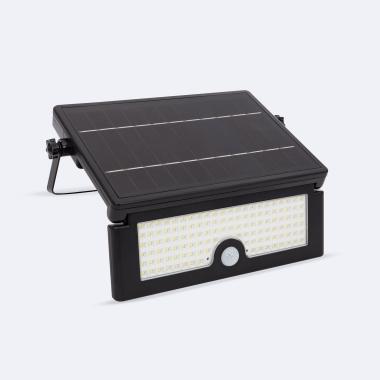

Before £47.99
£42.99
Ref 106367
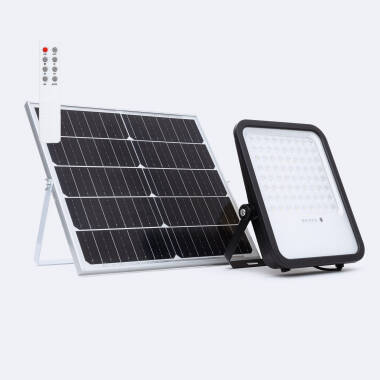
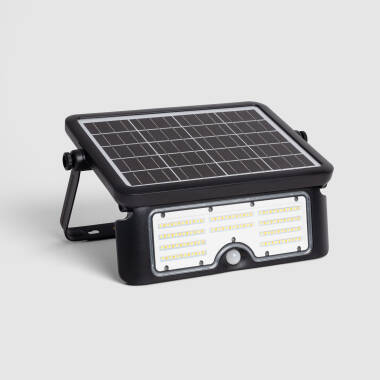
Solar 10W LED Floodlight IP54 with PIR Motion & Twilight Sensor
In Stock, delivery in 24/48h
- Wattage 10 W
- Voltage Range 220-240V AC
- Lumen 1600 lm
- -35%
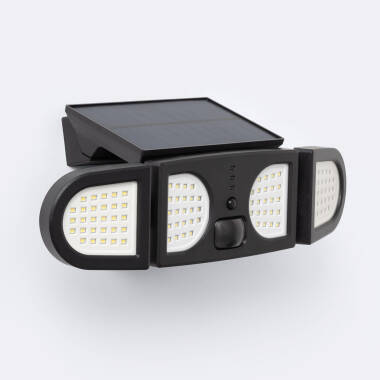
Essential
Before £21.79
£14.19
 (3)
(3)- Wattage 5 W
- IP Rating IP65
- Battery Operated Yes
- -10%
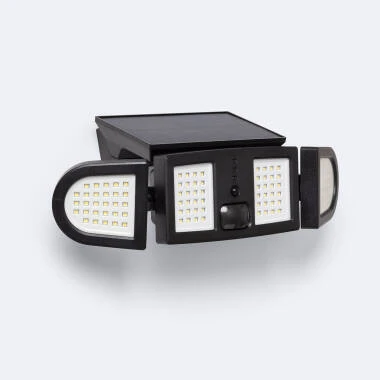
Essential
Before £21.79
£19.59
Ref 126658
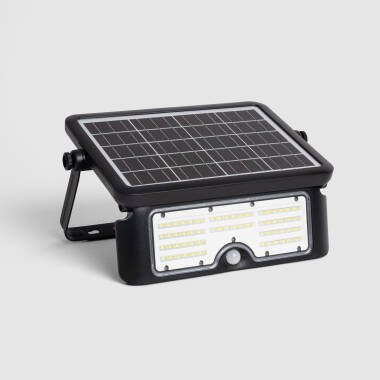
Cave 5W Solar LED Floodlight with Motion & Twilight Sensor IP65
In Stock, delivery in 15-20 days
- Wattage 5 W
- IP Rating IP65
- Battery Operated Yes
2 options 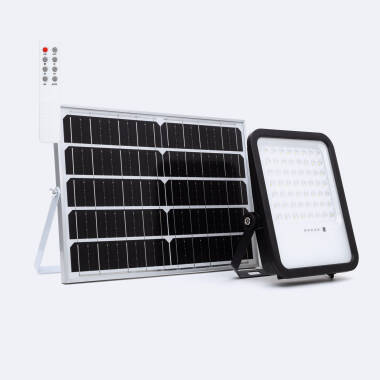
Advanced
£54.99
Ref 110636
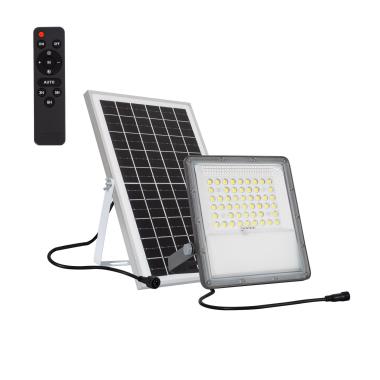
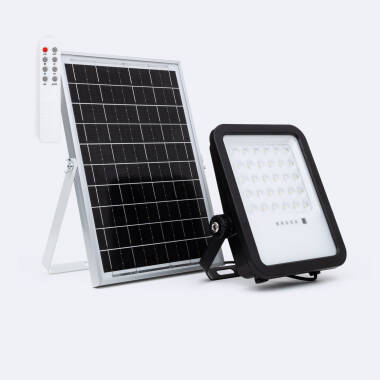
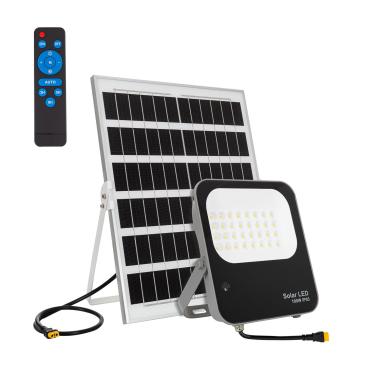
AdjustableNurda Outdoor Solar LED Floodlight 2100lm IP65 with Remote Control
In Stock, delivery in 15-20 days
- Wattage 20 W
- Voltage Range 5V DC
- Lumen 2200 lm
2 options




About Solar LED Floodlights
Autonomous solar lighting: how it works
Solar LED floodlights operate on a simple, efficient principle. A photovoltaic panel captures solar energy during the day and stores it in a built-in battery. When ambient light becomes insufficient, the floodlight uses this stored energy to produce light.
This energy autonomy clearly sets solar floodlights apart from traditional wired solutions. Unlike standard LED floodlights that require a mains connection, solar versions run without cabling, trenching or major works, significantly reducing installation time and cost.
Recent advances in LED technology and lithium batteries have greatly improved the reliability and lighting duration of solar floodlights, even when sunlight conditions vary.
Light output and energy efficiency
Contrary to common assumptions, today’s solar LED floodlights provide a lighting level that suits many outdoor uses. Their efficiency relies on several key factors:
- LED efficacy (lm/W),
- battery capacity,
- intelligent energy management,
- solar panel quality.
Rather than aiming for permanent full-output lighting, solar floodlights are designed to deliver light at the right time and at the right level—optimising autonomy while ensuring visibility and security.
Solar LED floodlights with motion sensor
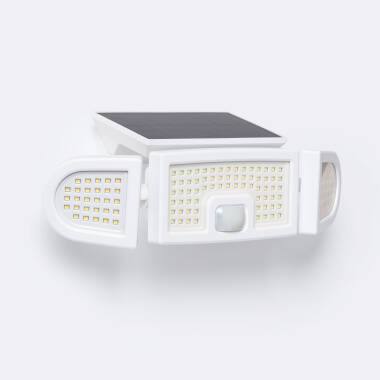
Combining a solar system with a presence sensor is one of the most efficient outdoor lighting set-ups. Solar LED floodlights with motion sensor switch on only when presence is detected, then switch off automatically after a set time.
This brings several major benefits:
- significant reduction in energy use,
- extended battery runtime,
- effective deterrence against intrusions,
- everyday convenience.
These models are especially suitable for entrances, gates, driveways/paths, garages, façades and perimeter areas. In this configuration, they follow the same usage logic as wired motion sensor LED floodlights, with the added benefit of operating without a mains supply.
Battery, runtime and intelligent energy management
The battery plays a central role in solar floodlight performance. Modern models mostly use lithium batteries, valued for their stability, service life and ability to handle many charge/discharge cycles.
Depending on the model, energy management may include:
- automatic brightness adjustment,
- several operating modes (reduced continuous light, full output on detection),
- power adaptation based on charge level.
This approach is similar to that used in some rechargeable LED floodlights, where the goal is to maximise runtime while maintaining comfortable light.
Simple, fast installation with no works
One of the main advantages of solar LED floodlights is ease of installation. With no mains wiring required, they can be installed almost anywhere:
- on a façade,
- on a wall,
- on a pole or bracket,
- along a path or walkway.
No work on the electrical network is needed, enabling quick commissioning even in hard-to-reach areas. You simply need to position the solar panel correctly to ensure sufficient daylight exposure.
This simplicity makes solar floodlights particularly attractive for evolving or temporary installations, or whenever you want to avoid major works.
Recommended uses for solar LED floodlights
Solar LED floodlights cover a wide range of outdoor applications, including:
Gardens and green areas
They can mark paths, light walkways or secure certain access points without running cables across the ground.
Paths, walkways and secondary access points
With a motion sensor, lighting activates only when someone passes, improving visibility without permanent lighting.
Façades and perimeters
Installed on a façade or wall, solar floodlights act as a deterrent while also highlighting outdoor volumes.
Areas without mains power
They’re particularly suitable for shelters, outbuildings, remote areas or temporary installations that become permanent.
Limitations and best practices
Although solar LED floodlights are very practical, a few limitations should be considered:
- runtime depends on sunlight exposure,
- poor panel positioning reduces performance,
- they are not designed to replace very high-power industrial lighting.
For best results, it’s recommended to:
- choose a model suited to the real use case,
- favour a motion sensor for walkways,
- avoid obstacles that shade the solar panel,
- match light output to the area to be lit.
Solar floodlights vs wired solutions
Solar LED floodlights don’t always replace wired solutions, but they complement them effectively. Where a mains connection is complex, costly or unnecessary, solar becomes a logical alternative.
For permanent, very powerful or professional lighting, wired solutions remain more suitable. For occasional, autonomous and energy-efficient lighting, solar stands out as a modern, practical option.
Why choose solar LED floodlights?
Solar LED floodlights offer an excellent balance between performance, simplicity and energy savings. They allow you to:
- light without works,
- reduce electricity consumption,
- improve outdoor security,
- benefit from automatic, autonomous lighting.
They fully align with a more responsible lighting approach—using renewable energy while keeping the advantages of modern LED technology.
FAQ about outdoor solar LED floodlights
Are solar LED floodlights powerful enough?
Yes, for many outdoor uses such as paths, gardens, entrances and perimeters. They are designed to provide functional, reassuring lighting—provided you choose a model suitable for the area and use.
Do they work in winter or with low sunlight?
They continue to work, but runtime can vary depending on solar exposure. Correct panel positioning and using a motion sensor help maintain reliable performance year-round.
What’s the difference between a solar floodlight and a rechargeable floodlight?
A solar floodlight recharges automatically from the sun, while a rechargeable floodlight requires manual charging from mains power. Both are autonomous, but solar is ideal when no socket is available.
Do solar LED floodlights need any special maintenance?
Maintenance is minimal. It’s recommended to clean the solar panel occasionally to ensure optimal charging and to check that positioning remains correct throughout the seasons.