
Ceiling Fans
Ceiling fans are one of the most comfortable and efficient ways to improve everyday comfort. They create a steady breeze that makes the space feel cooler, encourage air circulation and, in many cases, also provide lighting and an extra decorative touch.
Our featured products from Ceiling Fans
- -37%
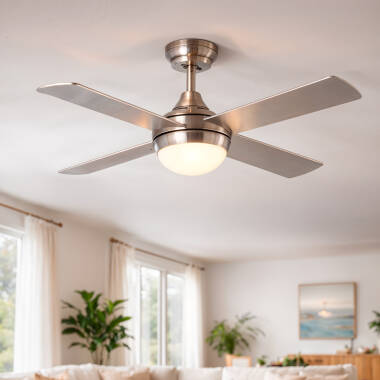

Before £97.99
£61.99
 (4)
(4) - -37%
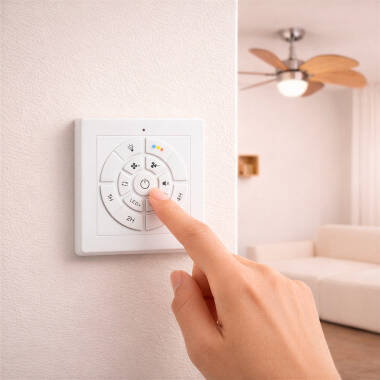
Before £8.69
£5.49
- -33%
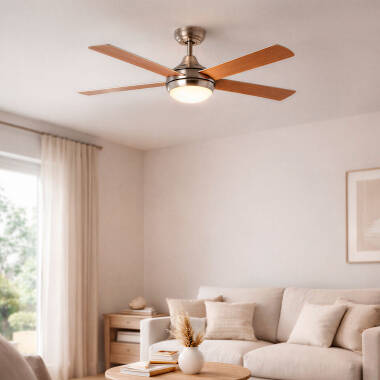
Before £97.99
£65.99
 (6)
(6)




Brands related to this category


About Ceiling Fans
Today you can choose from minimalist models, natural-inspired designs, smart-controlled options, or even versions made for terraces and porches. Here you’ll find choices for every room and preference: from compact fans for small bedrooms to large-diameter units for spacious living rooms, with quiet DC motors, remote control, or WiFi connectivity.
Why buy a ceiling fan?
A ceiling fan doesn’t lower the temperature like air conditioning, but it does improve thermal comfort by moving air evenly. That means more comfort with very sensible energy use. Many models also include a reversible mode so you can use them in winter too.
Ceiling fans stand out for:
- Instant comfort: a soft, continuous breeze without annoying drafts.
- Efficiency: especially in DC-motor models.
- More even air: reduces “stuffy” spots and improves ventilation.
- Design: blends in as a decorative element.
- Year-round use: with summer/winter function on compatible models.
Choose your fan based on lighting
Lighting is one of the easiest criteria to apply. You can pick a model that replaces the main ceiling light, or a no-light model if the room is already well lit.
With integrated light
If you want airflow and lighting in one point, a ceiling fan with light is a practical and very common choice for living rooms and bedrooms. Models with dimmable LED lights let you adjust lighting to different times of day.
Ideal if you want to replace the main light, prefer a cleaner finish (fewer light points), and like the idea of controlling lighting and airflow from the remote or the app.
Without light
If you already have lighting installed (spotlights, wall lights, track systems) or prefer to separate functions, ceiling fans without light offer a more discreet design and often work especially well in rooms where the ceiling light point isn’t centred.
The best option if you don’t want to rely on the fan as the main light and prefer a purely functional, design-led model.
AC and DC motors in ceiling fans
One of the biggest day-to-day differences is the motor, because it affects noise level, smooth rotation and energy use in continuous operation. Choosing between AC and DC really matters—especially if you’ll run it for many hours or install it in a bedroom.
AC motor (classic)
Traditional AC motors can be a valid alternative in certain situations. If use will be occasional or you’re looking for a simpler option, they can be perfectly suitable.
DC motor (our recommendation)
quiet DC ceiling fans stand out for efficiency and smooth operation. They typically offer more speed levels and finer control, which is especially useful in bedrooms.
They’re one of the best options if you prioritise quiet nights, want low consumption for daily use, and prefer a stable, pleasant breeze even at low speeds.
Control options for ceiling fans
Control type has a big impact on everyday convenience. Depending on the model, you can adjust speed, set an auto-off timer and manage lighting without getting up.
Remote control
ceiling fans with remote are perfect for controlling speed, timer and—on models with light—lighting from the sofa or bed. A particularly convenient option for bedrooms and living rooms.
WiFi
If you want mobile control and automations, ceiling fans with WiFi let you adjust the fan wherever you are and, depending on the model, integrate it into routines (for example, turning on at low speed at night or switching off at a set time).
Outdoor ceiling fans
For porches, covered terraces or semi-enclosed areas, it’s best to choose models designed to handle humidity and changing conditions. Besides improving comfort on summer nights, the airflow from an outdoor ceiling fan helps keep mosquitoes at bay—an added bonus.
Ceiling fan sizes by room
Choosing the right size fan makes a real difference in comfort and performance. In this category you can filter by room size to get it right first time.
For small rooms
ceiling fans for small rooms are compact and well proportioned, moving air effectively without visually overwhelming the space. A great choice for small bedrooms, home offices and kids’ rooms.
For medium rooms
ceiling fans for medium rooms offer a versatile balance of airflow, looks and features without oversizing the space. They’re a great fit for main bedrooms, medium living rooms and dining areas.
For large rooms
If you need to cover bigger spaces, ceiling fans for large rooms usually feature a larger diameter and stronger ventilation capacity. They work especially well in large living rooms, open-plan areas and high ceilings—particularly if you choose the right downrod length.
Using a fan in winter
ceiling fans summer-winter function include a reversible mode, meaning they can change the direction of rotation. In summer they push air downward to create a cooler breeze; in winter they spin the other way to move warm air that gathers near the ceiling and distribute it more evenly.
If you want a product for year-round use, this is a very worthwhile feature.
Styles and finishes that make the difference
Beyond performance, style matters. Choose the finish that best fits your décor and the visual effect you want, from warm natural looks to more modern, discreet designs.
Fans with a natural finish
wooden ceiling fans add a natural, elegant look—ideal for Nordic, Mediterranean or rustic styles. A great option if you want the fan to be a visual feature.
Fans with a “light fixture” look
ceiling fans with retractable blades combine design and function: when the fan isn’t in use, the blades retract, and the unit looks more compact—like a [pendant light]. Highly sought after for modern living rooms and bedrooms.
Minimalist fans
bladeless ceiling fans focus on a more integrated aesthetic. An attractive alternative if you prioritise a contemporary look and want a more discreet “invisible blades” effect than a traditional fan.
Installation and maintenance (the essentials)
For stable, quiet performance, a firm, level installation is most important.
Mounting: make sure the mounting point and bracket are designed for fans, so they support the weight securely and prevent vibration.
Height: if the ceiling is low, prioritise low-profile models or a short downrod to keep a safe, comfortable clearance.
Maintenance: periodic blade cleaning and an occasional check of screws is enough to keep it stable and quiet over time.
FAQs about ceiling fans
How many blades should a good ceiling fan have?
There’s no “magic” number. A fan can perform very well with 3, 4 or 5 blades—the real difference comes from the overall package: diameter, blade design, balance and motor quality.
What’s the best ceiling fan this year?
The best one is the fan that matches your room and how you’ll use it. For bedrooms, quiet operation (DC motor) is often the priority; for living rooms, looks and/or lighting; and for outdoors, durability.
What power or wattage should a ceiling fan have?
With fans, watts aren’t the only indicator. An efficient model can move a lot of air with low energy use, especially if it’s DC. The key is choosing the right size for the room (small, medium or large) and having useful speed settings for everyday use.
What advantages does a ceiling fan have over air conditioning?
Ceiling fans stand out for low energy use, instant comfort and more economical long-run use, as well as more even air distribution. They also pair well with air conditioning, because they enhance the cooling sensation and allow a more moderate temperature setpoint.
How much does it cost to install a ceiling fan?
It depends on whether you already have a suitable electrical point and a prepared mounting support, or whether the fixing needs reinforcement or the wiring needs adapting. In general, the easier the access and pre-installation, the lower the labour cost.
What’s the recommended minimum height to install a ceiling fan?
It should be at a safe height from the floor and with enough clearance from the ceiling so air can circulate properly. For low ceilings, prioritise compact or low-profile models; for high ceilings, the right downrod can improve performance.
How do you wire a ceiling fan?
It’s usually connected to the ceiling electrical point (and, depending on the model, to a receiver for remote or WiFi). To ensure a secure mount and correct wiring, it’s recommended to use a professional if you don’t have experience.
How long does a ceiling fan last?
With correct installation and periodic cleaning, a fan can last many years. Durability depends on the motor, daily use and the environment (dust, humidity or salt air in coastal areas). Basic maintenance helps keep performance optimal for longer.