
Single-Circuit LED Track and accessories
Single-phase tracks and accessories allow for the creation of flexible, orderly, and easy-to-adapt lighting lines in stores, contract spaces, and residential projects with a technical focus.
Our featured products from Single-Circuit LED Track and accessories
- -16%
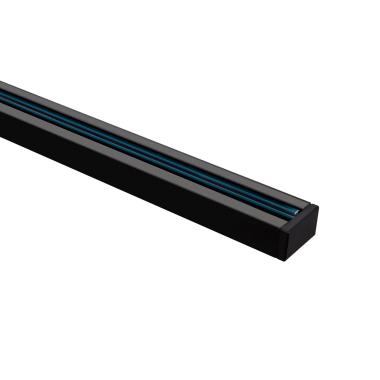
Essential
Before £6.29
£5.29
 (14)
(14)- Voltage Range 220-240V AC
- Max Wattage 250 W
- IP Rating IP20
2 options - -15%
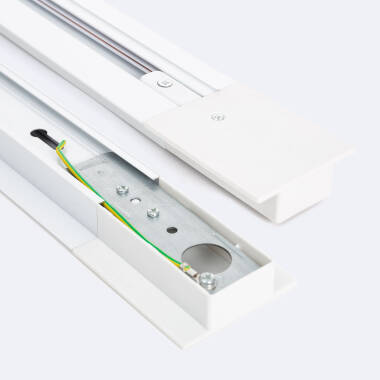
Essential
Before £8.39
£7.09
- Voltage Range 220-240V AC
- IP Rating IP20
- Battery Operated No
2 options 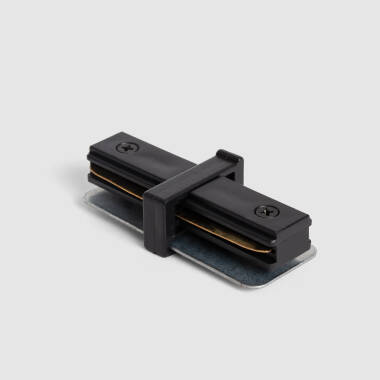
Essential
£1.59
(11)- IP Rating IP20
- Dimensions 78 mm x 34 mm x 20 mm
- Width 34 mm
2 options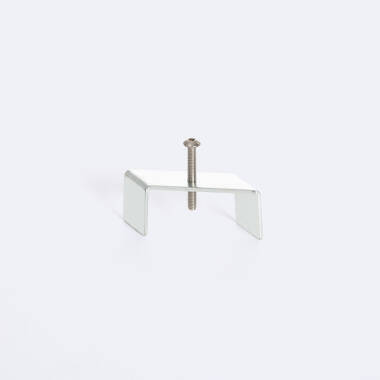
Essential
£0.68
- Voltage Range 220-240V AC
- IP Rating IP20
- Battery Operated No




You may also be interested in
About Single-Circuit LED Track and accessories
In a track lighting system, not everything depends on the luminaire. The quality of the installation, its adaptability, and the ease of expansion depend largely on the tracks and accessories that complete the set. In single-phase systems, this base takes on even more importance because it defines how light points are distributed, how the line is powered, and what margin exists for modifying it over time.
What are single-phase tracks and how do they work
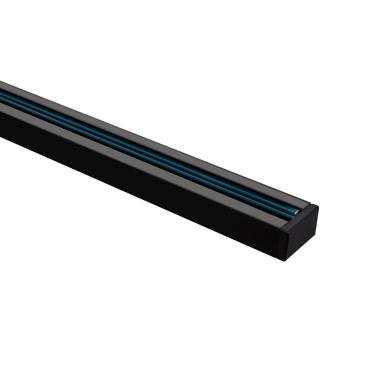
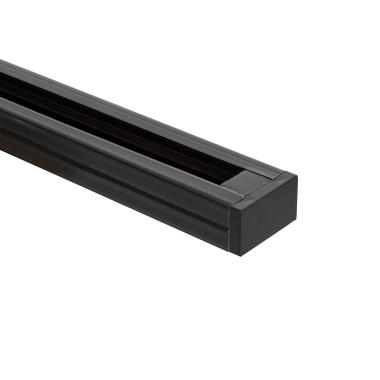
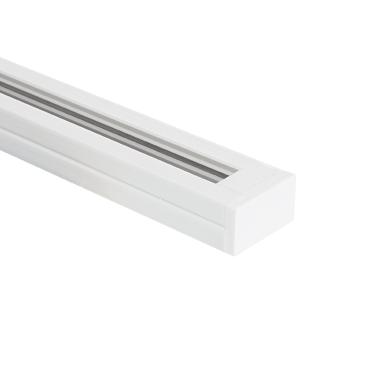
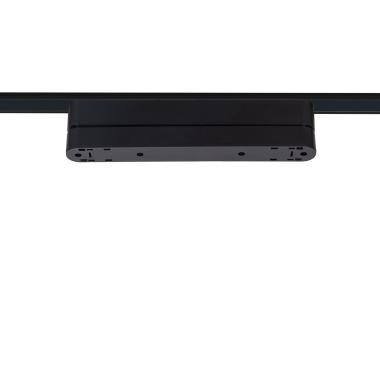
Single-phase tracks are electrified profiles that power and support compatible luminaires within a single ignition line, so the entire section functions as a single unit. On this base, the necessary accessories are incorporated to complete the installation, such as power feeds, connectors, straight or angled joiners, end caps, fixing supports, and, in some cases, suspension systems.
More than a linear profile, the single-phase system functions as a modular structure that allows for creating light paths, extending lines, turning corners, and adapting the installation to the real geometry of the space. The track acts simultaneously as a mechanical support and a power channel, allowing for the incorporation of luminaires at different points of the path without the need to create an independent base for each one.
By working with a single phase, all elements connected to that section share the same ignition. This simplicity facilitates installation, daily use, and future modifications, as it allows for moving luminaires, adding new points, or expanding the line without completely redoing the electrical installation.
Why the track is as important as the luminaire
In many projects, attention is focused only on the single-phase LED track light, but the track is what makes the system's flexibility possible. If the base is not well planned, the installation loses adaptability, assembly becomes complicated, and the possibility of future growth is limited.
A well-chosen track allows for distributing light points logically, maintaining an orderly aesthetic on the ceiling, and facilitating both the initial installation and subsequent modifications. It also influences the mechanical stability of the set, especially when working with multiple luminaires, angled joiners, or long paths.
This is particularly relevant in retail and contract settings, where the space may change several times throughout its useful life. But in housing too, it makes sense to think of the track as infrastructure and not just as a specific support. A well-planned line maintains its utility even if the table, island, bookshelf, or living room layout changes.
Types of accessories for single-phase tracks
Accessories are what allow the track to transition from a straight line into a solution adaptable to the space. Choosing them well is as important as correctly selecting the profile or the luminaire.
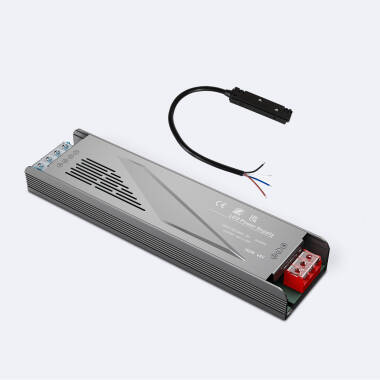
Power feeds
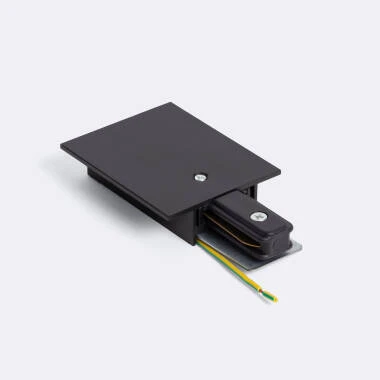
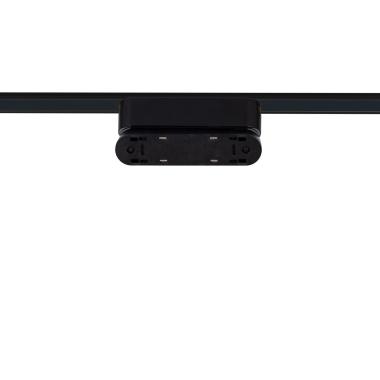
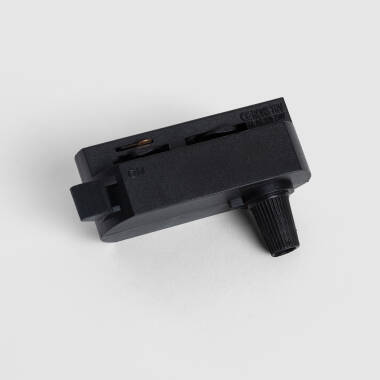
The power feed is the point where current enters the track. It can be located at one end or, in some systems, in other specific positions according to the installation design. Its compatibility with the profile is essential because the correct functioning and electrical continuity of the system depend on it.
Straight joiners
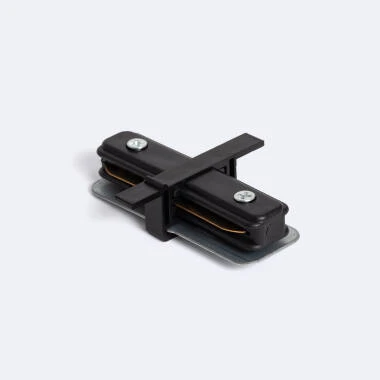
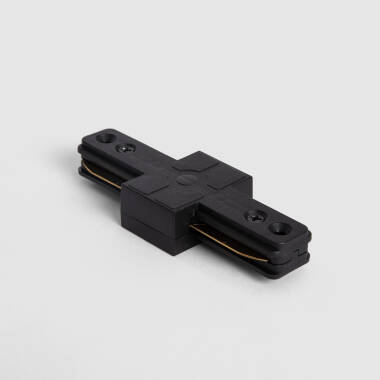
Straight joiners allow the line to be extended when a single track section does not cover the desired length. They are fundamental in commercial or contract projects, where it is common to work with paths longer than 2 or 3 meters and adapt the installation to the real geometry of the premises.
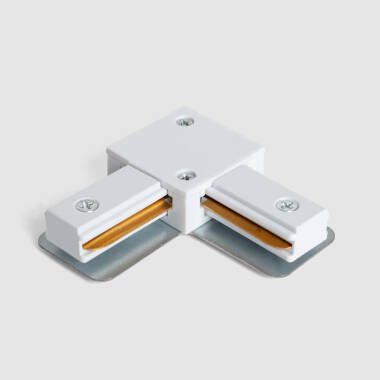
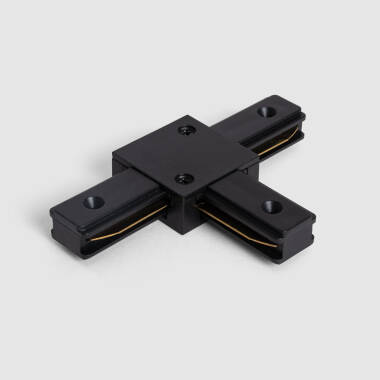
L, T, or X joiners
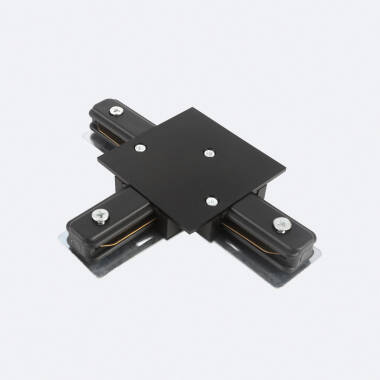
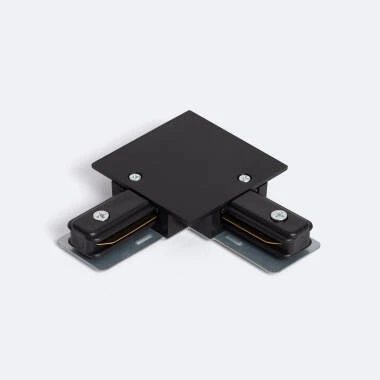
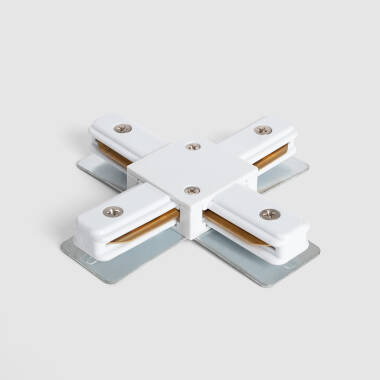
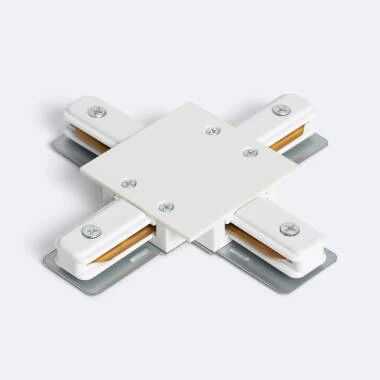
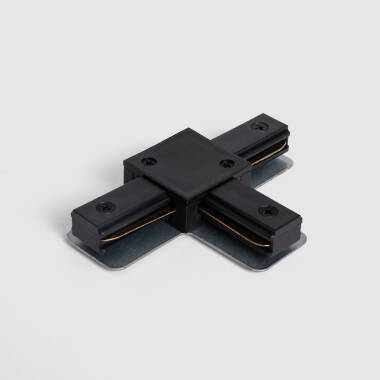
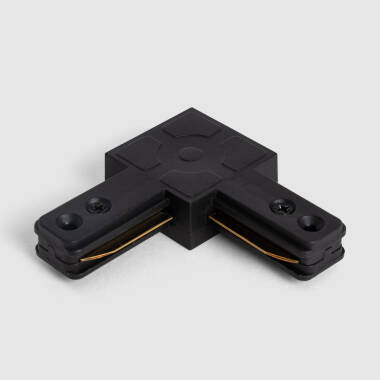
When the system must change direction or branch out, angled or cross joiners come into play. L-joiners allow for turning corners, T-joiners resolve branches, and X-joiners are used where several lines converge. In well-designed projects, these accessories allow for maintaining visual and functional continuity without improvisations.
End caps
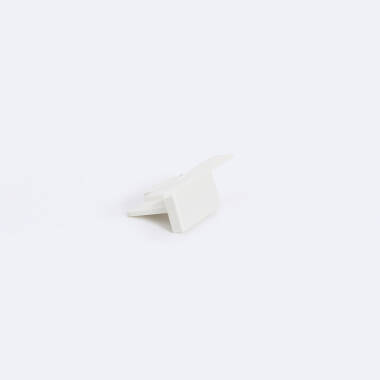
End caps close the end of the track when the line terminates at that point. Although they seem like a minor detail, they help finish the installation, protect the profile, and offer a cleaner look.
Mounts and fixings
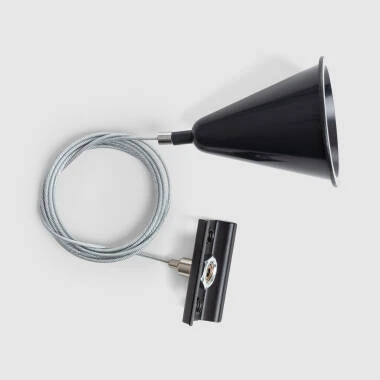
Fixing systems determine how the track is installed on the ceiling or a specific surface. In surface applications, the mounts must guarantee stability and correct alignment of the profile. In other projects, suspension systems are used when it is necessary to drop the track or clear specific heights.
How to choose single-phase tracks according to the project
The choice of track should not be made based solely on length or finish. The right profile depends on the type of space, the number of planned luminaires, the installation method, and the margin for modification desired for the future.
In a small shop or a home, a simple line may be enough to resolve a specific area with a few light points. In a more complex space, it may be necessary to provide several lines, angled joiners, or future expansions. Therefore, it is advisable to think of the system not only for the initial moment but also for the real evolution of the project.
It is also important to value the track's finish in relation to the ceiling and the overall aesthetic of the space. In many spaces, the track not only fulfills a technical function but is also part of the visual aspect of the installation.
Technical criteria to consider
A single-phase track system must be chosen based on practical and technical criteria. It is not enough for the profile to fit visually or have the right length.
Compatibility between track and accessories
All elements of the system must belong to the same compatible family. Track, power feed, joiners, caps, and luminaire adapters must be designed to work together. Incompatibility at any of these points can generate assembly problems, electrical continuity issues, or mechanical instability.
Length and planning of the sections
The length of the sections conditions both the installation design and the ease of assembly. In small spaces, working with well-adjusted measurements avoids unnecessary joints. In larger projects, good planning of the sections simplifies installation and helps to better anticipate paths, intersections, and expansions.
Mounting type
Installing a track flush against the ceiling is not the same as suspending it or integrating it into a more complex linear composition. The type of mounting influences both the choice of accessories and the final perception of the system within the space.
Common applications of single-phase tracks and accessories
The single-phase system is used in many environments because it easily solves a very specific need: having a lighting structure that can grow, move, or be reconfigured without redoing the ceiling.
Retail and small shops
In stores, single-phase tracks allow for creating lighting lines that accompany walls, central tables, displays, or main paths. When the collection or the premises' layout changes, the infrastructure remains valid and allows for repositioning luminaires quickly.
Hospitality and contract spaces
In cafes, restaurants, receptions, and public spaces, the track helps organize lighting in a clean and flexible way. It allows for handling bars, tables, decorative areas, or paths without multiplying connection points on the ceiling.
Contemporary housing
In homes, single-phase tracks and accessories are increasingly used to visually organize kitchens, living rooms, hallways, or studios. A well-traced line can accompany an island, a table, or a bookshelf and continue to function even if the furniture changes over time.
Offices and studios
In offices, creative studios, or small workspaces, the system can serve as a versatile infrastructure to illuminate work areas, meetings, or support walls without overly complicating the installation.
Advantages of single-phase tracks
Their main advantage is that it allows for building a flexible infrastructure without entering into complex control systems. They provide freedom to move luminaires, extend paths, or adapt lighting to real changes in the space.
They also simplify the project's maintenance and evolution. If an area needs more light, if a new display table is added, or if a room's use changes, the system can be adjusted without redoing the entire electrical installation.
At a visual level, they also offer an orderly and coherent solution. Well-planned, tracks do not just solve the technical part but help structure the ceiling and integrate lighting with a cleaner and more contemporary language.
Frequently asked questions about single-phase tracks and accessories
What does it mean for a track to be single-phase?
It means that the entire section works with a single ignition line. Luminaires connected to that line are activated together.
Which accessories are essential in an installation?
It depends on the design, but normally you need at least a power feed, fixing elements, and an end cap. From there, straight or angled joiners can be added depending on the track's path.
Can a single-phase track installation be expanded?
Yes, provided the system has been planned with adequate compatibility and sufficient capacity. This is one of its great advantages compared to completely fixed installations.
Are they only for stores?
No. Although they are very common in retail, they are also widely used in hospitality, offices, showrooms, and contemporary housing.
What should I check before choosing the system?
It is advisable to check the compatibility between track and accessories, the mounting type, the required length, the possibility of expansion, and the coherence of the system with the planned luminaires.