
Tracks and Accessories
Tracks and accessories make it possible to create flexible, organised and easy-to-adapt lighting systems in projects where the light distribution may change over time.
Our featured products from Tracks and Accessories
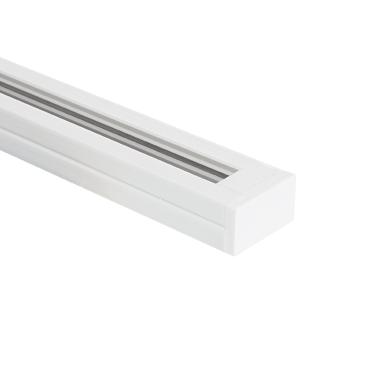
Essential
£5.49
 (5)
(5)- Voltage Range 220-240V AC
- Max Wattage 250 W
- IP Rating IP20
2 options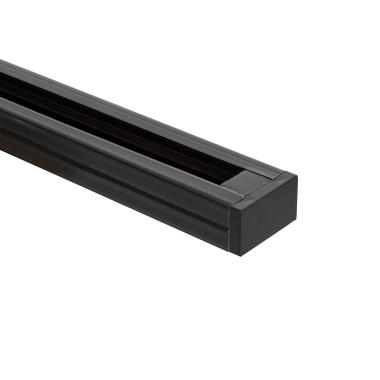
Essential
£7.29
(9)- Voltage Range 220-240V AC
- Max Wattage 250 W
- IP Rating IP20
2 options- -16%
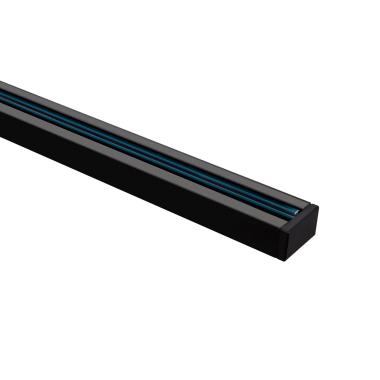
Essential
Before £6.29
£5.29
(14)- Voltage Range 220-240V AC
- Max Wattage 250 W
- IP Rating IP20
2 options 
Essential
£13.49
 (20)
(20)- Voltage Range 220-240V AC
- Max Wattage 250 W
- IP Rating IP20
2 options





About Tracks and Accessories
In technical and commercial lighting, the final result does not depend only on the luminaire. The structure on which it is installed, the ease of reorganising spotlights and track layouts, and the compatibility between all system components are also important. This is why tracks and accessories form part of the project from the very beginning, both in professional spaces and in residential environments where a more versatile installation is required.
What are lighting tracks and accessories?
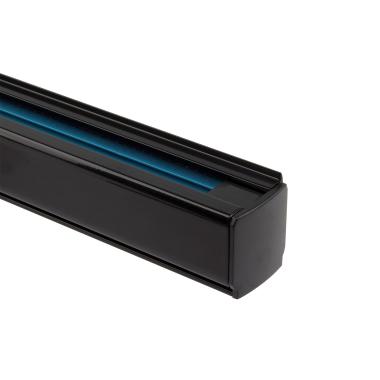
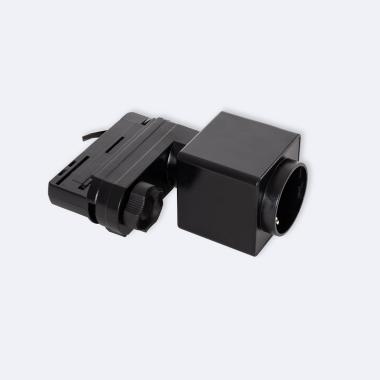
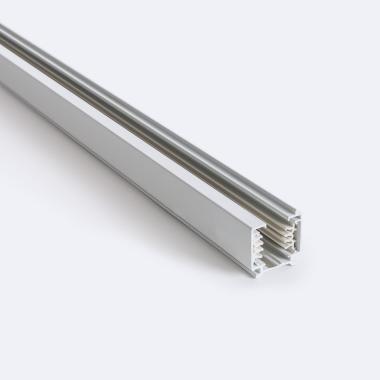
Lighting tracks are electrified profiles designed to power compatible luminaires, usually LED track spotlights, within the same track run. Inside, they integrate electrical conductors to which the spotlights connect by means of a compatible adapter, which transfers power and mechanically secures the luminaire. From there, the spotlight can be moved along the track and aimed at the desired area, usually with wide horizontal rotation and enough vertical tilt to adapt the light to different surfaces, pathways or points of interest.
Their main advantage is that they allow luminaires to be moved, re-aimed or replaced without having to redo the electrical installation every time the layout of the space or the lighting concept changes. In a retail store, for example, a central display may require a more intense and narrower beam, while a perimeter wall may need broader and more uniform lighting. Instead of modifying ceiling lighting points, the spotlights can simply be moved, re-aimed or replaced with more suitable models within the same system.
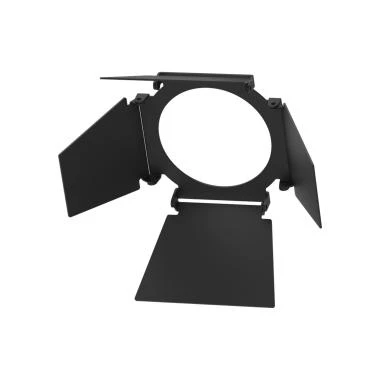
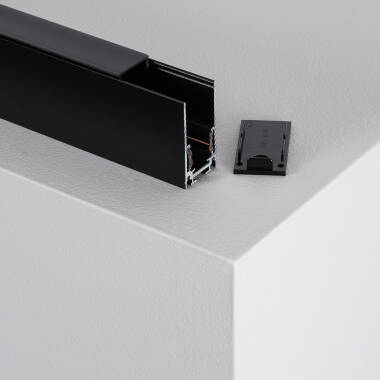
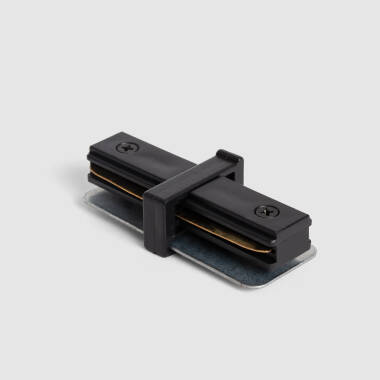
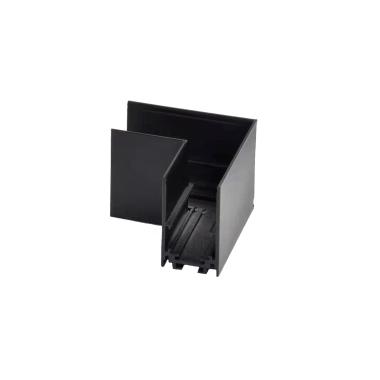
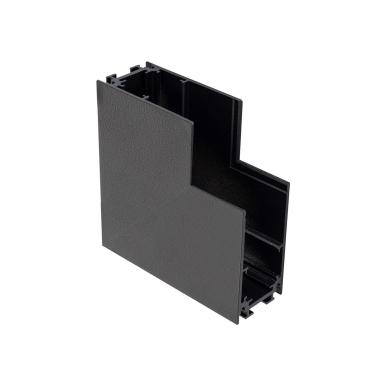
When talking about tracks and accessories, this does not refer only to the main profile. The system also includes power feeds, straight joints, L-shaped, T-shaped or cross joints, end caps, suspension parts, connectors and other fixing elements that allow the layout to adapt to the real architecture of the project. Without these accessories, the track loses much of its practical value.
For this reason, when planning an installation, it is important to assess not only the spotlight but the complete system as a whole. Both electrical safety and the real versatility of the installation in the medium and long term depend on this compatibility.
The type of track selected determines how the installation will behave. A single-phase system for simple uses, a three-phase system designed to divide switching circuits, a magnetic system focused on integration and modularity, or a DALI system aimed at precise light control do not follow the same logic. This is why the format should be clearly defined from the start.
Why choose a track system?
A track system is especially useful when lighting should not remain fixed for years. In retail stores, showrooms, hospitality spaces, offices or contemporary homes, the layout of furniture, products or usage areas can change frequently. Tracks allow those changes to be accommodated without opening new lines or rethinking the entire installation.
They also help maintain a cleaner ceiling layout. Instead of multiplying connection points or mixing different solutions, the track brings several luminaires together within the same infrastructure and simplifies the overall design. This not only provides greater visual order, but also makes maintenance and future expansion easier.
Another important advantage is the ability to adapt the system to the technical level required by each project. Some solutions are designed for simple installations, while others allow work by circuits, the integration of linear modules or precise scene control. This variety is precisely one of the reasons why tracks remain one of the most versatile solutions in lighting.
Types of tracks by system
Not all tracks work in the same way or respond to the same needs. Choosing the right type of system helps avoid limitations from the start and improves both use and the future evolution of the installation.
Single-phase tracks
Single-phase tracks work with a single switching line. They are a practical solution when a simple, easy-to-install system is required and when there is no need to separate circuits within the same profile.
They are often used in small shops, homes, offices, corridors or areas where flexibility is focused more on moving and aiming spotlights than on creating independent scenes or switching groups. When the project does not require complex zoning, a single-phase system can solve the installation very effectively with a clear and straightforward logic.
Three-phase tracks
Three-phase tracks allow three independent circuits to be used within the same profile. This makes it possible to separate groups of luminaires and control different areas without installing several tracks or duplicating ceiling runs.
They are especially useful in retail, showrooms, galleries, hospitality and commercial spaces where it is useful to differentiate shop windows, perimeters, featured products or circulation areas. Compared to single-phase tracks, they provide a higher level of flexibility when the project requires different usage scenes or more precise light organisation.
Magnetic tracks
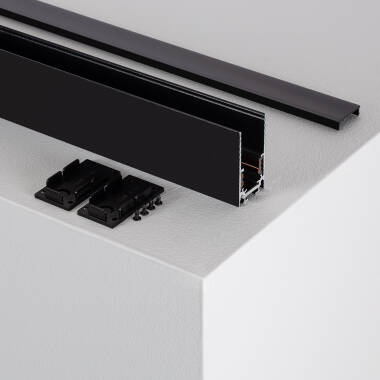
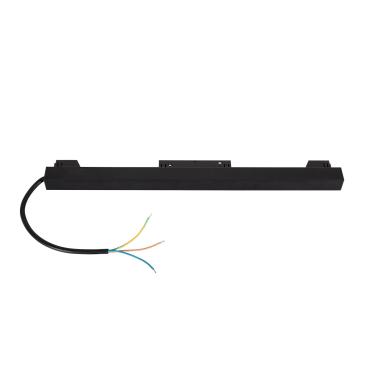
Magnetic tracks are designed to work with luminaires that are fixed by means of a magnetic system within a compatible ecosystem. Their main value lies in the modularity and visual integration of the complete system.
Within the same track, adjustable spotlights, linear modules, wall washers or suspended elements can coexist, depending on the system. This is why they fit particularly well in interior design projects, contemporary homes, retail and hospitality spaces where the aesthetics of the whole system are just as important as the lighting function.
In this type of solution, the track format also defines the compatibility of the entire system. For this reason, it should be chosen carefully from the start, maintaining consistency between profile, luminaires and accessories.
DALI tracks
DALI tracks are aimed at installations where dimming and control are a real part of the project. They allow work with luminaires compatible with the DALI protocol and make it easier to create scenes, groups and intensity adjustments with greater precision.
This type of system is especially useful in retail, hospitality, exhibition spaces, offices and environments where lighting changes according to schedule, occupancy or type of activity. More than a simple support infrastructure, the DALI track forms part of a much more complete control solution.
Common accessories in a track system
Although attention often focuses on the profile or the spotlights, the final result depends largely on the accessories. They are what allow the system to truly adapt to the space and ensure the installation is properly resolved.
Power feeds and connectors
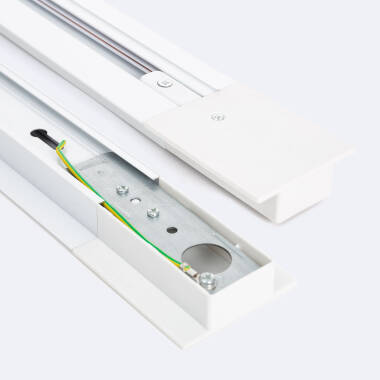
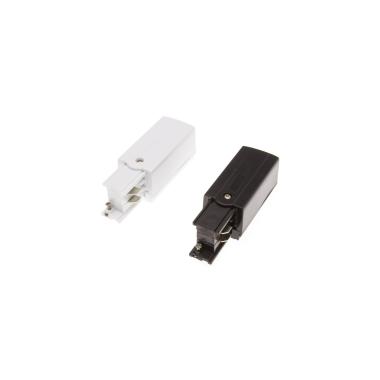
The power feed introduces current into the track and should be selected according to the layout and installation logic. It can be positioned at one end or in an intermediate position, depending on the system and the project design.
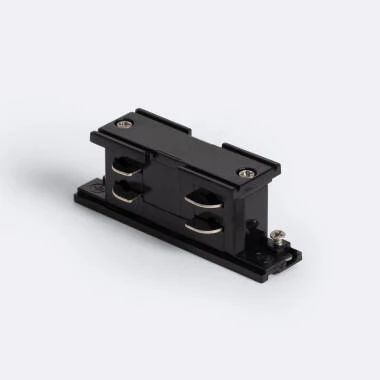
Connectors allow sections to be linked together and continuity to be maintained between parts. In simple installations they may go unnoticed, but in more complex projects they play an important role in both assembly and the final finish. When the system is properly resolved, it not only makes it easier to power the whole setup, but also allows the layout to be adapted without losing order or installation reliability.
Joints and layout components
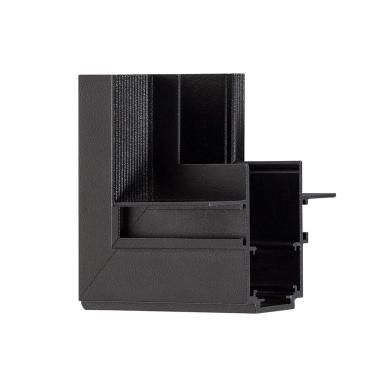
Straight, L-shaped, T-shaped or cross joints allow the track to adapt to perimeters, corners, branches and more open layouts. They are not simply shape pieces. They must also maintain mechanical and electrical continuity so that the system works correctly and preserves a clean installation.
Choosing a joint that is compatible with the type of track is essential to avoid fitting issues, gaps or future limitations.
End caps, suspension and fixings
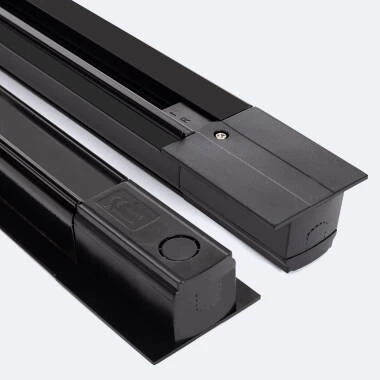
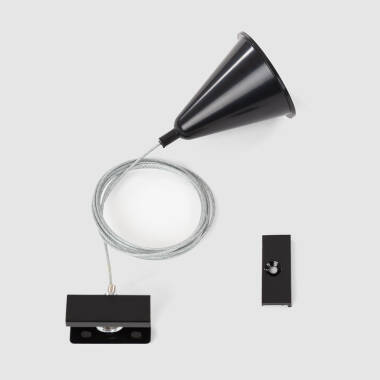
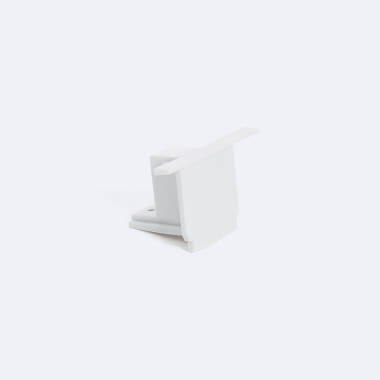
End caps close the run when the track does not continue. Suspension kits allow the system to be lowered when it needs to be brought closer to the useful plane or when the project seeks a lighter presence in spaces with high ceilings.
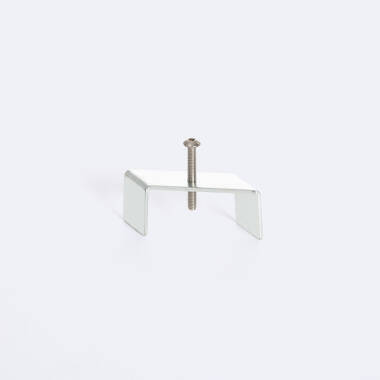
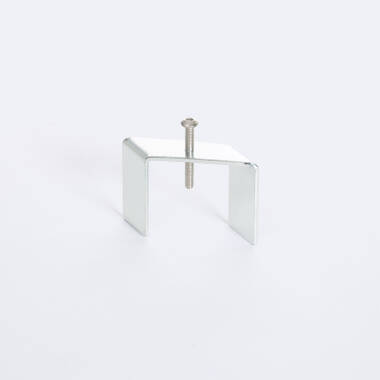
Fixings, clips and mounting parts also form part of the system’s real performance. Although they may seem secondary, they influence stability, the visual cleanliness of the whole installation and ease of installation.
How to choose tracks and accessories
Choosing the right track system is not just about measuring the space and selecting a length. It is important to analyse how the lighting will be used, how much flexibility the project requires and what compatibility must be maintained between all parts.
Type of space and level of flexibility
In a home or a small shop, a simple system with good aiming capability may be enough. In more complex commercial spaces, showrooms or contract installations, it is often more useful to work with separate circuits, specific modules or more advanced control systems.
Defining the real use of the space helps determine whether a single-phase, three-phase, magnetic or DALI track is the best choice, and avoids choosing a solution that is either too limited or unnecessarily complex.
Compatibility between track, luminaires and accessories
One of the most important points is compatibility. Not all profiles, adapters, joints and luminaires are designed to work together. For this reason, it is advisable to work with a coherent system and make sure all components belong to the same mounting and operating logic.
This is especially important in magnetic and DALI systems, where compatibility affects not only physical fitting, but also the behaviour of the whole system and the possibility of expanding it later.
Layout, mounting and future planning
Before purchasing the system, it is advisable to define the real layout and consider whether the installation may need to grow or be modified later. A well-planned project from the beginning makes it much easier to add sections, reorganise spotlights or adjust the lighting.
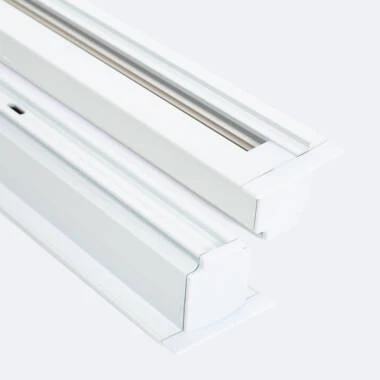
It is also important to choose the right mounting type. Surface-mounted, suspended or recessed installation do not respond in the same way to the architecture of the space or to the visual effect you want to achieve.
Common applications for lighting tracks
The value of this type of system becomes clearer when seen in real use. Its advantage lies not only in the technical aspect, but in how it adapts to changing spaces that require more flexible lighting.
Retail stores and commercial spaces
In retail, tracks allow lighting to be reorganised as campaigns, products or interior layouts change. This flexibility is one of their biggest advantages over more rigid installations.
Showrooms and exhibition spaces
In exhibition spaces, tracks help adapt light to different pieces, routes or displays without redoing the infrastructure every time the scene changes.
Hospitality and contract spaces
In restaurants, hotels or reception areas, the system allows lighting to be better adjusted to the architecture, atmosphere and needs of daily use.
Homes and offices
In contemporary homes, studies and offices, tracks offer a versatile solution for combining general and accent lighting with an organised installation that is easy to update.
Frequently asked questions about tracks and accessories
Which type of track is best?
There is no single best type of track in absolute terms. It depends on whether the project needs a simple installation, independent circuits, carefully integrated aesthetics or advanced lighting control.
Are accessories universal?
Not always. Although some parts may look similar, it is advisable to check that they are compatible with the same track system and with the intended luminaires.
Can a track installation be expanded later?
Yes, this is one of its main advantages. If the system is well planned from the start, sections can be added, joints can be changed or luminaires can be reorganised quite easily.
Which accessories are usually essential?
Normally, the track, power feed, end caps, fixings or suspension elements depending on the mounting type, and the necessary joints to complete the layout are required.
Which luminaires are usually installed on a track?
The most common option is to use LED track spotlights, although depending on the system, linear modules, wall washers or other compatible luminaires can also be installed.