
Children's Ceiling Lamps
Children's ceiling lamps combine playful designs, comfortable lighting and suitable materials to create welcoming, safe bedrooms adapted to the needs of younger children.
Our featured products from Children's Ceiling Lamps
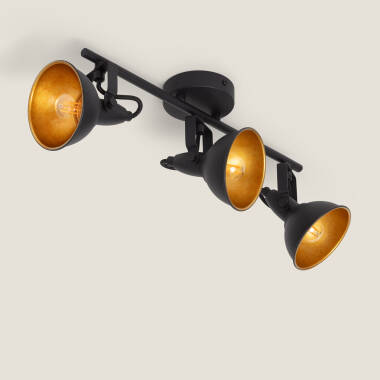
£54.99
- -18%


Before £49.82
£40.99
 (2)
DariRef 71561
WoodBlackWeeksDari Round 15W Wood & Aluminium CCT Selectable LED Ceiling Light Ø370 mm
Black
In Stock, delivery in 15-20 days






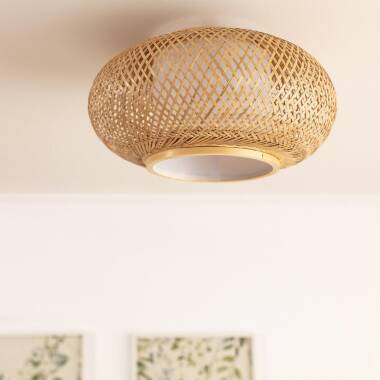


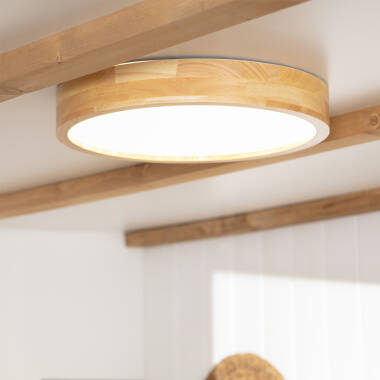




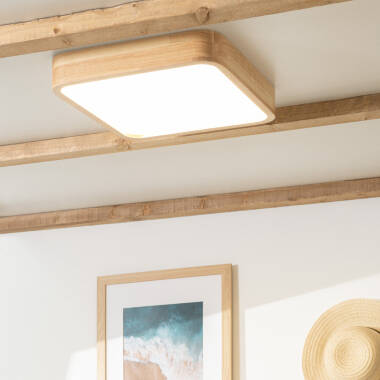


You may also be interested in
About Children's Ceiling Lamps
Children's lamps provide lighting for bedrooms used for rest, play and learning, incorporating designs that form part of the décor. Among ceiling lamps, these models stand out for their original shapes, soft colours and decorative motifs designed for children. Beyond appearance, it is important to consider light distribution, installation height and glare prevention to ensure a comfortable environment for different activities.
Features of Children's Ceiling Lamps
Children's lamps combine a decorative function with the need to provide general lighting in bedrooms used for very different activities. Their design should be appealing while also supporting rest, play and everyday tasks.
Unlike purely decorative fittings, particular attention should be paid to light quality, material durability and the position of suspended elements.
Children's Designs, Shapes and Colours
Children's lamps often feature shapes inspired by animals, stars, clouds, planets, balloons or colourful geometric figures.
Models with decorative motifs can become a focal point of the room, especially when combined with textiles, furniture and walls in similar shades.
Pastel colours, white and natural tones create soft environments that suit different ages. Less themed designs also offer greater versatility as the room's décor changes.
Materials and Safety
Children's lamps may incorporate metal, wood, fabrics, glass or plastics used in shades and diffusers.
In rooms for young children, priority should be given to sturdy structures, securely fixed components and shades without easily detachable parts.
Fittings must be installed out of children's reach, paying particular attention to raised beds, bunk beds and furniture that allows access closer to the ceiling.
LED light sources are also recommended because they consume less energy and generate less heat than equivalent incandescent bulbs, although their components can still reach high temperatures during operation.
Types of Children's Ceiling Lamps
Children's lamps are available in different configurations depending on their installation method and design. The choice should take into account the available ceiling height, room size and light distribution.
Children's Pendant Lamps
Children's pendant lamps feature shades suspended by cables or supports, often shaped like animals, balloons, clouds or other decorative elements.
They are suitable for rooms with sufficient ceiling height, particularly when positioned above areas not used as passageways.
For ceiling heights of 2.40 to 2.60 metres, short suspensions are advisable, maintaining approximately 2.10 metres of clear headroom in passageways.
Models with enclosed shades or diffusers soften the light and reduce direct visibility of the bulb.
Children's Surface-Mounted Flush Ceiling Lamps
Children's flush ceiling lamps are mounted directly onto the ceiling and have a compact structure.
They are particularly practical in small bedrooms, rooms with bunk beds or spaces where preserving headroom is important.
They may feature stars, moons, animals or colourful shapes, combining general lighting with an appearance suited to the bedroom.
Models with large diffusers distribute light evenly and reduce contrasts between different areas.
Children's Lamps with Multiple Light Sources
Children's lamps with multiple arms or shades distribute lighting from a single electrical connection.
Some models include adjustable heads that help direct some of the luminous flux towards specific areas. Ceiling lamps with spotlights can be practical in teenagers' bedrooms or multifunctional spaces where different areas need lighting. The spotlights should be positioned to prevent light from shining directly onto the bed or into a child's eyes while playing on the floor.
Dimming and Adaptation to Different Ages
Dimmable children's lamps allow brightness to be adjusted according to the activity. Brighter lighting can be used during play or cleaning, while before bedtime it can be reduced to create a calm atmosphere.
Some models have integrated LEDs with dimming controlled by a remote or dedicated control systems. For lamps with replaceable bulbs, it is necessary to check that the bulbs and dimmer are compatible.
Children's Ceiling Lamps by Age and Use
Lighting needs change as children grow. It is therefore advisable to choose designs and features that allow the room to be adapted without constantly replacing the fitting.
Baby Rooms
In baby rooms, soft, even lighting without light sources directly visible from the cot is recommended. Models with translucent diffusers or enclosed shades help reduce glare.
Warm white light at 2700 K is suitable for creating a calm atmosphere, particularly if it can be dimmed during night-time routines. When caring for a baby at night, a dim supplementary night light positioned outside the baby's field of vision is usually more practical than switching on the main lighting.
Children's Rooms for Play and Rest
During childhood, the bedroom may be used for playing, reading, drawing and resting. Children's designs of bedroom ceiling lamps should provide even base lighting that makes the space comfortable to use.
Additional lighting can be useful in play areas, especially when the main lamp has opaque shades or decorative shapes that create shadows. Soft colours and simple motifs help keep the décor adaptable as a child's preferences change.
Teenagers' Bedrooms and Study Areas
In teenagers' bedrooms, lighting needs to support a wider range of activities, including studying, reading and using electronic devices.
Lamps with multiple light sources or geometric designs offer a less childlike aesthetic and better light distribution.
For reading and writing tasks, approximately 500 lux can be considered at the desk through a combination of general and task lighting.
Direct reflections on screens and glossy surfaces should also be avoided.
Frequently Asked Questions About Children's Ceiling Lamps
Questions about children's lamps usually focus on the safety of decorative designs, visual comfort during rest and adapting lighting as children grow.
Which Children's Ceiling Lamp Is Best for a Room with Bunk Beds?
Compact models without arms are generally preferable, but it is more important to check the distance between the bunk bed and the lamp to prevent children from reaching or accidentally hitting it.
Are Children's Ceiling Lamps Shaped Like Animals or Clouds Recommended?
Yes, provided their construction is suitable and they provide functional lighting. Designs with opaque shades may block some of the luminous flux, so it is advisable to check the available lumens. Small or easily detachable decorative elements that could come within children's reach should also be avoided.
Which Children's Ceiling Lamp Is Most Comfortable for a Baby?
Models with an opal diffuser, warm white light and dimming capability are particularly suitable. Exposed bulbs or LED light sources directly visible from the cot should be avoided, as they may cause visual discomfort when the baby is lying down and looking upwards.
What Features Should a Children's Ceiling Lamp Have to Grow with the Child?
Designs featuring neutral colours, geometric shapes or understated decorative motifs generally adapt better to different ages. Models with replaceable bulbs or dimming are also useful, as they allow lighting to be adjusted when the room begins to accommodate new activities, such as studying.
Are Children's Ceiling Lamps with Integrated LEDs Safe?
Fittings with integrated LEDs can be suitable for children's bedrooms when they meet the applicable safety requirements and are installed correctly. Choose models with diffusers that prevent direct visibility of the LEDs, sturdy structures and appropriate fixing systems. Although LED technology generates less heat than equivalent traditional light sources, the fitting must remain out of children's reach.