
Programmable LED street lights
Programmable LED street lights allow outdoor lighting operation to be defined in advance over time. Through programming, the lighting system follows predefined schedules and automatic routines, enabling structured lighting management and reducing the need for constant manual intervention in outdoor installations.


Our featured products from Programmable LED street lights

Expert

£178.99
Ref 79676
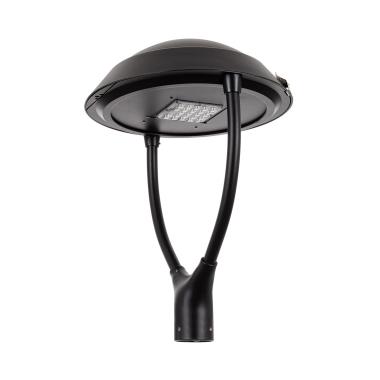
AluminiumAdjustableInfinity 60W PHILIPS Xitanium Programmable LED Street Light
Pre-Order, estimated shipping from 11/11/2026
- Wattage 60 W
- Voltage Range 220-240V AC
- Lumen 8400 lm
7 options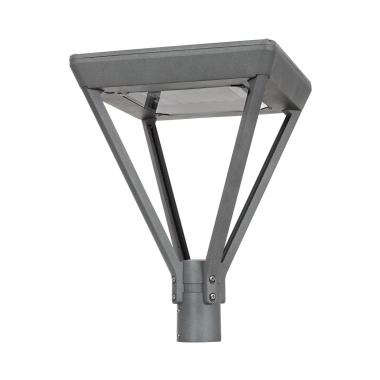
Expert
£209.99
Ref 79910
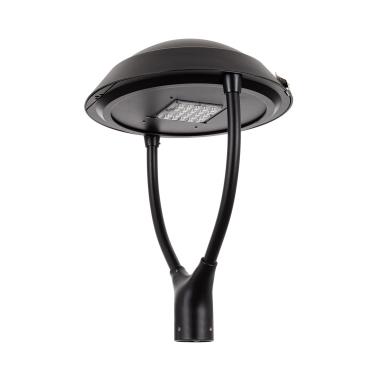
AluminiumAdjustableAventino Square 40W PHILIPS Xitanium Programmable LED Street Light LUMILEDS
In Stock, delivery in 16-21 days
- Wattage 40 W
- Voltage Range 220-240V AC
- Lumen 5400 lm
7 options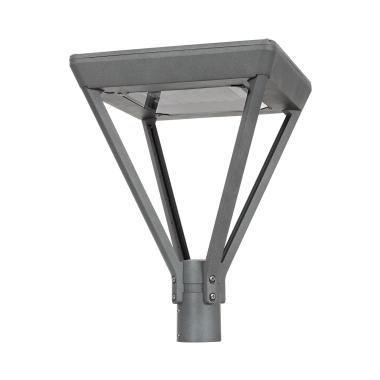
Expert
£220.99
Ref 79928
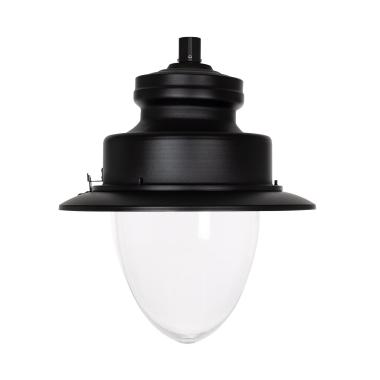
AluminiumAdjustableAventino Square 60W PHILIPS Xitanium Programmable LED Street Light LUMILEDS
In Stock, delivery in 16-21 days
- Wattage 60 W
- Voltage Range 220-240V AC
- Lumen 8100 lm
7 options
Expert
£209.99
Ref 70514
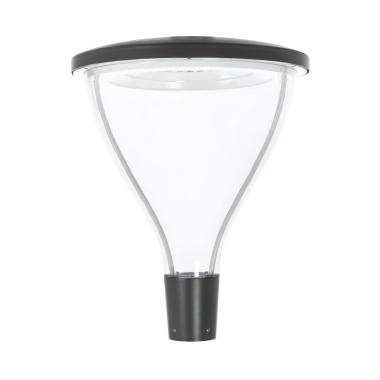
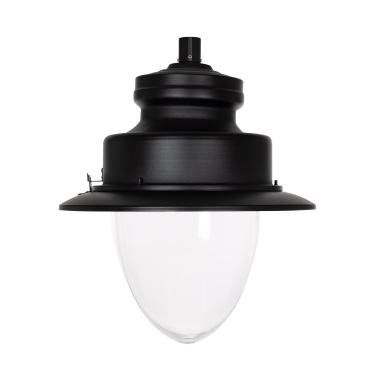
AluminiumAdjustable40W LED Streetlight Programmable LUMILEDS PHILIPS Xitanium Villa
In Stock, delivery in 16-21 days
- Wattage 40 W
- Voltage Range 220-240V AC
- Lumen 6000 lm
7 options

















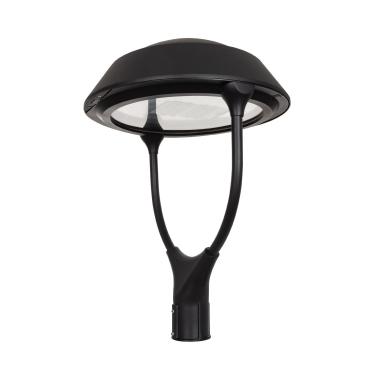



You may also be interested in
About Programmable LED street lights
Programming as part of outdoor lighting design
Contemporary outdoor lighting is no longer conceived solely as a system that turns on at dusk and switches off at dawn. In many urban environments, lighting is designed by taking into account schedules, usage patterns and space routines, incorporating time as a fundamental variable within the project.
Within public lighting, this approach makes it possible to align lighting operation with real environmental activity. Programming introduces a logic based on defined schedules, bringing order and consistency to outdoor lighting systems.
When LED street lights incorporate this capability, lighting operates in a planned manner, responding to predefined criteria rather than relying exclusively on external conditions or manual adjustments.
Programming as a way to manage outdoor lighting
Programming a LED street light involves defining its operational behaviour in advance. The system knows when it should switch on, how long it should remain active and how it should operate throughout the night, following a predefined sequence.
This approach transforms lighting into a managed system, as opposed to more reactive solutions that operate in the same way at all times. Programming allows outdoor lighting to follow the rhythm of the illuminated space, maintaining stable and repeatable operation.
In practical terms, this time-based management makes it possible to:
- Automate lighting switch-on and switch-off
- Maintain consistent schedules without manual intervention
- Coordinate the operation of multiple light points
- Avoid misalignments caused by manual changes
This type of organisation is especially useful in environments where space usage follows predictable routines, such as streets, urban areas or public spaces with regular activity.
Lighting programming in projects and urban environments
In outdoor lighting projects, the definition of schedules and routines is usually addressed from the earliest design stages. Deciding how lighting should operate over time enables the development of clearer, easier-to-manage installations.
This approach is common in installations using street lights for projects, where lighting is conceived as an integrated infrastructure within the urban environment. Programming helps ensure that the system responds to criteria defined by engineers and planners from the outset, maintaining operational consistency over time.
In addition, having a predefined operating scheme reduces the need for later adjustments and simplifies system operation once commissioned, particularly in large-scale installations.
Automation of operation and operational efficiency
One of the main values of lighting programming is operational automation. By removing dependence on manual actions, the system operates autonomously according to established guidelines.
This automation makes it possible to:
- Reduce human errors in daily management
- Simplify system operation
- Maintain consistent and predictable behaviour
Although programming does not directly affect luminaire technology, it has a clear influence on when and how the system is used. By defining precise operating periods, unnecessary lighting outside scheduled hours is avoided, contributing to more efficient installation management.
This time-based control is particularly relevant in installations that operate many hours per day or cover large areas, where small scheduling discrepancies can have a significant impact on overall operation.
Relationship between programming and lighting dimming
In many outdoor lighting systems, programming coexists with other management tools. In this context, it is often integrated within approaches commonly used in dimmable street lights, although both functions serve different purposes.
While dimming focuses on how light behaves, programming defines when and under which logic the system operates. This distinction allows for more structured lighting schemes, where each tool fulfils a specific role within the overall system.
Combining both capabilities results in more organised and easier-to-manage outdoor lighting systems, without one function replacing the other.
Programming and lighting system maintenance
A programmed lighting system follows stable routines, making supervision and maintenance easier. By reducing manual changes and improvised adjustments, system behaviour becomes more predictable.
This stability allows:
- Easier detection of faults
- Planned maintenance interventions
- More consistent lighting operation
In large-scale installations, where manual control is complex, programming provides a solid foundation for structured technical management.
Programming and urban space planning
In urban contexts, lighting programming makes it possible to coordinate lighting with other elements of public space. Defining schedules and operating sequences facilitates the integration of lighting within broader urban planning.
This approach is particularly useful in:
- New urban developments
- Comprehensive public space renovations
- Areas with regular night-time use
Programming helps outdoor lighting evolve in a structured way, maintaining a coherent relationship between light, space usage and time.
A tool for controlling outdoor lighting systems
Beyond energy savings, programming provides operational control and predictability. Knowing in advance how the lighting system will operate at any given time simplifies management and reduces the need for continuous adjustments.
Programmable LED street lights offer a different way of understanding outdoor lighting: not only as light emission, but as system operation management. Their ability to automate schedules and routines enables the development of more organised, stable and easy-to-manage installations.
Integrated into public lighting systems or planned outdoor lighting projects, these solutions reinforce an approach based on planning, operation and time control.
Frequently asked questions about programmable LED street lights
What does it mean for a LED street light to be programmable?
It means that its operation can be planned in advance. A programmable LED street light follows predefined schedules or calendars, allowing lighting operation to be organised over time.
What types of decisions does lighting programming allow?
Programming makes it possible to decide when lighting should be active and for how long, as well as to establish stable operating routines. This supports structured system management, especially in installations where space usage follows clear time patterns.
How does programming differ from other lighting control methods?
Programming acts on the time-based behaviour of the system, not on light output itself. Its function is to organise lighting operation over time, while other solutions focus on how light behaves when the system is active.
What does programming contribute in large-scale installations?
In extensive installations, programming reduces manual intervention, maintains uniform lighting behaviour and simplifies daily operation. By following automatic routines, the system becomes more predictable and easier to manage.