
GU10 LED bulbs
GU10 LED bulbs are a common solution for recessed spotlights and adjustable light fittings, especially when direct, efficient lighting that is easy to replace is required.


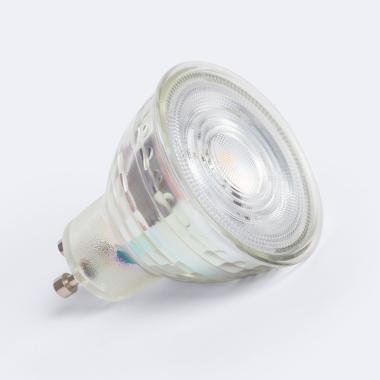
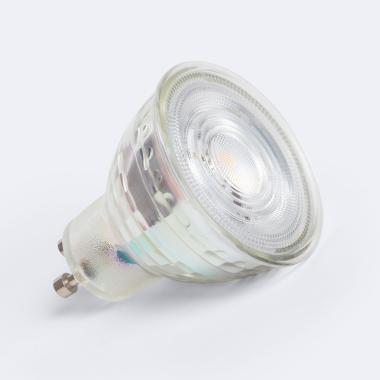
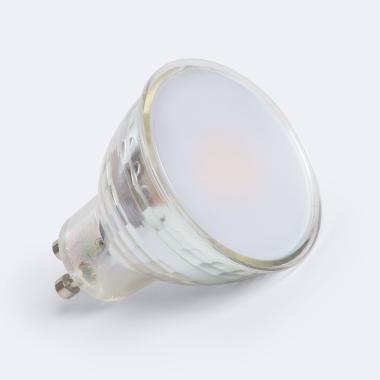
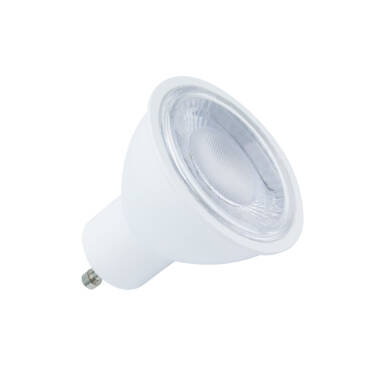
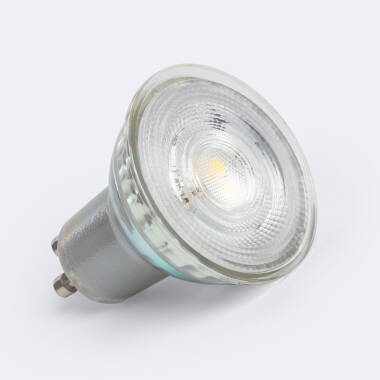
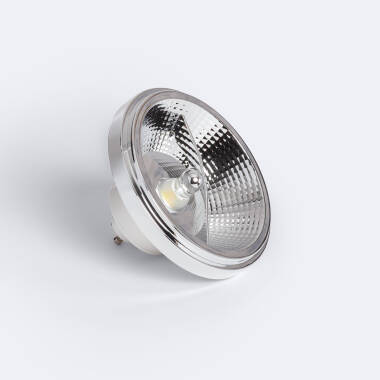
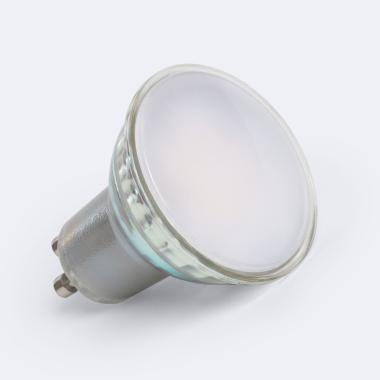
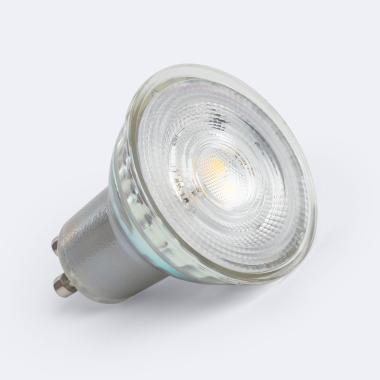
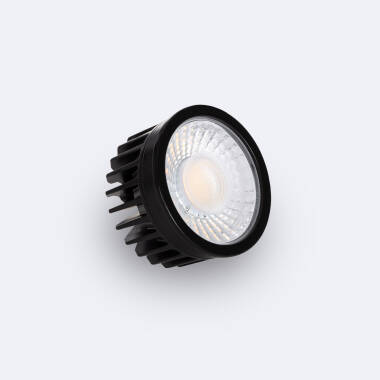
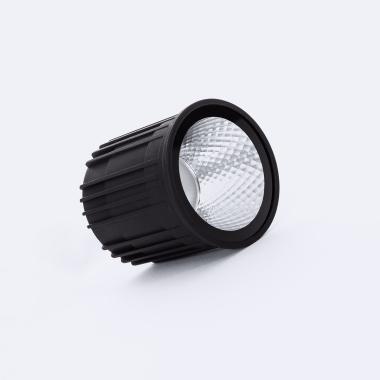
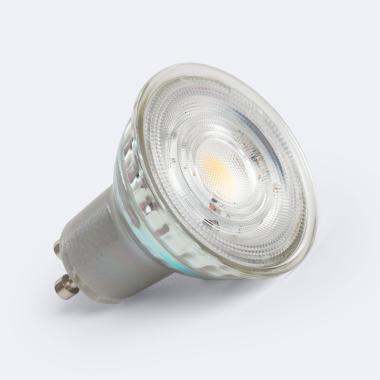
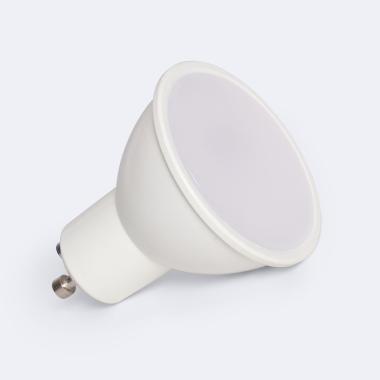
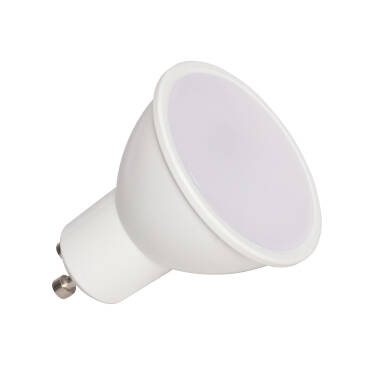
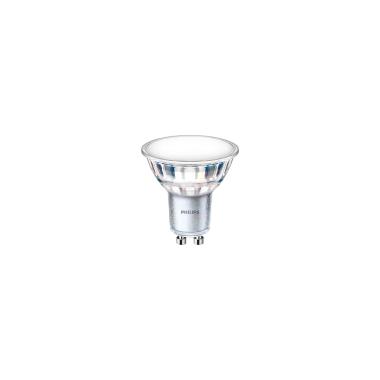
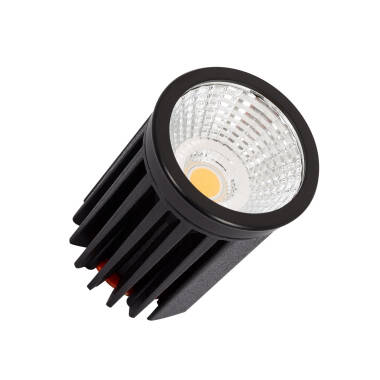
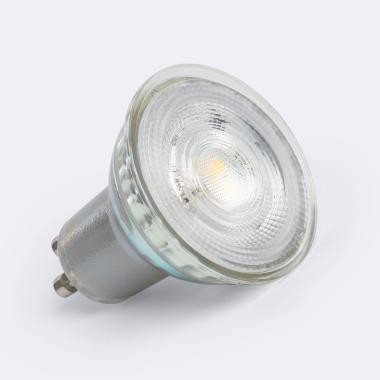
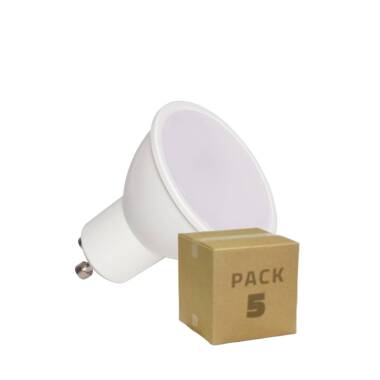
Our featured products from GU10 LED bulbs
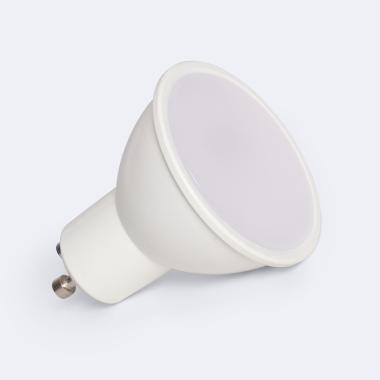
Essential
£1.05
 (7)
(7)- Wattage 5 W
- Voltage Range 220-240V AC
- Lumen 470 lm
3 options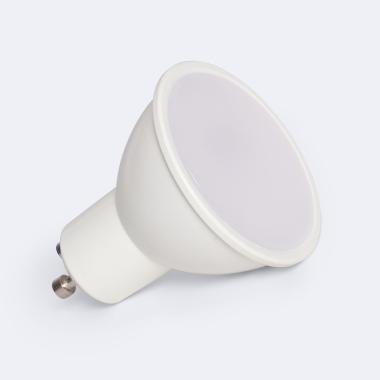
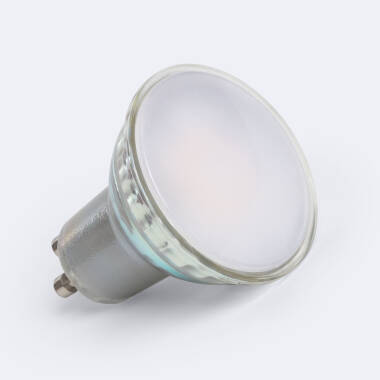
Essential
£1.22
(45)- Wattage 6 W
- Voltage Range 220-240V AC
- Lumen 550 lm
3 options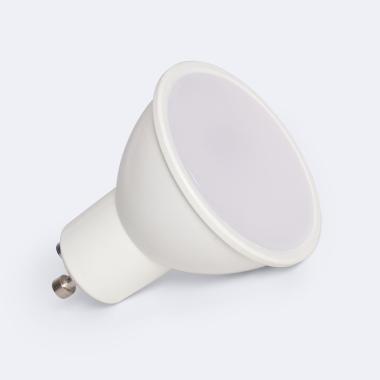
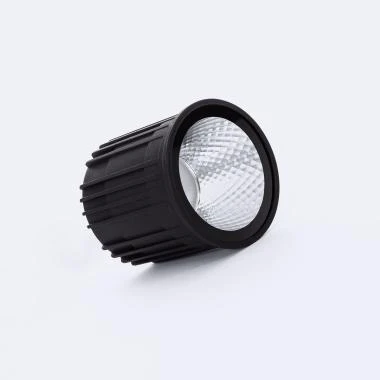
Essential
£1.33
(50)- Wattage 7 W
- Voltage Range 220-240V AC
- Lumen 600 lm
3 options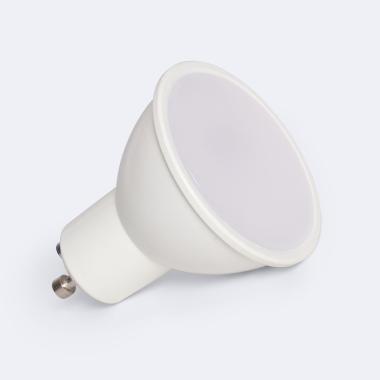
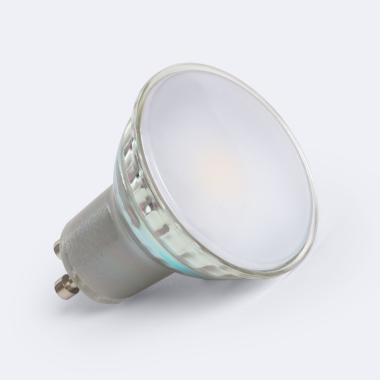
Essential
£1.69
(63)- Wattage 8 W
- Voltage Range 220-240V AC
- Lumen 720 lm
3 options





Brands related to this category


About GU10 LED bulbs
Within LED bulbs, the GU10 format stands out because it normally operates at mains voltage and is available in different wattages, beam angles, colour temperatures and dimming options.
GU10 or GU5.3: how to tell them apart
GU10 and GU5.3 are two very common bases used on reflector bulbs. They can be confused because both have two contacts, but they are not interchangeable due to differences in connection and power supply.
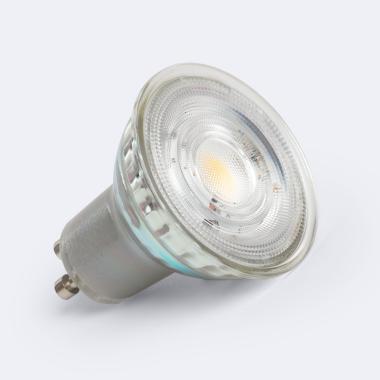
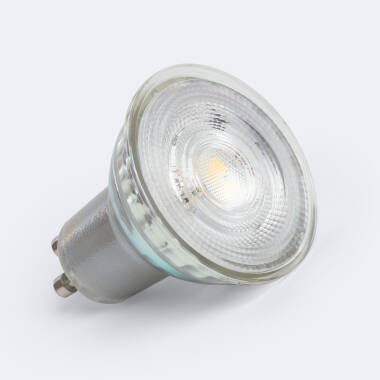
A GU10 can be identified by its two short, thick pins with enlarged heads, which are inserted and locked with a twist. The distance between them is approximately 10 mm.
A GU5.3 (MR16) has two thin, straight pins spaced around 5.3 mm apart, which are pushed into place without twisting.
The key difference is the voltage: GU10 bulbs operate at 220–240 V and incorporate the necessary electronics internally, while GU5.3 bulbs work at 12 V and require a transformer.
In short, if the bulb fits by twisting and has headed pins, it is GU10; if it pushes in with straight pins, it is GU5.3.
How to choose your GU10 LED bulb
Once the base has been identified, the main differences between GU10 bulbs are the amount and distribution of light. Wattage alone is not enough: lumens and beam angle are what really determine the final result.
To replace a 50 W GU10 halogen bulb, LED models of around 350–500 lm are commonly used, depending on efficiency and optics. Lower light outputs may be sufficient for ambient lighting, while kitchens, shops or work areas usually require greater intensity.
Colour temperature defines the atmosphere: 2700 K provides warm, halogen-style light, 3000 K maintains warmth with a more neutral tone, and 4000 K provides white light that is ideal for functional spaces such as kitchens, bathrooms or offices.
CRI, or colour rendering index, is also important. A CRI above 80 is suitable for general use, while values above 90 improve colour accuracy, which is particularly important in retail, hospitality or display areas.
Heat dissipation is another relevant factor. Although LEDs consume less energy than halogen bulbs, they still generate heat that must be dissipated correctly, especially in small recessed spotlights or fittings with limited ventilation.
If dimming is required, the GU10 bulb must be dimmable and the dimmer must be LED-compatible. Otherwise, flickering or unstable operation may occur.
Beam angle: a key factor in GU10 bulbs
Beam angle is one of the most important parameters in a GU10 bulb because this format is mainly used for directional lighting. Two bulbs producing 400 lm can create very different effects if one concentrates those lumens within 24° and the other spreads them across 60°.
To understand more clearly how beam angle affects the final result, it is useful to classify angles according to the type of beam and the effect they create in the space:
- 15°–24° (very narrow): produce a highly defined, high-contrast light spot. This type of beam is used when attention needs to be directed towards a specific feature, such as artwork, shop windows, sculptures or particular areas under high ceilings. They are ideal for very precise accent lighting, where the light should visually separate the illuminated object from its surroundings.
- 25°–38° (narrow): provide classic accent lighting with a defined but slightly wider beam. They are very common in retail, over kitchen worktops, in work areas or in adjustable spotlights in residential spaces. They highlight specific areas without creating an excessively harsh light spot, maintaining a balance between precision and visual comfort.
- 40°–60° (medium): provide a balance between accent and general lighting. They are among the most versatile options for residential installations, particularly in living rooms, bedrooms and hallways. They cover a larger area with each spotlight, reduce the appearance of isolated “patches” of light and help create more uniform lighting when several light points are installed.
- 90°–120° (wide): provide very uniform general lighting with a broad, soft distribution. They are used with low ceilings, in bathrooms, kitchens or spaces where strong shadows need to be avoided and continuous lighting is preferred. At this range, the spotlight becomes less directional and behaves more like ambient lighting.
Ceiling height and the spacing between light points also affect the result. The greater the distance to the illuminated surface, the wider the diameter of the beam becomes. For this reason, beam angle should be selected together with the layout of the spotlights rather than considered in isolation.
Wattage equivalence for GU10
Many current GU10 installations originate from older halogen systems ranging from 20 to 75 W. Replacing them with LED makes it possible to maintain similar light levels while significantly reducing electrical power consumption.
Older 20–25 W GU10 halogen bulbs provided relatively soft lighting and can normally be replaced with low-wattage LEDs when a similar luminous flux is required. Around 200–250 lm is usually a suitable starting reference.
For a 35 W halogen bulb, around 250–350 lm is commonly recommended, although beam angle can make a bulb with fewer lumens appear more intense at the centre of the beam if the light is more concentrated.
The most important reference is the traditional 50 W GU10 halogen bulb, one of the most widely installed formats in homes and commercial spaces. Its LED replacement is usually around 4–7 W, with luminous flux values of approximately 350–500 lm depending on the model.
For 75 W GU10 bulbs, which were used where higher intensity was required, the LED alternative should be selected mainly by lumens rather than by trying to reproduce a fixed percentage of the original wattage. Models producing around 600 lm or more can cover many of these replacements, provided the optical distribution is comparable.
Reducing a 50 W halogen bulb to around 5 W LED represents approximately 90% less nominal power at that light point. In an installation with ten spotlights, reducing consumption from 500 W to around 50 W is particularly significant when the lighting remains switched on for several hours each day.
Even so, lumen equivalence does not guarantee exactly the same result. Halogen bulbs produced a particular beam and light transition, while a GU10 LED may use different optics. When renovating a complete installation, it is advisable to keep beam angles consistent across all bulbs to avoid visible differences.
Types of GU10 LED bulbs
The GU10 format allows the same connection to be retained while incorporating different functions depending on the application. Options range from simple replacements for halogen bulbs to dimmable, connected or colour-changing bulbs.
Dimmable GU10 LED bulbs
Dimmable GU10 LED bulbs allow the light output to be adjusted using a compatible dimmer, a particularly useful function in living rooms, bedrooms, hospitality settings or spaces where the same spotlights are used for both general and ambient lighting.
Not all GU10 LED bulbs are dimmable. The model must be specifically identified as dimmable and the dimmer used must also support LED technology.
Smart GU10 LED bulbs
Smart GU10 LED bulbs incorporate connectivity and electronic control systems that allow the spotlights to be managed through an app or compatible platform.
Depending on the model, they may offer remote switching, dimming, scheduling, scenes or colour temperature adjustment. This makes it possible to add control functions to existing GU10 spotlights without replacing the recessed fitting.
RGB GU10 LED bulbs
RGB GU10 LED bulbs allow spotlights to be used not only for white lighting but also to create different atmospheres using colour.
The combination of red, green and blue LEDs makes it possible to generate a wide colour range. In models that also incorporate dedicated white channels, the bulb can be used as conventional functional lighting and switched to colour when ambient lighting is required.
Philips GU10 LED bulbs
Philips GU10 LED bulbs stand out in the market for their quality and reliability, especially in installations subject to intensive use. They provide good stability of luminous flux, reducing the loss of brightness over time.
Their main advantage is consistency between models, allowing them to be combined within the same installation without visible differences in tone or light. They also generally provide good colour rendering, improving the perception of colours in different environments.
Frequently asked questions
GU10 bulbs are mainly used in spotlight systems, so many common questions relate to their connection, beam angle, halogen replacement and installation in suspended ceilings.
What does GU10 mean on a bulb?
GU10 identifies a base with two contacts spaced approximately 10 mm apart. The pins have enlarged ends that allow the bulb to be inserted into the lamp holder and locked with a small twist.
Do GU10 bulbs need a transformer?
GU10 bulbs commonly used in Spain operate directly at 220–240 V and do not require a 12 V transformer. The necessary electronics are integrated into the bulb itself. This distinguishes them from many GU5.3/MR16 bulbs, which operate at low voltage and may require a compatible power supply or transformer.
How do you change a GU10 bulb?
Normally, the bulb needs to be pressed lightly towards the lamp holder and twisted to release the two contacts. To install the new bulb, the heads of the pins are inserted into the slots and twisted in the opposite direction until locked in place. Before handling the spotlight, the power supply should be disconnected and the bulb allowed to cool if it has been in use.
What GU10 beam angle is best for general lighting?
In many spaces, a minimum angle of 60° is recommended for general lighting, although beam angles above 90° are commonly used depending on ceiling height and the number of available light points. The lower the ceiling or the fewer spotlights installed, the wider the beam angle should generally be to avoid dark areas and achieve more uniform lighting.
How many lumens do I need to replace a 50 W GU10 halogen bulb?
As a guide, a GU10 LED bulb of approximately 350–500 lm can replace many 50 W halogen bulbs. The exact equivalence depends on the efficiency of the old lamp and, above all, the beam angle.
Are all GU10 bulbs the same size?
The base is standard, but the length and diameter of the bulb body can vary slightly. Most remain close to the dimensions of the traditional reflector format, although smart or higher-power models may be longer.
Why does a GU10 LED bulb flicker?
Flickering may be related to an incompatible dimmer, power supply issues, a low-quality bulb or small residual currents. If the problem appears after replacing halogen GU10 bulbs with dimmable LEDs, the minimum dimmer load and dimmer compatibility are among the first factors to check.
Can GU10 LED bulbs be installed in any GU10 recessed spotlight?
In general, yes, provided the lamp holder is GU10, the voltage is compatible and there is enough space for the bulb. However, ventilation and the installation conditions of the recessed spotlight should also be checked. In suspended ceilings with thermal insulation, the complete fitting should not be covered directly unless the luminaire is specifically designed for that type of installation.