
LED wall lights
LED wall lights integrate the light source into the luminaire itself, offering compact designs, low consumption and efficient lighting for both indoor and outdoor spaces.
Our featured products from LED wall lights
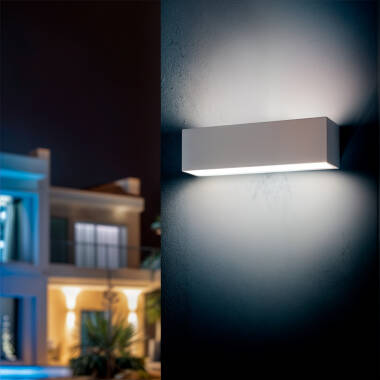
32,59 €
Ref 87915
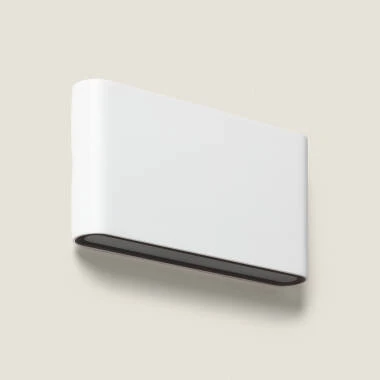
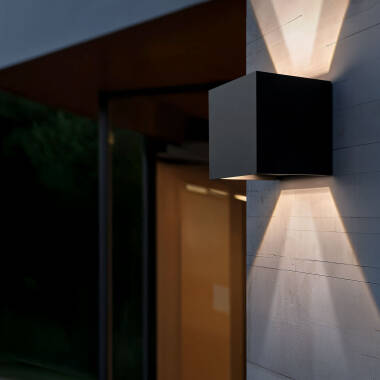
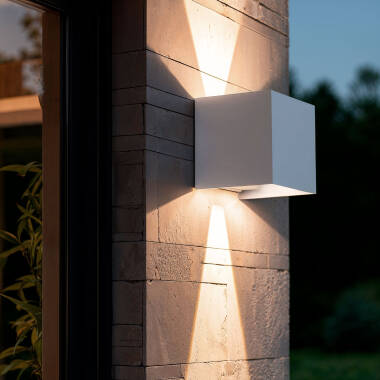
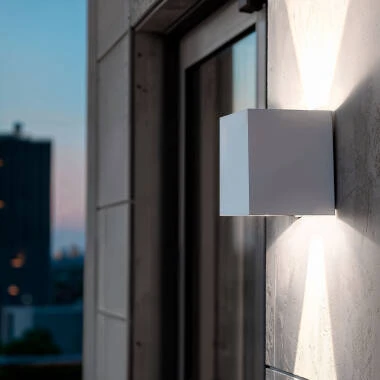
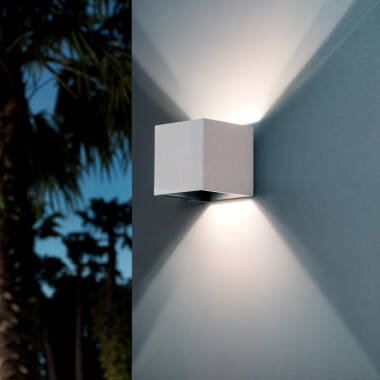
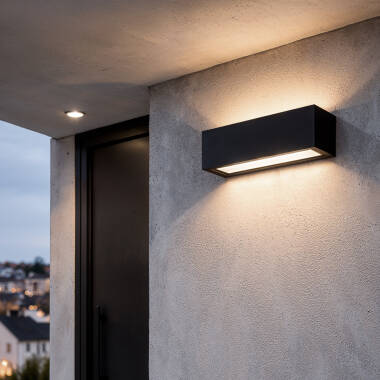
AluminiumLena 10W Rectangular Outdoor Double Sided Aluminium LED Wall Light White
Cool White 4000K
In Stock, delivery in 15-20 days
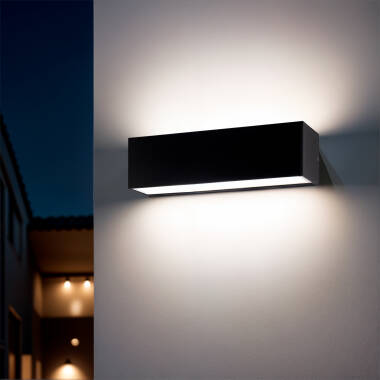
32,59 €
GaleoRef 87917
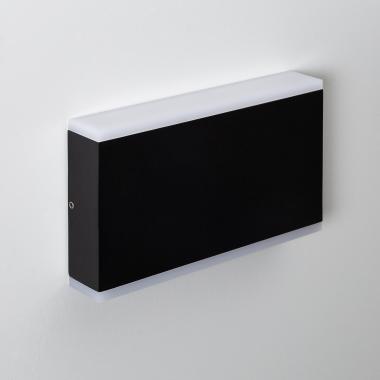
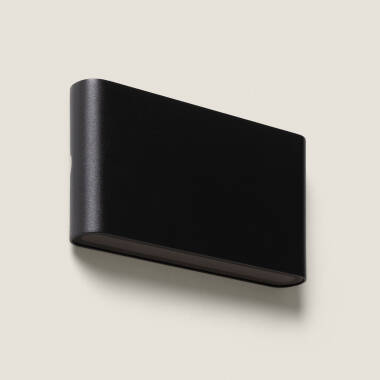
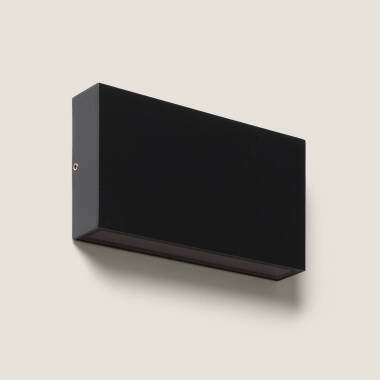
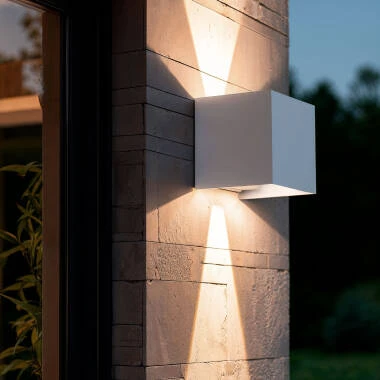
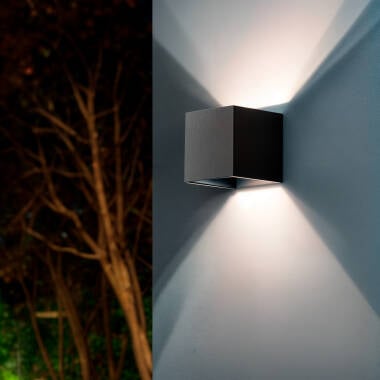
AluminiumLena 10W Rectangular Outdoor Double Sided Aluminium LED Wall Light Black
Cool White 4000K
In Stock, delivery in 15-20 days
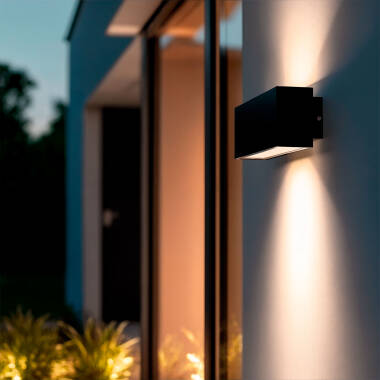
40,99 €
Ref 1729
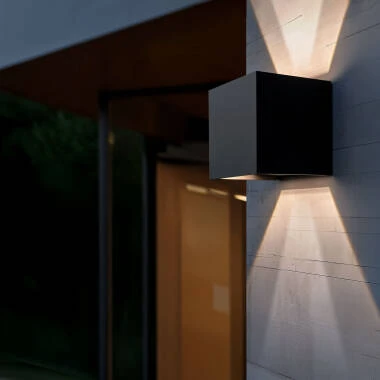
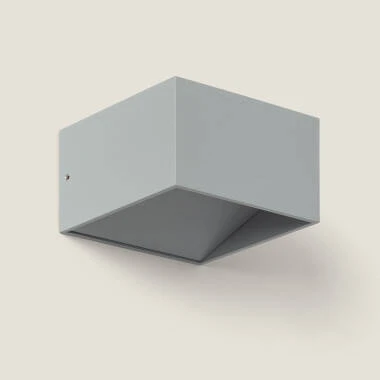
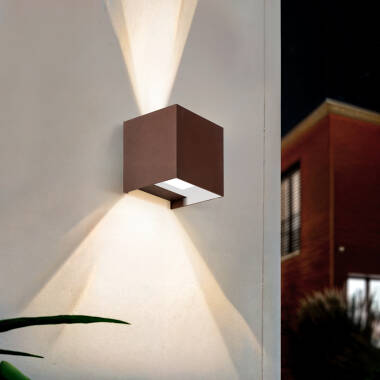
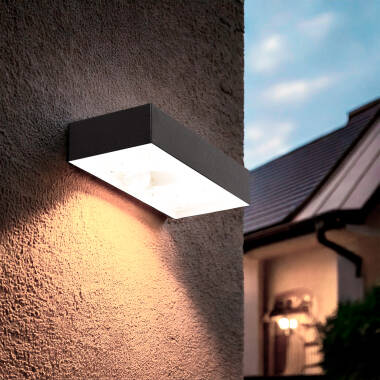
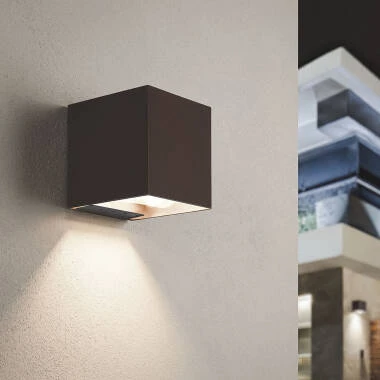
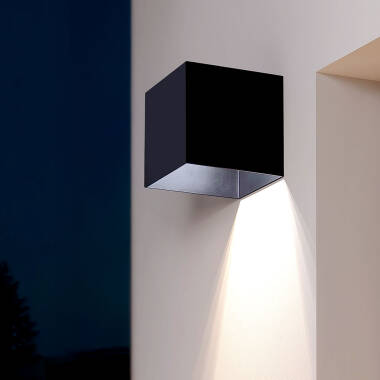
Aluminium11W Carinae Outdoor Aluminium Double Sided LED Wall Lamp
Cool White 4000K
In Stock, delivery in 15-20 days
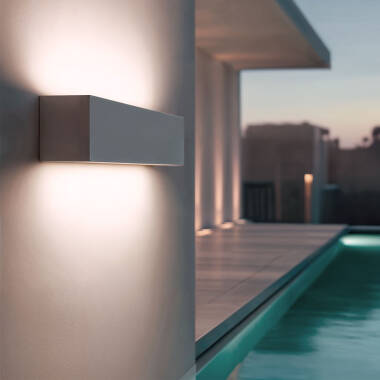
32,59 €
Ref 87915
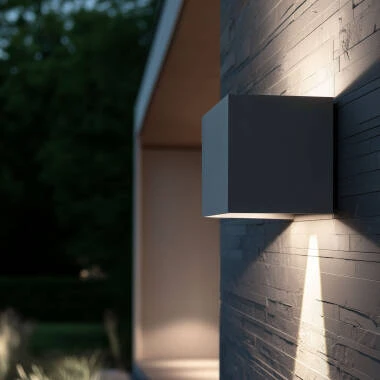
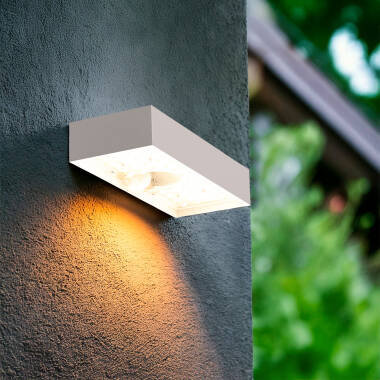
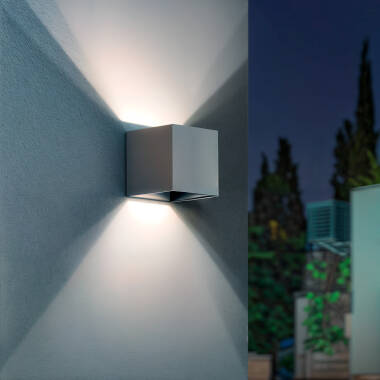
AluminiumLena 10W Rectangular Outdoor Double Sided Aluminium LED Wall Light White
Warm White 2700K
In Stock, delivery in 15-20 days





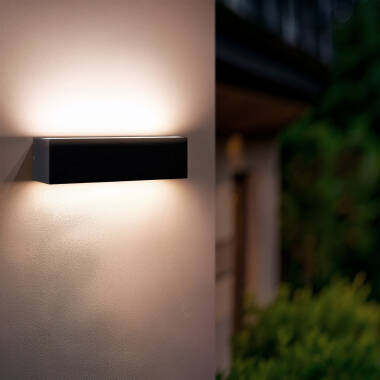
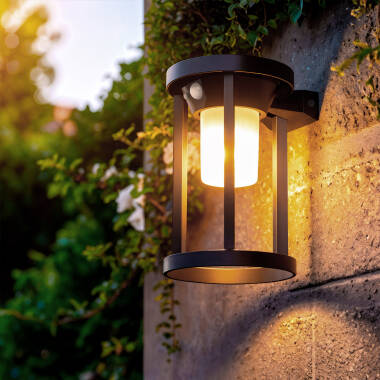
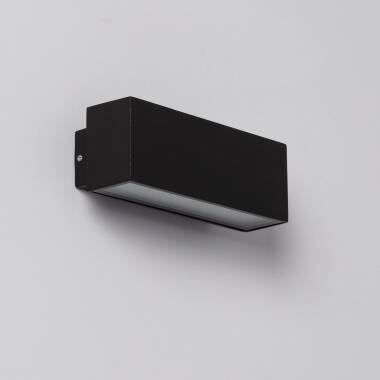
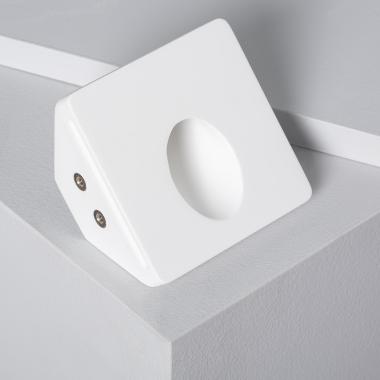
You may also be interested in
About LED wall lights
LED wall lights are luminaires that incorporate LED modules directly into their structure. Unlike models with a replaceable bulb, they do not require an independent bulb, as the light source forms part of the wall light’s own design. This makes it possible to create slimmer formats, cleaner lines and more efficient lighting solutions.
Within wall lights, integrated LED models stand out for their ability to combine aesthetics, performance and visual comfort. They are used both in homes and in professional spaces, in circulation areas, living rooms, bedrooms, bathrooms, kitchens, covered terraces or façades, provided that the protection rating is suitable for the environment.
What are LED wall lights
LED wall lights are luminaires designed to be installed on a wall and emit light through integrated LED modules. These modules are incorporated into the body of the wall light and work together with a driver, which regulates the electrical supply so that the LED works correctly.
Their main difference compared with a wall light with a traditional lampholder is that the lighting system is designed as a whole. The body, optics, heat sink, diffuser and LED source all form part of the same solution. This makes it possible to control light distribution better and use space more efficiently.
In practice, this translates into slimmer luminaires, indirect light designs, linear profiles, geometric shapes and wall lights with dual emission that would be harder to achieve with a conventional bulb.
Integrated LED versus LED bulb
A wall light with an LED bulb uses a replaceable light source, usually with an E27, E14, GU10 or other type of cap. The user can replace the bulb when it fails or change the power and colour temperature if the design allows it.
In an integrated LED wall light, the light source is not replaced like a conventional bulb. The LED is built into the luminaire and usually offers a long service life, typically between 20,000 and 50,000 hours, depending on the quality of the module, the driver and thermal management.
The advantage of integrated LED lies in design and light control. It allows for more compact luminaires, better light distribution and more contemporary shapes. The advantage of the model with a replaceable bulb lies in replacement flexibility. For this reason, the choice depends on the use, the desired design and the importance given to future maintenance.
Why integrated LED allows for more compact designs
LED takes up less space than a traditional bulb and can be distributed on boards, strips, linear modules or small surfaces inside the wall light. This design freedom makes it possible to create very slim luminaires, grazing light models, pieces with upper and lower emission or decorative wall lights with curved and geometric shapes.
In addition, as there is no need for a bulky lampholder, the designer can better integrate the diffuser and optics. This helps soften the light, reduce glare and create more precise effects on the wall.
In modern interiors, this feature is especially useful because it allows the luminaire to integrate visually into the architecture. Outdoors, it facilitates resistant and compact designs, provided that the wall light has the appropriate IP rating.
Advantages of LED wall lights
Integrated LED wall lights offer clear advantages in consumption, durability, design and light quality. They are a common choice when looking for an efficient, discreet luminaire with a more contemporary aesthetic.
Their performance depends on the quality of the LED, the driver and thermal dissipation. For this reason, it is advisable to assess not only wattage, but also lumens, colour temperature, colour rendering index and type of emission.
Low consumption and efficiency
LED technology makes it possible to obtain more light with lower electrical consumption. In wall lights, it is common to find luminaires with efficacies between 70 and 120 lm/W, although the real value depends on the design, diffuser and optics.
This means that an LED wall light with just a few watts can provide enough light for ambience, circulation or functional support. For example, a 6W to 10W model may be suitable for soft ambient light, while 12W to 20W designs can provide a more functional level in corridors, bathrooms, kitchens or outdoor areas.
Efficiency is especially interesting in areas where the light stays on for several hours a day, such as corridors, entrances, staircases, hallways or night-time outdoor lighting.
Long service life and lower maintenance
Integrated LED wall lights usually offer service lives of 20,000 to 50,000 hours. In domestic use of 3 hours per day, 30,000 hours equals more than 25 years of theoretical operation, although real service life also depends on temperature, ventilation and driver quality.
This durability reduces the need for frequent replacements. In corridors, staircases, façades or hard-to-reach areas, lower maintenance is an important advantage.
Service life does not mean that the LED suddenly switches off when it reaches that number of hours. It usually refers to luminous flux depreciation, that is, the point at which the luminaire retains a certain percentage of its initial light output, such as L70 or L80.
Clean design and better integration
By incorporating the light source into the body itself, LED wall lights can offer more compact and visually clean designs. This allows them to integrate better into contemporary decorative projects, where the luminaire does not always need to stand out.
Indirect light models, dual-beam designs and linear emission are common in this category. There are also adjustable, cylindrical, square, curved or extra-flat designs, adapted to different indoor and outdoor styles.
In minimalist spaces, the absence of a visible bulb helps achieve a more uniform aesthetic. In decorative areas, the effect of the light on the wall can be more prominent than the luminaire itself.
Instant switch-on and light control
LED wall lights offer instant switch-on and do not require warm-up time. This is useful in circulation areas, bathrooms, kitchens or outdoor access points where immediate light is needed.
In addition, many models can work with opal diffusers, controlled optics or defined beams. This helps direct the light upwards, downwards, frontally or through indirect emission, depending on the use.
Some LED wall lights are dimmable, although not all of them. If you want to control intensity, it is important to check dimming compatibility and the type of dimmer required. In living rooms, bedrooms or ambient areas, this function can greatly improve comfort.
Types of LED wall lights
Integrated LED wall lights can be classified according to emission type, design and intended use. This variety makes it possible to choose very different solutions, from ambient lighting to functional light for specific areas.
Not all LED wall lights illuminate in the same way. Some are designed to create a decorative effect on the wall, others to provide general light in a circulation area and others to illuminate more precisely.
Indirect light LED wall lights
Indirect light LED wall lights project the luminous flux towards the wall or ceiling, preventing the light source from being exposed. This creates soft lighting, reduces glare and provides a more enveloping feeling.
They are suitable for living rooms, bedrooms, corridors, indoor staircases and rest areas. They also work well on smooth walls or decorative wall coverings, where light helps highlight texture and depth.
In this type of wall light, power should not be assessed in isolation. The reflectance of the wall has a strong influence on the result. A white wall reflects more light back into the room than a dark wall, so on dark surfaces it may be necessary to increase the luminous flux.
Dual-emission LED wall lights
Dual-emission models project light upwards and downwards. They are very common in modern interiors and also outdoors, especially on façades, terraces and walls.
Their main appeal is the visual effect they create on the wall. The beams can be narrow or wide depending on the design, creating either a more decorative or more functional type of lighting. In corridors, they can add visual rhythm; on façades, they help highlight volumes and materials.
To avoid glare, they should be installed at a suitable height and it is worth checking that the beam does not fall directly on eyes, windows or rest areas.
Adjustable LED wall lights
Adjustable LED wall lights allow the light to be directed towards a specific area. They are useful by headboards, reading areas, desks, entrance halls, corridors or spaces where the light point needs to be adjusted.
As they integrate the LED, they usually have more compact heads than models with a bulb. This allows for discreet designs, good adjustment capacity and less visual volume.
For reading or specific tasks, it is advisable to choose a luminaire with a controlled beam and sufficient flux. Poorly directed light can cause shadows, while a beam that is too wide may be ineffective for reading or working.
Outdoor LED wall lights
LED wall lights are also used outdoors, provided that they have sufficient protection against humidity, dust and rain. On covered terraces, IP44 may be valid depending on exposure, while on exposed façades or walls, IP54, IP65 or higher is recommended.
In residential outdoor areas, warm 3000K light usually offers a suitable balance between visibility and comfort. For garages, functional access points or areas where greater clarity is required, 4000K may be more appropriate.
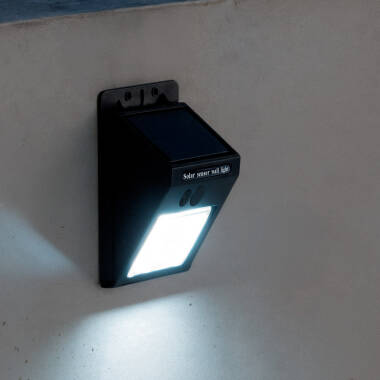
In this context, solar wall lights can be an alternative when there is no wiring or when an autonomous solution is required. However, mains-connected LED wall lights offer greater stability if constant light is needed for many hours.
How to choose LED wall lights
Choosing well means reviewing technical and aesthetic parameters. As these are models with integrated LED, it is especially important to pay attention to light quality from the start, since it will not always be possible to modify it by changing a bulb.
The selection should start from the intended use: ambience, orientation, reading, bathroom, kitchen, outdoor or decorative effect. From there, it is advisable to assess lumens, colour temperature, CRI, beam angle, IP protection and dimming capability.
Lumens and power
With integrated LED, lumens are the most useful figure for knowing how much light the wall light provides. Watts indicate consumption, but two luminaires with the same power can emit different amounts of light depending on their efficiency and optical design.
For ambient lighting, between 300 and 700 lumens may be enough. For circulation areas, corridors or entrance halls, it is usually better to work with several distributed points rather than a single very powerful luminaire. For reading, bathroom or kitchen use, it may be necessary to move closer to 700–1200 lumens, depending on the use and the distance to the illuminated plane.
Outdoors, in entrances or garages, distribution should also be considered. A high-flux luminaire that is poorly oriented can cause glare and leave shadows, while a moderately powered wall light that is well placed can be more comfortable.
Colour temperature
Colour temperature defines whether light is perceived as warm, neutral or cool. In living rooms, bedrooms and decorative areas, the most common choice is 2700K or 3000K. These tones create more welcoming and comfortable lighting.
In kitchens, bathrooms, functional corridors and work areas, 4000K can offer greater clarity.
In integrated LED wall lights, this choice is especially important because colour temperature cannot always be changed afterwards. Some models allow CCT selection between several values, but if this is not the case, it is advisable to choose correctly from the beginning.
Colour rendering index
The colour rendering index, or CRI, indicates how light reproduces colours. For general domestic use, CRI >80 is usually sufficient. In bathrooms, dressing tables, wardrobes, make-up areas, kitchens or spaces where it is important to perceive the colour of materials and finishes more accurately, CRI >90 may be recommended.
A good CRI helps skin tones, textiles, wood, paint and food appear more natural. In decorative lighting, this detail can make a difference even when the light level is moderate.
Diffuser, optics and glare
Visual comfort depends greatly on how the light is emitted. An opal diffuser softens emission and reduces bright points. A narrower optic concentrates the beam. An indirect light luminaire prevents direct view of the light source.
In bedrooms, living rooms and corridors, it is advisable to prioritise soft, glare-free light. In kitchens and bathrooms, the light should be clearer, but also well diffused. Outdoors, it is important to prevent the wall light from projecting light directly towards windows, neighbours or rest areas.
LED wall lights by room
Choosing the right wall light depends largely on the use and characteristics of each space. Below are specific recommendations by room to make the most of them.
- LED wall lights for kitchens: kitchen wall lights should provide clear, comfortable and easy-to-maintain light, making them useful for reinforcing secondary walls, illuminating dining areas or complementing general lighting; a colour temperature of 4000K is recommended to improve visibility on work surfaces, combining it with warmer tones in areas open to the living room, and it is best to choose materials resistant to steam, grease and daily use to make cleaning and durability easier.
- LED wall lights for bathrooms: bathroom wall lights should be selected taking into account humidity, the IP rating and their position in relation to the basin, shower or bathtub, ensuring uniform lighting by the mirror to avoid shadows on the face, preferably with side wall lights or a well-diffused horizontal luminaire; a temperature between 3000K and 4000K offers a balance between comfort and precision, and for tasks such as make-up or shaving, a CRI above 90 is recommended.
- LED wall lights in corridors and staircases: In corridors and staircases, LED wall lights provide continuous and safe lighting without taking up space, with indirect light, dual-emission or extra-flat models being ideal for reducing glare; in narrow corridors, it is advisable to choose shallow luminaires and space them 2 to 3 metres apart depending on flux and height, while on staircases it is important for the light to mark steps and changes in level through grazing or indirect lighting.
- LED wall lights in living rooms and bedrooms: In living rooms and bedrooms, LED wall lights are used to create ambience, highlight walls or replace auxiliary lamps, with dimmable or warm-light models being preferable to adapt intensity; in bedrooms, they can be placed by the headboard, choosing adjustable models for reading or indirect light for ambience, while in living rooms they help create layers of lighting combined with other sources to achieve more comfortable spaces.
Installation and maintenance of integrated LED wall lights
Although integrated LED wall lights require less maintenance than models with bulbs, it is important to install them correctly to ensure proper operation and durability. They should be installed according to the manufacturer’s instructions, avoiding areas with excessive heat or poor ventilation.
Height and location
In living rooms, corridors and entrance halls, they are usually installed between 150 and 180 cm from the floor, while outdoors they can be placed higher. In bedrooms, height depends on the use, especially if they are used for reading. In bathrooms, it is essential to respect safety zones and the IP rating.
The direction of the light must also be considered: dual-emission models need space on the wall, adjustable models should remain accessible and indirect light models work better on light-coloured surfaces.
Replacement and service life
In these wall lights, the bulb is not replaced; if the LED or driver fails, it may be necessary to repair or replace the luminaire. For this reason, it is advisable to choose quality models from the start.
To maintain their performance, it is enough to clean the diffuser periodically and avoid the accumulation of dust or grease, especially in kitchens and outdoor areas.
Frequently asked questions about LED wall lights
What does it mean when an LED wall light has integrated LED?
It means that the light source forms part of the luminaire itself. It does not use a conventional replaceable bulb, but LED modules incorporated into the body of the wall light. This allows for more compact designs and better light control, although it reduces flexibility when changing power or colour temperature after purchase.
Can the bulb be changed in an integrated LED wall light?
In most cases, a bulb is not changed as in a traditional wall light. If the LED or driver fails, technical repair or replacement of the luminaire may be required. For this reason, it is advisable to choose models with good service life, proper thermal dissipation and suitable light characteristics from the start.
How many lumens does an LED wall light need?
For ambience, between 300 and 700 lumens is usually enough. For circulation areas, reading, bathrooms or kitchens, it may be advisable to work between 700 and 1200 lumens depending on distance and use. Outdoors or at entrances, the amount of light should be adapted to the area. An entrance can work well with 600–1200 lumens, provided that the light is well directed and does not cause glare.
Which colour temperature should I choose?
For living rooms, bedrooms and decorative areas, 2700K or 3000K are usually the most comfortable options. For bathrooms, kitchens and functional areas, 4000K offers greater clarity. In residential outdoor areas, 3000K usually balances visibility and visual warmth. The choice is important because in many integrated LED wall lights it cannot be changed afterwards.
Do integrated LED wall lights consume less?
Yes. LED technology provides more light per watt than traditional technologies. An integrated LED wall light can provide useful lighting with moderate consumption, especially in well-designed models. Savings will be greater in areas where the luminaire is used for many hours a day, such as corridors, entrances, staircases, outdoor areas or frequently used bathrooms.
Are they suitable for bathrooms and kitchens?
Yes, provided that the right model is chosen. In kitchens, it is advisable to prioritise clear light, easy-to-clean materials and good diffusion. In bathrooms, it is also essential to check the IP rating according to the installation zone. For mirrors, make-up or shaving, uniform light, a temperature around 4000K and, if possible, high CRI are recommended to reproduce colours better.