
Bug zapper lamps
Bug zapper lamps help reduce the presence of mosquitoes and flying insects in homes, terraces, gardens and businesses, without requiring complex daily maintenance.
Our featured products from Bug zapper lamps
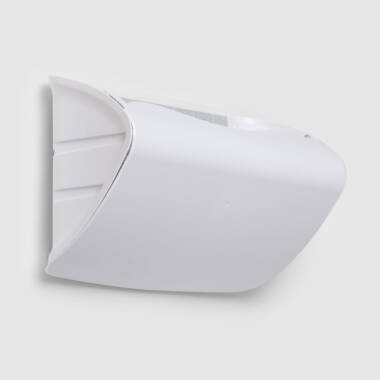
Essential
44,99 €
- Wattage 20 W
- Voltage Range 220-240V AC
- Cap Code T5
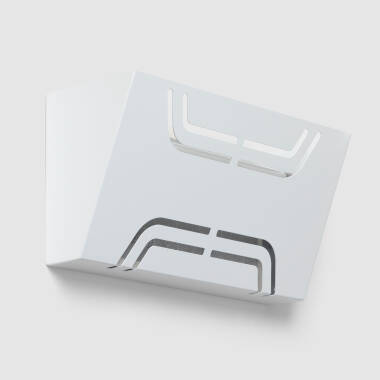
Expert
44,99 €
- Wattage 20 W
- Voltage Range 220-240V AC
- Cap Code T5
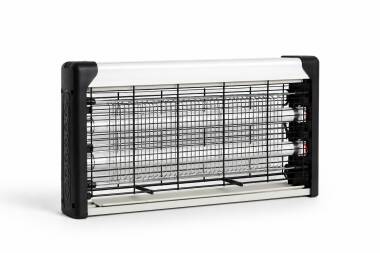
Essential
22,49 €
Ref 180371
NewElectric Antimosquito Lamp with 2 UV Tubes
Pre-Order, estimated shipping from 14/12/2026
- Wattage 20 W
- Voltage Range 220-240V AC
- Cap Code T8
2 options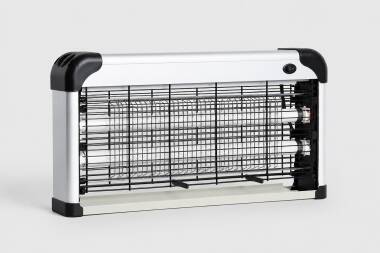
Expert
28,19 €
Ref 180364
AluminiumNewElectric Antimosquito Lamp with 2 Aluminium UV Tubes
Pre-Order, estimated shipping from 14/12/2026
- Wattage 20 W
- Voltage Range 220-240V AC
- Cap Code T8
2 options

About Bug zapper lamps
Choosing the right bug zapper lamp is not just about assessing its power. The capture system, installation location, level of protection against moisture, coverage area and safe use indoors or outdoors also play an important role. A good choice allows you to better control the presence of flying insects without constantly relying on sprays, candles or short-term chemical solutions.
What is a bug zapper lamp and how does it work?
A bug zapper lamp is a device designed to attract, capture or eliminate mosquitoes and other flying insects using light and physical retention systems. Its operation is based on the sensitivity many insects have to certain wavelengths.
Most models use UV-A ultraviolet light, usually in ranges close to 365–395 nm. This light acts as a visual lure for mosquitoes, moths, small flies and other flying insects. Once attracted, the device can work through an electrified grid, suction fan, glue board or collection container, depending on the type of insect killer lamp.
It is important to distinguish between attracting and repelling. A mosquito killer lamp does not create an invisible barrier or drive insects away like a chemical repellent. Its purpose is to progressively reduce the presence of insects in a specific area, especially when installed continuously in strategic points.
UV-A light, attraction and area of influence
A mosquito trap light works best when it does not have to compete with other intense light sources. For this reason, indoors it usually performs better when placed away from brightly lit windows, powerful decorative lamps or screens left on at night.
Outdoors, effectiveness depends heavily on placement. An outdoor mosquito lamp placed near a wall, under a porch or in a passage area can help draw insects away from the table or main entrance. However, installing it directly above a seating area may attract insects towards people before capturing them.
Physical capture versus chemical products
These solutions do not spray substances or generate residues in the environment. In models with an electric grid, the insect is neutralised when it comes into contact with the active area. In models with a glue board, capture is silent and does not involve an electric discharge.
This approach is especially practical in homes, covered terraces, small businesses, offices, warehouses or waiting areas where a stable solution for regular use is required.
Types of bug zapper lamp
The main types of mosquito lamp differ by capture system: electric grid or glue board. Both formats cover most domestic and professional uses, although they respond to different needs in terms of speed of action, cleanliness, discretion, coverage and maintenance.
Lamps with electric grid
Lamps with an electric grid are one of the most common options when looking for a fast-acting insect zapper. They attract insects using UV-A light and eliminate them on contact with an electrified grid positioned around the light source.
They are usually effective in spaces where flying insects are frequently present and direct action is required. Thanks to their larger area of influence, they can cover broad surfaces, with typical references of up to 80 m² in models designed for large rooms, garages, covered terraces or passage areas.
Maintenance mainly consists of emptying the insect collection tray and cleaning the grid with the device disconnected. In models used intensively, this cleaning should be carried out more frequently to avoid build-up that may reduce performance and the light’s attraction capacity.
Lamps with glue board
Lamps with a glue board are the other major group within insect killer lamps. Instead of using an electric discharge, they attract insects with UV-A light and retain them on a replaceable adhesive surface, allowing clean, silent capture with no visible remains.
This system is especially suitable for indoor areas, shops, cafés, food preparation workshops, professional kitchens, areas near food, receptions or spaces where discretion is a priority. In many environments with special hygiene requirements, glue traps are used because they prevent the insect from falling after capture, which is essential where there is food, display cases, counters, preparation tables or surfaces that must be kept clean.
The key is to replace the board when it loses adhesive capacity. During periods with a high presence of insects, such as spring and summer, it may be necessary to check it every few weeks to maintain effective capture.
Other types of mosquito lights
In addition to models with an electric grid and glue board, there are lamps with suction fans and portable or rechargeable lamps. The former attract insects with UV light and guide them into a container through airflow, making them useful in rooms where a more discreet operation is desired. Portable models, meanwhile, include a battery and are designed for occasional use on terraces, while camping, in small gardens or when travelling.
These formats can be practical in specific situations, but they usually have more limited coverage or depend on factors such as battery life, fan power and container design. For this reason, when choosing a general solution for a home, business or fixed installation, systems with an electric grid and glue board are usually the main options.
How to choose a bug zapper lamp
To choose well, it is important to relate the power and capture system to the size of the space, the type of installation and the level of exposure to dust, moisture or rain. An oversized lamp may be unnecessary in a small room, while a model that is too limited will have little effect on a large terrace.
Coverage area and power
The coverage indicated by the manufacturer is usually expressed in square metres, but it should be interpreted as an approximate reference. In small areas or specific points, a glue board lamp can cover around 15 m² if installed correctly. For large living rooms, garages, covered terraces or passage areas, a bug zapper lamp with an electric grid can offer higher coverage, with typical references of 80 m².
This difference does not mean that one system is better than the other, but rather that each one responds to a different need. The electric grid provides greater reach and direct action; the glue board offers cleaner, more localised capture and is suitable for spaces where insects must not fall after capture.
Power does not always mean greater effectiveness. The light wavelength, optical design, insect entry into the capture system and placement are also important. A fly killer lamp with good light distribution and an accessible tray may perform better than a more powerful but poorly positioned model.
Indoor or outdoor use
Not all lamps are suitable for outdoor use. An outdoor mosquito lamp must have sufficient protection against moisture and splashes. For covered terraces or porches, an IPX4 rating may be sufficient, while more exposed areas require higher protection, such as IP65.
Indoors, priorities are usually noise, safety, cleanliness and the type of activity carried out in the space. Glue board models are better suited to customer service areas, food shops, counters, display cases or areas near food, as they capture the insect without discharge or subsequent falling. Electric grid models are more suitable when the goal is to eliminate insects quickly in garages, storage rooms, covered terraces or auxiliary spaces away from food.
Safe use and placement
An insect killer lamp should be installed out of reach of children and pets, especially if it includes an electrified grid. It is also advisable to avoid unstable surfaces, areas with direct water exposure or locations where the device could be hit.
Indoors, an approximate height of 2 to 2.5 metres usually helps attract flying insects without interfering with the movement of people. In outdoor areas, it is recommended to place the lamp at a reasonable distance from the area where people will remain, so that it works as an alternative attraction point and does not concentrate insects where people are.
Noise, cleaning and maintenance
If the lamp is going to be installed in a space where noise is an important factor, such as a bedroom, it is advisable to prioritise quiet operation and a light that is not disturbing.
In terms of maintenance, lamps with a grid require cleaning of the tray and grid, while glue board models require consumable replacement. In all cases, keeping the capture area clean prevents loss of effectiveness and extends the service life of the device.
Common applications of a bug zapper lamp
Bug zapper lamps are used both in homes and professional spaces. The key is to adapt the capture system to the environment, as the requirements are not the same in a bedroom, on an outdoor terrace or in premises with a constant flow of people.
Homes, bedrooms and living rooms
For domestic use, the priority is usually to reduce nuisance at night without odours or chemical products. In bedrooms, silent models such as glue board lamps work especially well, provided that the light is not excessively intense.
For living rooms and lounge areas, devices with greater coverage can be chosen, especially if there are balconies, open windows or direct access to a terrace. Placing the lamp away from the resting area helps prevent insects from concentrating near people.
Terraces, gardens and porches
Outdoors, the mosquito lamp must better withstand moisture and operate in an environment with more competing light. Placement is decisive: on a terrace, it is usually more effective to install it to one side or near the insect entry point, rather than directly above the table.
For gardens or patios, a single unit may not cover the whole surface if there are trees, dark areas or spots with stagnant water. In these cases, several medium-range lamps may offer a more balanced result than one central device.
Kitchens, garages and storage rooms
In ventilated kitchens, garages or storage rooms, lamps with an electric grid or glue board help control small flies, moths and other insects attracted by light, moisture or organic residues. Frequent cleaning is important, especially in areas where residues may accumulate.
When used near food areas, closed systems or glue board models should be prioritised to prevent the fall or dispersion of remains. This type of lamp is especially recommended in environments where food is exposed, as the insect remains held on the board and does not fall onto worktops, display cases, counters or preparation surfaces. Installation should be carried out away from direct work surfaces and always in accordance with the manufacturer’s recommendations.
Shops, offices and small businesses
In retail premises, offices, receptions or waiting rooms, discretion is often as important as effectiveness. A fly killer lamp with a glue board or enclosed design avoids noise, prevents the insect from falling after capture and maintains a cleaner image for customers. In food businesses, this system is usually the most suitable for hygiene and residue control.
At entrances where doors are opened constantly, it may be necessary to reinforce the installation with a unit near the entrance, but without placing it directly in the outdoor airflow. This reduces the entry of insects into occupied areas without creating an attraction point inside.
Technical criteria that make the difference in a bug zapper lamp
Beyond the external design, there are technical parameters that help distinguish a basic mosquito lamp from a more efficient solution. Reviewing them allows for a safer choice and helps avoid purchases that are not suitable for the real space.
Wavelength and type of light
UV-A light between 365 and 395 nm is common in this type of equipment because it is attractive to many flying insects. It should not be confused with UV-C light, used in other technical contexts and subject to different safety requirements. For mosquito control use, UV-A and physical capture systems are the standard approach.
Light intensity also matters. In very brightly lit rooms, the lamp may lose attraction capacity. For this reason, indoors it is advisable to use it with moderate ambient lighting, especially in the evening and at night.
Open area, obstacles and airflow
A mosquito lamp works better when the light is visible from several points in the space. Curtains, tall furniture, shelving or partitions reduce the real reach. In small warehouses or garages, placing it in a high, unobstructed point improves light exposure.
Air currents also have an effect. Mosquitoes have more difficulty flying in ventilated areas, and a strong current can move them away from the capture point. On open terraces, it is advisable to combine a sheltered position with some distance from people and food.
Service life of the light source
In UV LED lamps, service life can reach thousands of hours, although attraction performance may decrease over time if UV emission loses intensity. In devices with a traditional UV tube, periodic replacement is usually more important, often after a season of intensive use or when reduced attraction capacity becomes noticeable.
For frequent use, it is worth considering the availability of replacement parts, the ease of replacing tubes or glue boards and the annual maintenance cost. A lamp that is easier to maintain usually preserves its performance better in the medium term.
Frequently asked questions about bug zapper lamps
These questions help when choosing between a mosquito killer lamp, an indoor mosquito trap light or a solution designed for outdoor use. The answers focus on general criteria for use, installation and maintenance.
Does a bug zapper lamp eliminate all mosquitoes?
It does not eliminate all mosquitoes immediately. It reduces their presence within an area of influence, but its effectiveness depends on placement, competition from other lights, ventilation and the number of insects present.
In small indoor spaces, a clear reduction may be noticed if it is used several hours before the room is occupied. In open outdoor areas, the result is usually more gradual because insects continue to arrive from gardens, vegetation, stagnant water or nearby untreated areas.
What is the difference between a mosquito killer lamp and a repellent?
A mosquito killer lamp attracts and captures insects using light and a physical system, while a repellent aims to keep them away from the skin or a specific area through active substances or odours.
The lamp is an environmental control solution and can operate for many hours without spraying chemicals. Repellent acts in a more localised and temporary way. In areas with a high presence of mosquitoes, both approaches can fulfil different functions.
Where should an outdoor mosquito lamp be placed?
On terraces or in gardens, it should be installed in a side position, visible and slightly away from the area where people eat or relax. An approximate distance of 2 to 5 metres from the table usually helps insects move towards the lamp rather than towards people.
It is also important to prevent it from being hidden behind furniture, closed awnings or dense vegetation. If the device will be exposed to rain or splashes, it must have an appropriate IP protection rating for outdoor use.
Can a fly killer lamp work for mosquitoes?
Yes. A fly killer lamp can also work for mosquitoes, as these devices are designed to attract and capture flying insects using UV-A light. For this reason, terms such as mosquito lamp, mosquito killer lamp, fly killer lamp or insect killer lamp are often used to refer to the same type of solution.
Since mosquitoes, unlike other flying insects such as flies, are not attracted only by light, it is advisable to place the lamp in a visible area, with little competition from other lights and slightly away from people, so that it acts as an alternative attraction point within the space.
How many square metres does a bug zapper lamp cover?
Typical models can range approximately from 15 to 80 m², depending on power, design and capture system. Glue board lamps are usually aimed at more specific zones, around 15 m², while a lamp with an electric grid can cover larger areas, with references of up to 80 m² in open spaces.
For small rooms, access points or areas near food, localised coverage may be sufficient. For terraces, garages or large premises, it is advisable to choose devices with greater reach or install more than one unit.
Real coverage decreases if there are obstacles, strong ambient lighting, air currents or areas separated by walls. For this reason, in irregular spaces it is better to distribute several devices rather than rely on a single high-powered lamp.
What mosquito lamp is best if there is food nearby?
In areas with food, a lamp with a glue board is usually preferable. This system retains the insect on a replaceable surface and prevents it from falling after capture, which is important on counters, display cases, professional kitchens, food preparation workshops or indirect preparation areas.
Lamps with an electric grid can be effective in other spaces, but they are not the most suitable option when there is a risk of insect remains falling onto food, utensils or surfaces that must be kept hygienic.
Is an insect killer lamp with an electric grid safe?
Yes, provided it is used according to the manufacturer’s instructions. These devices usually include a protective housing to prevent accidental contact with the grid, but they must be kept out of reach of children, pets and areas with direct water exposure.
Before cleaning the tray or grid, the device must be disconnected. It is also advisable to avoid installing it on flammable surfaces, near light curtains or in places where it could be hit.
How long should it be left on?
To improve results, it can be switched on 2 to 3 hours before using a room or terrace. During periods with a high presence of insects, many lamps are designed to operate for several consecutive hours during the evening and night.
Indoors, keeping it switched on with low ambient light increases its attraction capacity. Outdoors, continuous use during the hours of greatest mosquito activity, usually at dusk and early evening, tends to provide better results.
What maintenance does a bug zapper lamp require?
Maintenance depends on the capture system. In models with an electric grid, the tray must be emptied and the active area cleaned with the device switched off. In adhesive models, the board must be replaced when it loses adhesion or becomes saturated.