
Natural Wall Lamps

Pendant
Show All

Table
Show All

Floor
Show All

Wall
Show All

Ceiling
Show All


Our featured products from Natural Wall Lamps
- -29%
Before 45,99 €
32,49 €
- -28%
Before 44,99 €
32,49 €





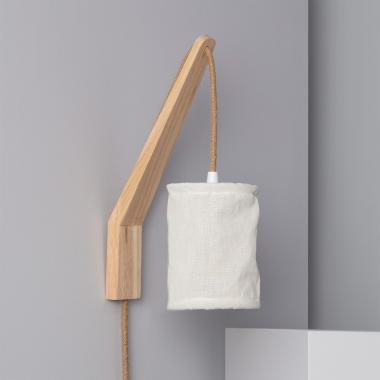
You may also be interested in
About Natural Wall Lamps
Natural wall lamp are a very suitable option for lighting interiors where calm, visual balance and a connection with warm materials are desired. Within wall lights, this type of light fixture stands out for its ability to add light without making the atmosphere feel harsher, integrating easily into different rooms.
Main features of natural wall lights
Natural wall lights are recognised for their light and not overly artificial aesthetic. Their value lies in the combination of decorative design and light designed to accompany the atmosphere without feeling invasive.
Organic materials and soft textures
The most evident feature of natural wall lamp is the use of organic materials or materials with a natural appearance. Wood adds visual warmth, rattan creates a highly decorative woven texture, plant fibres filter the light with a soft effect, and textile shades help reduce glare.
These materials have a different presence from metal or glass. They do not reflect light harshly, but partially absorb it or project it with nuances. This makes it possible to create more relaxed atmospheres, especially in rest areas or in spaces where excessive lighting is to be avoided.
They also influence the perception of colour. For example, a natural wall lamp with touches of light wood can integrate into white or beige walls without creating a sharp contrast.
Designs created to integrate into relaxed atmospheres
Natural designs usually avoid overly rigid shapes or excessively glossy finishes. Soft lines, rounded volumes and structures designed to integrate calmly into the room are the most common. This type of wall light does not need to stand out intensely to add personality.
In living rooms and bedrooms, its decorative function is noticeable even when the light is switched off. The texture of wood and the finish add relief to the wall and help the space look more carefully designed. In hallways and entrance areas, they can soften spaces that are usually more functional and turn them into more welcoming transition areas.
The key is to choose suitable proportions. A natural wall lamp that is too large can feel heavy on a narrow wall, while a very small piece can get lost on a large surface.
Decorative lighting that brings calm and comfort
The light from a natural wall lamp usually has an ambient or decorative focus. It is not intended to light the whole room with great intensity, but to create a comfortable layer of light that complements other points. This secondary lighting is especially useful at night, when a ceiling light can feel too intense.
To reinforce the feeling of calm, warm light is the most recommended option. A temperature between 2700 K and 3000 K works very well in living rooms, bedrooms and entrance areas. If a more intimate atmosphere is desired, 2200 K light can be suitable for decorative points, as long as it is not the only functional light source.
The luminous flux should be adapted to the use. For ambient light, a wall light between 300 and 500 lumens may be enough. For focused reading or support next to an armchair, 500 lumens may be sufficient, but always with controlled direction or a diffuser that prevents visual discomfort.
Where to place natural wall lights
Natural wall lights can be installed in different rooms, but they are especially effective in spaces where the aim is to enhance the decoration and improve the feeling of comfort.
Natural wall lights for living rooms
In living rooms, natural wall lights help create more enveloping lighting that is less dependent on ceiling light. They can be placed next to the sofa, near a bookcase or on a side wall where texture and depth are desired.
When used as ambient light, models with a textile shade, natural fibres or wood are a great option because they soften the light output and reduce contrasts. Warm light at 2700 K is usually suitable for watching television and maintaining pleasant lighting during the evening.
They can also be used to accompany reading areas. In this case, it is advisable to choose designs that allow the light to be slightly directed or that have a shade capable of guiding the beam towards the area of use. If the wall light is very diffuse, it will be more decorative than functional, so it may be necessary to combine it with an auxiliary lamp.
In living rooms with natural materials such as wood, stone, linen or ceramic, this type of wall light reinforces the coherence of the whole space.
Natural wall lights for bedrooms
In bedrooms, natural wall lamp are very useful for creating a relaxing atmosphere. They can be installed on both sides of the headboard, replace bedside lamps or complement the general lighting with a softer, closer light.
If they are placed next to the bed, it is important to define the use. If the aim is to create atmosphere, a more diffuse filtered light with a temperature of 2700 K may be enough to maintain a restful feeling.
Natural materials combine very well with upholstered headboards, light wood and walls in off-white, sand or warm grey. The result is a more serene and balanced bedroom, where the light fixture does not compete with the rest of the elements.
It is also important to consider the height. For a leisure activity such as reading or watching television, the light point is usually placed between 95 and 120 cm from the floor, depending on the height of the mattress and the headboard. If the wall light is decorative, it can be installed slightly higher so that the light is distributed better over the wall.
Natural wall lights for hallways and entrance areas
In hallways and entrance areas, natural wall lights bring warmth to spaces that are often lit in a very functional way. An entrance area with a light wall or a mirror can gain depth with a warm light point and a natural texture.
In narrow hallways, it is advisable to choose compact models with little depth to avoid knocks or the feeling of an obstacle. A projection of less than 15 cm from the wall is usually more comfortable in reduced passage areas. If the wall light has fibres or a shade with volume, it is better to place it on walls where it does not interfere with circulation.
Installation height also influences comfort. As a general reference, the centre of the wall light can be placed between 150 and 170 cm from the floor. In long hallways, several points placed at the same height create continuity and avoid dark areas. The distance between them will depend on the power and beam angle, although separations of 2 to 3 metres can work in many domestic routes.
In entrance areas without natural light, light finishes and natural shades help avoid a dull feeling. Warm light at 3000 K can offer slightly more clarity than 2700 K without losing comfort.
Natural wall lights according to their main material
The material defines much of the character of the wall light. Although they all share a natural aesthetic, wood, rattan and fabric do not convey the same feeling. Each finish provides a different texture, a way of filtering the light and a distinct decorative sensation.
Wooden wall lights to add warmth
Wooden wall lights are one of the most versatile options within natural lighting. Wood adds immediate warmth and integrates well with other types of styles.
In living rooms, a wooden wall light can accompany different pieces of furniture or walls in neutral tones. It can also work in entrance areas, where it adds a more welcoming feeling from the moment you enter.
The choice of wood tone is important. Light woods, such as oak, beech or ash, reinforce brightness and combine very well with white, beige or soft grey. Dark woods add more presence and can fit into more sophisticated atmospheres, but it is advisable to balance them with light walls or warm light so as not to darken the whole space.
From a lighting point of view, wood does not usually act as the main diffuser, but rather as a structure or decorative detail. That is why it is important to check how the wall light emits light.
Rattan wall lamp for a natural and light decoration
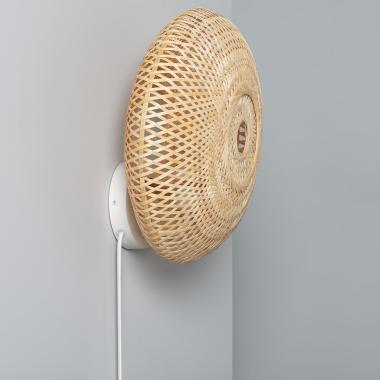
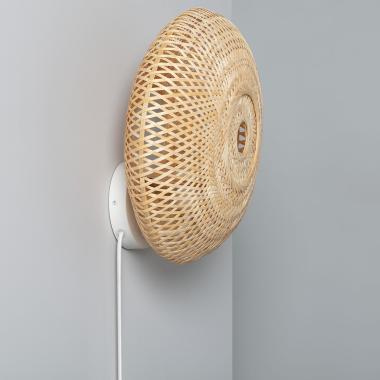
Rattan wall lamp provide a light, handcrafted aesthetic that is closely linked to relaxed atmospheres. The woven material allows the light to be partially filtered and creates decorative shadows on the wall, especially when the bulb remains inside an open shade.
This effect can be very attractive in bedrooms, living rooms and entrance areas, where the light fixture has a clearly ambient role. However, it is worth bearing in mind that rattan does not usually offer completely homogeneous light. If functional lighting is needed, it is advisable to combine it with other light points.
In decoration, rattan combines very well with light wood, plant fibres, ceramic, linen, cotton and sand tones. It can also soften modern interiors that feel too cold, adding texture without needing to introduce intense colours.
To maintain visual comfort, it is recommended to use warm bulbs with low luminance. A temperature of 2700 K reinforces the natural appearance of the material. If the bulb remains visible through the weave, soft filament models help avoid glare.
Fabric wall lights for softer and more welcoming light
Fabric wall lights are a very suitable solution when filtered and comfortable light is desired. Textile shades reduce the direct view of the light source and distribute the lighting in a gentler way, especially in bedrooms and living rooms.
The fabric can be linen, cotton or other textiles with a natural texture. Light tones allow greater light transmission, while denser and darker fabrics create more intimate lighting. In any case, the result is usually softer than metal or an exposed bulb.
They are also a good option for modern, Nordic interiors or spaces where a discreet light fixture is desired.
Nordic and natural wall lights: a very balanced combination
Nordic wall lights and natural designs have a very close relationship. Both seek practical, simple and pleasant lighting, with materials that do not visually overload the space and an aesthetic designed to improve the feeling of well-being at home.
Why the Nordic style works with natural materials
Nordic style is based on light, functionality and the use of warm materials. That is why it works so well with wall lights made of wood, rattan, linen or natural fibres. These materials help prevent light interiors from feeling cold and add texture without breaking visual clarity.
In Nordic decoration, the wall often plays an important role. White surfaces, neutral tones and furniture with simple lines need light points that accompany without overloading. A natural wall lamp can add exactly that nuance: it lights, decorates and adds depth, while maintaining a light presence.
The light should also accompany that combination. A temperature of 2700 K or 3000 K reinforces the warmth of wood and textiles, while cold light can create a less welcoming feeling.
This combination works well when light walls, wooden furniture, soft textiles and simple-shaped light fixtures are combined. The materials do not all need to be identical; it is enough for them to share the same visual feeling.
What type of light to choose for a natural wall lamp
Light determines whether the wall light is perceived as a functional element or merely a decorative one. In natural designs, it is advisable to prioritise warm temperatures and an intensity proportional to the use of each room.
Warm light to reinforce the feeling of comfort
Warm light is the most suitable option for natural wall lights. A temperature between 2700 K and 3000 K helps enhance materials such as wood or plant fibres.
2700 K light offers a more intimate and relaxed atmosphere, ideal for bedrooms and rest areas. 3000 K light provides slightly more clarity, so it can be useful in hallways or living rooms where more versatile lighting is needed.
If decorative bulbs are used, it is advisable to check both the temperature and the intensity. A bulb that is too powerful inside a fibre shade can create harsh contrasts or excessive shadows. For atmosphere, between 300 and 500 lumens per point is usually enough for most domestic uses.
Indirect light to create a relaxing atmosphere
Indirect light combines very well with natural wall lights because it reduces glare and creates a more enveloping effect. When the beam is projected towards the wall or ceiling, the light bounces and is distributed more softly throughout the room.
In bedrooms, it can be used as a light before rest. In living rooms, it helps create a more pleasant scene at night. In hallways, it allows the route to be guided without generating an overly intense effect.
Light surfaces reflect light better and help visually enlarge the space. Textured walls, such as natural coverings or sandy paint, can create a more marked decorative effect when they receive grazing light.
Ambient light for living rooms, bedrooms and hallways
Ambient light is one of the main functions of natural wall lights. It adds a secondary layer of lighting that makes the space feel more comfortable and less flat. It does not always replace general light, but it greatly improves the daily use of the room.
For this lighting to be effective, it should be distributed well. A single wall light can serve as a decorative point, but on long walls or in hallways it may be necessary to install several. It is preferable to use several points with moderate intensity rather than one very powerful one, as this reduces harsh shadows and uncomfortable contrasts.
How to combine natural wall lights with the decoration
Natural wall lights integrate better when they interact with other materials in the room.
Relationship with wooden furniture and plant fibres
If the room already has wooden furniture, rugs or handcrafted details, a natural wall lamp reinforces the coherence of the whole space. The key is not to mix too many wood tones without intention. A combination of light woods usually adds lightness, while a mix with dark woods can create more contrast.
Plant fibres add a more informal and relaxed nuance. They work very well in Mediterranean interiors, but can also be integrated into contemporary spaces if combined with smooth walls and a neutral palette.
Light textiles to soften the lighting
Textiles play an important role in the perception of light. Linen curtains, wool rugs, etc., help the lighting appear warmer and more enveloping.
When the wall light includes a textile shade, it is advisable to maintain some relationship with the rest of the fabrics in the room. They do not need to be the same, but they should share a colour range or a compatible texture.
In bedrooms, this combination is very effective. A natural wall lamp helps create a serene atmosphere without needing to add too much decoration. In living rooms, textiles help balance the presence of wood, ceramic or fibres.
Light walls to enhance the feeling of spaciousness
Natural wall lights usually look especially good on light walls. Off-white, beige, sand or warm greys allow the light to bounce softly and natural materials to stand out without creating excessive contrast.
On white walls, a natural wall lamp prevents the surface from looking too flat. If the wall is dark, the wall light can gain prominence, but the room will need more careful lighting planning so that it does not feel dull.
Indirect or grazing light can help highlight the texture of the wall. However, if the surface has imperfections, very close light can make them more visible. In that case, it is advisable to choose a more diffuse emission.
Frequently asked questions about natural wall lights
What materials are most common?
The most common materials are wood, rattan, plant fibres, linen, cotton, bamboo and other finishes with an organic appearance. Wood adds warmth, rattan and fibres add texture, and fabric softens the light. The choice depends on the desired effect. For a warmer and more structured aesthetic, wood works very well. For a light and handcrafted atmosphere, rattan is a good option. For soft and discreet lighting, textile shades offer a very comfortable result.
What colour temperature is best?
The most recommended option is usually warm light between 2700 K and 3000 K. 2700 K creates a more relaxed atmosphere and is suitable for bedrooms and living rooms. 3000 K provides a little more clarity and can work better in entrances, hallways or rooms with little natural light. Cold temperatures above 4000 K do not usually fit well with natural materials, as they can make them feel less warm.
Do natural wall lights provide enough light?
They can provide enough light as ambient support, but they do not always replace general lighting. A natural wall lamp is usually designed to create atmosphere, soften a wall or provide secondary light. To light an entire room, it is normally advisable to combine it with other light points. As a reference, between 300 and 500 lumens per wall light can be suitable for ambience.