
Spotlight for Three-Circuit track
Three-phase LED track lights allow for illuminating commercial and professional spaces with flexibility, a well-defined aperture, and an installation designed to adapt the light to each zone.

Our featured products from Spotlight for Three-Circuit track
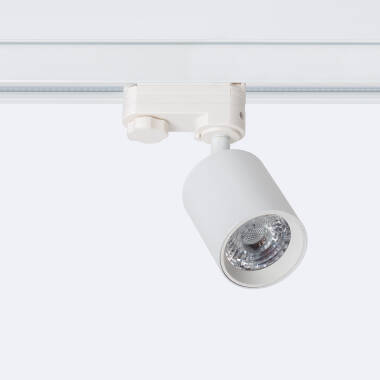
Advanced
17,39 €
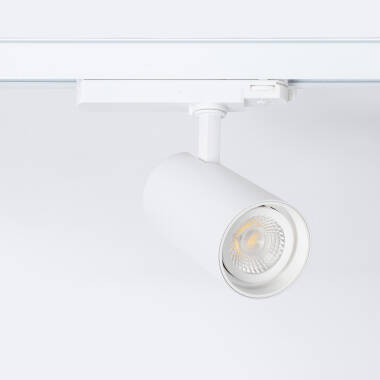
Ref 106707
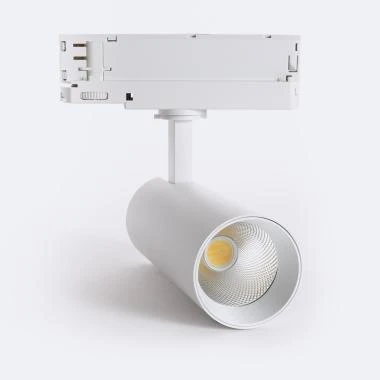
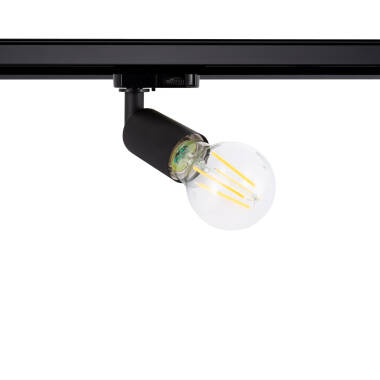
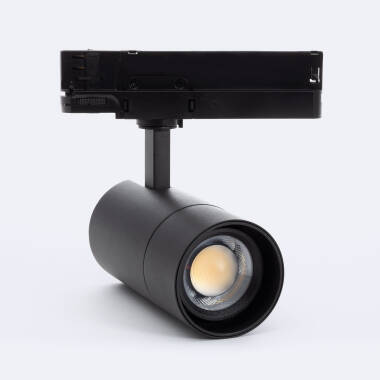
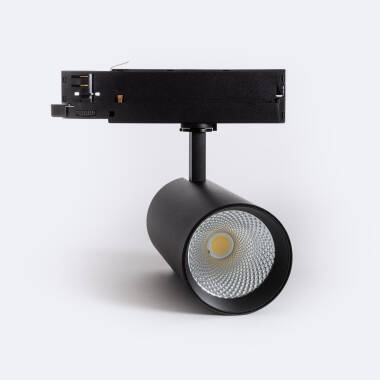
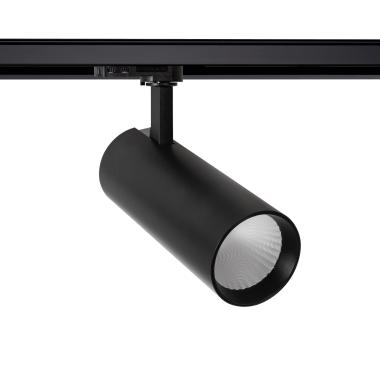
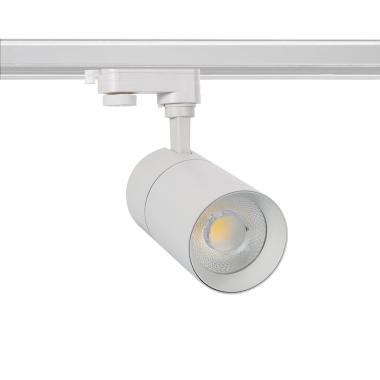
AluminiumAdjustable3-Circuit Track LED Spotlight 10W Mallet Dimmable White
In Stock, delivery in 15-20 days
- Wattage 10 W
- Voltage Range 220-240V AC
- Lumen 1000 lm
2 options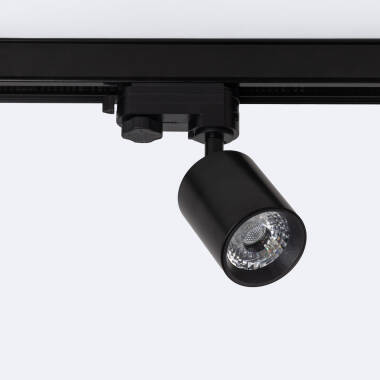
Advanced
17,39 €
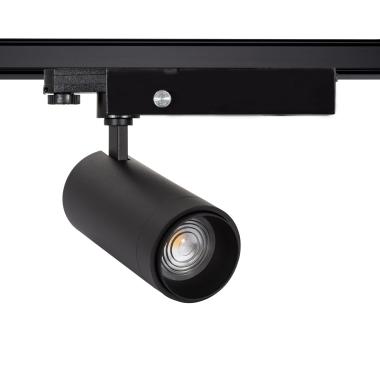
Ref 106700
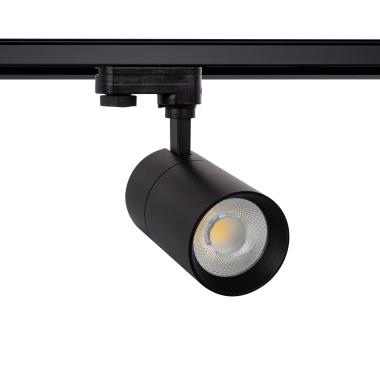
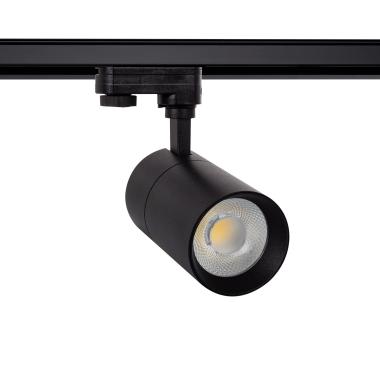
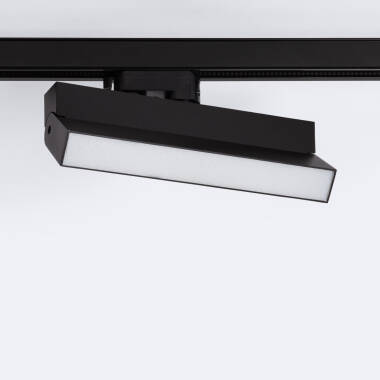
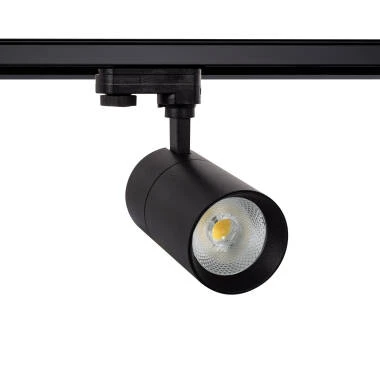
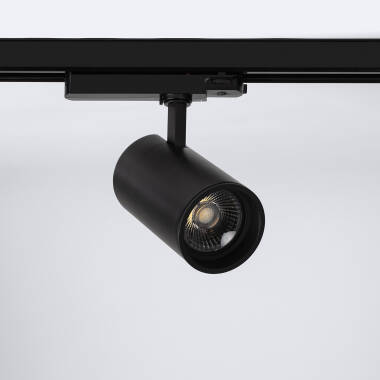
AluminiumAdjustable3-Circuit Track LED Spotlight 10W Mallet Dimmable Black
In Stock, delivery in 15-20 days
- Wattage 10 W
- Voltage Range 220-240V AC
- Lumen 1000 lm
2 options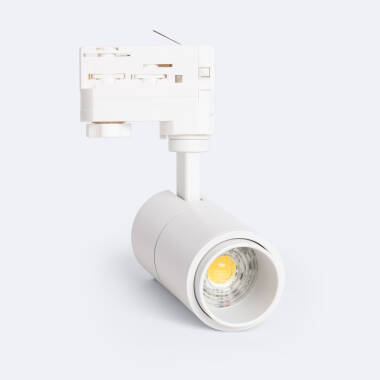
Expert

28,69 €
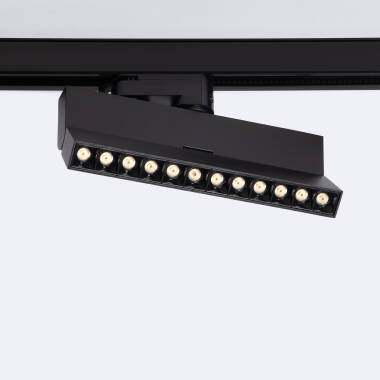
Ref 108687
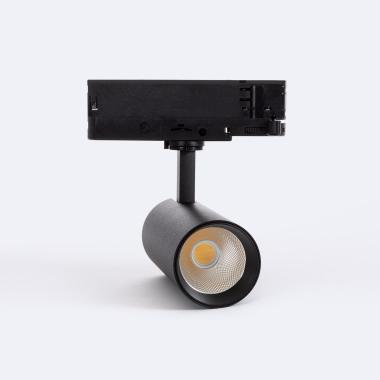
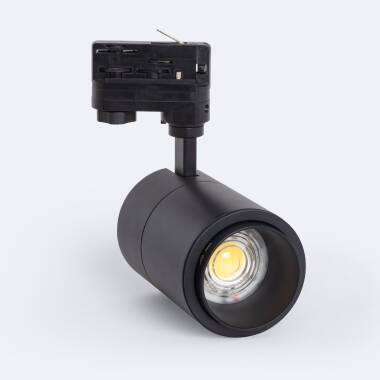
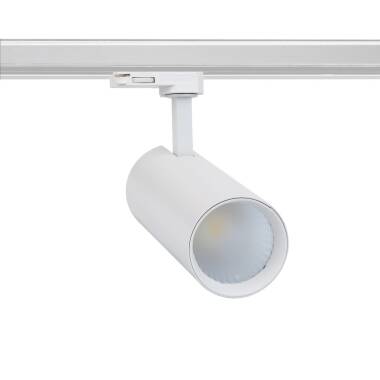
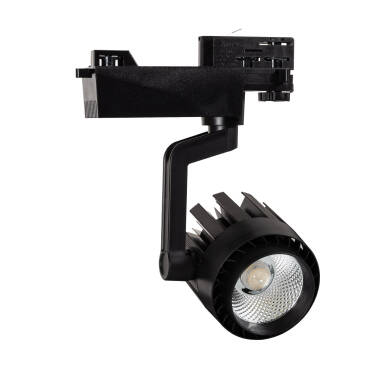
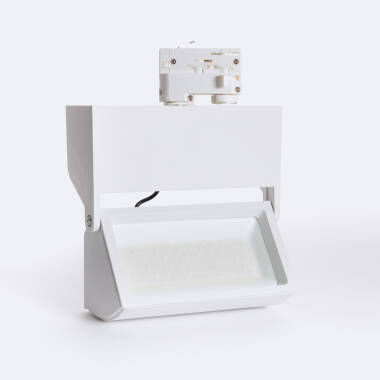
AluminiumAdjustable3-Circuit Track LED Spotlight 10W Pulyx Multi Angle 15-60º Dimmable Selectable CCT
In Stock, delivery in 15-20 days
- Wattage 10 W
- Voltage Range 220-240V AC
- Lumen 1000 lm
2 options- -15%
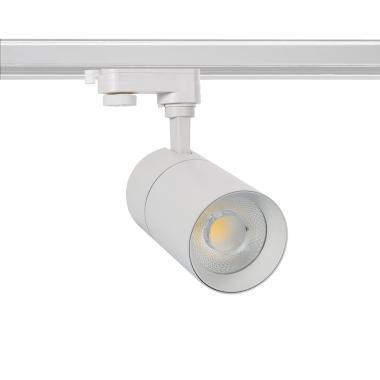
Advanced
Before 32,99 €
28,19 €
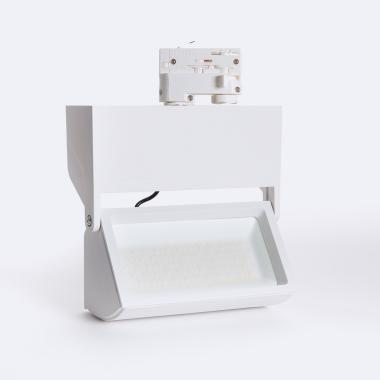
Ref 65411
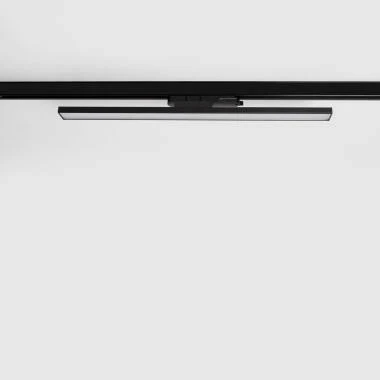
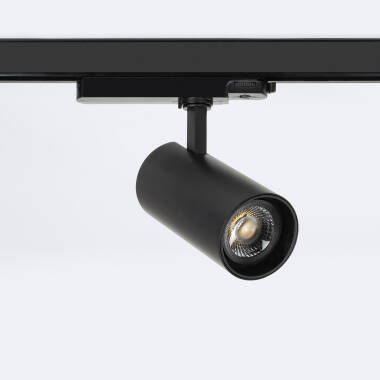
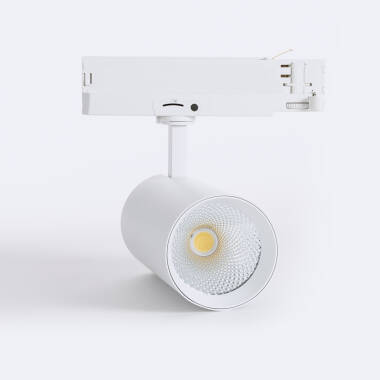
AluminiumAdjustable3-Circuit Track LED Spotlight 20W Mallet Dimmable White
In Stock, delivery in 15-20 days
- Wattage 20 W
- Voltage Range 220-240V AC
- Lumen 2000 lm
3 options







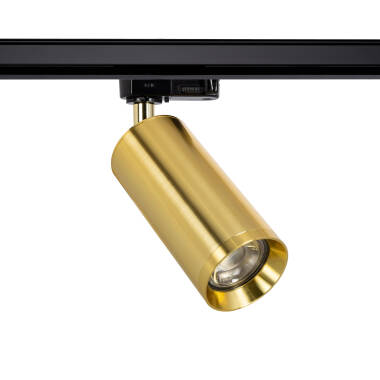
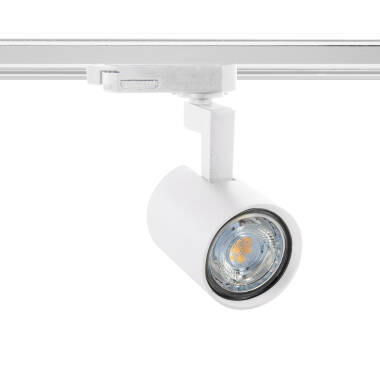
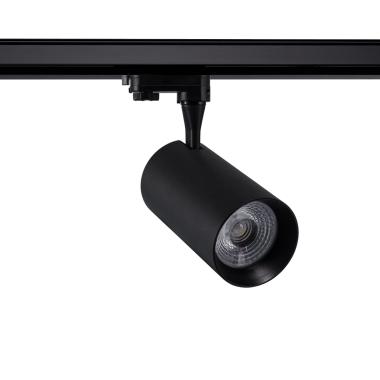
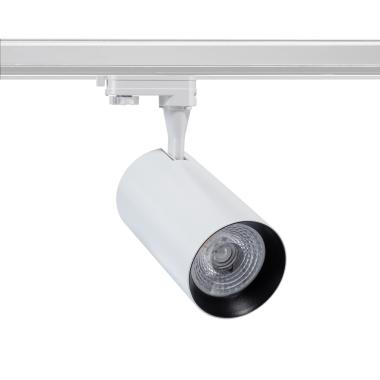
Brands related to this category


About Spotlight for Three-Circuit track
Track lights remain one of the most effective solutions when a project needs to combine general lighting, accent, and reconfiguration capacity. In retail, exhibition, hospitality, or workspaces, the three-phase system provides a clear advantage: it allows for distributing different circuits on the same electrified line, facilitating independent switching and a much more precise adaptation of the set.
What are three-phase LED track lights
Three-phase LED track lights are adjustable luminaires designed to be installed on a three-circuit electrified track. Unlike other more rigid solutions, this system allows for moving each light, reorienting it, and reorganizing the lighting without modifying the installation point on the ceiling. This is why it is a common choice in spaces where the distribution of products, furniture, or work zones changes with some frequency.
Furthermore, in a three-phase tracks, three independent switching lines can be created within the same profile, allowing for the separation of, for example, window lighting, central aisles, and perimeter zones. This flexibility improves daily operation and avoids over-dimensioning installations with additional circuits.
On the other hand, LED technology provides standard efficiencies above 90-120 lm/W in many models for professional indoor use, along with a lifespan that typically ranges between 30,000 and 50,000 hours.
Why choose a three-phase track system
When lighting must adapt to the real space and not the other way around, the three-phase track offers a very practical solution. It not only allows for the installation of LED track lights with freedom of movement but also for switching different groups according to the time of day, the season, or the activity being carried out.
In a store, for example, it is not always necessary to keep the entire installation running at the same level. it is common to reinforce shop windows, promotional walls, or highlighted tables and reduce other areas at certain times. With a three-phase track, this operation is much simpler because the system is already prepared to work by circuits within the same layout.
It is also useful in projects where lighting is frequently reviewed. In fashion spaces, showrooms, galleries, or commercial corners, moving a light a few centimeters, changing its orientation, or redistributing power can have more impact than adding new luminaires. The three-phase system allows for these adjustments without construction work and with a much cleaner installation logic.
Types of three-phase LED track lights according to their function
Although they all share the same mounting principle, not all lights fulfill the same role within the project. Choosing the right format helps improve uniformity, contrast, and the perception of the product or space.
Lights for accent lighting
These are the most commonly used when seeking to highlight a product, a wall, a display table, or a specific architectural point. They normally work with narrow apertures, even below 30°. In retail and exhibition, they allow for the creation of visual hierarchy, directing the gaze and improving the reading of the space without the need to increase general lighting.
Lights for general or support lighting
When the goal is to accompany ambient lighting or cover wide areas with a flexible solution, lights with wider apertures (60° or 90°) are used. They do not always replace a technical luminaire designed for total uniform lighting, but they do work very well in shops, receptions, circulation, or customer service areas where combining visual comfort and orientation capacity is of interest.
How to choose three-phase LED track lights
The choice should not be made solely by power or design. In this type of product, height, space use, aperture, color rendering level, and the operating logic of the circuits all play a role.
Power, lumens, and installation height
In commercial interiors, many three-phase track lights operate in approximate ranges from 10W to 40W, although there are more powerful versions for high ceilings or very marked accents. In a premises with a 3-meter ceiling, a 20W to 30W light may be sufficient to highlight a product or reinforce aisles, whereas at greater heights, it is usually necessary to increase the flux or narrow the optics to maintain intensity on the useful surface.
It is not advisable to compare watts alone. What matters is the real emitted flux, the optics, and how the light reaches the work or exhibition plane. A light with less power but a better-adjusted aperture can offer a more effective result than another with more watts and poorer distribution.
Beam angle and light distribution
The angle defines whether the light is concentrated or distributed. A practical rule consists of relating aperture, height, and the size of the object or surface to be illuminated. The greater the distance between the light and the plane, the more the illuminated surface grows. If this data is not controlled, the lighting loses its intention and the project becomes flat.
Color rendering and visual comfort
In sales and exhibitions, the Color Rendering Index (CRI) has real weight. A CRI 80 may be sufficient in many general uses, but when there is a product where color is decisive, such as textiles, decoration, cosmetics, or food, it is preferable to work with CRI 90 or higher. The difference is perceived in skin tones, textiles, finishes, and materials with complex nuances.
Glare must also be monitored. A poorly oriented light or one installed at an inappropriate height can generate visual discomfort for both customers and staff. A good result depends not only on the product but on the final adjustment of the aperture and the balance between ambient light and accent light.
Common applications of three-phase LED track lights
The value of this system is best understood when analyzed in real use. Its advantage is not only technical but also operational.
Stores and retail spaces
In commerce, three-phase track lights allow for combining general lighting and accent within the same infrastructure. It is common to work with ambient lighting levels around 300-500 lux and reinforce shop windows, tables, or product walls with higher levels according to the sought-after visual hierarchy. The system facilitates campaign changes, product redistribution, and premises adaptation without redoing the installation.
Showrooms and exhibition spaces
In exhibitions, orientation and aperture are decisive. The same space may need narrow beams for specific pieces and medium apertures for paths or backgrounds. The three-phase track allows for reorganizing this composition quickly, something especially useful when collections, setups, or points of interest change.
Hospitality and catering
In restaurants, cafes, or common areas, lighting often requires different scenes according to the time and atmosphere. Independent circuits help separate bars, tables, access points, or decorative elements, maintaining a coherent base and allowing for adjustments by zone. Here, balancing accent and comfort is crucial to avoid an excessively harsh or irregular space.
Offices, receptions, and multipurpose spaces
Although not always associated with office environments, the three-phase track also works well in receptions, multipurpose rooms, creative zones, or customer service areas. In these cases, it provides flexibility to reorganize workstations, paths, or meeting points without having to rethink the electrical installation every time the layout changes.
Frequently asked questions about three-phase LED track lights
What is the difference between a three-phase track light and a single-phase one?
The main difference lies in the adapter and the way circuits are managed. A single-phase system works with a single ignition line, while the three-phase allows for three independent circuits within the same track. In spaces where it is necessary to separate zones or scenes, the three-phase offers clearly superior flexibility.
How many three-phase lights do I need?
There is no standard quantity of lights based on space dimensions, because the result depends on ceiling height, the lumens of each light, its aperture, and the type of lighting desired. As a guideline, in retail, a base of 300 to 500 lux can be planned for general areas, with shop windows, tables, or exhibition walls reinforced with higher levels. Therefore, rather than thinking about how many lights fit in a surface, it is better to dimension the installation according to useful lumens, the separation between luminaires, and the real distribution of light.
What aperture is suitable for a track light?
To highlight a specific product, narrow apertures of 30° or less usually work best. For broader uses or general support, it is more common to work above 60°. The correct choice depends on the distance to the illuminated plane and the actual size of the area to be covered.
Is 3000K or 4000K better in a three-phase track?
In most interior projects, 3000K is used when seeking a warmer atmosphere, while 4000K offers a more neutral and defined perception. In retail, both options are valid, but it is advisable to maintain consistency throughout the project so the space does not look visually fragmented.
Can three-phase lights be moved once installed?
Yes. That is one of the great advantages of track lights. The lights can be moved along the track and reoriented as the space distribution or the point of interest changes. This flexibility reduces interventions and allows for adapting lighting without construction work.
What is the typical lifespan of a three-phase LED track light?
In professional ranges, it is common to find lifespans of 30,000 to 50,000 hours, although the real figure depends on the thermal quality of the set, the driver, and the conditions of use. In installations with many daily hours, good dissipation and stable electronics are as important as the initial flux of the light.
Does it make sense to use three-phase track in small spaces?
Yes, provided there is a need to sectorize light or anticipate future changes. In small premises, it may seem like an over-dimensioned system, but when the project requires differentiated scenes, mounting flexibility, or growth capacity, the three-phase track remains a very practical solution.