
Three-Circuit LED Track and accessories
Three-phase tracks and accessories allow for the creation of flexible, orderly lighting installations that are prepared to adapt spotlights, paths, and circuits to each project.
Our featured products from Three-Circuit LED Track and accessories
Expert
18,39 €
 (8)
(8)- Voltage Range 220-240V AC
- Max Wattage 2000 W
- IP Rating IP20
2 options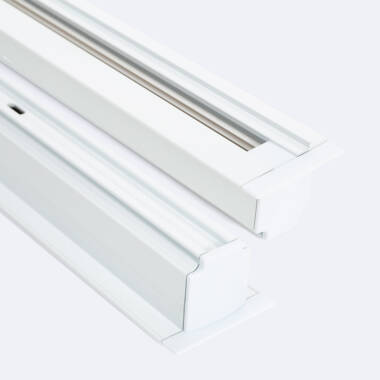
Expert
30,69 €
- Voltage Range 220-240V AC
- Max Wattage 2000 W
- IP Rating IP20
2 options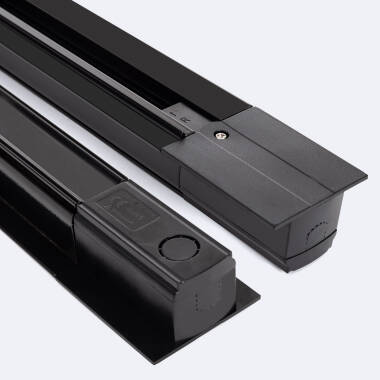
Expert
17,39 €
Ref 122991
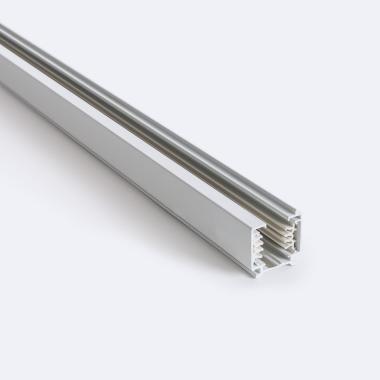
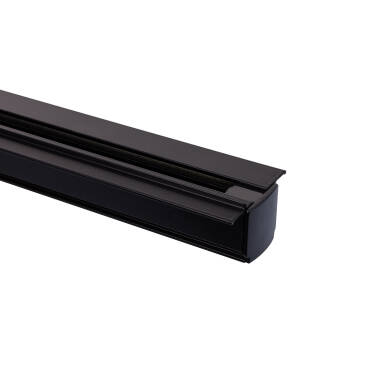
Aluminium1m 3-Circuit Recessed Aluminium Track for LED Track Spotlights
In Stock, delivery in 15-20 days
- Voltage Range 220-240V AC
- IP Rating IP20
- Battery Operated No
2 options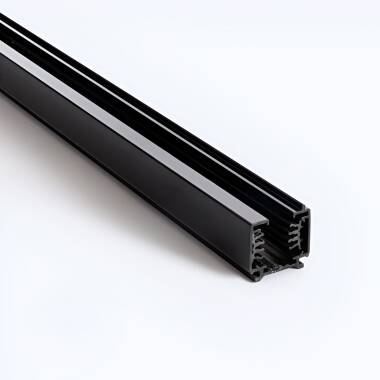
Expert
51,07 €
Ref 100020
AluminiumAdjustable3-Circuit Track DALI 2m for LED Spotlights
In Stock, delivery in 15-20 days
- Voltage Range 220-240V AC
- Type Of Dimming DALI
- IP Rating IP20
2 options




![[NO ACTIVAR] Type F Schuko Plug for 3-Circuit Track](https://www.ledkia.com/933355-product_380x380/type-f-schuko-plug-for-three-phase-track.jpg)
You may also be interested in
About Three-Circuit LED Track and accessories
In commercial and professional lighting, it is not enough to choose a good luminaire. The final result also depends on the structure on which it is installed, how the power supply is distributed, and the ease with which the system can grow or be modified. Therefore, three-phase tracks and their accessories are part of the technical solution from the start, especially in spaces where lighting must be adjustable without redoing the installation.
What are three-phase tracks and accessories
Three-phase tracks are electrified profiles designed to power luminaires through three independent circuits within a single line. This allows for turning different groups of spotlights on or off without the need to install several separate tracks or duplicate runs on the ceiling.
On a practical level, a three-phase system allows for organizing lighting much more flexibly. In a store, for example, one line can be reserved for the shop window, another for perimeter lighting, and a third for the central area. In exhibitions or hospitality, this same logic facilitates creating scenes, reinforcing specific zones, or adjusting the switching according to the time and real use of the space.
When speaking of tracks and accessories, it does not refer only to the main profile. The system also includes power feeds, straight joiners, L, T, or X joiners, end caps, suspensions, mechanical connectors, and other elements that allow the layout to be adapted to the real shape of the project. Without these pieces, the track is nothing more than a linear profile with limited possibilities.
Why choose a three-phase system
The three-phase track is used when the installation needs real flexibility. Compared to fixed solutions, it allows for moving luminaires, reorganizing light paths, and separating switching without construction work. This capacity is especially useful in retail, showrooms, exhibition spaces, catering, galleries, open-concept offices, or any environment where the distribution changes over time.
It is also a logical option when wanting to avoid an excessively rigid installation from day one. In many projects, the layout of the product, furniture, or highlighted zones does not stay the same for years. With a three-phase track, the system can adapt without redoing the ceiling, without opening new lines, and without compromising the aesthetic of the whole.
From a technical point of view, another important advantage is order. A single layout can solve different switching and positioning needs, which helps to simplify the visible installation and maintain a cleaner reading of the space.
Elements that make up a three-phase track system
Although from the outside it may seem like a simple installation, the result depends on the correct combination of several pieces. Each accessory fulfills a specific function, and it is advisable to understand it well before defining the assembly.
Electrified track
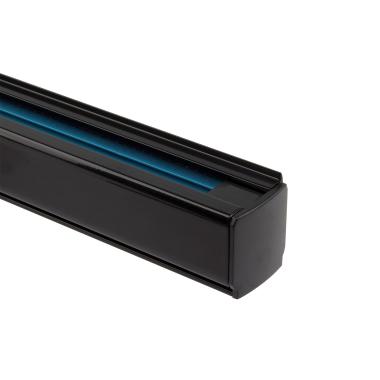
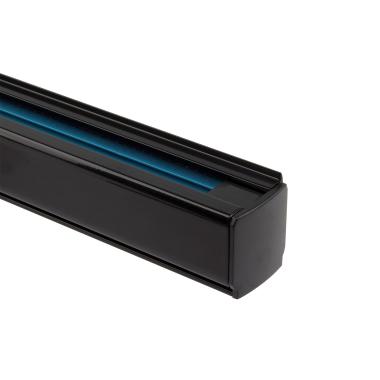
It is the base of the system. It is installed on the surface or suspended and houses the conductors that allow for powering the three-phase LED track lights. It is usually made of aluminum with insulated conductors inside and is marketed in different lengths to adapt the layout to the project. Beyond the finish or color, the important thing is that it offers mechanical and electrical compatibility with the planned lights and connectors.
Power feeds and start connectors
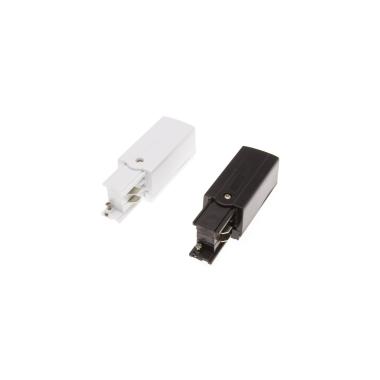
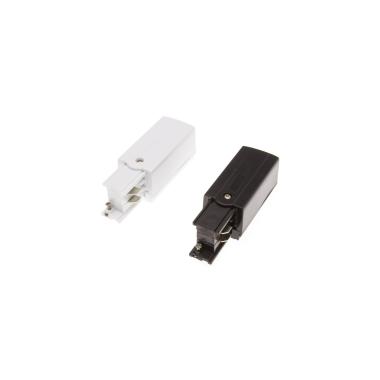
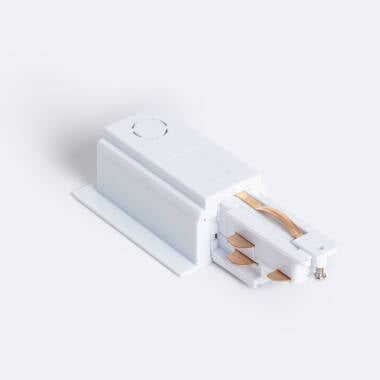
The power feed is the piece that introduces current into the track. It can go at one end or in an intermediate position, according to the layout design and the logic of the installation. Choosing this point well is key to facilitating assembly and avoiding improvised solutions once the track is installed.
In simple linear projects, an end feed is usually sufficient. In more complex compositions or with several linked sections, it may be preferable to power from the center or from several points to balance the set and simplify the wiring.
Straight, L, T, and X joiners
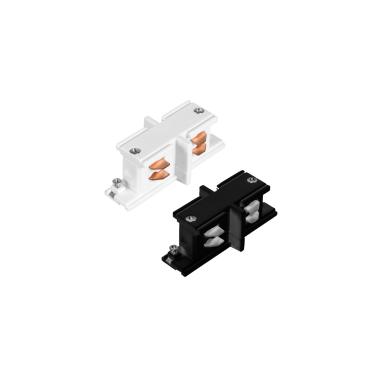
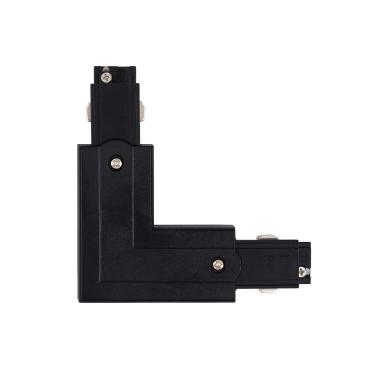
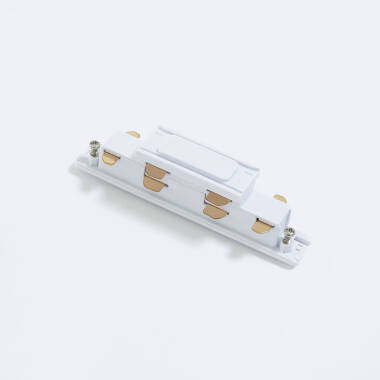
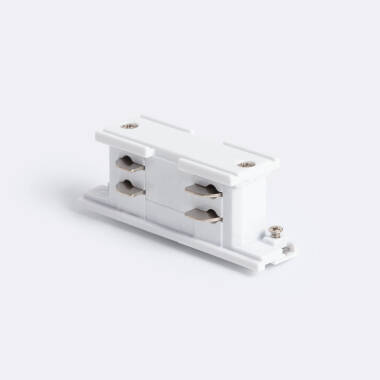
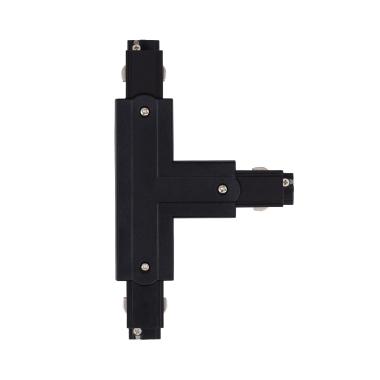
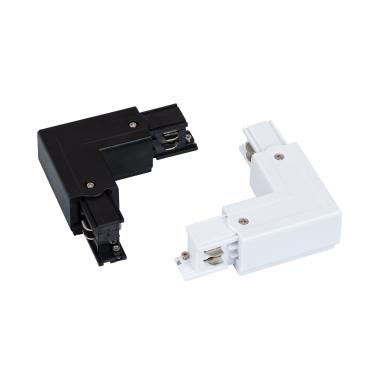
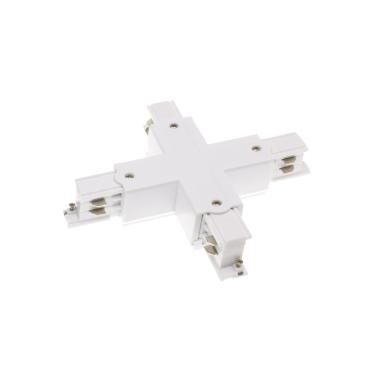
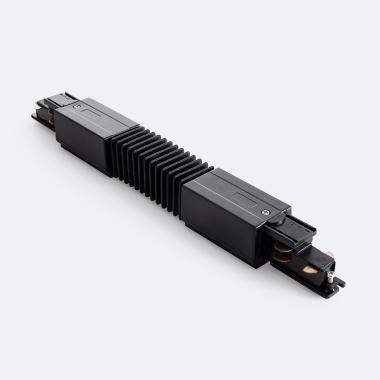
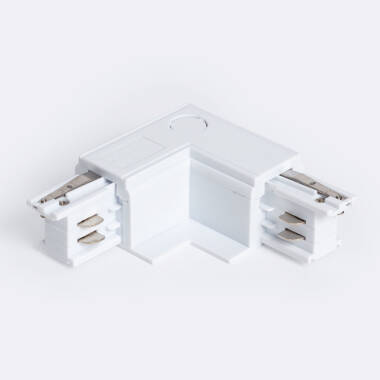
These pieces allow for building paths adapted to the real architecture. A straight joiner links two sections in a line; an L-joiner resolves corners; a T-joiner allows for branching to another section; and an X-joiner is useful in more open compositions or on ceilings where lighting is distributed in several directions.
They are not just shape accessories. They must also maintain electrical continuity and mechanical stability, so it is advisable to always select pieces compatible with the chosen system. A poorly resolved joiner can generate gaps, contact failures, or an untidy finish.
End caps, suspension, and mounting accessories
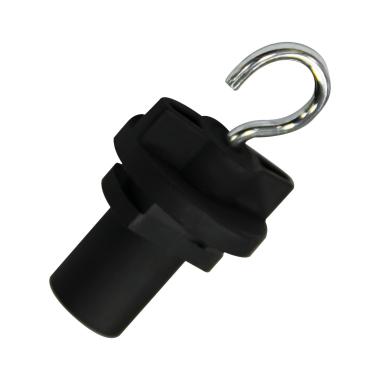
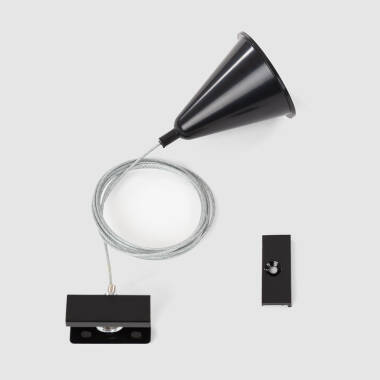
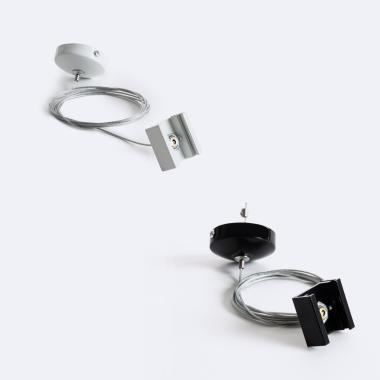
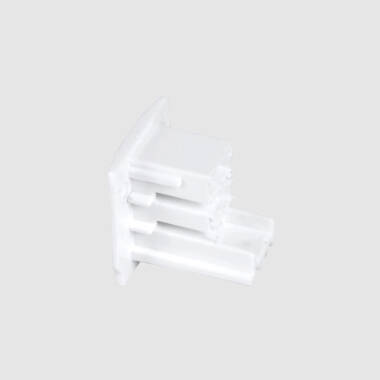
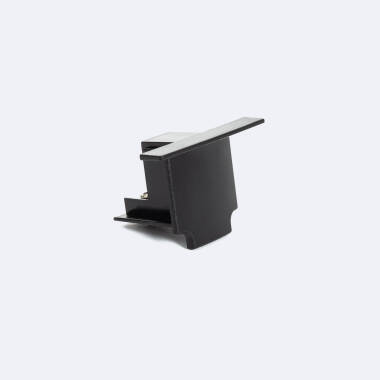
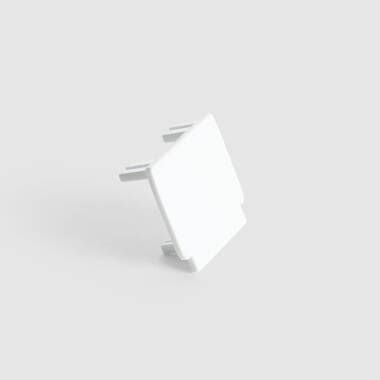
End caps close the track when the layout does not continue, improving safety and finish. Suspension kits allow for installing the system hung when it is of interest to lower the line relative to the ceiling, which is common in premises with great height or in spaces where a scale closer to the exhibition plane is sought.
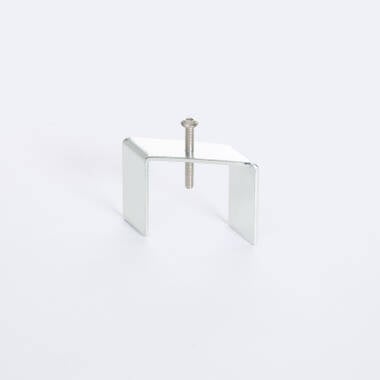
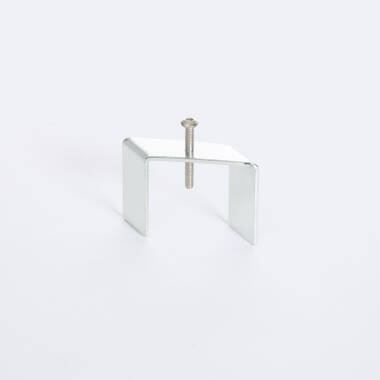
There are also fixing accessories, clips, and specific elements to adapt the mounting to different surfaces. Although they are often considered secondary, they directly influence the stability of the set and the visual cleanliness of the finished installation.
How to choose three-phase tracks and accessories
The choice of the system should not be made based only on length or price. In this type of product, compatibility, mounting type, growth capacity, and coherence between all the pieces of the set matter.
Path length and space distribution
Before selecting accessories, it is advisable to define the real layout. A rectangular premises with a central line does not require the same approach as a store with perimeter, corners, highlighted zones, and variations in height. The better the path is studied from the start, the cleaner and more functional the installation will be.
In small commercial spaces, one or two well-planned linear sections may suffice. In larger projects, it is common to combine longitudinal lines with branches or crossings to accompany shop windows, circulation, exhibition walls, or central tables.
Mounting type
The three-phase track can be installed on the surface or suspended. The choice depends on the ceiling height, the aesthetic of the project, and the distance at which it is convenient to place the lights relative to the illuminated plane. In very high ceilings, slightly lowering the line can improve the performance of the projectors and make the whole more proportionate.
The architecture also influences the choice. In premises with exposed installations, technical ceilings, or open structures, the suspended track can integrate well. In cleaner spaces or with low ceilings, a surface installation, more discreet and direct, usually works better.
Future modification capacity
One of the great advantages of the three-phase track is that it allows for changes without construction work. But to truly take advantage of that benefit, the system must be designed with a certain margin. Leaving expansion points, providing for joiners, or choosing a logical distribution of circuits greatly facilitates future expansions or reorganizations.
In dynamic projects, such as seasonal stores, showrooms, or spaces that change layout, this foresight is especially useful. A good track system not only solves the present but also avoids unnecessary limitations when the space evolves.
What to keep in mind during installation
A three-phase track system works best when the layout responds to the logic of the space and not just the geometry of the ceiling. Before installing, it is advisable to define which zones are to be illuminated, which circuits should be separated, and how the use of the premises is expected to change over time.
It is also important to maintain continuity between all components. Mixing profiles, joiners, and accessories from different systems can generate fit problems, loss of stability, or electrical failures. In this type of installation, apparent visual compatibility does not always guarantee correct operation.
Alignment and finish also count. In retail and contract, the track is part of the visible language of the ceiling. Therefore, it is advisable to take care of joiners, suspensions, finishes, and power feed points so that the system not only works well but is integrated cleanly.
Frequently asked questions about three-phase tracks and accessories
What is the difference between a three-phase track and a single-phase one?
The main difference is in the number of circuits available. A single-phase track works with a single ignition line, while the three-phase allows for three independent circuits within the same profile. This facilitates separating zones, scenes, or uses without the need to install several physical lines.
Are the accessories universal?
Not always. Although at first glance many profiles and connectors appear similar, not all offer the same mechanical and electrical compatibility. Therefore, it is recommended to work with a coherent system and verify that the track, joiners, power feeds, and luminaires are prepared to work together.
Can a three-phase track installation be expanded later?
Yes, that is one of its main advantages. If the system has been well-planned from the start, it is possible to add sections, change joiners, or incorporate more luminaires without redoing the entire installation. This growth capacity is especially useful in commercial and exhibition spaces.
What accessories are usually essential?
It depends on the path, but normally at least the track, a power feed, end caps, and the fixing or suspension system are needed. From there, straight, L, T, or X joiners are incorporated according to the shape of the layout and the project needs.
Does it make sense to install three-phase track in a small premises?
Yes, if flexibility or sectorization is needed. In small spaces, it may seem like a more advanced solution than necessary, but when wanting to separate the shop window, interior area, and highlighted points within the same line, the three-phase still makes a lot of sense.