
48V DC LED strips
48V DC LED Strip Lights are designed for long linear installations where uniformity, electrical stability, and reduced cabling are critical factors.

Our featured products from 48V DC LED strips
6,49 €
Ref 112618
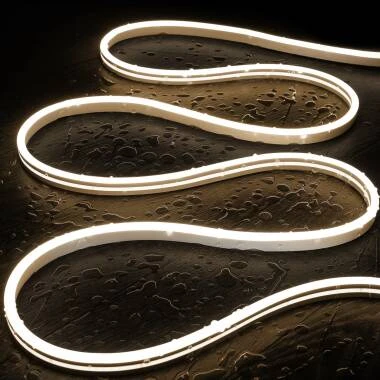
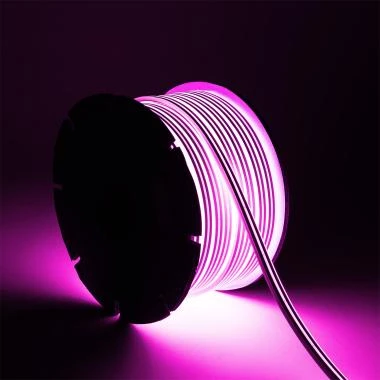
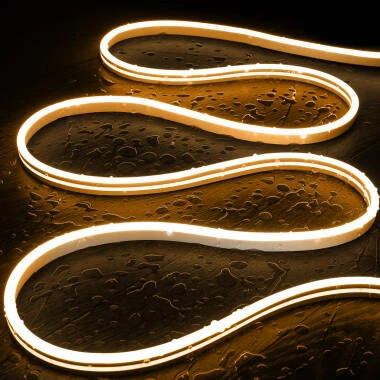
Adjustable48V LED Neon Strip N-FLEX6 in Neutral White 8W/m Cut at Every 5cm IP65 Custom Length
In Stock, delivery in 16-21 days
- Voltage Range 48V DC
- Cut Points 5 cm
- Type Of Dimming Controller
7 options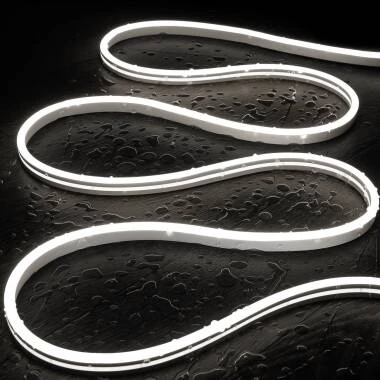
Essential
6,49 €
Ref 112624
AdjustableAdjustable48V LED Neon Strip N-FLEX6 in Cool White 8W/m Cut at Every 5cm IP65 Custom Length
In Stock, delivery in 16-21 days
- Voltage Range 48V DC
- Cut Points 5 cm
- Type Of Dimming Controller
5 options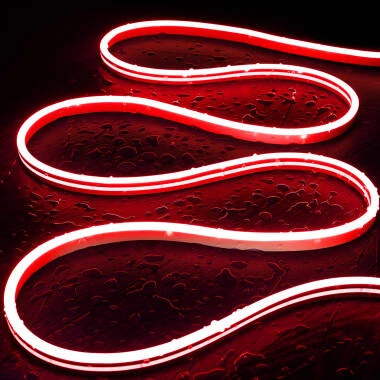
Essential
6,49 €
Ref 112627
Adjustable48V LED Neon Strip N-FLEX6 in Red 8W/m Cut at Every 5cm IP65 Custom Length
In Stock, delivery in 16-21 days
- Voltage Range 48V DC
- Cut Points 5 cm
- Type Of Dimming Controller
7 options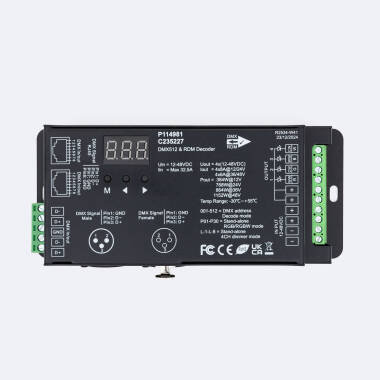

47,99 €
SKYDANCERef 114981
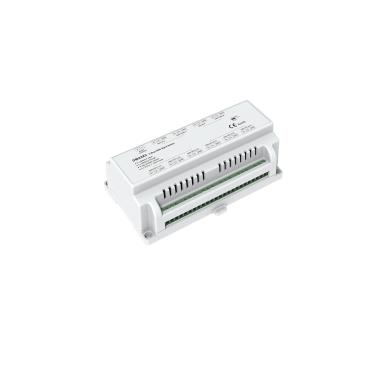
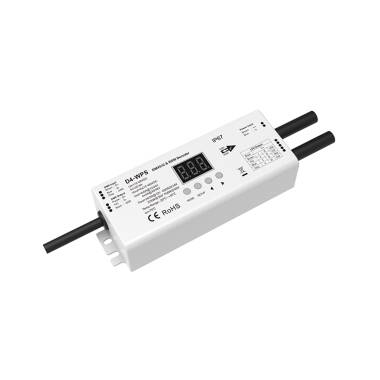
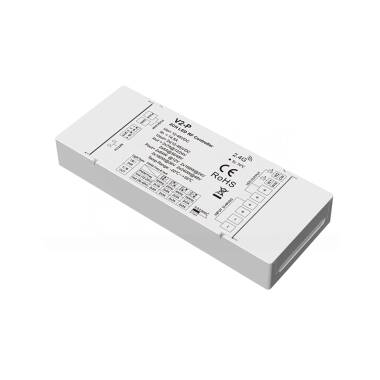
AdjustableDMX512 & RDM 12/48V 4-Channel Decoder SKYDANCE D4-XE with XLR5 Port
In Stock, delivery in 15-20 days
- Voltage Range 12V DC, 24V DC, 36V DC, 48V DC
- Max Wattage 1152 W
- Type Of Dimming DMX





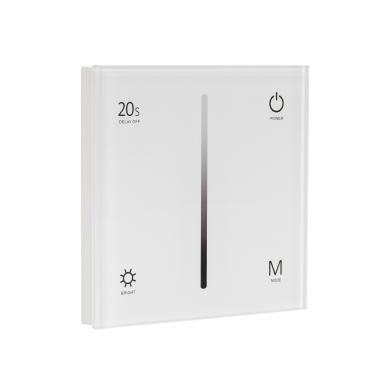
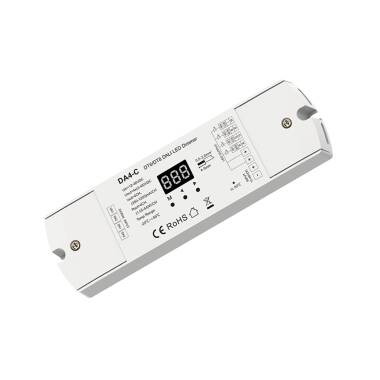
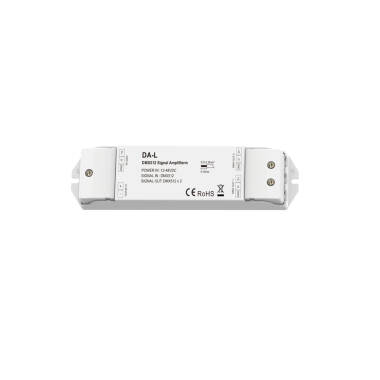
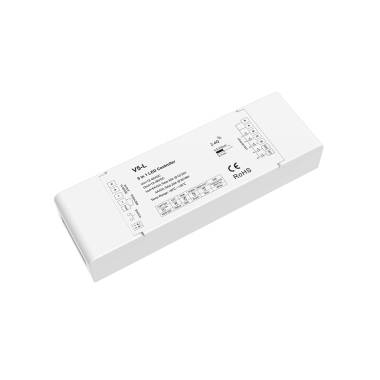
You may also be interested in
Brands related to this category


About 48V DC LED strips
Within the ecosystem of Low Voltage LED Strip Lights, the evolution towards 48V responds to a clear need: efficiently delivering projects with long runs, multiple continuous meters, and high technical requirements without compromising light quality.
When it makes sense to use 48V
Unlike more common voltage options, 48V is not a general-purpose solution. It is intended for scenarios where the limitations of 12V or even 24V systems become evident, particularly in terms of voltage drop and installation complexity.
In continuous lighting lines—such as architectural, retail, or large-scale spaces—each additional power injection point introduces connections, losses, and potential failure points. Moving to 48V simplifies the system and maintains consistent illumination even across long distances.
What really changes when moving from 24V to 48V
The shift goes beyond a simple change in voltage. It represents a significant transformation in the overall behavior and performance of the system.
Usable length per run
While 24V DC LED Strip Lights typically allow runs of up to 10 meters without noticeable voltage drop, 48V systems can exceed that distance while maintaining nearly constant light output.
This significantly reduces the number of required power injection points and enables cleaner, more streamlined designs in complex projects.
Current and efficiency
By operating at a higher voltage, the current required to deliver the same power is lower. This results in reduced Joule losses in the wiring and improved overall system efficiency.
In practical terms, this means less heat in conductors, greater stability, and reduced need to oversize cables.
Installation complexity
Although more efficient, 48V systems require more careful planning. They are not intended for ad-hoc installations, but for projects with a clearly defined electrical layout.
48V installation architectures
One of the main differences compared to other categories lies in how installations are designed.
Centralized systems
In large-scale projects, it is common to use a centralized power supply distributing 48V to multiple LED strip lines. This allows for centralized control and simplifies maintenance.
Parallel distribution
LED strips can be powered in parallel from a single line, maintaining stable voltage levels across the entire system. This configuration is particularly useful in modular or repetitive installations.
Integration into profiles and linear systems
48V LED Strip Lights are often integrated into continuous aluminum profiles, creating seamless lines of light with no visible interruptions. This is essential in projects where aesthetics are as important as functionality.
Lighting performance and configuration
Beyond voltage, lighting performance remains a key factor.
Power and illumination levels
48V LED strips typically operate in ranges between 10 and 25 W/m, with luminous outputs that can exceed 2,000 lumens per meter in high-efficiency configurations.
This allows them to cover everything from ambient lighting to demanding functional applications, depending on LED density and optical design.
Uniformity over long distances
The main advantage of 48V is maintaining consistent light output across the entire length. In projects where the light line is visible, this uniformity prevents the typical brightness drop associated with lower voltages.
Color temperature and RGB options
As with other voltages, versions are available in warm white, neutral white, and cool white. However, 48V systems are often focused on technical or architectural lighting applications.
RGB and RGBW versions are also available, used in projects requiring dynamic lighting or customization. These solutions are typically integrated with advanced control systems for managing scenes, intensity, and color.
Comparison with other voltages
To better understand their positioning, it is useful to compare them with other available solutions.
Compared to 12V DC LED Strip Lights
12V DC LED Strip Lights stand out for their ease of cutting and flexibility in smaller installations. However, their limited run length makes them less suitable for continuous lighting projects.
48V systems, by contrast, prioritize continuity and stability over cutting flexibility.
Compared to 24V DC LED Strip Lights
24V LED Strip Lights offer a versatile mid-range solution with strong performance in most applications. However, in very long installations, additional power injection may be required to maintain uniform lighting.
48V systems eliminate much of these limitations, at the cost of requiring more detailed upfront planning.
Applications where 48V makes a difference
The use of 48V LED strips responds to specific project needs.
Large-scale architectural projects
In hotels, offices, or public buildings, continuous lines of light are a common design feature. 48V enables these designs to be executed without interruptions or brightness variations.
Large-format retail and commercial spaces
In large stores or shopping centers, maintaining consistent lighting across long distances is key to the visual experience.
Linear office and workspace lighting
In environments where lighting is integrated into suspended ceilings or linear systems, 48V simplifies installation and ensures consistent lighting levels throughout the space.
Selection criteria for 48V LED Strip Lights
Choosing the right 48V LED strip involves more than just power or color.
Electrical design
Before selecting a product, it is essential to define power distribution, total installation length, and system control strategy.
Component compatibility
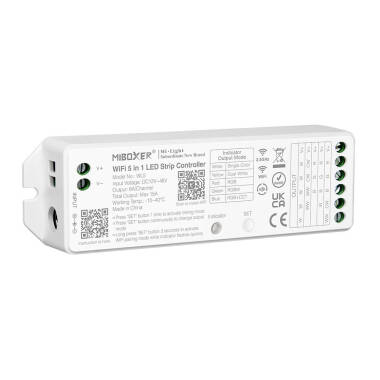
Drivers, controllers, and accessories must be compatible with 48V systems. Not all standard control systems are designed for this voltage.
Heat dissipation
Despite higher efficiency, thermal management remains critical. Aluminum profiles are essential in most applications.
Protection and environment
As with other LED strips, the IP rating must match the installation environment. In outdoor or industrial projects, IP65 or higher is typically required.
Frequently asked questions about 48V DC LED Strip Lights
How many meters can be installed without voltage drop?
Depending on the model, runs of over 10–15 meters are common without visible differences in brightness, representing a significant improvement over lower voltages.
Are they more efficient than 24V?
Yes, especially in long installations, where reduced current lowers electrical losses and improves overall efficiency.
Can they be cut like other LED strips?
Yes, although cutting points are typically spaced further apart, as they are designed to prioritize continuity over adjustment precision.
Are they suitable for residential use?
They are not the most common choice for residential applications. They are better suited to technical or professional projects where their advantages can be fully utilized.
Can they be used with RGB systems?
Yes, RGB and RGBW versions are available, typically integrated into advanced control systems.
What advantages do they offer over other LED strips?
Primarily greater stability over long distances, reduced voltage drop, and more efficient installation in large-scale projects.