
Downlights
LED downlights offer integrated, efficient and discreet lighting for homes, shops and professional spaces, with different formats, wattages and finishes depending on each installation.


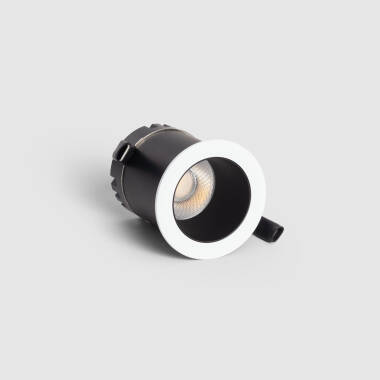
Our featured products from Downlights
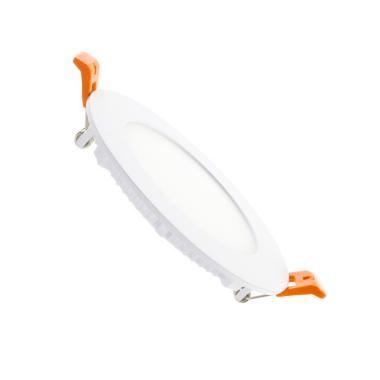
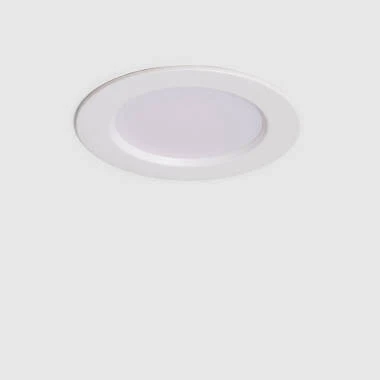
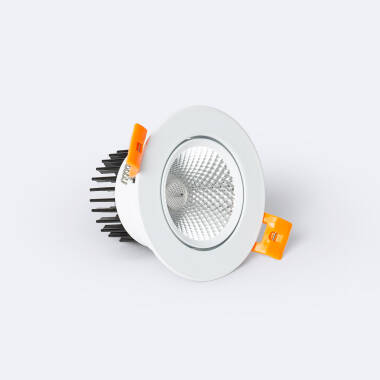
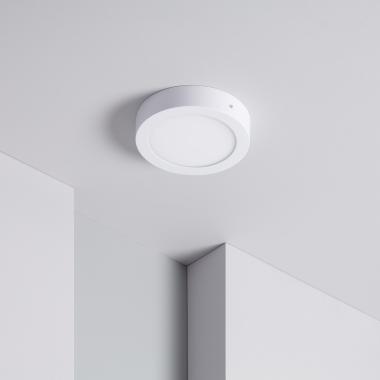
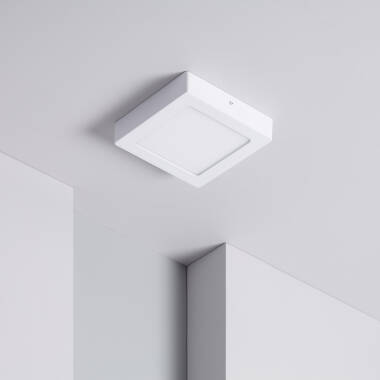
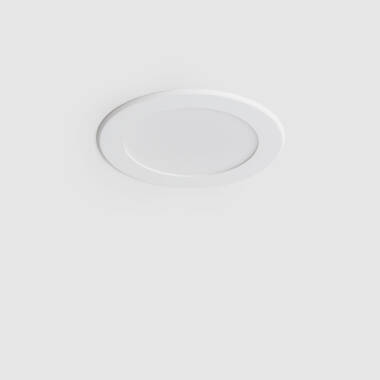
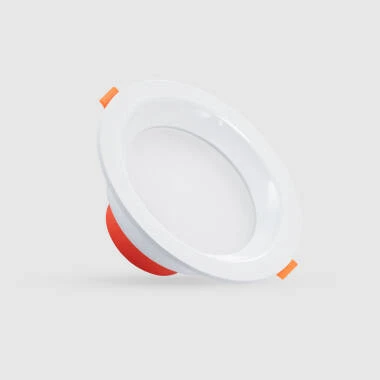
Essential
2,69 €
 (44)
(44)- Wattage 6 W
- Voltage Range 220-240V AC
- Cut Out Dimensions Ø105 mm
3 options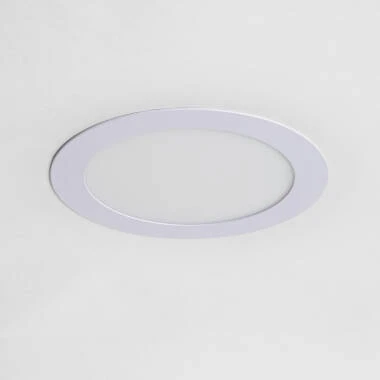
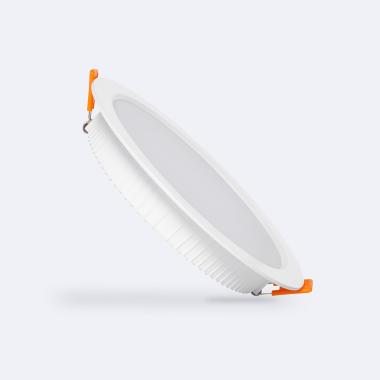
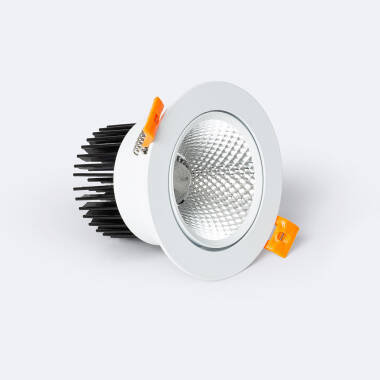
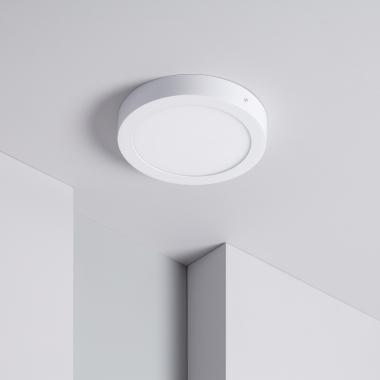
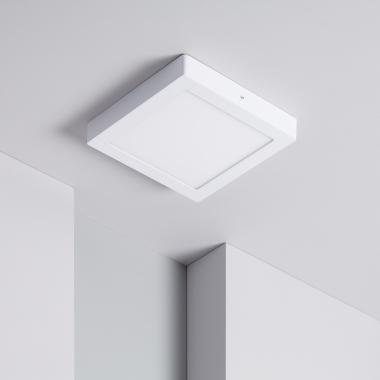
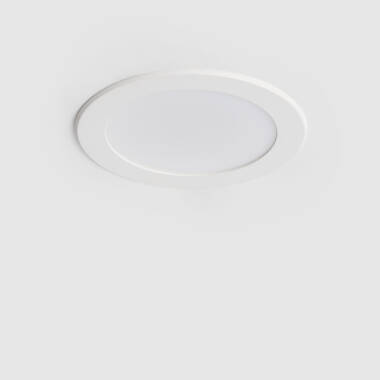
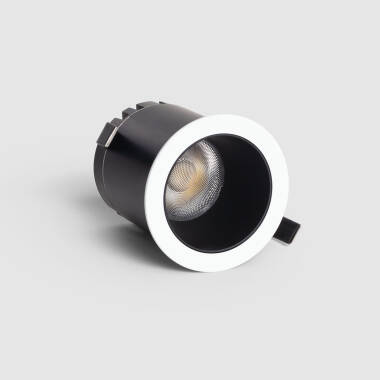
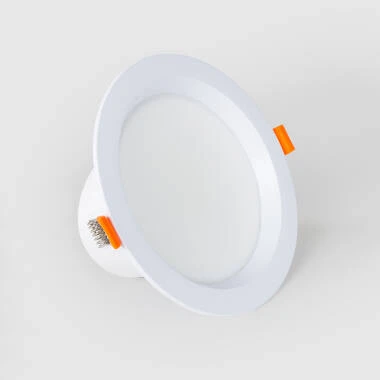
Essential
3,79 €
(47)- Wattage 12 W
- Voltage Range 220-240V AC
- Lumen 1200 lm
3 options
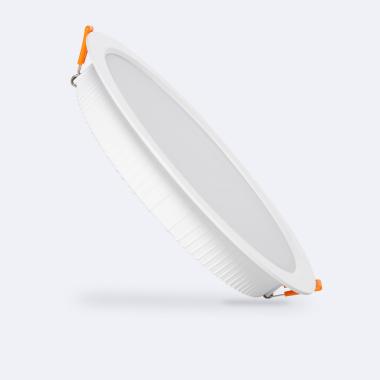
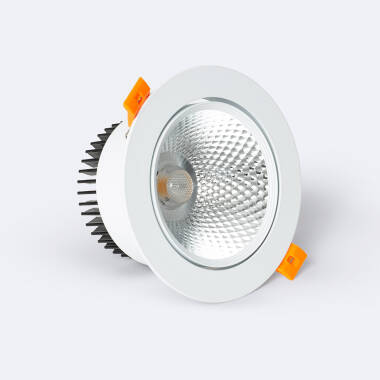
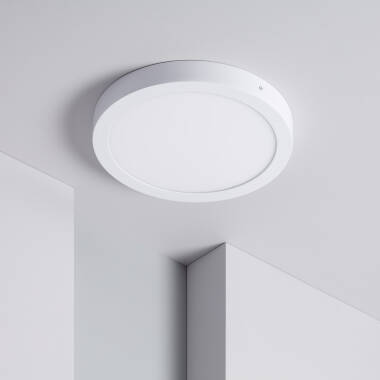
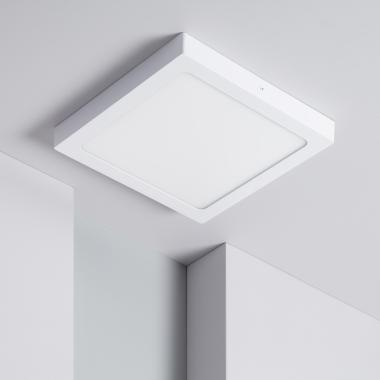
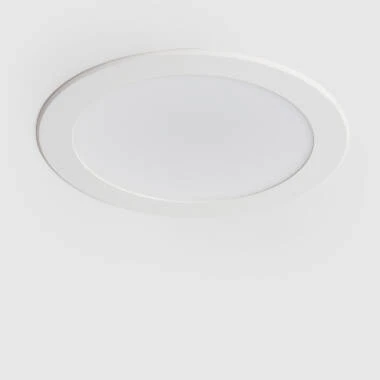
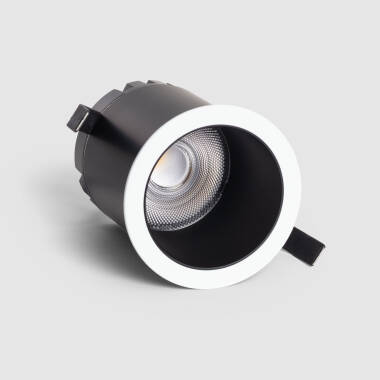
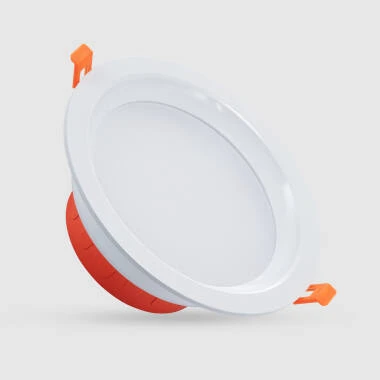
Essential
4,09 €
(9)- Wattage 15 W
- Voltage Range 220-240V AC
- Cut Out Dimensions Ø170 mm
4 options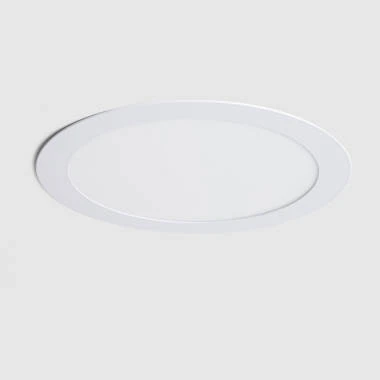
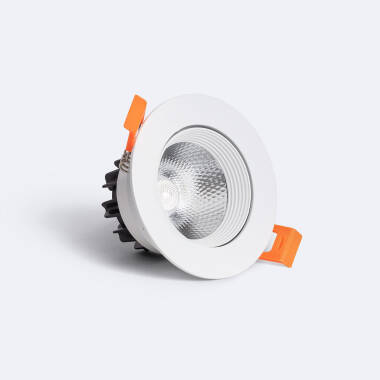
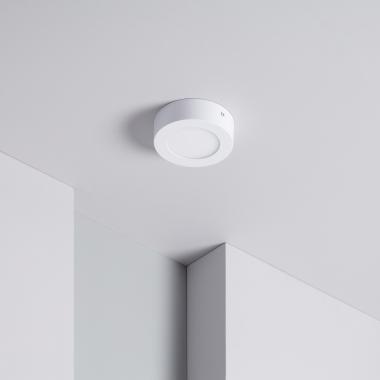
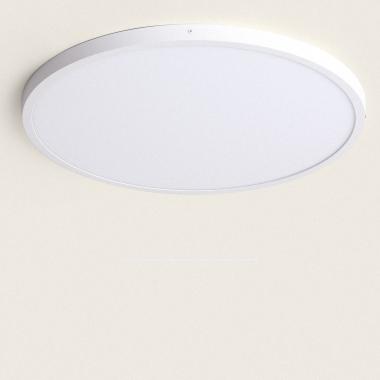
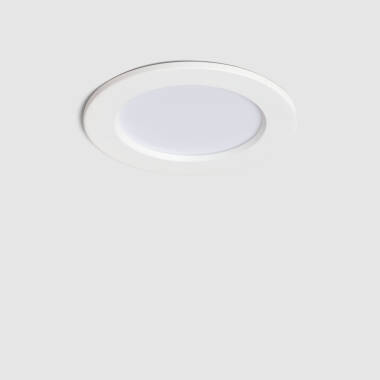
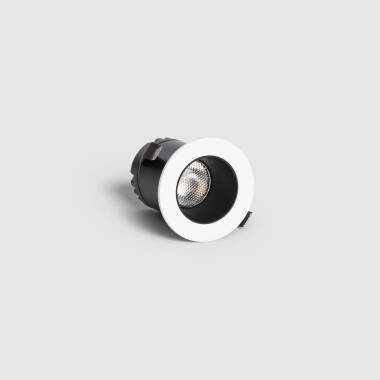
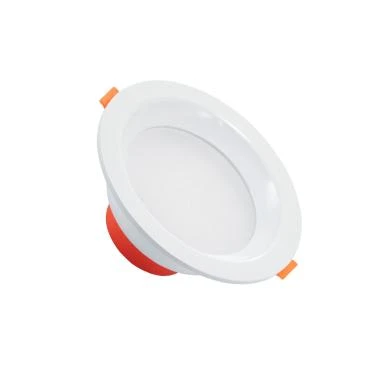
Essential
4,29 €
(97)- Wattage 18 W
- Voltage Range 220-240V AC
- Lumen 1800 lm
4 options





Brands related to this category


About Downlights
The downlight has become one of the most common ceiling lights when a clean, functional lighting solution, well integrated into the ceiling, is required. Its use is very broad because it can provide anything from general lighting in a home to technical lighting in offices, hotels, shops or circulation areas, while maintaining a discreet appearance and making good use of the available space.
Unlike other, more decorative luminaires, an LED downlight works from the ceiling to distribute light in a direct and controlled way. This helps create visually ordered environments, reduce unnecessary shadows and adapt the lighting level to each room according to specific criteria: colour temperature, luminous flux, beam angle, cut-out diameter, IP rating or dimming capability.
What is a recessed LED downlight?
A recessed LED downlight is a luminaire designed to be installed recessed into the ceiling, so that the body remains hidden and only the trim, diffuser or light-emitting surface is visible.
This type of lighting is mainly used to provide general or functional light from above, without taking up visual volume in the room. When integrated into plasterboard false ceilings, plaster ceilings, technical ceilings or suspended ceiling tiles, it offers a cleaner appearance than a pendant or surface-mounted luminaire.
LED technology has made downlights more efficient and versatile. A domestic model can range between 6 W and 18 W, while solutions for shops, offices or work areas can exceed 25 W or 30 W. Beyond wattage, what matters is the relationship between consumption and emitted light, expressed in lumens. A 12 W downlight with 1,000 lm may be sufficient for many circulation areas, while a kitchen, a large bathroom or a commercial premises may require several light points with 1,200 to 2,000 lm each, depending on height and layout.
In modern installations, it is also common to choose downlights with an external driver, opal diffuser to reduce glare, narrower optics to illuminate specific areas or low-UGR versions when greater visual comfort is required at workstations. For this reason, the downlight should be understood not only as a recessed light point, but as a technical luminaire capable of adapting to very different needs.
Types of LED downlights
LED downlights differ by shape, dimming system, adjustability, optical design and technical characteristics. Choosing one type or another affects both the aesthetics of the ceiling and the quality of the light.
In a home, the visual criterion often carries significant weight: the trim should match the ceiling, the light should feel pleasant and switching should be convenient. In professional environments, uniformity, luminous efficacy, driver lifespan, ease of maintenance and compatibility with control systems also become important.
Shallow Downlights
Shallow downlights are very slim downlights designed for installation in suspended ceilings with limited available depth, where a conventional recessed downlight may not always fit properly. Their extra-flat body allows them to be discreetly integrated into renovations, low ceilings or tight ceiling voids, while maintaining broad, uniform lighting without requiring a large recessed installation space.
Square vs. round downlights
The shape of the downlight mainly affects aesthetic integration and the visual reading of the ceiling. Square LED downlights fit very well in projects with straight lines, modern kitchens, wide corridors, offices or premises with a more architectural composition. Their geometry makes it possible to align several light points precisely and create a sense of order, especially when combined with straight-lined furniture or modular ceilings.
Round LED downlights, on the other hand, are the most widespread option because of their versatility. They integrate easily into most ceilings, are discreet and usually offer straightforward installation, as many models on the market use standardised cut-out diameters. In homes, bathrooms, entrance halls and circulation areas, the round format tends to be less noticeable and makes it easier to replace older luminaires.
The choice between square and round does not, by itself, change the amount of light, as two downlights of different shapes can offer the same luminous flux. What changes is the visual distribution of the ceiling and, in some cases, the type of optic or diffuser available. If very uniform technical lighting is required, it is always advisable to check the beam angle and real lumen output, not only the external shape.
Dimmable downlights
Dimmable LED downlights allow the light intensity to be adjusted according to the time of day, the activity or the atmosphere you want to create. This feature is especially useful in living rooms, bedrooms, restaurants, meeting rooms and multifunctional spaces, where it is not always necessary to operate at 100% power.
Dimming can be achieved through phase-cut systems, push buttons, 1-10 V protocols, DALI or wireless solutions, depending on the type of installation. In homes, phase dimming is common, provided that the downlight driver and the dimmer are compatible. In professional projects, DALI offers more precise control, allows luminaires to be grouped and makes it easier to create scenes with defined levels, for example 300 lux for general use and 100 lux for night-time ambience or circulation.
Dimming the light does not only provide comfort. When the installation operates for many hours a day, reducing intensity during periods of low occupancy can lower consumption and reduce the operating temperature of the equipment. This supports the lifespan of the driver and LED modules, especially in ceilings with limited ventilation.
Fixed and adjustable downlights
Fixed downlights emit light in a stable direction, normally perpendicular to the ceiling. They are suitable for general lighting, corridors, bathrooms, kitchens, offices or any area where a homogeneous distribution is required without the need to direct the beam towards a specific point.
Adjustable downlights incorporate a tilting or rotating system that allows the beam to be angled. They are used when it is useful to illuminate a wall, highlight an exhibition area, reinforce lighting over a worktop, direct light towards a picture or prevent the light point from falling on an area of little use. In retail and hospitality, they are especially interesting because they allow the lighting to be adapted to furniture, displays or changes in layout.
The orientation should be planned carefully to avoid direct glare. A poorly aimed adjustable downlight can be uncomfortable if the beam falls into the eyes of a seated person or onto glossy surfaces. For this reason, in rest or work areas it is advisable to combine orientation, beam angle and installation position.
Downlights by brand
In technical lighting, the brand can influence aspects such as colour stability, driver quality, availability of spare parts, warranties, dimming compatibility and range continuity. When choosing a Philips LED downlight or any equivalent alternative, it is worth assessing more than the commercial name: real efficacy in lm/W, declared lifespan, colour tolerance, diffuser finish and available technical documentation.
In projects with many installed units, range continuity is especially important. If light points need to be replaced or added in a few years, having a stable product line makes it easier to maintain the same tone, size, appearance and dimming behaviour. In professional installations, this consistency avoids visible differences between luminaires and reduces maintenance issues.
How to choose an LED downlight
Choosing an LED downlight involves balancing aesthetics, luminous performance, safety and compatibility with the existing installation. It is not enough to choose an approximate wattage: each parameter affects the final result.
A good starting point is to define the room, the ceiling height, the desired lighting level and the type of use. Colour temperature, luminous flux, CRI, cut-out diameter, IP rating and dimming system are then adjusted. In new builds, the layout can be designed from scratch; in renovation projects, existing openings must also be respected or adapters considered.
Colour temperature (K)
Colour temperature is measured in kelvin and determines whether light is perceived as warm, neutral or cool. In homes, 2700 K and 3000 K create a cosy feeling, suitable for living rooms, bedrooms and rest areas. In kitchens, bathrooms, home offices and functional areas, 4000 K provides neutral light that improves visual perception without feeling excessively cool.
In commercial or technical environments, 4000 K or 5000 K can also be used, especially when a clear reading of products, documents or work surfaces is required. Even so, overly cool temperatures should be avoided in spaces where people spend long periods unless there is a specific visual need, as they can create uncomfortable atmospheres.
Chromatic consistency is important. Mixing 3000 K and 4000 K downlights in the same room usually creates visible differences and a less carefully finished installation. When different luminaires are combined, it is advisable to maintain the same colour temperature or clearly separate the atmospheres.
Luminous flux (lm)
Luminous flux indicates the total amount of light emitted by the downlight and is expressed in lumens. It is more useful than wattage, because two 12 W models can offer very different performance. In current LED downlights, efficacies between 80 and 120 lm/W are common in domestic ranges, with higher values in professional solutions.
For a circulation area, levels of around 100 or 150 lux may be enough, while a functional kitchen or bathroom usually requires between 200 and 500 lux depending on the task. A living room can combine general lighting of 150 to 300 lux with dimmable points to adapt the ambience. In offices or reading areas, work is usually carried out close to 500 lux on the useful plane.
The basic calculation relates lumens and surface area: a 10 m² room with a target of 300 lux needs around 3,000 useful lumens. As there are always losses due to height, distribution, reflectance and diffuser, the installed luminous flux must be higher. In practice, that room could be lit with three 1,200 lm downlights or four 900 lm downlights, always checking the spacing between points to avoid shadows.
Colour rendering index (CRI)
CRI indicates the ability of a light source to reproduce colours faithfully compared with a reference. For most interior uses, a CRI above 80 is considered suitable. For kitchens, bathrooms, shops, hair salons, studios, make-up areas or spaces where colour is relevant, it is preferable to work with CRI 90 or higher.
A downlight with low CRI may offer many lumens, but make materials, food, textiles or finishes appear dull or unnatural. In a shop, this affects product perception. In a home, it can alter the feeling of warmth in woods, walls and fabrics. For this reason, when the visual result matters, CRI should be checked together with colour temperature.
Size and cut-out diameter
The cut-out diameter is the size of the opening required to install the recessed downlight. It is one of the most important details in renovation projects, because it determines compatibility with the existing ceiling. Common diameters can range from 70 mm to 220 mm, although compact, ultra-slim and larger formats are available to replace older luminaires.
Before buying, it is advisable to measure the actual ceiling opening and also check the available depth. Some downlights need space for the body and driver, while ultra-slim models are better suited to false ceilings with limited void space. If the existing opening is larger than required, adapter rings can be used, but improvised solutions that compromise fixing or finish should be avoided.
The distance between downlights also affects the result. As a guide, in domestic ceilings of 2.4 to 2.7 m, a spacing of 1 to 1.5 m usually works for general lighting, adjusted according to the beam angle and flux of each luminaire. In higher ceilings or professional spaces, the calculation must consider height, reflectances and uniformity.
IP rating
The IP rating indicates protection against the ingress of dust and water. In dry interiors, an IP20 downlight may be sufficient. In bathrooms, kitchens, porches or areas exposed to humidity, higher protection ratings are recommended depending on the exact location and the risk of splashing.
For covered outdoor areas or exposed spaces, an outdoor LED downlight should normally have IP44, IP54 or IP65, depending on the level of exposure. IP65 provides protection against dust and water jets, making it suitable for porches, covered terraces, access areas or bathrooms in zones with higher humidity, provided that the electrical installation is also compatible with that environment.
In certain projects, fire-rated downlights also come into play, especially when regulations or building compartmentation require the fire resistance of the ceiling to be maintained. These models are designed to help preserve the integrity of the construction element for a specific period, usually expressed in minutes, such as 30, 60 or 90 minutes depending on the tested system. They should not be confused with a high IP rating: IP protection refers to water and dust, whereas the fire-rated condition responds to fire safety and regulatory compliance criteria.
Downlights by room
Each room requires a different combination of light, protection and visual comfort. The same luminaire may work well in a corridor but fall short in a kitchen, or prove unsuitable for a bathroom.
That is why it is important to adapt downlights to the real use of the space. Ceiling height, wall and furniture colours, the presence of mirrors, humidity, type of activity and the need for dimming all change the lighting design.
Kitchens
In a kitchen, clear and functional light is needed, especially over worktops, cooking areas, the sink and islands. A kitchen LED downlight usually works well at 3000 K if a warmer atmosphere is desired, or at 4000 K when visibility during food preparation is the priority. In modern kitchens, 4000 K is very common because it makes it easier to distinguish textures, cleanliness and details without reaching an extremely cool light.
Recommended levels can range between 300 and 500 lux in work areas. If downlights are placed only along the central axis of the room, the user may cast shadows over the worktop. To avoid this, the light points should be brought closer to functional areas or combined with under-cabinet lighting. In open-plan kitchens connected to the living room, dimming helps reduce intensity when the kitchen is not in use.
Bathrooms
In bathrooms, the choice must take into account humidity, safety zones and the quality of light in front of the mirror. A bathroom LED downlight with the appropriate IP rating improves the safety and durability of the installation. In areas away from the shower or bathtub, IP44 may be sufficient, while in more exposed areas higher protection ratings are recommended, always in accordance with the applicable electrical regulations.
The most balanced colour temperature is usually between 3000 K and 4000 K. For everyday bathrooms, 4000 K offers good visibility for shaving, make-up or personal care. CRI is also important: values above 80 are correct, but CRI 90 provides a more faithful perception of skin tone and colours.
Living rooms
In living rooms, the downlight should provide enough light without turning the room into a flat or excessively lit space. An LED downlight for a living room usually works best with colour temperatures of 2700 K or 3000 K and, where possible, with dimming. This makes it possible to switch from general light for cleaning or receiving guests to softer lighting for watching television or relaxing.
The layout should avoid placing light points directly over areas where people often look upwards, such as sofas or armchairs. It is also advisable to combine downlights with wall lights, floor lamps or indirect lighting to create layers of light. In large living rooms, downlights can be divided into circuits: seating area, dining area and circulation area, each with independent intensity.
Corridors, entrance halls and circulation areas
In corridors and entrance halls, downlights provide orientation and visual continuity. Lighting levels are usually lower than in work areas, with approximate values between 100 and 200 lux. Here, homogeneous light is important, without strong contrasts between sections, and with regular spacing to avoid dark areas.
In long corridors, it is preferable to use more points with lower flux rather than a few very powerful downlights, as this improves uniformity and reduces glare. Presence sensors can be useful in homes, communal areas, hotels or offices, especially when circulation areas are used intermittently.
Offices, shops and professional spaces
In offices, classrooms, consulting rooms and shops, downlights should be selected with greater attention to visual comfort. For workstations, levels close to 500 lux on the useful plane are recommended, with glare control and generally neutral colour temperature, around 4000 K.
In retail, hospitality or exhibition spaces, beam angle and CRI play an important role. A downlight with a narrower beam can highlight a table, a display or a route, while a wide beam provides general light. When products, finishes or food are illuminated, CRI 90 helps maintain a more natural and attractive perception.
Advantages of LED downlights
LED downlights combine energy efficiency, aesthetic integration and technical variety. Their main value lies in offering a high level of useful light from a discreet and adaptable luminaire.
Compared with halogen solutions, energy savings can usually range between 50% and 80%, depending on the replaced wattage and the number of hours of use. An old 50 W halogen point can be replaced by a downlight or LED module of 6 to 10 W in many domestic applications, maintaining a similar perception of light with much lower consumption.
Another advantage is lifespan. Many LED downlights declare between 25,000 and 50,000 hours, and professional models can exceed these values when they operate with good thermal dissipation and quality drivers. In a home with 4 hours of daily use, 25,000 hours is equivalent to more than 17 theoretical years of operation; in a shop with 10 hours per day, real lifespan becomes a very relevant economic factor.
They also stand out for instant start-up, low heat emission into the room and the possibility of choosing colour temperatures, beam angles, finishes, dimming or IP protection. In low ceilings, their integration avoids hanging elements and helps maintain a sense of spaciousness. In technical ceilings or false ceilings, they allow for a clean and repeatable distribution.
The quality of light depends on the model chosen. A downlight with a good diffuser reduces visible LED points, improves comfort and distributes light better. In work areas, a low-glare design can make the difference between an installation that is simply bright and one that is comfortable for several hours of use.
Installation of recessed downlights
Installing recessed downlights requires checking dimensions, power supply, driver compatibility, ventilation and ceiling conditions. Good planning avoids fit issues, flickering or overheating.
Before installation, it is essential to check the cut-out diameter, the available depth and the type of ceiling. In plasterboard, the cut must be made accurately so that the fixing springs work correctly. In suspended ceilings, the tile may need to be reinforced if the luminaire has a certain weight. In renovation projects, it is advisable to check the condition of the wiring and whether there is enough space to house the driver without forcing it.
The driver is a critical part of the system. It must be compatible with the downlight wattage, the supply voltage and, where applicable, the dimming system. Many flickering issues are caused by incompatible dimmers, minimum loads not being reached or low-quality drivers. When several dimmable downlights are installed on the same circuit, all elements must be designed to work together.
Ventilation also affects lifespan. Although LED emits less heat than a halogen lamp, the electronic components need to dissipate temperature. Installing a downlight in a very closed void, surrounded by insulation or without space around it can reduce the life of the equipment. In projects with thermal insulation, compatible solutions or specific protection boxes should be used where appropriate.
In bathrooms, outdoor areas or zones with special requirements, the installation must respect safety distances, the appropriate IP rating and applicable electrical regulations. If the ceiling has fire-resistance requirements, it is not enough to install just any recessed luminaire: tested solutions for that use must be selected and the continuity of the construction system maintained.
Frequently asked questions
The most common questions about LED downlights are usually related to the amount of light, spacing between points, bathroom compatibility, dimming and the replacement of older luminaires.
How many downlights do I need per square metre?
There is no single figure per square metre, because the lumens of each luminaire, the height, the colour of the walls and the use of the room all come into play. As a reference, a living room can work with 150 to 300 lux, a kitchen with 300 to 500 lux and a work area close to 500 lux. For a 12 m² room with a target of 250 lux, around 3,000 useful lumens are needed, which could be distributed across three 1,200 lm downlights or four 900 lm downlights depending on the layout.
What spacing should there be between downlights?
In domestic ceilings of 2.4 to 2.7 m, spacing of 1 to 1.5 m is usually suitable for general lighting with wide beam angles. If the beam is narrower, spacing should be reduced to avoid shadows. It is also advisable to leave some distance from walls, normally between 50 and 80 cm, adjusting according to whether the aim is to wash a vertical surface or illuminate the centre of the room.
Which downlight is best for a bathroom?
For a bathroom, it is recommended to choose a downlight with an IP rating suitable for the installation zone. In areas away from splashing, IP44 can be used, while in more exposed zones it is advisable to move up to IP54 or IP65, always following electrical regulations. In terms of light, 4000 K and CRI above 80 offer good visibility for daily grooming; if the mirror is important, CRI 90 improves the reproduction of skin tone.
Can I replace halogens with LED downlights?
Yes, provided that the opening, voltage and connection system are compatible. In many cases, 50 W halogens are replaced with 6 to 10 W LED solutions, significantly reducing consumption. If the installation has old transformers or dimmers, they may need to be replaced with compatible drivers or dimmers to avoid flickering, buzzing or unstable switching.
What colour temperature should I choose for the home?
In living rooms and bedrooms, 2700 K or 3000 K is usually recommended because of its warm feel. In kitchens, bathrooms and home offices, 4000 K provides a more neutral and functional light. The important thing is not to mix temperatures within the same room without a clear intention, because the difference between 3000 K and 4000 K is easily noticeable on walls, furniture and white surfaces.
Is it worth choosing dimmable downlights?
Yes, especially in living rooms, bedrooms, dining rooms, restaurants, hotels and multipurpose rooms. Dimming allows intensity to be adapted to real use: high light for tasks, medium light for daily use and low light for ambience. For it to work correctly, the downlight, driver and dimmer must be compatible; otherwise flickering or very limited dimming ranges may appear.
What does it mean for a downlight to have low UGR?
UGR is an index related to discomfort glare. In offices and workstations, a UGR below 19 is usually sought because it helps reduce visual fatigue when working with screens or documents. In homes it is not always essential, but a downlight with good glare control is more comfortable, especially in low ceilings or areas where people remain seated.
How long does an LED downlight last?
The usual lifespan is between 25,000 and 50,000 hours, although it depends on the quality of the LED, the driver, the operating temperature and the hours of use. In installations with many hours per day, such as shops or offices, it is advisable to choose models with good dissipation, clear technical documentation and reliable drivers, as maintenance can have a greater economic impact than the initial price difference.