
Bathroom LED Downlights
Bathroom LED downlights offer clean, efficient and safe recessed lighting, designed for a room where moisture, steam and precise visual tasks all come together.
Our featured products from Bathroom LED Downlights
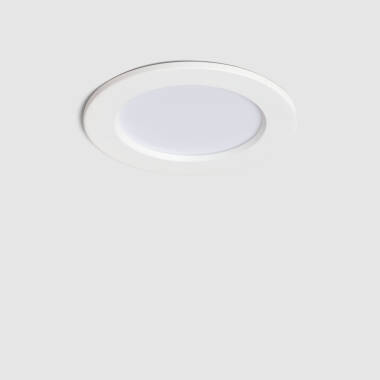
Advanced
7,59 €
 (15)
(15)Ref 3068
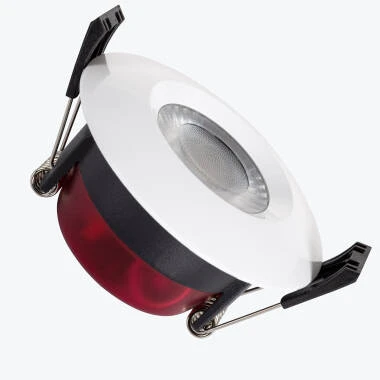
AluminiumRound 8W LED Downlight Ø75mm Cut Out IP65 for Bathrooms
In Stock, delivery in 15-20 days
- Wattage 8 W
- Voltage Range 220-240V AC
- Lumen 640 lm
3 options- -10%
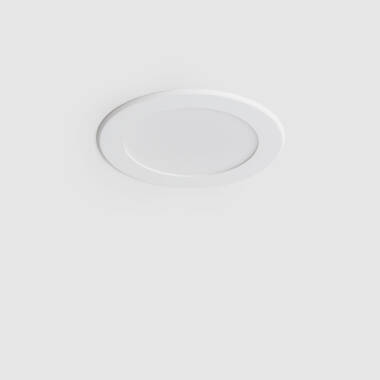
Advanced
Before 8,69 €
7,79 €
(19)- Wattage 10 W
- Voltage Range 220-240V AC
- Lumen 950 lm
3 options - -6%
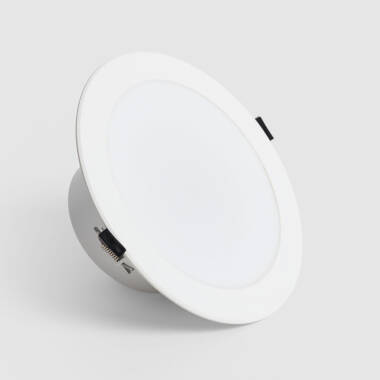
Advanced
Before 19,49 €
18,39 €
(2)- Wattage 25 W
- Voltage Range 220-240V AC
- Lumen 2250 lm
2 options 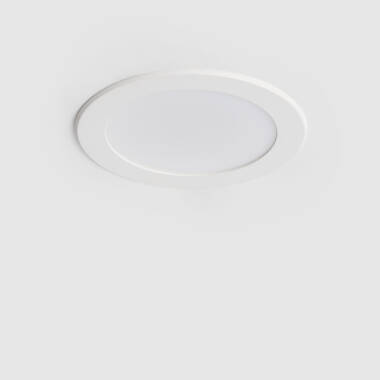
Advanced
13,29 €
- Wattage 15 W
- Voltage Range 220-240V AC
- Lumen 1410 lm
2 options






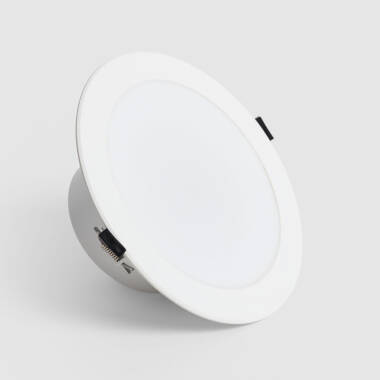
You may also be interested in
About Bathroom LED Downlights
A bathroom needs comfortable lighting for daily use, but it must also remain safe in the presence of moisture and splashes. Choosing bathroom LED downlights therefore involves more than design alone: the IP rating, installation zone, colour temperature and light distribution must all be considered to prevent shadows around the shower, washbasin and mirror.
LED lighting for bathrooms
LED bathroom lighting should combine electrical safety, visual comfort and suitable light distribution in a room that is usually compact and contains reflective surfaces.
Within the range of LED downlights, bathroom models are widely used because they integrate into the ceiling, take up no visual space and distribute light evenly. They are especially practical in small bathrooms, cloakrooms, main bathrooms, shower areas and refurbishment projects where a clean appearance without bulky luminaires is required.
General bathroom lighting should make it possible to move around safely, identify wet floors clearly, access the shower and use the washbasin without dark areas. In domestic bathrooms, approximately 200–300 lux is generally sufficient for general lighting. Around the mirror, higher levels of roughly 300–500 lux may be advisable for tasks such as shaving, applying make-up and skincare.
Downlights work very well as a basis for general lighting, but they do not always replace frontal mirror lighting. When light comes only from the ceiling, it can create shadows beneath the eyes, nose and chin. For this reason, downlights should be complemented with other bathroom lights.
The most common solution is undoubtedly bathroom wall lights positioned above the mirror or on either side.
The shape of the luminaire also affects how well it integrates into the room. Round LED downlights are particularly common in bathrooms because they fit standard cut-outs, integrate easily into plasterboard ceilings and create a discreet appearance. Shallow models are useful where there is limited space within the suspended ceiling, while adjustable versions allow the light to be directed towards specific areas when required by the bathroom layout.
Colour temperature and CRI are important for making bathroom lighting truly functional. A CRI of 80 or above is recommended for general use. When the light is used in front of a mirror, a CRI of 90 can improve the appearance of skin tone, make-up, clothing and finishes.
IP ratings in the bathroom
The IP rating indicates the luminaire’s level of protection against the ingress of solid particles and water, an essential consideration in bathrooms because of steam, condensation and splashes.
In a dry room, an IP20 downlight may be sufficient. In a bathroom, however, the protection rating should be selected according to the exact installation zone. A light fitting positioned in the centre of the ceiling, away from the shower, is exposed to different conditions from one installed directly above a bath or within a protected zone.
An IP classification consists of two digits. The first indicates protection against solids and dust, while the second indicates protection against water. In bathrooms, the second digit is generally the most relevant. IP44 protects against splashing water, IP65 protects against water jets and IP67 relates to temporary immersion under specified conditions.
In practice, many bathroom downlights are selected with an IP44 or IP65 rating. IP44 may be suitable in areas away from direct splashes, while IP65 offers greater safety above showers and baths, beneath low ceilings or in bathrooms with heavy condensation. The selection must always comply with the electrical zones defined by the relevant regulations. In Spain, ITC-BT-27 of the REBT classifies bathrooms and showers into protection zones 0, 1, 2 and 3.
Bathroom zones and required protection
Bathroom zones are defined according to their proximity to the bath or shower, as the electrical risk increases the closer a luminaire is to water.
Zone 0 corresponds to the inside of the bath or shower tray. Only equipment specifically designed for this use is permitted, using safety extra-low voltage and protection against immersion. A conventional ceiling downlight should therefore not be installed within this zone.
Zone 1 is located above the bath or shower up to the height defined by the regulations, commonly 2.25 metres from the floor or the base of the bath. This area requires specific protection against water and is subject to voltage limitations. When lighting is installed above a shower or bath, the luminaire must be suitable for that zone and have an appropriate IP rating, with IP65 commonly used as a practical reference.
Zone 2 surrounds Zone 1 in an area close to the bath or shower. Risks from splashing water and moisture remain present, so water-resistant luminaires are required, usually with a minimum rating of IP44. IP65 may be appropriate where there is direct exposure or an open shower.
Outside these zones, the requirements may be less demanding. Even so, moisture-resistant luminaires remain advisable in small or poorly ventilated bathrooms. Condensation can affect the driver, bezel and electrical connections even when there are no direct splashes.
Colour temperature for bathrooms
Bathroom colour temperature should balance comfortable everyday light with sufficient clarity for tasks carried out in front of the mirror.
Warm light at 3000K creates a pleasant atmosphere and is suitable for domestic bathrooms where continuity with bedrooms or relaxation areas is desired. It is a good option for main bathrooms, guest cloakrooms and spaces where a more welcoming appearance is preferred.
Neutral white light at 4000K provides greater visual clarity and is often the most functional option in bathrooms where precise tasks such as shaving, applying make-up or cleaning are carried out. It also makes surfaces, grout lines, tiles and other details easier to see.
Cool colour temperatures of 5000K or above can be used in highly technical bathrooms or areas where maximum visibility is required. In the home, however, they may feel less comfortable when used as the only light source, particularly at night.
When ceiling downlights are combined with mirror lighting, it is advisable to use a consistent colour temperature. A 3000K ceiling light combined with a 6000K mirror can create an uneven perception of both the face and the room. For a balanced result, 3000K and 4000K are generally the most common choices.
Downlights above showers and baths
Downlights above showers and baths must be selected with particular care because they are positioned in the area most exposed to steam, condensation and possible water splashes.
In these locations, IP65 is commonly used as a practical reference because it provides protection against water jets. The final choice nevertheless depends on the safety zone, ceiling height, shower type, presence of a screen, ventilation and applicable regulations.
In open showers or bathrooms with low ceilings, exposure to water may be greater than in an enclosed shower with a screen. Water pressure and the direction of the shower head also affect the level of exposure. Where there is a possibility of a direct water jet, a model with a higher protection rating should be selected and the manufacturer’s approval for that location should be confirmed.
The installation should prevent the driver from being positioned where moisture can accumulate. Some models use an external driver, which must be installed in a protected and accessible location. Electrical connections must also be completed correctly to avoid compromising the seal of the complete system.
Electrical safety zones
Electrical safety zones are defined around baths and showers to establish which electrical products may be installed and under what conditions.
In Spain, the REBT and its ITC-BT-27 define Zones 0, 1, 2 and 3 for rooms containing a bath or shower. This classification helps determine which type of luminaire may be installed, the required protection rating and the voltage restrictions that must be respected.
Zone 0 is the inside of the bath or shower tray, where the requirements are most stringent and conventional recessed downlights are not installed. Zone 1 covers the area above the bath or shower up to the height specified by the regulations, where only permitted and appropriately protected equipment may be used. Zone 2 extends around Zone 1 and also requires protection against splashing water. Zone 3, or the area outside the most critical zones, presents a lower risk, although luminaires designed for damp environments are still recommended.
In bathrooms without a clearly defined shower tray, with level-access showers or open layouts, defining the zones may require greater care. The absence of a screen or physical edge can increase the area exposed to water, so the IP rating should not be selected solely according to visible distance. During refurbishment, the ceiling height and the exact location of the luminaire in relation to the water outlet must also be checked.
Electrical safety zones do not replace the judgement of an authorised installer. Where a bathroom has special features, such as a whirlpool bath, open shower, very low ceiling, public use or intensive use, the installation should be assessed individually to ensure regulatory compliance and electrical safety.
Frequently asked questions
What IP rating should a bathroom LED downlight have?
IP44 may be sufficient in areas away from splashes, while IP65 is commonly recommended above a shower or bath because it protects against water jets. The final choice should depend on the electrical zone, ceiling height, ventilation and actual exposure to moisture or direct water.
Can I install a standard downlight in a bathroom?
This is not recommended where the bathroom is exposed to moisture, condensation or splashing water. An IP20 indoor downlight may operate in a dry area, but bathroom models with appropriate protection should be used, particularly near the shower, bath or washbasin. The installation must also comply with the electrical zones defined by the relevant regulations.
What colour temperature is best for a bathroom?
For domestic bathrooms, 3000K provides warm and comfortable light, while 4000K offers greater clarity for shaving, applying make-up and cleaning. Where mirror lighting is also installed, both systems should use a consistent colour temperature to prevent uncomfortable visual differences.
Are downlights suitable above a shower?
Yes, provided the model is approved for that zone and has the required IP rating. IP65 is commonly used above showers and baths, but voltage limitations and electrical safety zones must also be respected. The connection and driver must be protected against moisture and condensation.
How many downlights do I need in a bathroom?
This depends on the size of the room and the lumen output of each luminaire. In a small bathroom, one or two downlights providing 600–900 lm each may be sufficient, while a main bathroom may require three or more fittings. As a guideline, general lighting may be around 200–300 lux, with 300–500 lux around the mirror.
Do downlights replace mirror lighting?
Not always. Downlights provide general light from above, but they can create shadows across the face when used as the only source in front of a mirror. For shaving, applying make-up and personal care, it is advisable to add wall lights, light bars or dedicated bathroom luminaires close to the mirror.
What CRI is suitable for a bathroom?
For general use, a CRI of 80 or above is usually sufficient. Where the bathroom is used for make-up, shaving or selecting clothing, CRI 90 improves colour accuracy and provides a more natural perception of skin tone and finishes.
Can dimmable downlights be used in a bathroom?
Yes, provided they are suitable for bathroom use and the dimming system is compatible with the driver. Dimming can be useful for creating soft light at night or adjusting the intensity according to the activity. The dimmer and electrical connections must be installed outside prohibited zones and in accordance with the relevant regulations.
What is the difference between IP44 and IP65 in a bathroom?
IP44 protects against splashing water, while IP65 protects against water jets. IP44 may be sufficient in areas away from the shower. Above a shower or bath, or in bathrooms with heavy condensation, IP65 is generally the safer choice.
Where should downlights be positioned in a bathroom?
They should be distributed to illuminate the entire room without creating strong shadows around the shower, washbasin or circulation areas. In a small bathroom, a single central fitting may be sufficient. In a long bathroom or one with a separate shower, several downlights should be distributed across the room. Around the mirror, frontal or side lighting should be added to prevent shadows across the face.