
Dimmable CCT LED flush ceiling lights
Dimmable CCT LED flush ceiling lights allow you to adjust the brightness and tone of the light to suit each activity, room and time of day.
Our featured products from Dimmable CCT LED flush ceiling lights
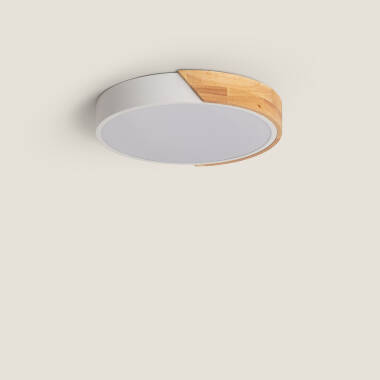

21,69 €
 (15)
(15)Ref 71573
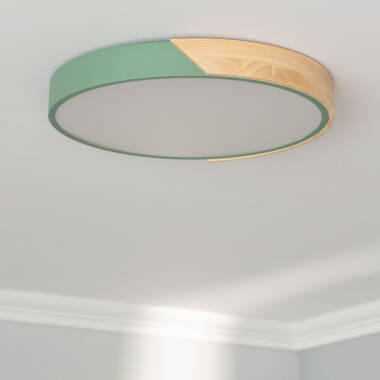
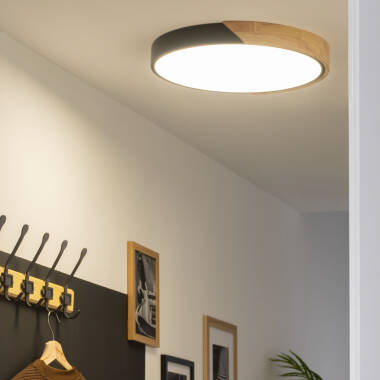
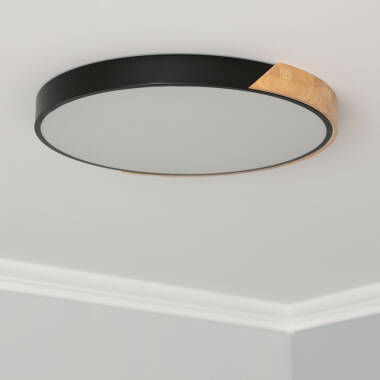
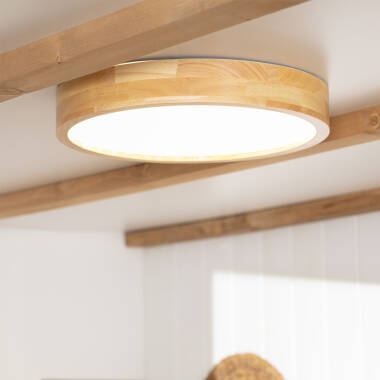
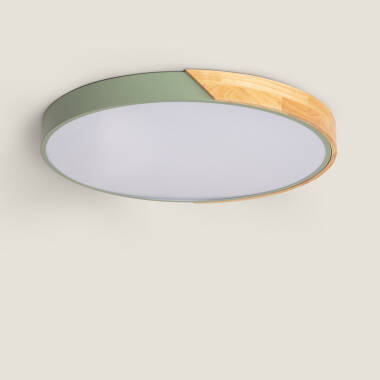
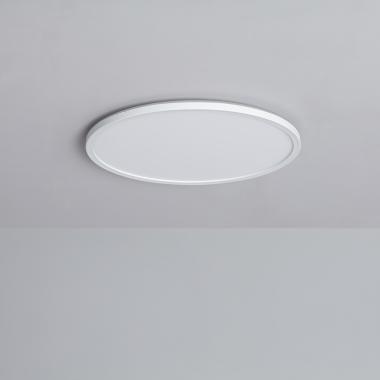
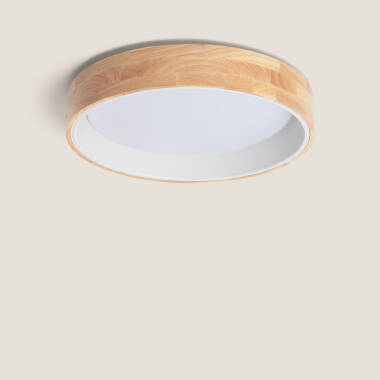
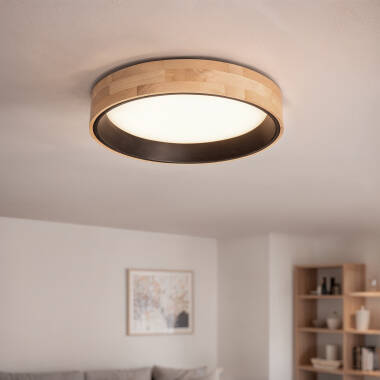
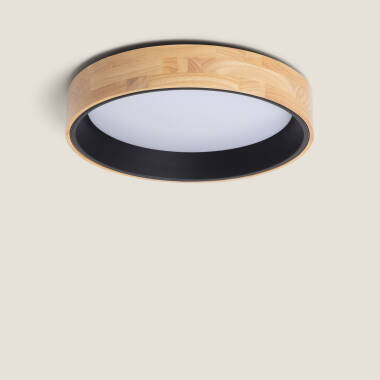
AluminiumSemi-Dari Round 18W Wood & Aluminium CCT Selectable LED Ceiling Light Ø320 mm
In Stock, delivery in 15-20 days
- Wattage 18 W
- Voltage Range 220-240V AC
- Lumen 1600 lm
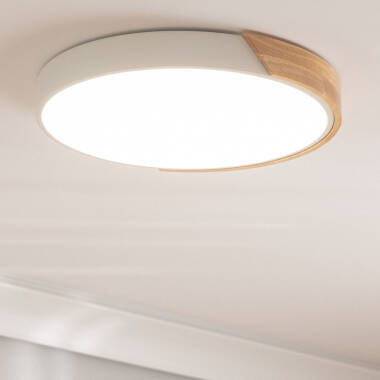
37,99 €
 (11)
(11)Ref 71581
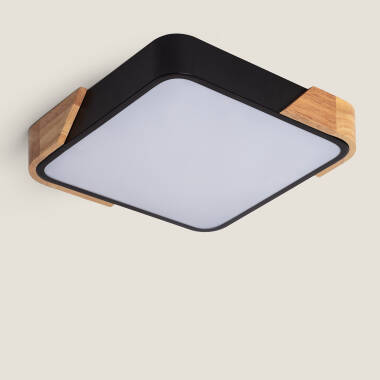
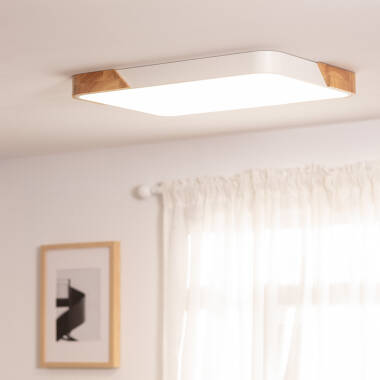
AluminiumSemi-Dari Round 24W Wood & Aluminium CCT Selectable LED Ceiling Light Ø418 mm
In Stock, delivery in 15-20 days
- Wattage 24 W
- Voltage Range 220-240V AC
- Lumen 1800 lm
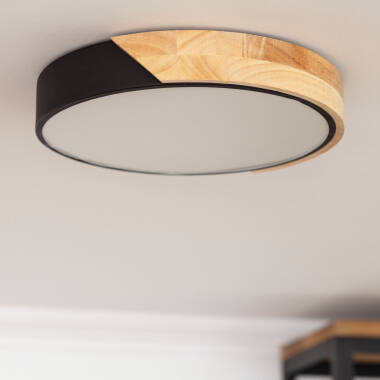
22,49 €
(15)Ref 71573
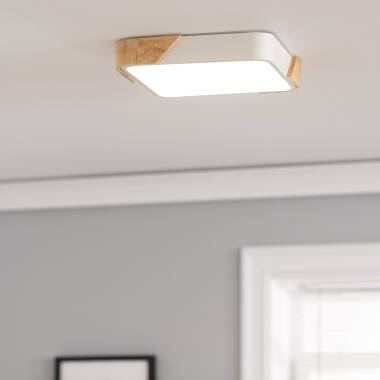
AluminiumSemi-Dari Round 18W Wood & Aluminium CCT Selectable LED Ceiling Light Ø320 mm
In Stock, delivery in 15-20 days
- Wattage 18 W
- Voltage Range 220-240V AC
- Lumen 1600 lm
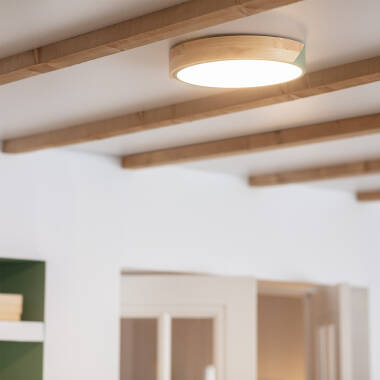
22,49 €
(15)Ref 71573
AluminiumSemi-Dari Round 18W Wood & Aluminium CCT Selectable LED Ceiling Light Ø320 mm
Pre-Order, estimated shipping from 11/11/2026
- Wattage 18 W
- Voltage Range 220-240V AC
- Lumen 1600 lm






Brands related to this category


About Dimmable CCT LED flush ceiling lights
A flush ceiling light of this type offers greater control than a fixed-output fitting. Depending on the model, it can reduce or increase luminous flux, select different colour temperatures or combine both functions. This versatility is useful in living rooms, bedrooms, offices, shops and multi-purpose spaces where lighting needs change throughout the day.
What does it mean for a flush ceiling light to be dimmable
A dimmable LED flush ceiling light allows the amount of emitted light to be adjusted without replacing the fitting or changing its rated power. When the brightness is reduced, the driver supplies less energy to the LED module and the luminous flux decreases in a controlled way.
Dimming is usually expressed as a percentage. A 2,000-lumen flush ceiling light operating at 50% does not always emit exactly 1,000 lumens, as the dimming curve depends on the driver, but the response is generally progressive enough to adjust the atmosphere effectively. Some fittings can dim down to 10%, while others maintain a minimum brightness of 20% or 30%.
Reducing brightness can lower electricity consumption during periods when maximum output is not required. However, the main benefit is functional: the same fitting can provide bright light for working, cooking or cleaning and softer illumination for relaxing, watching television or creating a welcoming atmosphere.
Not all LED flush ceiling lights are dimmable. The product must state this feature explicitly and specify the compatible control system. Connecting a non-dimmable model to a dimmer can cause flickering, buzzing, irregular switching or damage to the driver.
What is CCT
CCT stands for Correlated Colour Temperature. It is expressed in kelvin and describes the warm, neutral or cool appearance of the white light emitted by the flush ceiling light.
A CCT flush ceiling light may include several preset colour temperatures, for example 3,000, 4,000 and 6,000 K, or allow gradual adjustment between different tones. This function should not be confused with brightness dimming: a model can offer CCT without being dimmable, be dimmable without colour temperature adjustment, or combine both functions.
Physical selector, remote control or app
The physical selector is usually located on the rear or inside the flush ceiling light. It allows a colour temperature to be selected before installation is completed. This is a simple solution when the same model is to be used in different rooms, but it is not intended for frequent colour changes, as it normally requires removing the diffuser or accessing the body of the fitting.
A remote control can adjust brightness, colour temperature and, on some models, store the last setting. Its range is generally sufficient for one room, although the remote needs to remain accessible and its batteries must be replaced when necessary.
App control adds scheduling, scenes and operation from a smartphone. Depending on the system, communication may use Bluetooth, Wi-Fi, Zigbee or another protocol. In installations with several fittings, it is advisable to check how many flush ceiling lights can be grouped and whether control will continue to work when there is no internet connection.
Compatibility with dimmers and drivers
The driver adapts the mains supply for the LED module and determines how it is dimmed. To ensure stable operation, the driver, dimmer and load must be fully compatible.
In residential settings, leading-edge or trailing-edge phase-cut dimming is the most common approach, and performance varies depending on the driver. An incompatible dimmer can cause flickering at low levels, delayed switch-on or problems when switching the fitting off. Professional projects use 0-10 V, 1-10 V or DALI systems for centralised control of groups and scenes. These require compatible wiring and drivers, as the fact that a flush ceiling light is dimmable does not in itself guarantee integration.
Before installation, the dimming method, total load and permitted number of fittings should be checked. If several flush ceiling lights are connected to the same dimmer, the driver inrush current must also be taken into account.
Dimming combined with presence detection
Combining dimming with detection makes it possible to adapt brightness to occupancy. The fitting can remain off when nobody is present, operate at a reduced level as courtesy lighting and increase to 100% when movement is detected.
This system is useful in garages, entrance halls, corridors, hotels and communal areas. A standby level of 10% or 20% helps users find their way without leaving the space completely dark, while full brightness is reserved for periods when people are passing through.
Flush ceiling lights with motion sensor must incorporate a driver designed for this type of operation. Simply adding an external detector to any dimmable flush ceiling light is not enough, as the sensor and control system must coordinate timings, standby levels and driver response.
Some fittings allow an initial period at full output followed by a second period at reduced brightness. For example, the flush ceiling light can operate at 100% for three minutes after the last detection, remain at 20% for ten minutes and then switch off completely if no further presence is detected.
Integrated lighting control
When several fittings are installed, dimming can be integrated into a wider control system. This makes it possible to group flush ceiling lights by room, create scenes, set schedules and coordinate the lighting with blinds, sensors or building management systems.
Smart lighting solutions allow each group to be controlled using switches, remote controls, apps or compatible assistants. In a home, a scene could combine warm light at 30% in the living room with automatic switch-off in circulation areas. In a shop or office, scheduling can adjust lighting levels according to opening hours and available daylight.
The protocol should be chosen before expanding the installation. Wi-Fi systems are simple for a small number of fittings, but each device connects directly to the network. Bluetooth works well over short distances and without internet, although its range may be limited. Zigbee and other mesh-network protocols are suitable for installations with many light points, provided a compatible hub is used.
Frequently asked questions about dimmable CCT LED flush ceiling lights
The following answers cover the main questions about dimming, colour temperature, compatibility and control.
Is a CCT flush ceiling light always dimmable?
No. CCT means that the colour temperature can be selected or adjusted, but it does not guarantee brightness control. To have both functions, the product must specify both dimming and CCT adjustment.
Can a dimmer be installed with any LED flush ceiling light?
No. The driver must be dimmable and compatible with the type of dimmer being used. Connecting a non-dimmable flush ceiling light can cause flickering, noise or faults. The dimmer’s minimum load must also be respected.
What colour temperature is most suitable?
2,700 or 3,000 K are suitable for living rooms and bedrooms. 4,000 K works well in kitchens, bathrooms, offices and shops. Colour temperatures above 5,000 K are normally reserved for technical spaces or specific tasks.
Does the flush ceiling light remember the last setting?
It depends on the model. Some fittings include a memory function and restore the last brightness level and colour temperature. Others return to a preset setting or change mode each time the wall switch is operated.
Does dimming extend the life of a flush ceiling light?
Operating at a lower brightness for part of the time can reduce the temperature of the LED module and driver. This may help extend their service life, although lifespan also depends on component quality, ventilation and the stability of the electrical supply.
Can several flush ceiling lights be controlled with the same remote?
Yes, if they belong to the same system and support group pairing. It is advisable to check the maximum number of fittings, the remote-control range and whether independent groups can be created.
What happens if an incompatible dimmer is installed?
Flickering, buzzing, sudden changes in brightness, incomplete switch-off or switch-on problems may occur. If these symptoms appear, the compatibility of the dimmer, the minimum load and the driver’s dimming system should be checked.