
Step lights
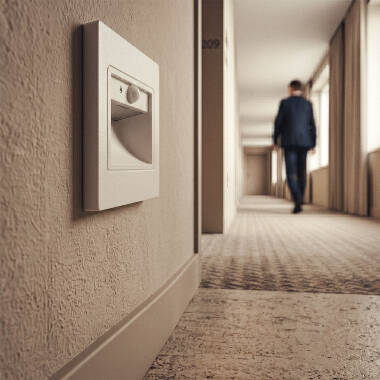
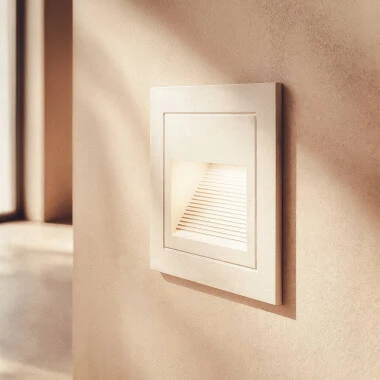
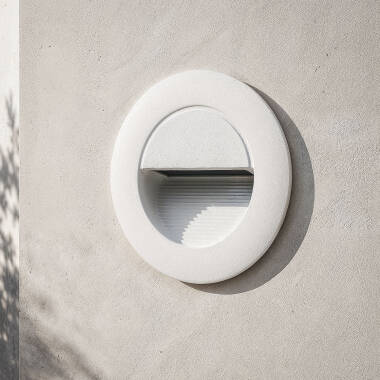
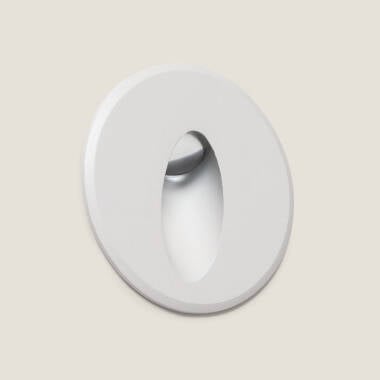
Step lights offer a discreet form of lighting that is very easy to integrate into different settings.
Our featured products from Step lights
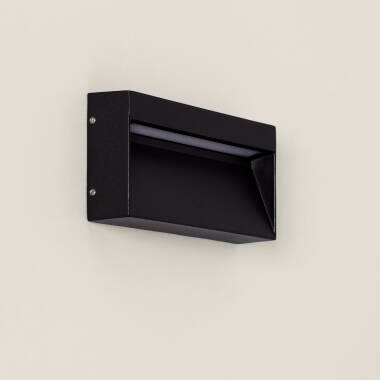
32,59 €
Ref 5355
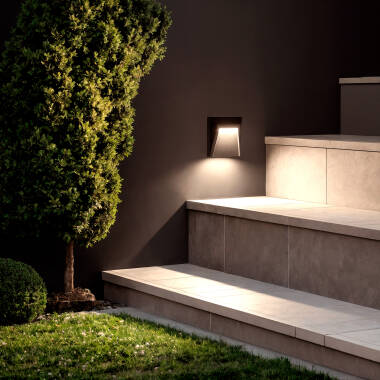
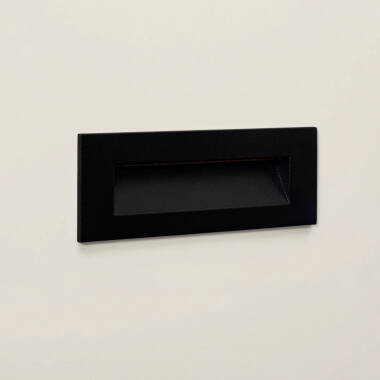
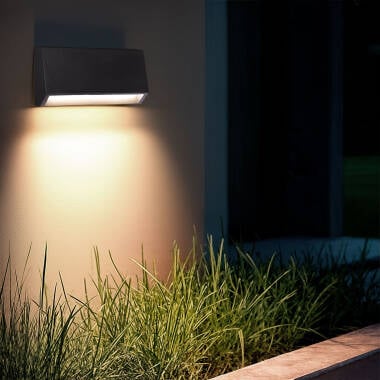
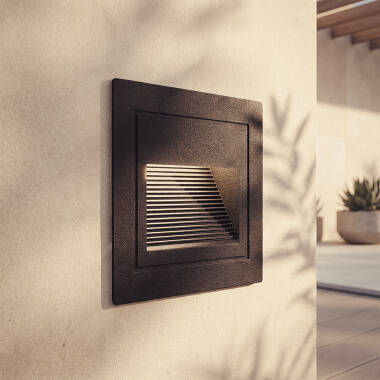
AluminiumColumbia 6W Outdoor Aluminium Surface Mounted LED Wall Light Black
Cool White 4000K
In Stock, delivery in 15-20 days
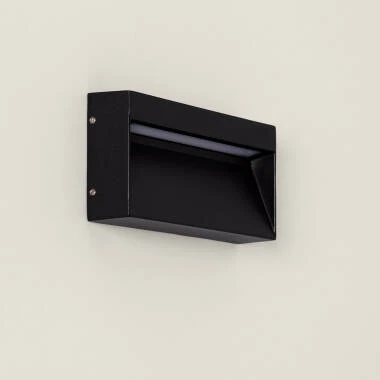
32,59 €
Ref 5355
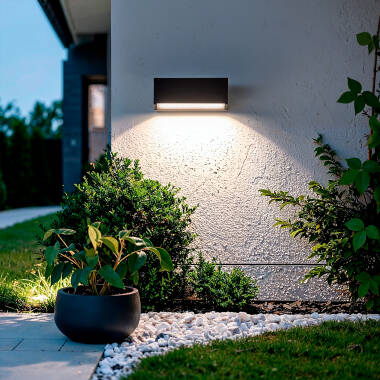
AluminiumColumbia 6W Outdoor Aluminium Surface Mounted LED Wall Light Black
Warm White 3000K
In Stock, delivery in 15-20 days
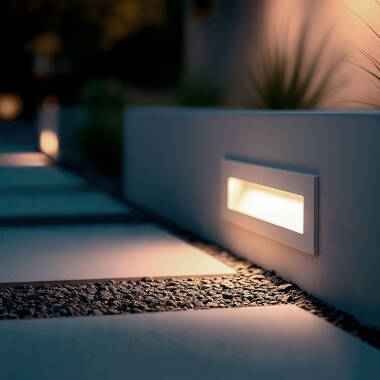
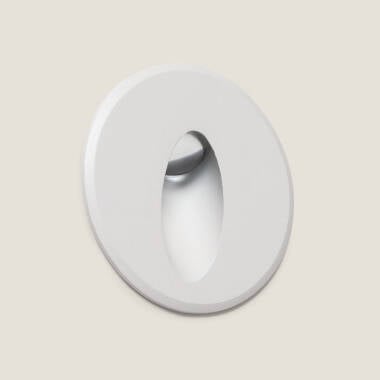
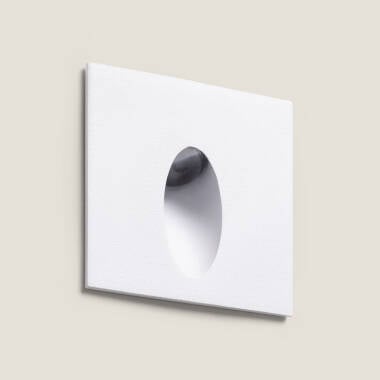
24,59 €
Ref 87905
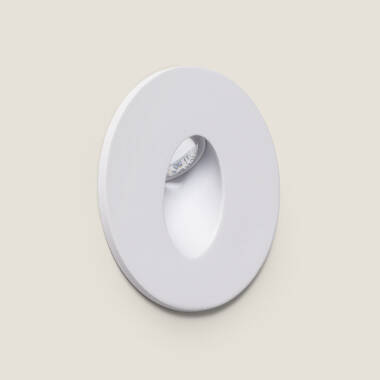
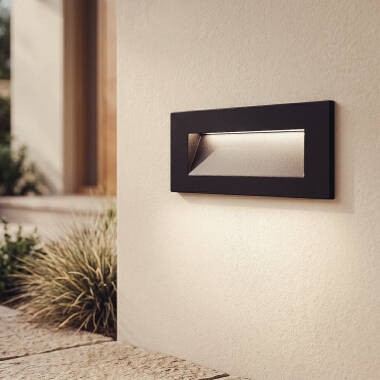
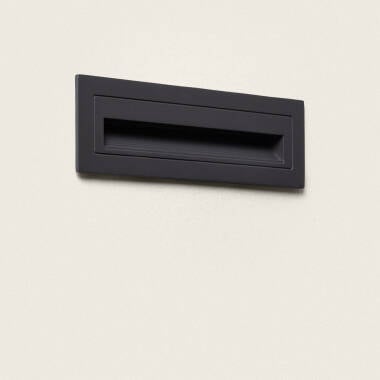
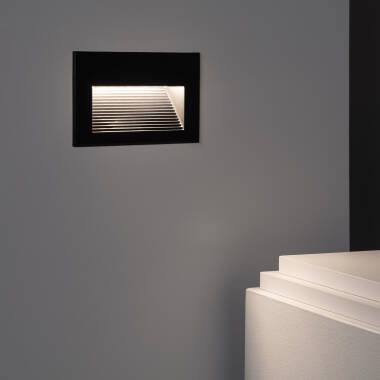
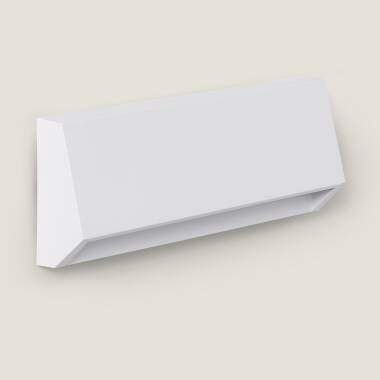
AluminiumGroult 7W Rectangular Outdoor Recessed LED Wall Light White
Warm White 2700K
In Stock, delivery in 15-20 days
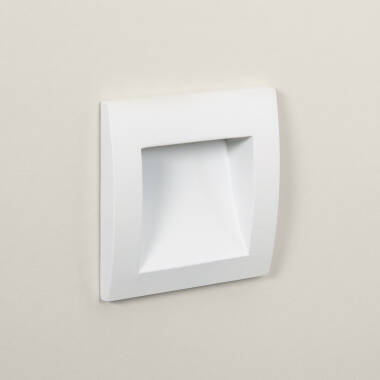
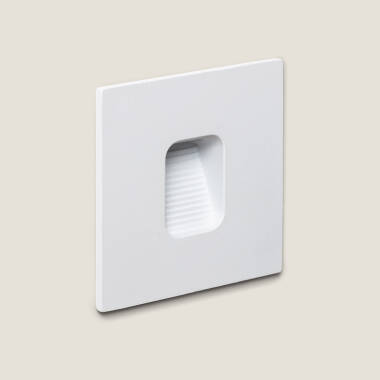
22,49 €
Ref 87954
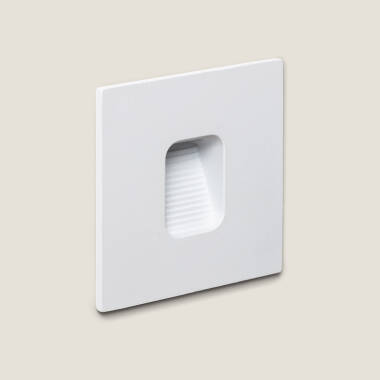
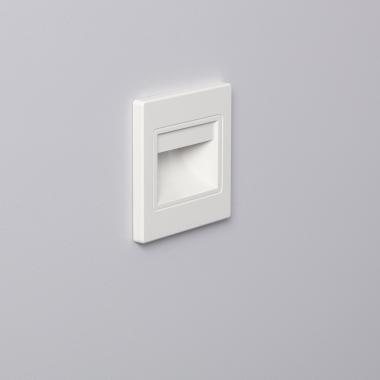
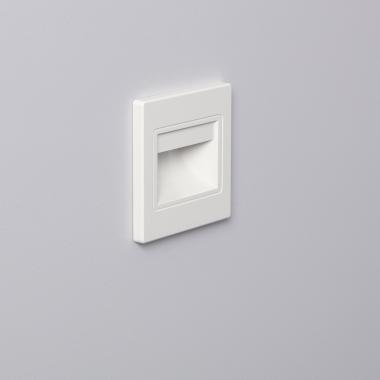
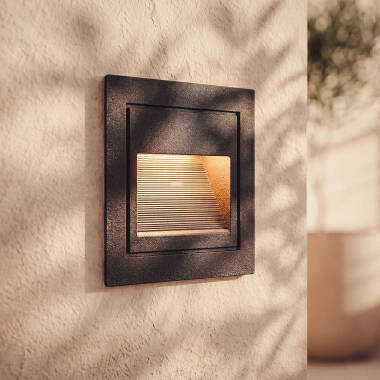
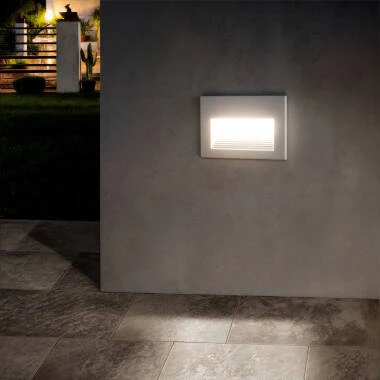
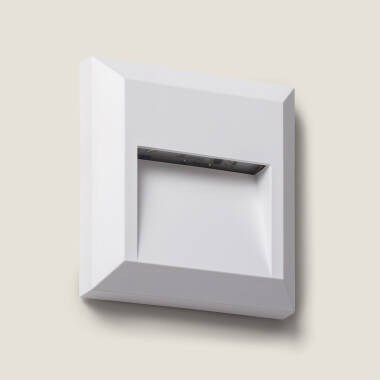
AluminiumLeif 4W Square Outdoor Aluminium Recessed LED Wall Light White
Warm White 2700K
In Stock, delivery in 15-20 days





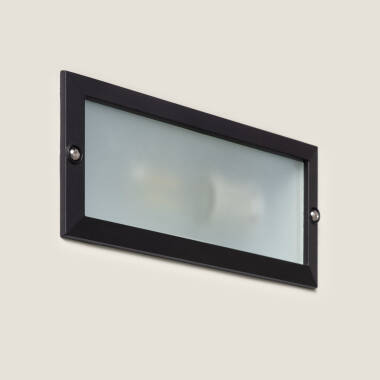
You may also be interested in
Brands related to this category


About Step lights
Among the different types of LED Path lights, wall models are a very practical solution when passage areas, façades, indoor zones or terraces need to be illuminated without taking up floor space. They are installed directly on walls and allow the light to be directed towards the floor. Thanks to their compact format and low consumption, they are suitable for private homes as well as residential communities or commercial spaces.
Advantages of Step lights compared with other lighting systems
Their main advantage compared with other systems is that they make use of existing surfaces, so they do not require posts, floor bases or elements that could interfere with movement.
A wall step light works with more controlled illumination, which makes it possible to improve visibility at specific points without creating a feeling of excessive brightness. Compared with recessed ground lights, it avoids more complex building work and reduces problems associated with drainage, foot traffic or dirt accumulation.
In addition, Step lights can perform a dual function: guiding movement and adding a decorative effect to the architecture.
Lighting for façades and terraces
On façades and terraces, wall step lights provide light without overloading the space. Installed at low or medium height, they can illuminate entrances, stairs or areas close to doors and windows. Their visual presence is usually lower than that of other lighting systems, which makes a cleaner integration into the architecture easier.
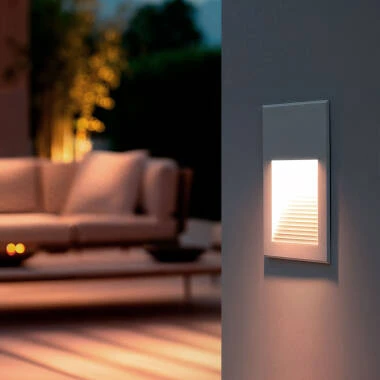
On residential terraces, a wall step light can work as ambient or support lighting. It is not always necessary to use a high-power luminaire; in many cases, a low and well-directed light makes it possible to move around comfortably while maintaining a pleasant atmosphere. For relaxation areas, a warm colour temperature between 2700 K and 3000 K helps create a more comfortable ambience and avoids lighting that feels too harsh.
On façades, the step light can also provide effective illumination. Placing several points at the same height makes it possible to follow the length of a wall, define a passage area or highlight the texture of the cladding. On stone, brick or concrete walls, the light provided by the step light can reinforce the volume of the surface without the need to use floodlights.
When installed in commercial areas such as hotels or restaurants, wall step lights help maintain functional lighting with an elegant presence. In these spaces, the light allows people to move safely without disturbing those who are seated.
Practical solution when there is no floor space
One of the most common reasons for choosing Step lights is the lack of floor space. In narrow corridors, stairways or small terraces, installing LED Bollard Lights or ground lights can reduce the usable passage area or create obstacles. The wall, on the other hand, offers a stable surface that is usually available for placing light points.
This advantage is especially important in areas with frequent movement. A side corridor 80 or 100 cm wide can become uncomfortable if luminaires are added to the floor. By contrast, a wall step light installed at low height illuminates the route without interfering with people’s movement.
It is also a suitable solution for renovations where the floor does not need to be lifted or complex conduits installed. If there is already a wall close to the route, installation can be simple. However, it is still important to plan the wiring properly and protect the connections.
In spaces with dense vegetation, a wall step light can be more stable than other low-level solutions. Plants can grow and block the light from a ground luminaire; a step light installed on a wall maintains its function better in the medium term, provided the vertical surface is well positioned in relation to the area to be illuminated.
Practical light for stairs and corridors
Outdoor and indoor stairs and corridors require clear lighting without glare. Step lights are especially useful in these cases because they can be placed at low height and direct the light towards ramps or narrow routes. The aim is to identify changes in level and floor edges without creating shadows that make foot placement more difficult.
On stairs, the light should mark each flight continuously. A stair step light placed too high can create shadows projected by the person themselves when going up or down. An installation at low or medium height, normally between 30 and 80 cm depending on the type of wall and the geometry of the staircase, makes it possible to illuminate the support area more effectively. On long flights, it is preferable to distribute several low-power points rather than use a single very intense luminaire.
In corridors, uniformity is important. If the light points are too far apart, dark areas appear between the luminaires. If they are too close together or have too many lumens, the result can be uncomfortable. As an initial reference, a spacing of 2 to 4 metres between step lights can work in many residential routes.
Features of Step lights
Step lights must combine resistance, efficiency and suitable light distribution. As they are installed on exposed façades or walls, choosing an attractive design is not enough; the following features should be checked:
Compact design integrated into the architecture
Compact design is one of the most valued features of Step lights. As they are fixed onto a vertical surface, they usually have a reduced volume and a discreet presence.
In architecture, proportion is important. A step light that is too large on a narrow wall can look visually heavy; a luminaire that is too small on a wide façade can lose presence or fail to provide enough light. The choice should consider the size, installation height, distance between points and type of wall finish.
Colour and finish also influence integration. Dark tones often go unnoticed on modern façades or black joinery, while grey, white or metallic finishes may fit better in lighter environments.
Weather resistance and IP protection
Weather resistance is essential for any path light. These luminaires may be exposed to rain, wind, dust, solar radiation, condensation and thermal changes. That is why it is important to choose models made from materials prepared for outdoor use, such as treated aluminium, suitable stainless steel, opal glass or polycarbonate.
The IP rating indicates resistance to the ingress of particles and water. Some models have IP20, which is only suitable for indoor areas or completely dry and protected zones, as it does not offer protection against water. For this reason, it is not usually recommended for outdoor use, even in covered spaces where ambient moisture may be present.
For protected outdoor areas, such as porches or covered terraces, IP44 may be sufficient if the luminaire does not receive direct rain. For façades, outdoor corridors or exposed areas, IP65 or higher is recommended. This level of protection offers greater safety against dust, splashes, heavy rain and cleaning with water.
Installation also influences durability. A step light with good IP protection can fail if the connections are poorly insulated or if water enters through the back of the luminaire. It is advisable to ensure firm fixing, correctly seal the cable entry point and prevent water from accumulating between the base and the wall. On uneven surfaces, such as stone or rough cladding, it may be necessary to prepare the support area to improve watertightness.
Low energy consumption
Thanks to LED technology, they can provide a good amount of light with reduced wattage. In orientation and passage applications, wattages between 1.5 W and 10 W per luminaire are common, sufficient to illuminate stairs, terraces or entrances if the beam is well designed.
Savings do not depend only on watts. LED efficiency, optics and the direction of light also play a role. A step light that projects light towards the floor can make better use of luminous flux than another with dispersed emission in all directions. For this reason, when comparing models, it is advisable to check the lumens and type of distribution, not only the wattage.
The service life of LED path lights is usually high, with common values between 20,000 and 50,000 hours depending on the model and conditions of use. This reduces replacement frequency and is especially interesting in installations with many light points.
LED Path lights for functional and decorative lighting
Wall step lights form part of a wider range of path lighting solutions. When correctly combined with other formats, they make it possible to create more complete lighting.
LED Path lights are a versatile option for illuminating different areas such as gardens, entrances, terraces and passage areas. In a well-planned project, the different models are used according to the needs:
Pillar Lights for low walls and pillars
Pillar Lights are a very useful alternative when there is a low wall, a pillar or an enclosure. Unlike wall step lights, which are fixed onto vertical surfaces, pillar lights are installed on the top of the wall and project light from a raised and stable position.
This format is common at home entrances, access pillars, perimeter walls or stairways with a low side wall. Its location makes it possible to illuminate passage areas without occupying the floor and provides a clear visual presence around the perimeter. In addition, as it is placed on the wall, it can offer a more open emission than a low wall step light.
Recessed deck lighting to combine upward and side lighting
Recessed deck lighting complements Step lights very well when the aim is to create lighting with more depth. While the wall step light illuminates from a vertical plane, the recessed ground light works from the floor, usually with upward light.
This combination is useful on façades, in gardens and on terraces. A wall step light can provide functional light for movement, while recessed deck lighting can highlight a texture, a tree or a wall. This creates richer lighting, with different levels and directions of light.
On façades, recessed deck lighting makes it possible to enhance architectural volumes from below. If combined with wall step lights, it is advisable to avoid both luminaires illuminating the same area with similar intensities, as the result may lose definition. Ideally, each type of luminaire should have a clear function: the step light for orientation and safety, and the ground light for accent or decorative effect.
How to balance wall light with light projected from the floor
To balance wall light with light projected from the floor, it is important to prevent all points from competing for attention. The wall step light can be responsible for route visibility, while the ground light can highlight an architectural or plant element.
The colour temperature should remain within the same range. If the wall step lights work at 3000 K, the ground lights should also remain at 3000 K or within a very close variation. Mixing warm light with cool light on the same façade or in the same garden can create unnatural contrasts, unless there is a very clear design intention.
Intensity must also be adjusted. A very powerful ground light can overshadow the soft light of a wall step light and create marked shadows. By contrast, moderate power and a suitable beam angle make it possible to create accents without affecting orientation.
Beam orientation is another key factor. Ground lights should avoid pointing towards passage areas or windows, and wall step lights should direct the light towards the floor or the desired surface.
When to choose Pillar Lights instead of Step lights
Pillar Lights are preferable when there is already a suitable horizontal surface and the aim is to illuminate from a slightly raised point. On low walls, this format makes use of the existing architecture and allows a visible line of light to be created.
It is also advisable to choose a pillar model when the vertical wall is not available or does not allow an aesthetic installation. In some entrances, the pillar offers a cleaner base than the façade. On terraces with low walls, installing on the top can feel more natural than placing step lights on a wall away from the route.
By contrast, Step lights are more suitable when the passage area runs alongside a façade or a continuous vertical surface. They work especially well in side corridors or stairways where it is useful to direct the light towards the floor from a vertical plane.
Frequently asked questions about Step lights
What IP rating should they have?
For a step light installed on a façade or wall exposed to rain, IP65 or higher is recommended. In covered areas, such as porches or protected terraces, IP44 may be sufficient if the luminaire does not receive direct water. IP protection must be accompanied by correct installation and well-insulated connections.
At what height should they be installed?
In passage areas, stairways or corridors, they are usually installed between 30 and 80 cm from the floor to illuminate the surface directly. On façades or terraces, they can be placed slightly higher if a decorative effect or wider support light is desired. The height should avoid glare and allow the beam to reach the useful area.
What wattage is recommended for a Step light?
For orientation, stairs and corridors, wattages between 1.5 W and 10 W are usually sufficient, depending on the luminous flux and emission angle. In areas where more visibility is needed, higher-power models can be used, but it is always better to prioritise well-directed optics rather than excessive lumens.
What colour temperature is best?
In homes, terraces and gardens, warm light from 2700 K to 3000 K is usually the most comfortable. In communal entrances, garages or professional areas, neutral light at 4000 K can improve the perception of details. The most important thing is to maintain consistency with the rest of the luminaires.
Are Step lights suitable for illuminating stairs?
Yes, they are one of the most suitable solutions for stairs. Installed at low height, they help mark steps and changes in level without taking up space.
What is the difference between a Step light and a wall light?
A Step light is usually installed at low or medium height and is designed to guide movement or illuminate specific areas of the floor. A wall light is normally placed higher and provides more general lighting for entrances, terraces or façades. Both can be combined if more complete lighting is desired.
Can Step lights be combined with ground lights?
Yes, this is a very effective combination. Step lights provide functional light for routes or stairs, while ground lights can highlight façades, vegetation or architectural elements. To achieve a balanced result, it is advisable to maintain a similar colour temperature and avoid the light beams crossing in an uncomfortable way.