
Pillar lights
Installed on pillars, boundary walls or entrances, LED Pillar Lights make use of existing construction elements and allow safe, well-integrated light points to be created.
Our featured products from Pillar lights
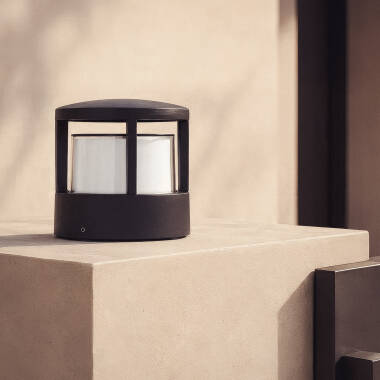
19,49 €
Ref 174817
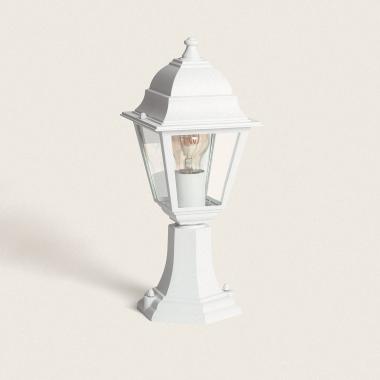
AluminiumObis Outdoor 5W Aluminium Fence Post Light 11cm
Black - CCT 2700K - 3300K - 4000K
In Stock, delivery in 15-20 days
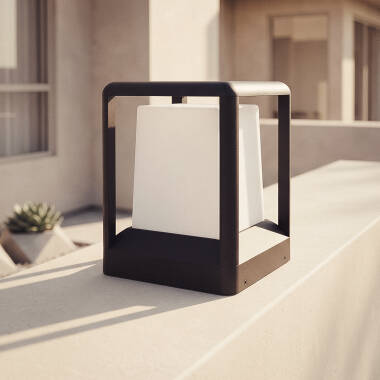
37,99 €
Ref 175029
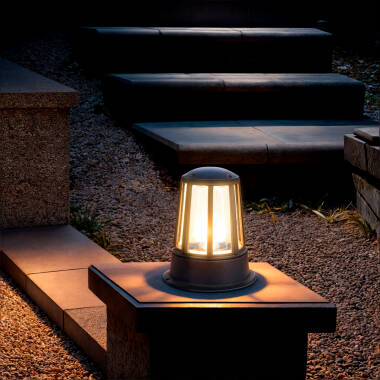
AluminiumNewINDO Aluminium Fence Post Light for E27 Bulb 21cm
Black
In Stock, delivery in 15-20 days
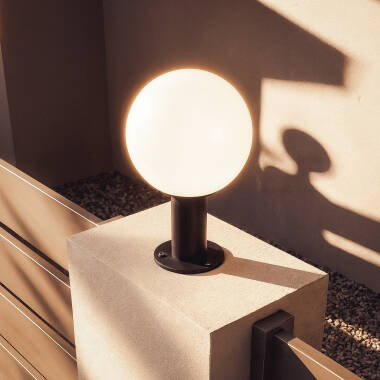
23,89 €
TonduRef 114247
AluminiumTondu Aluminium Outdoor Wall Mounted Bollard
Black
In Stock, delivery in 15-20 days
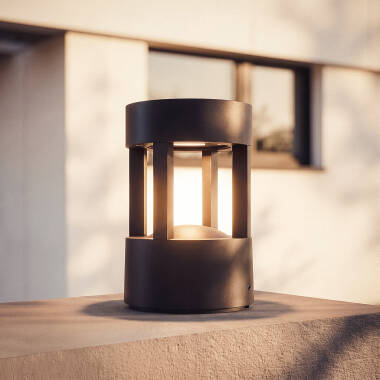
36,69 €
Ref 100527
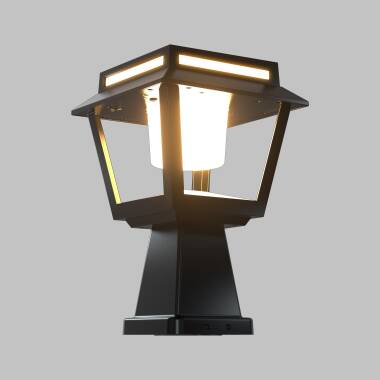
AluminiumMokka 7W Aluminium Outdoor Fence Post Light 14cm
Black
In Stock, delivery in 15-20 days






You may also be interested in
About Pillar lights
Within the different types of LED Path lights, the LED pillar light model illuminates entrances, walls and gardens with low energy consumption, good resistance and discreet aesthetic integration in residential or professional spaces.
Why choose LED Pillar Lights?
LED Pillar Lights offer functional lighting, energy efficiency and decorative presence. Their raised position above the ground allows the light to be directed more effectively, improves visibility in access areas and avoids obstacles on paths or passage areas.
Unlike other luminaires installed directly into the paving, pillar lights are protected from footsteps or small accidental knocks. In addition, by being positioned on walls or pillars, they provide a wider and more noticeable light distribution, especially at entrances and in areas where the wall itself acts as a visual guide.
LED technology provides low energy consumption and a long service life. In most residential installations, an LED pillar light can operate with moderate wattages, usually between 3 W and 40 W, without the need for oversized luminaires. For orientation lighting, an approximate output of 100 to 400 lumens per point is usually sufficient; at main entrances or in areas where greater clarity is required, it may be advisable to move to higher ranges, always keeping glare under control. On the other hand, some models use bulbs, and the light will depend on the bulb model selected.
Installation on walls and pillars
Installation on walls and pillars is one of the main advantages of this type of light. Many outdoor spaces already have access walls or built bases that can be used as supports for installing luminaires without modifying the garden layout or taking up paving space.
This type of installation is especially convenient at home entrances, garage entrances or stairways. The light remains visible but does not interfere with people passing through. On narrow routes, this difference is important because it avoids reducing the usable width of the path.
For safe installation, it is advisable to check the available width of the wall and the support surface. A light that is too large on a narrow low wall may look disproportionate or be exposed to side impacts. It is also important that the base is correctly fixed and levelled, as a slight tilt can alter the direction of the beam and create poorly lit areas.
In exposed outdoor areas, connections must be protected against moisture, rain and condensation. Running the wiring inside the wall or through suitable conduit improves the durability of the installation and prevents premature faults. On old or porous walls, it may be necessary to prepare the surface beforehand to ensure stable fixing and prevent water ingress.
LED Pillar Lights are very effective for perimeter lighting because they make it possible to follow the outline of a space without saturating it with light. Placed on boundary walls, they define entrances, patios, gardens and terraces, helping to identify the limits of the outdoor area at night. This function is useful for both safety and visual orientation.
At home entrances, a sequence of lights on pillars or low walls can guide the route from the gate to the home or garage. The light does not need to be excessively intense; what matters is that the user can clearly identify changes in level and the edges of the path. In these cases, a warm colour temperature of 3000 K usually provides a suitable balance between comfort and visibility.
In gardens, perimeter lighting helps avoid completely dark areas without altering the natural atmosphere. When the garden has dense vegetation, it is advisable to consider how the plants will grow to prevent them from blocking the light over time.
In residential communities or professional spaces, perimeter lighting also helps improve the readability of the outdoor space. A well-distributed line of light on low walls makes it possible to identify routes and separate seating or stay areas. In addition, because it uses LED technology, energy consumption remains controlled even when several points stay switched on for many hours.
Decorative and functional light
An LED pillar light can fulfil a decorative function while still remaining useful. Its design, emission pattern and colour temperature directly influence the perception of the space. A model with diffused light creates a soft, even atmosphere, while a light with directed emission can concentrate illumination on the path or on the wall itself.
In residential outdoor areas, warm light between 2700 K and 3000 K is usually the most recommended option when the aim is to create a pleasant atmosphere in gardens and access areas. This tone reduces the feeling of harsh light and combines well with stone, wood, vegetation and architectural finishes. In more technical-use areas, such as communal entrances, garage entrances or areas where greater visual precision is needed, neutral light at 4000 K can make it easier to identify steps. In models that work with a bulb, the lighting can be chosen according to the desired colour temperature.
The decorative function also depends on proportion. A very tall light on a low wall can appear visually heavy, while a luminaire that is too small may go unnoticed or fail to provide enough light. The choice should take into account the height of the wall, the size of the entrance, the distance between light points and the style of the surroundings.
When several lights are combined, regularity is key. Keeping the same colour temperature, a consistent installation height and balanced spacing helps achieve a professional result. On long walls, an approximate distance of 2 to 4 metres between points can serve as an initial reference, although it should be adjusted according to wattage, luminous flux and the desired effect.
Key features of an LED Pillar Light
An LED Pillar Light should be chosen by assessing both lighting performance and the resistance of the whole unit.
Materials suitable for withstanding outdoor weather
The materials of an LED Pillar Light must withstand prolonged outdoor exposure. Treated aluminium is a common option because it combines lightness, resistance and good heat dissipation. There are also models made from stainless steel, opal glass or polycarbonate, as well as diffusers resistant to corrosion and sunlight.
The finish must be prepared to withstand moisture and temperature changes. In areas with frequent rain, automatic irrigation or high ambient humidity, it is advisable to choose luminaires with anti-corrosion coatings and fixings suitable for outdoor use.
The IP rating is another criterion to consider. In semi-covered outdoor areas, IP44 may be sufficient if the luminaire does not receive direct water. However, for walls exposed to rain, irrigation or dust, it is recommended to choose lights with IP65 or higher. This classification indicates greater protection against particles and water jets, although it should always be accompanied by correct installation and well-insulated connections.
In addition to moisture, mechanical resistance must also be considered. At frequently used entrances or on walls close to maintenance areas, the luminaire may receive accidental knocks. A robust body, a firm base and a good fixing system help extend the service life of the light and keep it correctly aligned over time.
Light distribution on low walls and raised areas
Light distribution defines how the installation is actually perceived. Two lights with the same wattage can offer very different results depending on the direction of the light. For this reason, before choosing a model, it is worth analysing whether the priority is to illuminate the path, mark the perimeter, create ambience or highlight the wall itself.
On low walls, a light with wide emission can work well to create soft ambient light around the luminaire. This type of distribution is useful in gardens, patios and terraces where decorative lighting is desired, not only functional lighting. However, if the wall is next to a narrow path, a light with downward or side emission may be more effective, as it concentrates the output on the passage area and reduces scattered light.
On entrance pillars, the luminaire usually has a more visible function. It can help identify the gate and define the access point. To avoid discomfort, it is advisable to choose models with a wattage proportionate to the surroundings.
The height of the wall also affects the choice. On low walls, the light remains close to the ground and can work as orientation lighting. On higher walls or raised pillars, the beam reaches a larger surface, but the risk of the light source entering the field of vision also increases.
The spacing between lights should respond to the level of lighting required. For residential paths and entrances, a distance of 2 to 4 metres can provide continuity without excess light, provided that the output of each luminaire is moderate. On decorative walls or in areas where the aim is only to mark presence, the spacing can be greater.
Other LED Path lights to complete the installation
LED Pillar Lights work very well for lighting pillars and entrances, but many projects need to combine several formats to achieve a complete result. A garden, façade or perimeter area is not always correctly lit with a single type of luminaire.
Combining different solutions allows the light to be adapted to each surface:
Step lights for façades and vertical areas
Step lights complement pillar lights very well when the outdoor space includes façades, side corridors or stairways. They are installed directly on the wall and make it possible to illuminate the ground without taking up space on the paving or on the top of a wall.
This format is especially useful in areas where there is no suitable low wall for installing a pillar light. In corridors, side façades or narrow access areas, a wall-mounted step light with downward emission can improve route visibility and reduce the risk of tripping. It can also provide a decorative effect if it has a double beam or indirect light on the façade.
The main difference lies in the direction and location of the light. A pillar light illuminates from a raised horizontal surface, while a step light projects from a vertical surface. This changes how shadows are perceived, the width of the beam and the degree of glare. On walls close to passage areas, models with downward-directed light are usually the most comfortable.
On façades, step lights also help create visual continuity between architectural lighting and route lighting. They can be placed at a low height to work as orientation lighting or at a medium height if the aim is to reinforce the presence of the entrance. In both cases, it is advisable to avoid excessive wattages and choose models with good optical control, especially if there are windows or rest areas nearby.
Frequently asked questions about LED Pillar Lights
What IP rating should an LED Pillar Light have?
For a light installed on a wall exposed to rain or irrigation, it is recommended to choose an IP65 rating or higher. In porches, covered terraces or areas where the luminaire does not receive direct water, IP44 may be sufficient. Even so, the IP protection must be accompanied by correct installation, with insulated connections and a base that does not encourage water ingress.
What wattage is suitable for an LED Pillar Light?
For residential orientation or ambient use, wattages between 3 W and 8 W are usually sufficient if the luminaire has good light distribution. For main entrances, entrance pillars or areas where greater visibility is required, models from 10 W to 15 W or higher can be used. The most important thing is to check the lumens and the type of emission, because a well-designed light can illuminate better with less wattage than a more intense but poorly directed one.
What colour temperature should be chosen?
For gardens, terraces and home entrances, a warm colour temperature between 2700 K and 3000 K is usually the most comfortable option. In residential communities, garage entrances or transit areas where greater perception of detail is needed, neutral light at 4000 K may be more functional. It is advisable to avoid mixing colour temperatures without a clear reason, as this can create uneven and poorly refined lighting.
Can LED Pillar Lights be installed on entrance pillars?
Yes, entrance pillars are one of the most common points for installing LED Pillar Lights. They illuminate the access area, improve gate visibility and reinforce the presence of the boundary. It is important to check that the base of the luminaire fits the width of the pillar, that the fixing is stable and that the emission does not cause glare towards the street or the home.
How many metres apart should pillar lights be installed?
On walls next to paths or passage areas, an approximate spacing of 2 to 4 metres can provide continuous and balanced lighting. If the light has a high luminous flux or wide emission, the distance can be increased. On stairways or changes in level, it is advisable to reduce the spacing to improve safety and avoid dark sections.
What is the difference between a pillar light and a step light?
A pillar light is installed on a horizontal surface, such as a low wall or pillar, while a step light is fixed to a vertical surface. The first is very useful at entrances and perimeters; the second works better on façades, side corridors and stairways next to a wall. Both can complement each other in the same project if consistency is maintained in colour temperature, design and light level.
Are LED Pillar Lights suitable for lighting gardens?
Yes, they are suitable for gardens when there is a wall from which to project the light. They help mark perimeters and illuminate access areas. If the garden has paths far from the wall or internal areas without a raised support, it may be advisable to combine them with other types of path lights to achieve more complete lighting.