
Outdoor LED wall lights
Outdoor wall lights illuminate façades, entrances, terraces and circulation areas with resistant, functional and decorative solutions adapted to weather exposure.
Our featured products from Outdoor LED wall lights
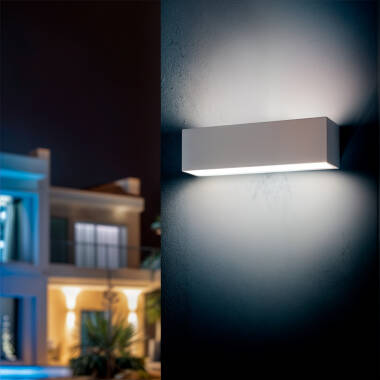
32,59 €
Ref 87915
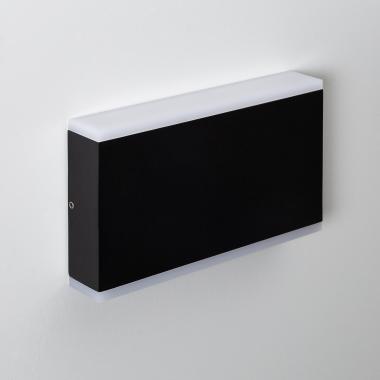
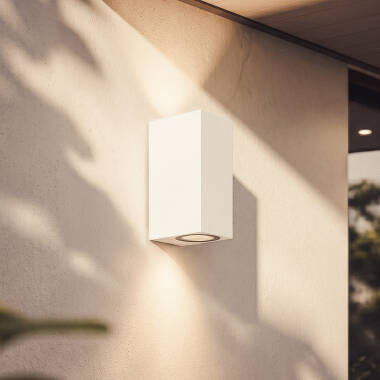
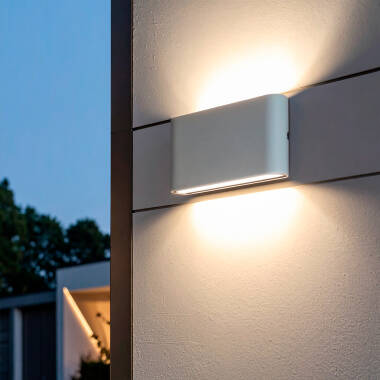
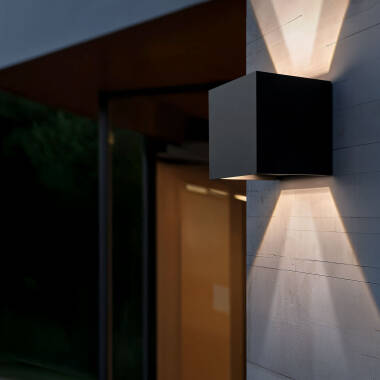
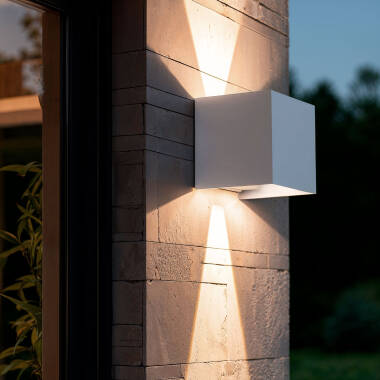
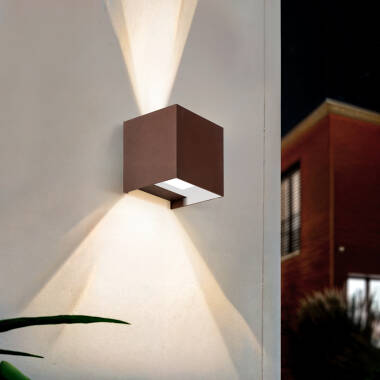
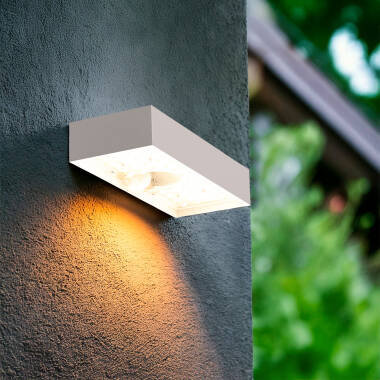
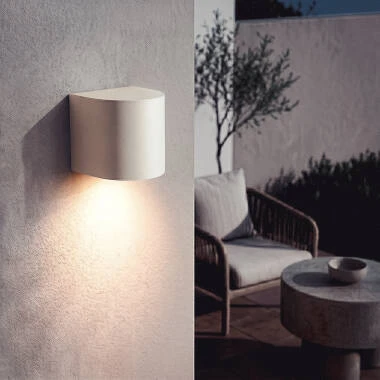
AluminiumLena 10W Rectangular Outdoor Double Sided Aluminium LED Wall Light White
Cool White 4000K
In Stock, delivery in 15-20 days
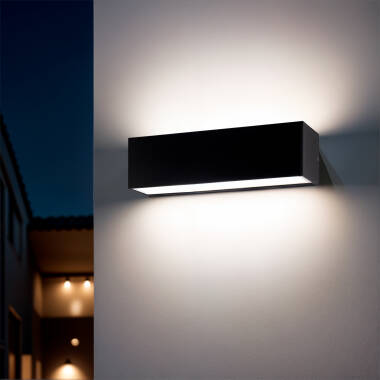
32,59 €
GaleoRef 87917
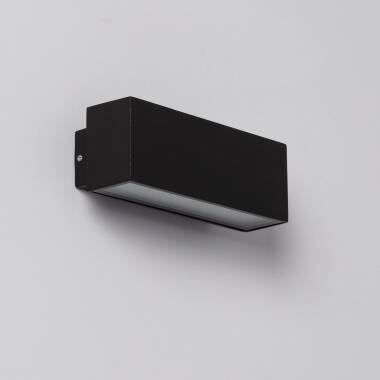
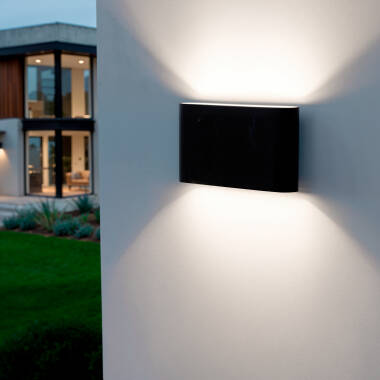
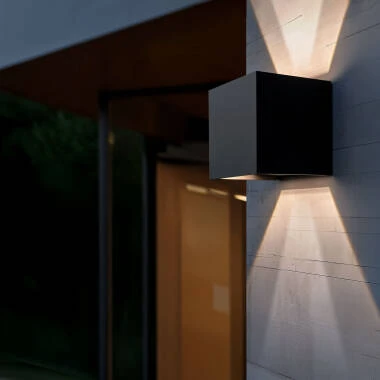
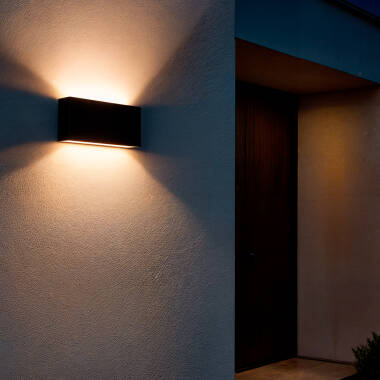
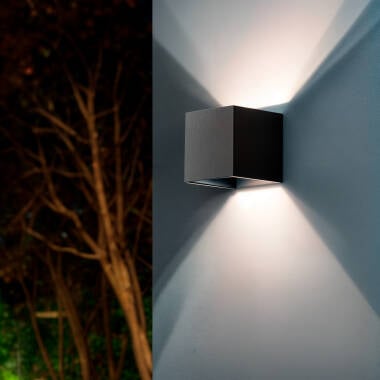
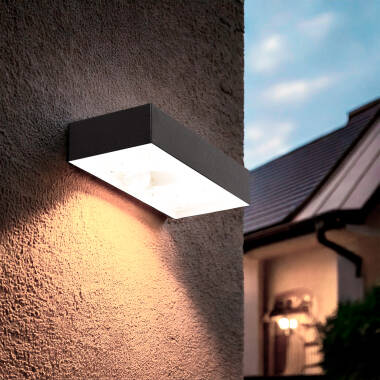
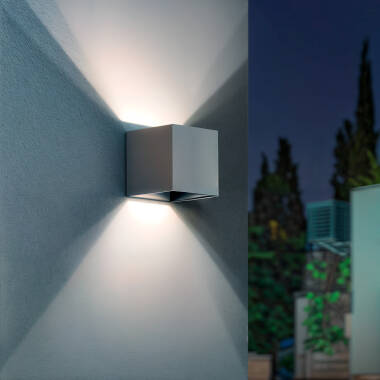
AluminiumLena 10W Rectangular Outdoor Double Sided Aluminium LED Wall Light Black
Cool White 4000K
In Stock, delivery in 15-20 days
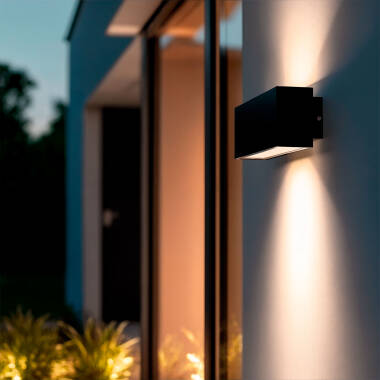
40,99 €
Ref 1729
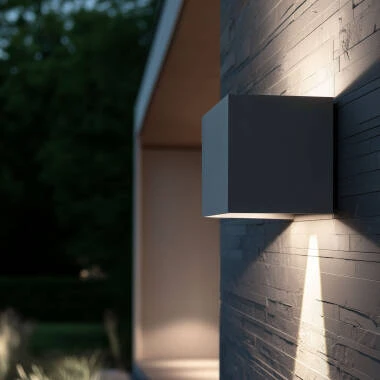
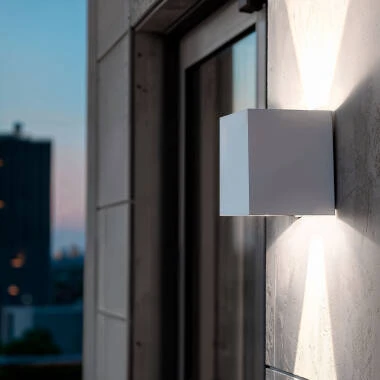
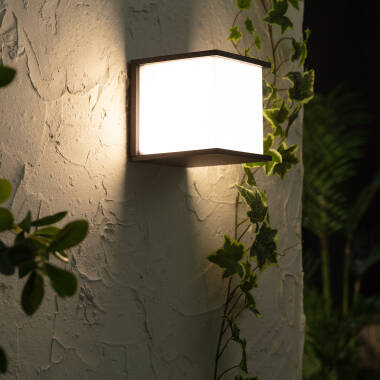
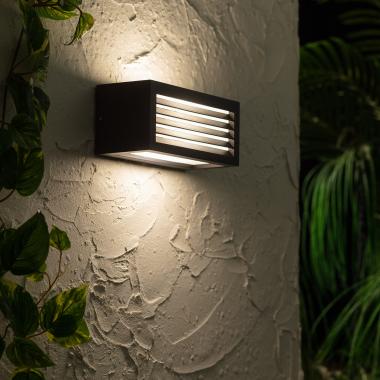
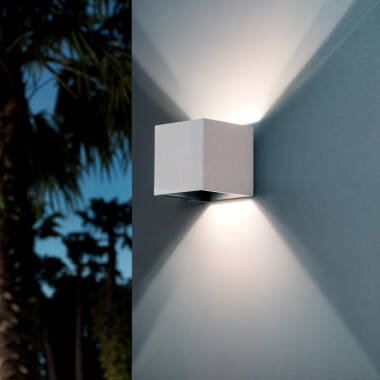
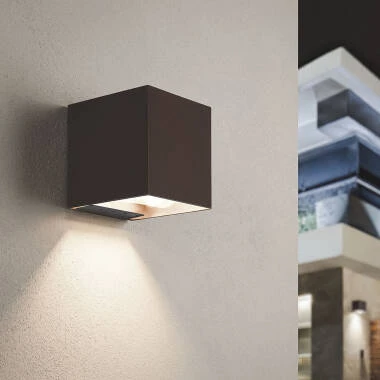
Aluminium11W Carinae Outdoor Aluminium Double Sided LED Wall Lamp
Cool White 4000K
In Stock, delivery in 15-20 days
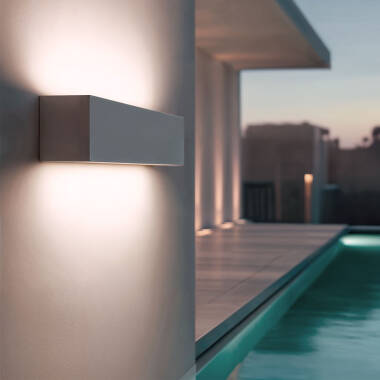
32,59 €
Ref 87915
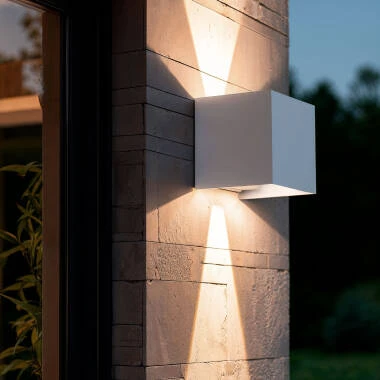
AluminiumLena 10W Rectangular Outdoor Double Sided Aluminium LED Wall Light White
Warm White 2700K
In Stock, delivery in 15-20 days





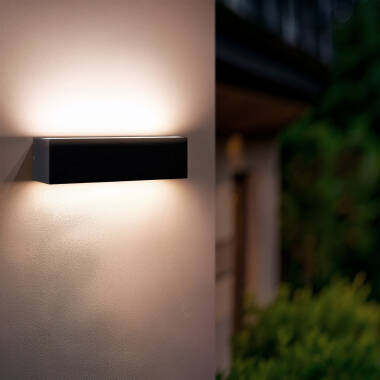
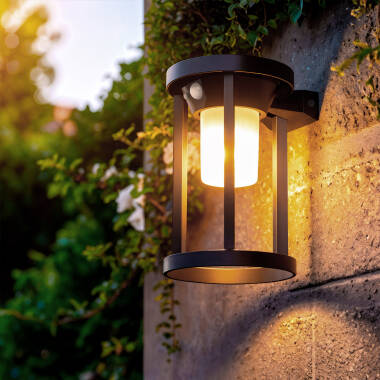
You may also be interested in
Brands related to this category


About Outdoor LED wall lights
Outdoor wall lights are luminaires designed to be installed on façades, walls, porches, terraces, patios, garages or access areas. Their function is not limited to lighting: they also help improve safety, guide movement and reinforce the exterior aesthetics of a home, business or building.
Unlike general-use wall lights, outdoor models must withstand rain, humidity, dust, solar radiation and temperature changes. For this reason, in addition to design and power, it is important to review technical aspects such as the IP rating, materials, type of light, beam orientation and finish resistance.
What are outdoor wall lights
Outdoor wall lights are luminaires installed on vertical surfaces in open-air or semi-open spaces. They are designed to provide light in areas where visibility, safety or ambience is needed without resorting to posts, bollards or ceiling luminaires.
They are commonly used at main entrances, on façades, terraces, patios, porches, garage areas, paths next to walls and access points to homes or commercial premises. Their wall installation makes it possible to take advantage of the existing architecture and keep the space clear, which is especially useful in narrow circulation areas or small terraces.
Compared with indoor wall lights, outdoor models incorporate more resistant materials and seals. Although both share decorative and functional formats, outdoor models must be prepared for more demanding environmental conditions. An indoor wall light may work correctly in a living room or bedroom, but it is not designed to withstand direct rain, condensation or prolonged sun exposure.
Decorative, functional and safety role
Outdoors, a wall light performs several functions at once. It can illuminate an entrance to locate the lock, mark a step, define a route, add light to a terrace or create a decorative effect on a façade.
The functional role is especially important in access areas, staircases, ramps and garages. Insufficient lighting can create dark areas, harsh shadows or risk points. In these cases, the light must be well oriented and offer enough output to move around safely.
The decorative aspect is also important. A dual-emission wall light can create vertical beams on the façade, a lantern-style design can add a classic look, and a modern model with straight lines can integrate into contemporary homes. The key is to combine technical resistance and visual coherence with the style of the building.
Differences compared with other outdoor lighting systems
Wall lights differ from other outdoor luminaires because they are installed on the wall. Bollard lights illuminate from the ground, floodlights usually offer more power and reach, and outdoor ceiling lights are installed in porches or covered areas. A wall light, on the other hand, uses façades and walls to create light points at mid height.
This position makes it possible to illuminate entrances and routes very effectively. It also reduces the risk of knocks compared with ground luminaires and makes maintenance easier than with points installed at great height.
In addition, wall lights can function as the main light in many residential outdoor areas. On a small terrace, a single well-placed point may be enough for ambient use. On a façade or in a large garden, it may be necessary to combine several wall lights with other solutions to achieve a more balanced distribution.
Special types of outdoor wall lights
There are different types of outdoor wall lights depending on emission form, technology, power supply system and intended use. Among all of them, solar models and those with motion sensors are the most popular.
Solar wall lights
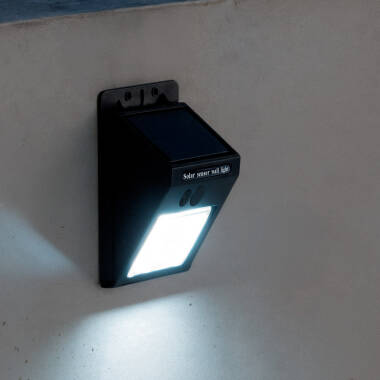
Solar wall lights work through a photovoltaic panel that charges an internal battery during the day. At night, that energy powers the luminaire without the need for a direct electrical connection.
They are especially useful in gardens, walls, patios, paths, sheds, secondary access areas or spaces where running wiring is complex. Their installation is usually simple, as they do not depend on an electrical outlet, but they need to receive sufficient solar radiation to work correctly.
To obtain good performance, they should be placed in areas with several hours of direct sunlight. In very shaded locations, north-facing areas or under deep cornices, the battery may not charge enough, reducing night-time autonomy. It is also worth checking whether the model works with continuous light, a motion sensor or different intensity modes.
Wall lights with motion sensor
Wall lights with motion sensor switch on automatically when they detect presence. They are very practical at entrances, garages, circulation areas, rear patios and secondary access points, where it is not always useful to keep the light on continuously.
Their main advantage is efficiency. The luminaire only operates when it detects movement, reducing consumption and increasing convenience. It also adds safety, as it illuminates the area when someone approaches.
In this type of wall light, it is advisable to assess the detection angle, range distance and switch-on time. In a narrow entrance, a short-range sensor may be enough, while in a garage or large patio, a wider angle may be necessary.
How to choose outdoor wall lights
Choosing an outdoor wall light requires paying attention to more factors than with an indoor luminaire. Aesthetics remain important, but resistance, watertightness and installation quality are decisive to ensure long-lasting operation.
The choice should start from the exact place where it will be installed. A covered porch is not the same as a fully exposed façade, a protected terrace is not the same as a wall next to a garden, and a high-traffic access area is not the same as an occasionally used decorative area.
IP rating and protection against weather exposure
The IP rating indicates the degree of protection against solids and liquids. In outdoor lighting, it is one of the most important criteria. The first digit refers to protection against dust or solid bodies, and the second to protection against water.
For covered outdoor areas, such as porches or protected terraces, IP44 may be sufficient, the same rating as bathroom wall lights, since there is no direct exposure to rain. On façades, walls, gardens or more exposed access areas, it is advisable to choose higher values.
An IP65 wall light offers full protection against dust and resistance to water jets, making it a common choice for exposed outdoor areas. In very demanding areas, with heavy rain, nearby irrigation or humid environments, it is worth considering higher protection ratings and especially careful installation.
Materials and finish resistance
Materials must withstand humidity, sun, temperature variations and, in some cases, corrosive environments. Aluminium, stainless steel, technical polymers and certain anti-corrosion finishes are common in outdoor luminaires.
In areas close to the sea, salt corrosion can damage metal finishes if they are not prepared for it. In these cases, it is advisable to prioritise resistant materials and review the recommended maintenance.
It is also important to assess the diffuser. Glass usually withstands ageing well and provides a good visual perception, while some technical plastics offer lightness and impact resistance. In any case, the material should maintain its transparency or diffusion over time.
Power, lumens and lighting level
To choose correctly, it is advisable to look at lumens, not only watts. Watts indicate consumption, while lumens indicate the amount of light emitted.
At an entrance or main door, a wall light of 600 to 1200 lumens can provide comfortable lighting to identify locks, steps and nearby areas. On an ambient terrace, lower flux levels may be enough if a warm and relaxed light is desired. In garages, large patios or access areas, it may be necessary to increase the flux or combine several points.
Distribution also matters. A very powerful wall light that is poorly oriented can cause glare and leave areas in shadow. Outdoors, well-directed and well-distributed light is usually preferable to an excessively intense luminaire.
Outdoor colour temperature
Colour temperature influences the feel of the space and its integration with the architecture. For residential outdoor areas, 3000K is usually a very balanced option: it offers good visibility without creating cold or aggressive light.
Warmer tones, between 2200K and 2700K, work well on terraces, patios, porches and ambience areas. They create more welcoming lighting and reduce the sensation of technical light. Neutral 4000K light can be suitable for garages, functional access points, outdoor work areas or spaces where greater clarity is desired.
It is advisable to avoid overly cool temperatures in rest areas or terraces, as they can feel less comfortable and create an unnatural atmosphere.
Light direction and glare
Outdoors, glare can be especially annoying if the luminaire points towards windows, rest areas or nearby homes. For this reason, it is important to choose designs that control emission well.
Models with downward light are suitable for entrances and routes, as they illuminate the ground and reduce scattered light. Dual-emission wall lights add a decorative effect, but they should be placed at a height that does not disturb the eyes. Designs with an opal diffuser soften the light and can be suitable for terraces or porches.
Good orientation improves safety without creating excess light. On outdoor staircases, changes in level or access points, the priority should be to see the walking plane clearly and avoid harsh shadows.
Applications of outdoor wall lights
Outdoor wall lights are used in many areas of a building, from main entrances to private terraces or circulation spaces. Each application requires a different combination of resistance, power, design and light control.
- Entrances and main doors: lighting should allow the door, lock and any step to be clearly recognised, but without being uncomfortable to the eyes. Models that project light downwards or incorporate a soft diffuser usually offer a more comfortable result, and if they also include a motion sensor, they add extra practicality. Choosing a design that matches the façade helps maintain a coherent aesthetic.
- Façades and exterior walls: here, the wall light fulfils both a practical and decorative function. Dual-beam models or those with downward light make it possible to highlight the wall surface while illuminating the surroundings. Maintaining a balanced distribution and choosing well-oriented warm light helps the whole composition integrate naturally into the outdoor space.
- Terraces, porches and patios: in these areas, it is advisable to opt for lighting that invites people to spend time there, with warm tones between 2700K and 3000K and soft diffusion that avoids abrupt contrasts. In large spaces, combining several light points helps create a more uniform ambience, while the protection rating should be adjusted according to weather exposure.
- Garages and parking areas: in these spaces, the priority is to see well and move safely. Motion sensors are very practical, and correct luminaire orientation avoids unnecessary glare.
- Outdoor staircases and circulation areas: lighting should accompany the route and clearly mark changes in level, avoiding shadows that could hide steps. Wall lights placed at mid height or grazing light help signal the path, and presence sensors add convenience by switching the light on only when necessary.
In all cases, lighting should respond to the real use of the space. A terrace for dining needs different light from a garage, just as a decorative façade does not require the same level as an outdoor staircase.
Installation and maintenance of outdoor wall lights
Good installation is key for an outdoor wall light to work correctly for years. Even a luminaire with a high IP rating can fail if the connection is not well protected or if it is installed in an unsuitable position.
Before installation, it is advisable to review orientation, height, electrical point and type of surface. It is also important to anticipate whether there will be nearby irrigation, direct exposure to rain or dirt accumulation.
Installation height
Height depends on use. At entrances and on façades, wall lights are usually installed between 160 and 220 cm from the floor, depending on the design of the luminaire and the desired effect. This height makes it possible to illuminate the access area without the light being too low.
On terraces or porches, they can be placed slightly higher to distribute light better. On staircases or routes, height can be adjusted to mark steps or changes in level.
The important thing is to prevent the light source from being directly at eye level, especially in narrow circulation areas. Poor height can cause glare even if the power is suitable.
Sealing and electrical connection
In mains-connected wall lights, the connection must be protected against humidity. The cable entry, fixing base and joint with the wall must be correctly sealed.
If the wall is irregular, such as stone or rough brick, it may be necessary to reinforce the sealing to prevent water ingress. It is also advisable to check that the wiring and mechanisms are suitable for outdoor use.
In new installations or renovations, it is recommended to plan the light points before finishing the façade or cladding. This makes it possible to place the wall lights in the correct position and avoid improvised solutions.
Cleaning and periodic inspection
Outdoor wall lights are exposed to dust, rain, insects and environmental dirt. Periodic cleaning helps maintain luminous flux and the appearance of the finish.
It is advisable to check diffusers, seals, screws and joint areas with the wall. If cracks, water ingress or loss of watertightness are observed, it is better to act before the electrical part is damaged.
In coastal areas or humid environments, maintenance should be more frequent to avoid corrosion and premature deterioration.
Frequently asked questions about outdoor wall lights
What IP rating should an outdoor wall light have?
For covered outdoor areas, such as porches or protected terraces, IP44 may be sufficient. On exposed façades, patios, gardens or walls with direct rain, IP65 is recommended.
How many lumens does an outdoor wall light need?
It depends on the use. For a main entrance, between 600 and 1200 lumens can provide comfortable lighting. For an ambient terrace, a lower flux may be enough, especially if combined with other light points.
In garages, large patios or circulation areas, it may be necessary to install several wall lights or use models with higher flux. More important than power is distribution: well-oriented light improves visibility without causing glare.
What colour temperature is best for outdoors?
In residential outdoor areas, 3000K is usually the most balanced option. It provides good visibility and maintains a warm ambience. For terraces, porches or rest areas, temperatures from 2200K to 2700K also work well.
Can I install an indoor wall light outdoors?
It is not recommended. An indoor wall light is normally not prepared to withstand rain, humidity, dust or temperature changes. Even if installed under cover, condensation and ambient humidity can damage it.
Which outdoor wall light should I choose for a terrace?
For a terrace, it is advisable to choose a wall light with warm or neutral light, soft diffusion and suitable protection according to exposure. On covered terraces, IP44 may be sufficient, while in open areas IP65 is recommended.