
E40 LED bulbs
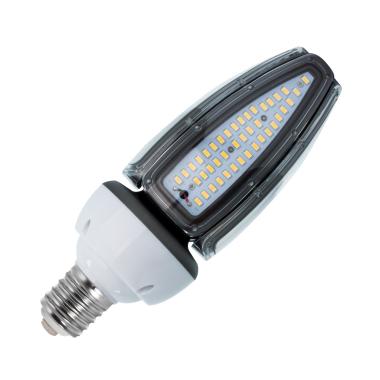
E40 LED bulbs are large-format light sources designed to replace high-power lamps in industrial installations, outdoor lighting and large spaces. They are characterised by their large-diameter screw base and their ability to provide efficient lighting in environments where high light output and prolonged operation are required.
Our featured products from E40 LED bulbs
- -15%
Expert
Before 29,29 €
24,99 €
Ref 152151
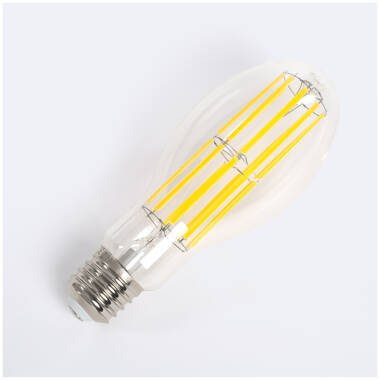
E40 ED90 Filament LED Bulb 40W 8400lm High Efficiency 210lm/W for Public Lighting Class A
In Stock, delivery in 15-20 days
- Wattage 40 W
- Voltage Range 220-240V AC
- Lumen 8400 lm
3 options 
Expert
28,19 €
Ref 152157
E40 T46 Filament LED Bulb 40W 8400lm High Efficiency 120lm/W for Public Lighting Class A
In Stock, delivery in 15-20 days
- Wattage 40 W
- Voltage Range 220-240V AC
- Lumen 8400 lm
3 options- -50%
Advanced
Before 53,99 €
27,19 €
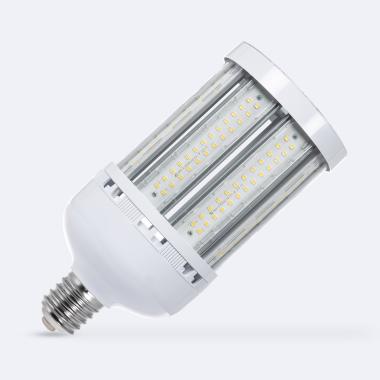
- Wattage 80 W
- Voltage Range 220-240V AC
- Lumen 10400 lm
2 options 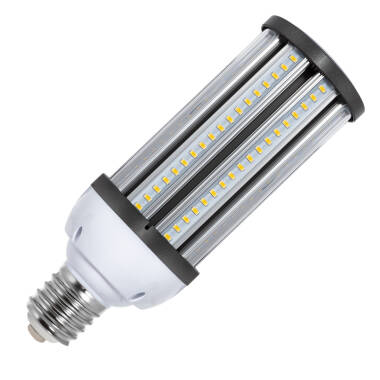
Advanced
33,79 €
 (11)
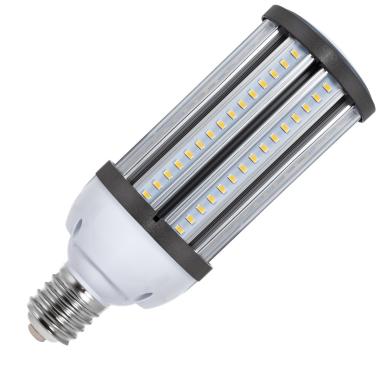
(11)- Wattage 54 W
- Voltage Range 220-240V AC
- Lumen 5940 lm







You may also be interested in
About E40 LED bulbs
LED bulbs make it possible to adapt lighting to a wide range of environments through different bases, wattages, luminous flux levels, colour temperatures and formats for domestic and professional applications.
E40 LED bulbs for high-power lighting
E40 LED bulbs combine a large-diameter screw base with wattages and luminous flux levels designed primarily for professional installations. This format makes it possible to replace certain conventional lamps while retaining the existing lamp holder when the installation allows it.
Their use is particularly beneficial in installations that remain switched on for many hours a day. Reducing consumption by several dozen watts per light point can result in significant energy savings when there are dozens or hundreds of light fittings.
LED technology also provides instant light and allows parameters such as colour temperature and beam distribution to be selected precisely. These features make it possible to use an E40 bulb in an industrial building, an outdoor light fitting or a large commercial space.
What is an E40 base?
E40 is a screw base belonging to the Edison family. Its size is intended for light sources with higher power ratings and larger dimensions than those commonly used in residential lighting.
Dimensions and characteristics of the E40 screw base
The E40 designation refers to an Edison screw thread with a diameter of approximately 40 mm. The connection is made through the lateral metal thread and the electrical contact located at the base.
Its larger size provides secure support for bulbs with greater dimensions and weight. For this reason, it is frequently found in industrial, road and professional light fittings originally designed for high-power discharge lamps.
When replacing a lamp, visually identifying the screw thread is not enough. The operating voltage, available internal space and electrical system used by the light fitting must also be checked.
Differences between E40 and E27 bases
E40 and E27 use the same Edison screw principle, but their dimensions are clearly different. E27 has a nominal diameter of around 27 mm, while E40 measures approximately 40 mm.
This difference prevents the two bulbs from being directly interchangeable. An E40 light source cannot be screwed into an E27 lamp holder and vice versa.
They are also generally associated with different applications. E27 is very common in general lighting, while E40 is more frequently associated with high wattages, high luminous flux and professional light fittings.
Where are E40 LED bulbs used?
The E40 format is mainly used where each light point needs to cover large areas or operate for extended periods. It is commonly found in both outdoor installations and industrial and commercial spaces.
Public spaces
This base can also be found among LED bulbs for street lighting, where high-power formats may be used when streets, squares, pedestrian areas, car parks or other outdoor spaces need to be illuminated.
In these applications, it is important to consider not only the lumens emitted but also how they are distributed. A very powerful light source with unsuitable optics may concentrate too much light in one area while leaving other areas insufficiently illuminated.
Attention should also be paid to protecting the light fitting against moisture, dust and temperature changes. The protection rating applies to the complete light fitting, not just the installed bulb.
Industrial buildings and warehouses
Industrial bulbs with an E40 base can be used in certain light fittings in industrial buildings, warehouses, workshops and production areas where high luminous flux levels are required.
With high ceilings, the number of lumens and the beam angle become particularly important. The light has to travel a greater distance before reaching the working plane, so electrical wattage alone is not enough to assess performance.
Reduced maintenance is also an important consideration. Replacing a light source located six, eight or more metres above the ground may require access platforms and temporarily disrupt a work area.
Commercial and professional applications
E40 bases can also be found in certain commercial spaces, markets, sports facilities and service areas.
A colour temperature of around 4,000 K generally provides a neutral appearance suitable for many professional applications. In other environments, warmer light at around 3,000 K may be preferred, or a higher colour temperature when a cooler visual appearance is required.
How to choose an E40 LED bulb
To select the right E40 bulb, the lighting requirements of the space must be considered together with the physical and electrical characteristics of the existing installation.
Wattage and luminous flux
Wattage indicates electrical consumption, while luminous flux is expressed in lumens. When switching to LED, this second value is essential for estimating the amount of light available.
Two bulbs with the same wattage may provide different lumen outputs due to differences in efficiency. It is therefore advisable to compare both values and also assess how the light is distributed.
Colour temperature
Colour temperature affects the appearance of a space. 3,000 K produces warm light, while around 4,000 K provides a neutral tone widely used in professional environments.
Temperatures of around 5,000 or 6,000 K provide a cooler appearance. Before choosing, it is advisable to maintain consistency with the other light points to avoid visible differences within the same installation.
Beam angle
The beam angle determines how the luminous flux is distributed. A bulb with a very wide distribution may be suitable for open light fittings or installations at low height.
With high ceilings, a more concentrated distribution may be preferable in order to direct a greater proportion of the luminous flux towards the floor or working plane.
For this reason, two light sources with the same lumen output can produce very different illuminance levels on a surface.
Dimensions and ventilation of the light fitting
High-power E40 LED bulbs may have bulky bodies due to their heat dissipation systems. Their diameter and length should therefore be checked before installation.
There must also be sufficient space around the bulb to allow heat to dissipate. A light fitting that is too enclosed may restrict the cooling of the electronics.
What to check before replacing an E40 lamp with LED
Replacing an E40 lamp does not always simply involve unscrewing one lamp and installing another. Traditional installations may include auxiliary equipment that must be checked before making the change.
Compatibility with auxiliary equipment
Discharge lamps may operate with ballasts, ignitors or capacitors. An LED bulb may require a different power supply and, depending on its design, may require these components to be removed or modified.
Keeping incompatible auxiliary equipment can cause start-up failures, irregular operation or damage to the new light source.
When changes to the electrical installation are required, the work must be carried out according to the connection diagram specified for the bulb and by qualified personnel.
Installation type and supply voltage
The voltage supported by the LED bulb and the supply available at the light fitting must also be checked.
The fact that two light sources share the same E40 base does not necessarily mean that they operate under the same electrical conditions. The voltage indicated on the new bulb must match the installation voltage once any existing auxiliary equipment has been taken into account.
Frequently asked questions about E40 LED bulbs
Can an E40 bulb be fitted into an E27 base?
Not directly. The E40 base has a diameter of approximately 40 mm, while E27 measures around 27 mm, so the screw threads are not compatible. Adapters are available between certain base types, but their use should be assessed taking into account the weight of the bulb, wattage, dimensions and the electrical and thermal conditions of the light fitting.
What LED wattage replaces a traditional E40 lamp?
There is no single LED wattage that is equivalent to every traditional E40 lamp. The base only defines the connection system, not the amount of light produced by the source. To select a suitable replacement, the luminous flux in lumens of the existing lamp, its light distribution and the actual requirements of the space must be compared.
Does the installation need to be modified when switching to LED?
In some cases, yes. E40 light fittings that operate with discharge lamps may include ballasts or other auxiliary equipment that is either unnecessary or incompatible with the new LED light source. Whether modifications are required depends on the design of the chosen bulb. Before replacing it, the connection diagram should be checked and the required power supply method confirmed.