
B22 LED bulbs
B22 LED bulbs provide efficient, long-lasting lighting through a practical bayonet cap, making them suitable for upgrading domestic and professional light fittings with LED technology.
Our featured products from B22 LED bulbs
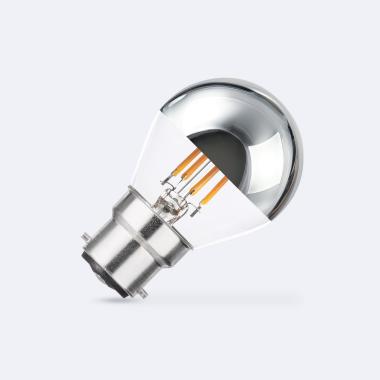
Essential
1,73 €
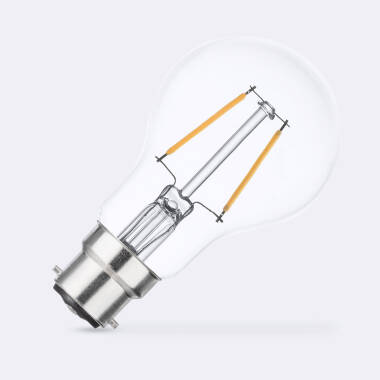
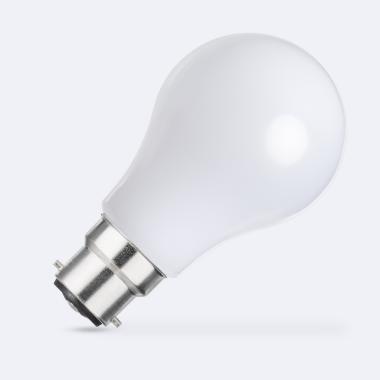
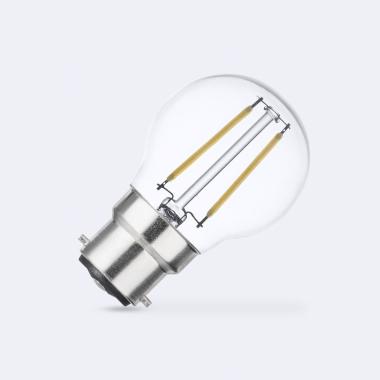
- Wattage 4 W
- Voltage Range 220-240V AC
- Lumen 400 lm
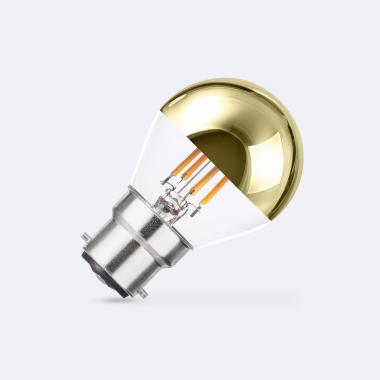
2,35 €
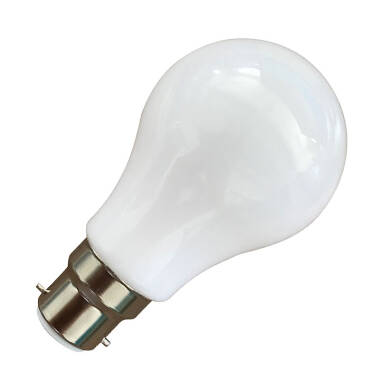
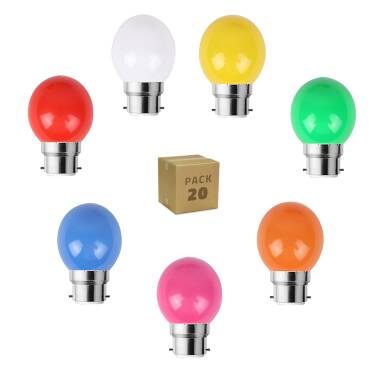
- Wattage 4 W
- Voltage Range 220-240V AC
- Lumen 400 lm
- -51%
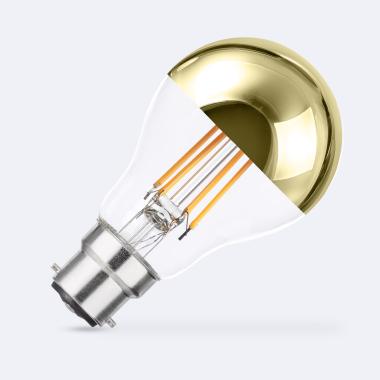
Essential
Before 3,19 €
1,58 €
Ref 112245
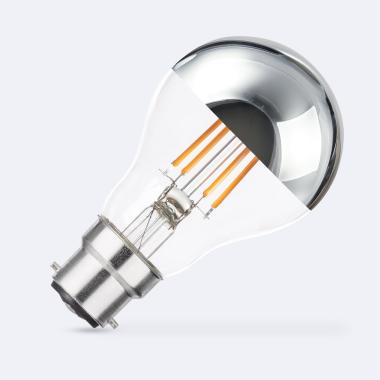
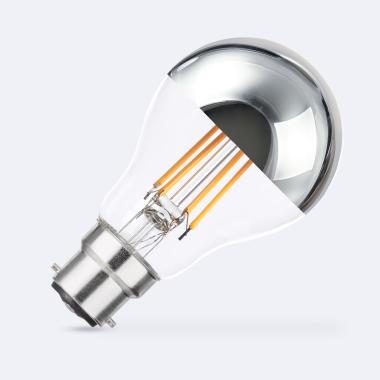
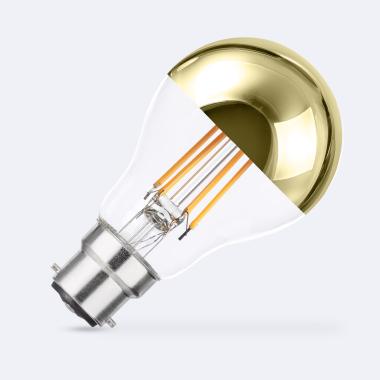
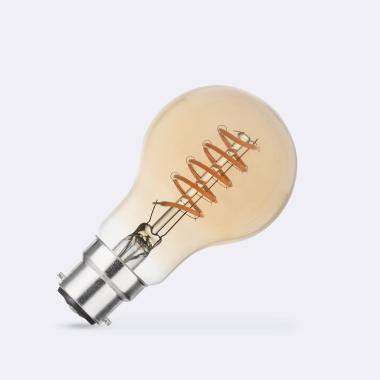
AdjustableB22 Dimmable LED Bulb 8W A60 800 lm Gold Reflect
In Stock, delivery in 15-20 days
- Wattage 8 W
- Voltage Range 220-240V AC
- Lumen 800 lm
- -51%
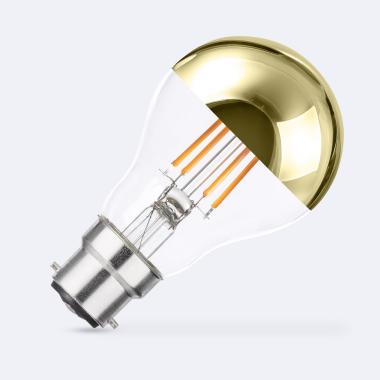
Essential
Before 3,19 €
1,58 €
Ref 112224
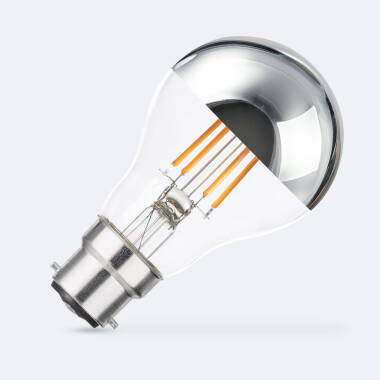
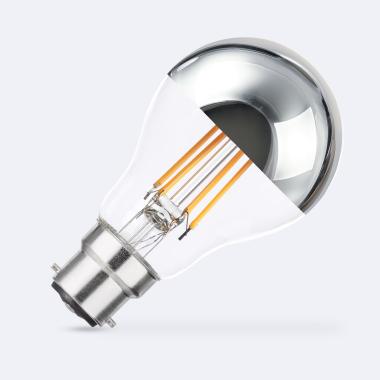
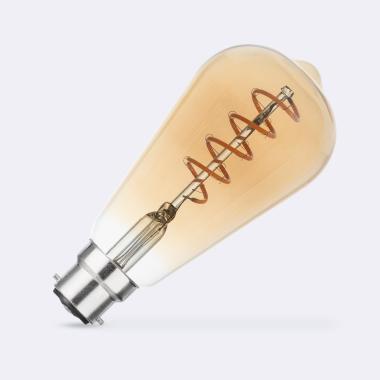
AdjustableB22 Dimmable LED Bulb 6W A60 600 lm Gold Reflect
In Stock, delivery in 15-20 days
- Wattage 6 W
- Voltage Range 220-240V AC
- Lumen 600 lm





You may also be interested in
About B22 LED bulbs
LED bulbs combine low energy consumption, long service life and a wide range of lighting options to meet the needs of homes, shops and professional spaces.
B22 LED bulbs: efficient lighting
B22 LED bulbs combine the energy efficiency of LED technology with a cap designed to lock into place through pressure and a short twisting motion. They are a practical solution when an installation needs to be upgraded without replacing compatible lamp holders or light fittings.
This format is particularly practical in installations where B22 lamp holders are already in use and the aim is to reduce energy consumption compared with older incandescent, halogen or energy-saving bulbs. A modern LED bulb can provide similar levels of illumination while using a fraction of the electrical power required by older technologies. The B22 cap is particularly common in the United Kingdom and Ireland, where it is also often referred to as BC, short for Bayonet Cap, and remains widely used in homes and light fittings.
In addition to energy savings, LED technology makes it possible to select characteristics such as light colour and brightness more precisely. This makes it easier to adapt the same B22 connection to very different environments, from a room in the home to communal areas in shops or customer-facing spaces.
What is a B22 LED bulb?
A B22 LED bulb is a light source that uses light-emitting diodes and connects via a bayonet cap with a diameter of approximately 22 mm. The B22 designation refers specifically to the connection system and its nominal size.
Characteristics of the B22 cap
Unlike screw caps, the B22 uses small side pins that fit into slots in the lamp holder. To install the bulb, the cap is inserted with gentle pressure and then turned slightly until it locks into place.
This mechanism provides a secure hold and allows the bulb to be installed or removed without the need for several complete turns. In installations where light sources are replaced periodically, this feature makes maintenance easier.
How to identify a B22 bulb
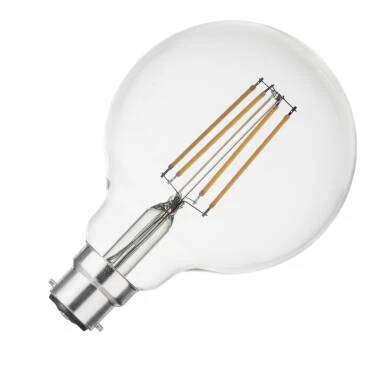
The easiest way to identify a B22 bulb is to look at its base. The cap has two small metal pins on the sides that allow it to lock into place using the bayonet system, as well as, typically, two contacts on the bottom.
It can also be identified by checking the reference printed on the bulb itself, its packaging or the specifications of the light fitting. The B22 or B22d marking usually appears alongside other information such as wattage, luminous flux, operating voltage or colour temperature.
It should not be confused with connections of a similar size. Before replacing a bulb, it is advisable to check both the diameter and the fixing system, particularly in older light fittings where the type of lamp holder may not be immediately obvious.
Where are B22 LED bulbs used?
B22 LED bulbs can be found in both residential and professional environments. Their use depends mainly on the type of lamp holder installed and the lighting requirements of each space.
Applications in domestic lighting
In homes, they can be used in ceiling lights, table lamps, floor lamps and other types of light fittings. The luminous flux required will depend on the size of the room, the presence of other light sources and the intended use.
For ambient lighting in bedrooms or living rooms, a warm colour temperature of around 2,700-3,000 K may be suitable. In kitchens, study areas or spaces where a more neutral perception of colours is required, temperatures close to 4,000 K are commonly used.
It is also important to check the space available inside lampshades or enclosed light fittings. Even if two bulbs use the same cap, they may have different diameters, lengths and shapes.
Use in shops, hotels and other spaces
In shops and professional environments, B22 bulbs can be used for general or ambient lighting when the existing light fittings are equipped with this type of cap.
In these settings, the number of operating hours per day is an important consideration. A lighting installation that remains switched on for eight or ten hours a day quickly accumulates thousands of hours of use, so energy efficiency and service life have a direct impact on operating and maintenance costs.
Colour temperature also influences the atmosphere. Light between 2,700 and 3,000 K creates a warm appearance associated with relaxation areas and hospitality environments, while around 4,000 K provides a more neutral feel that is suitable for work areas and certain commercial spaces.
How to choose a B22 LED bulb
Choosing the right B22 bulb means combining physical and electrical compatibility with the required lighting characteristics. Wattage alone is not enough to determine whether a bulb will light a space adequately.
Wattage and lumens
When replacing an older bulb, luminous flux should be the main criterion. An LED bulb producing around 800 lumens can be used as a reference for replacing a traditional 60 W incandescent bulb, although the exact equivalence may vary depending on the efficiency of each light source.
For higher lighting requirements, bulbs producing more than 1,000 or 1,500 lumens are available. In these cases, it is also advisable to check the dimensions and heat dissipation capacity, as higher-output models may have a slightly larger body.
Colour temperature: warm, neutral or cool light
Colour temperature is measured in kelvin and determines the visual appearance of the light. Between 2,700 and 3,000 K, the result is a warm tone with yellowish nuances that is commonly used in living rooms, bedrooms and relaxation areas.
At around 4,000 K, the light has a neutral appearance, making it suitable for kitchens, shops, offices and spaces where good visibility is required without an excessively cool tone.
Values close to 6,000-6,500 K produce cool light with a more noticeable blue component. This can be suitable for certain technical or work areas, although it is not always appropriate for spaces intended for relaxation.
Beam angle and bulb shape
The beam angle indicates how the light is distributed. A bulb with a wide beam angle spreads the luminous flux across a broad area, while a narrower beam concentrates the lighting in a specific direction.
For lamps with shades, open light fittings or general lighting, wider light distributions are usually more suitable. By contrast, when the fitting directs light towards a specific area, a more controlled optical distribution may be preferable.
The physical shape of the bulb should also be checked. Standard, globe, candle and other shapes are available with B22 caps. The choice should take into account the internal space of the light fitting and the position that the light source will occupy.
Replacing traditional B22 bulbs with LED
Replacing a conventional B22 bulb with an LED version is generally straightforward, provided that the same cap and a compatible operating voltage are used. The change can reduce energy consumption without necessarily requiring the lamp holder to be replaced.
Before carrying out the replacement, the power supply should be switched off and the existing bulb allowed to cool. The bulb can then be removed by applying gentle pressure and twisting the cap to release the bayonet pins. The new bulb is installed by following the same process in reverse.
When choosing a replacement, it is advisable to compare the lumens of the new light source with the amount of light required. The dimensions of the bulb should also be checked, especially when it is being installed inside globes, narrow lampshades or enclosed light fittings.
In fully enclosed light fittings, attention should be paid to the permitted operating temperature. LEDs produce less heat overall than incandescent technologies, but their electronic components still need to dissipate heat effectively in order to preserve their service life.
Frequently asked questions about B22 LED bulbs
Are all B22 bulbs the same size?
The cap has standardised dimensions to ensure compatibility with the lamp holder, but the body of the bulb can vary considerably. A globe bulb, a candle bulb and a standard bulb may all use a B22 connection while having different lengths and diameters. For this reason, when space is limited, it is advisable to check the full dimensions rather than just the cap type.
What is the difference between B22 and E27?
The main difference lies in the connection system. B22 uses a bayonet cap of approximately 22 mm in diameter that is secured by pressure and a short twisting motion. E27 uses a screw cap of approximately 27 mm in diameter. Although both formats are commonly used for general lighting bulbs, they are not directly interchangeable.
Can B22 LED bulbs be used with a dimmer?
Yes, but only when the B22 bulb is specifically designed to be dimmable. This feature should be clearly stated in its specifications. In addition, the dimmer must be compatible with LED technology and operate correctly within the connected wattage range. An incompatibility between the bulb and dimmer can cause flickering, irregular operation or make it impossible to reach certain brightness levels.
What is the difference between B22 and E27?
The main difference lies in the connection system. B22 uses a bayonet cap of approximately 22 mm in diameter that is secured by pressure and a short twisting motion. E27 uses a screw cap of approximately 27 mm in diameter. Although both formats are commonly used for general lighting bulbs, they are not directly interchangeable.
Can B22 LED bulbs be used with a dimmer?
Yes, but only when the B22 bulb is specifically designed to be dimmable. This feature should be clearly stated in its specifications. In addition, the dimmer must be compatible with LED technology and operate correctly within the connected wattage range. An incompatibility between the bulb and dimmer can cause flickering, irregular operation or make it impossible to reach certain brightness levels.