
E27 LED bulbs
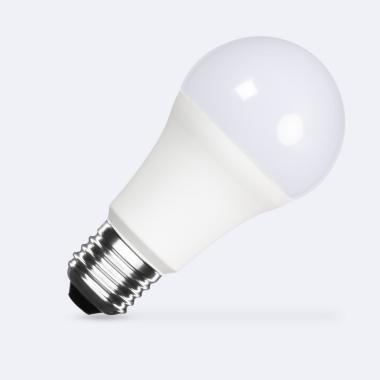
E27 LED bulbs combine the most widely used screw base with efficient technology, offering numerous options in terms of wattage, format, colour and light distribution.


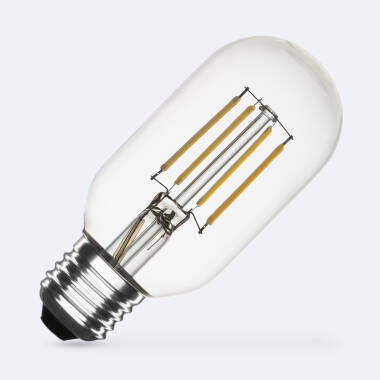
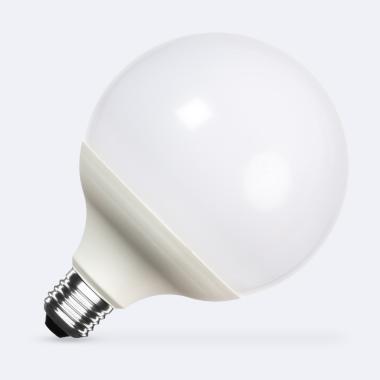
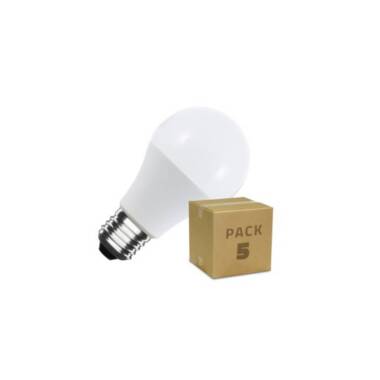
Our featured products from E27 LED bulbs
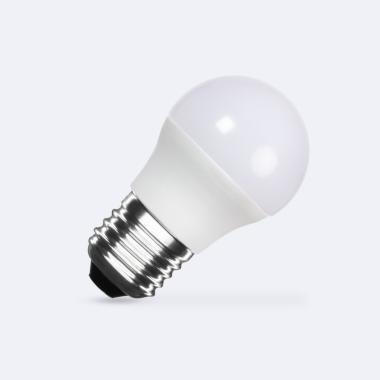
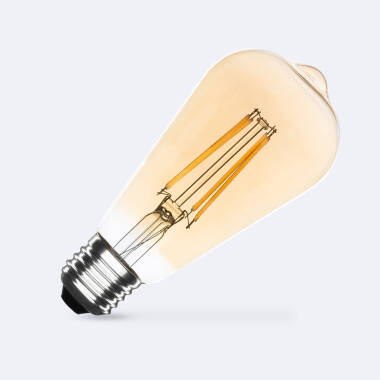
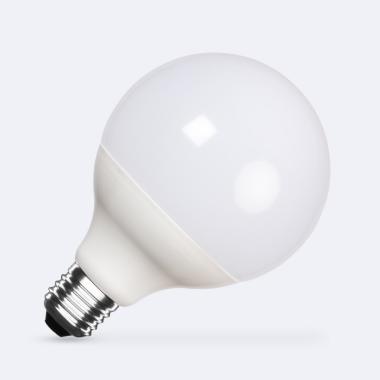
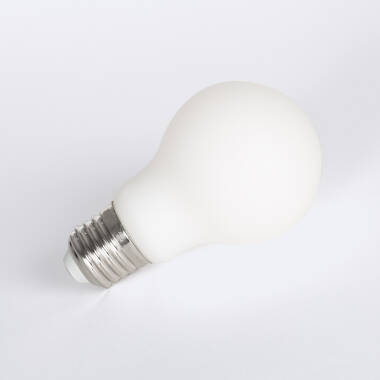
Essential
1,08 €
- Wattage 6 W
- Voltage Range 220-240V AC
- Lumen 550 lm
3 options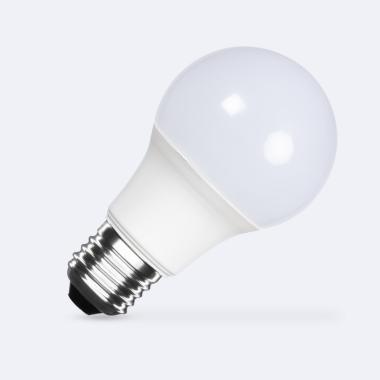
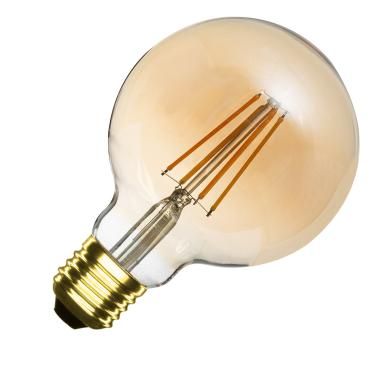
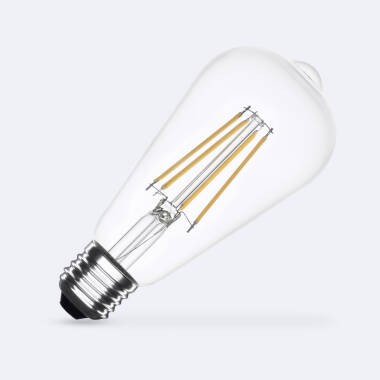
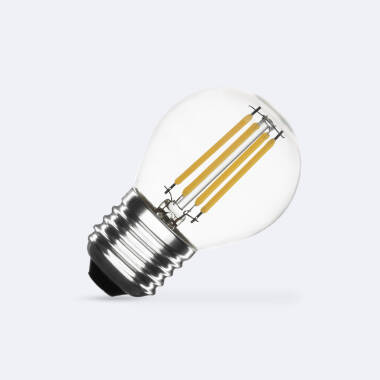
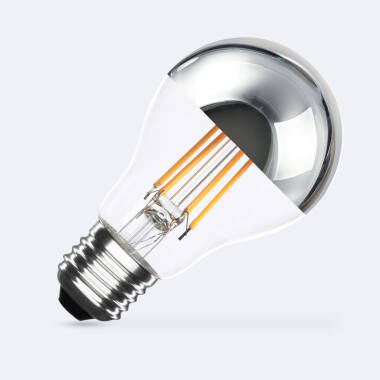
Essential
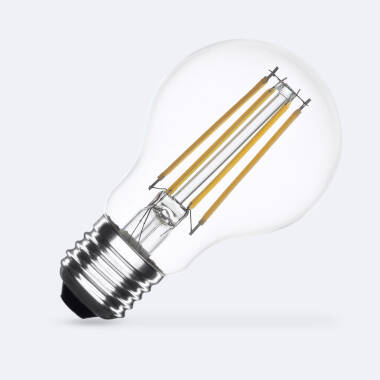
1,22 €
- Wattage 5 W
- Voltage Range 220-240V AC
- Lumen 470 lm
3 options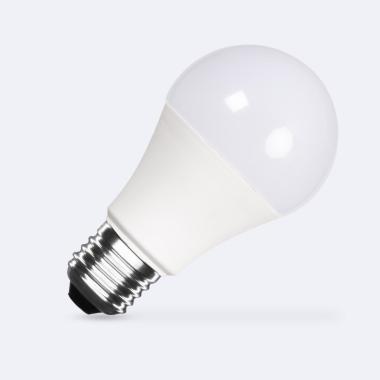
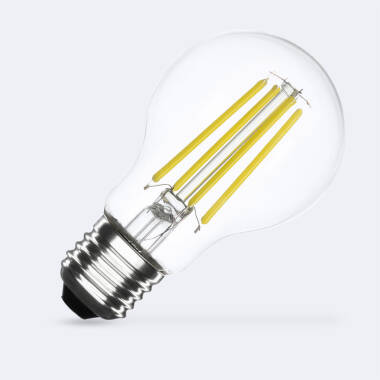
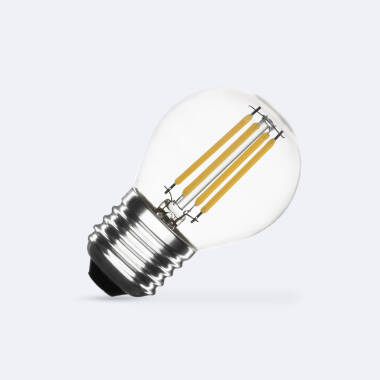
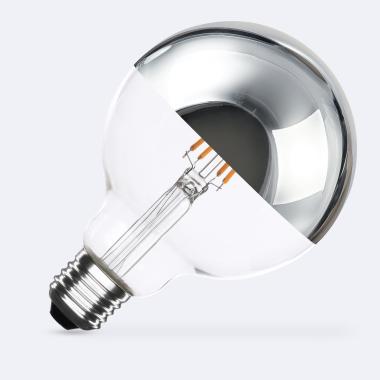
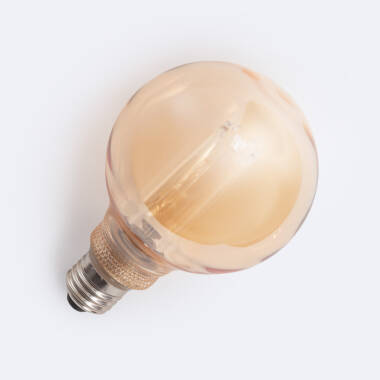
Essential
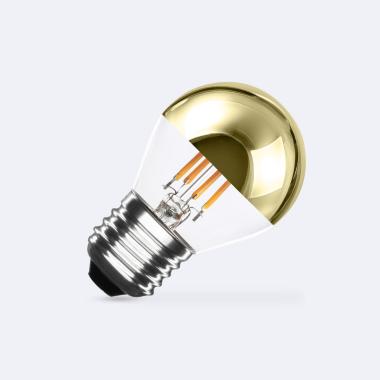
1,08 €
- Wattage 10 W
- Voltage Range 220-240V AC
- Lumen 1000 lm
3 options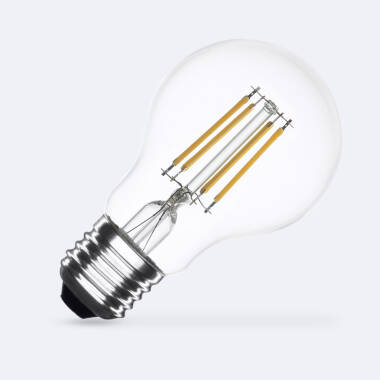
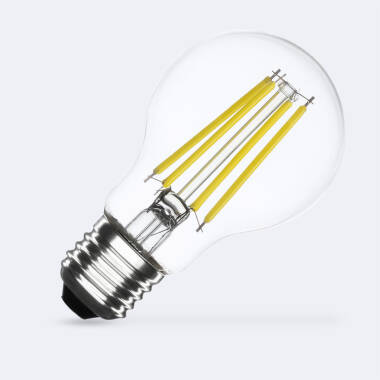
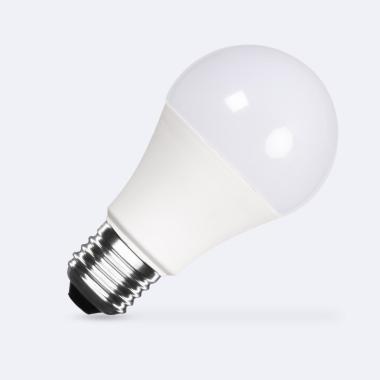
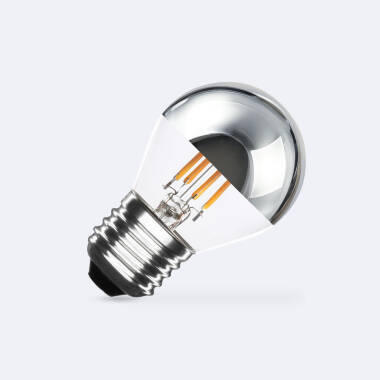
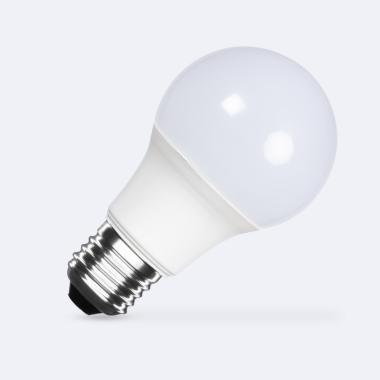
Essential
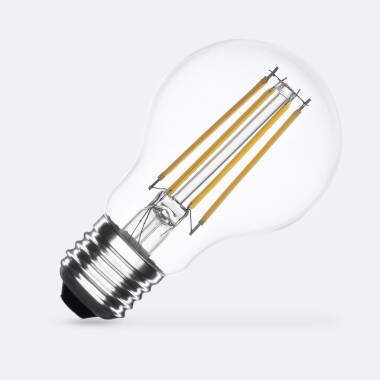
1,40 €
 (21)
(21)- Wattage 6 W
- Voltage Range 220-240V AC
- Lumen 720 lm
2 options





Brands related to this category


About E27 LED bulbs
Their compatibility with ceiling lights, table lamps, wall lights and professional luminaires makes them one of the most commonly used bulbs, both for replacing traditional lamps and for new installations.
How to identify an E27 base
The E27 base belongs to the Edison screw family and is identified by its approximate diameter of 27 mm. It is important to check this measurement before replacing a bulb, as there are other bases with a similar appearance but different dimensions.
The letter E comes from the Edison screw system, while the number 27 refers to the nominal diameter of the thread in millimetres. The bulb is installed by screwing it directly into the lamp holder until it is securely fixed and the electrical contacts are properly connected.
At first glance, E27 can be confused particularly with E14 and E40 bases. E14, at around 14 mm in diameter, is considerably narrower and is mainly used in small lamps, candle-style bulbs and decorative luminaires. E40, by contrast, has a thread of approximately 40 mm and is mainly intended for larger and more powerful light sources used in industrial or professional applications.
It is therefore not enough to check that the bulb uses a screw base. If in doubt, measuring the outer diameter of the base makes it possible to identify the correct format quickly. An E27 lamp holder requires an E27 bulb; an E14 will not make proper contact and an E40 will not even fit.
How to choose your E27 LED bulb
Two E27 bulbs can have the same thread but provide very different lighting. The choice should be based on lumens, meaning the amount of light, as well as size, shape and type of light.
Watts only indicate energy consumption: 400–500 lm is usually enough for auxiliary lighting, while general lighting typically requires between 800 and 1,500 lm or more. Physical size is also important, such as A60, globe, PAR and other formats, especially in enclosed luminaires.
Colour temperature defines the atmosphere: 2700 K is warm, 3000 K is slightly whiter and 4000 K is neutral and suitable for work areas. The beam angle varies depending on the model, being wider in standard bulbs and more directional in PAR reflector bulbs. CRI indicates colour quality: >80 is standard and >90 offers more accurate colour rendering. If a dimmer is installed, the bulb must be dimmable and compatible with the dimmer to avoid faults or flickering.
Wattage equivalence: from halogen to E27 LED
When replacing an old E27 incandescent or halogen bulb with an LED version, the most reliable criterion is to compare luminous flux rather than trying to reproduce the original electrical wattage exactly.
With traditional lighting, there was a fairly well-known relationship between watts and the amount of light. With LED technology, efficiency varies between products and the same wattage can deliver different luminous outputs. This means that one 8 W LED bulb does not necessarily produce exactly the same amount of light as another 8 W model.
As a guide, an old incandescent bulb of around 40 W, which produced approximately 450–500 lm, can be replaced by an LED model of around 4–6 W depending on its efficiency. To replace a 60 W incandescent bulb, it is common to look for around 800 lm, typically available with LED power consumption close to 7–10 W.
A traditional 75 W bulb produced roughly 1,000–1,100 lm, while a 100 W bulb could provide around 1,500 lm. With LED technology, these luminous flux levels are generally achieved with much lower power consumption, although exact wattage should be considered secondary to the stated lumen output.
Halogen bulbs should also be compared using luminous flux. Although halogen technology was more efficient than conventional incandescent lighting, it still required significantly more power than an LED bulb to produce a similar amount of light.
Visual equivalence also depends on more than lumens alone. An E27 bulb producing 1,000 lm with almost omnidirectional emission can create a very different effect from a 1,000 lm reflector bulb that concentrates most of its luminous flux within a narrow beam angle. Before replacing a lamp, it is worth considering how the luminaire used the original light.
It is also not advisable to automatically install the LED bulb with the highest possible lumen output. If a luminaire was designed for ambient lighting, unnecessarily increasing the lumens can create excessive brightness or glare. The advantage of LED technology is achieving the required level of light with lower consumption, not oversizing every light point.
Types of E27 LED bulbs
The E27 screw base supports a wide variety of configurations. In addition to standard bulbs for general lighting, there are models specifically designed for dimming, connectivity, decorative lighting, directional lighting or more demanding professional applications.
Dimmable E27 LED bulbs
Dimmable E27 LED bulbs allow the luminous flux to be adjusted without changing the lamp, making it possible to adapt the same light point to different times of day or activities.
They are particularly useful in living rooms, bedrooms, restaurants and multifunctional spaces where bright lighting may be needed for certain tasks, while a lower level is preferred for creating ambience.
To use them correctly, compatibility between the bulb and the dimmer must be checked. Many dimmers originally installed for incandescent or halogen lamps were designed for much higher electrical loads than modern LED products. When LEDs are connected, flickering, sudden jumps in brightness or difficulty reaching low dimming levels can occur.
For this reason, as well as choosing an E27 bulb specifically marked as dimmable, it is advisable to use a dimmer that is compatible with LED loads.
Smart E27 LED bulbs
Smart E27 LED bulbs incorporate control electronics and connectivity so that lighting can be managed without necessarily changing the existing lamp holder.
Depending on the model, they allow the bulb to be switched on and off, schedules to be programmed, brightness to be adjusted or scenes to be created through an app or compatible home automation system. Some use a direct Wi-Fi connection, while others operate via Bluetooth or protocols that require an additional controller.
The E27 format is particularly practical for this type of lighting because it allows many conventional lamps to be converted into controllable light points simply by replacing the bulb, provided the wall switch continues supplying power whenever remote access is required.
RGB E27 LED bulbs
RGB E27 LED bulbs incorporate several LED channels capable of producing different colours by combining red, green and blue.
They are mainly used for ambient lighting, leisure spaces, hospitality, bedrooms and areas where the look and feel of the environment needs to be changed without replacing the luminaire. Many models allow colours to be selected from a remote control or app while also adjusting brightness.
For functional lighting, it is particularly useful to check whether the bulb also includes dedicated white LEDs in addition to the RGB system. RGBW models or tunable white variants can provide a more suitable white light for everyday use than a combination generated solely from the three colour channels.
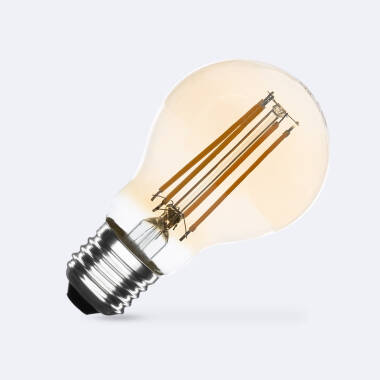
E27 LED filament bulbs
E27 LED filament bulbs combine the standard screw base with a design inspired by traditional incandescent bulbs.
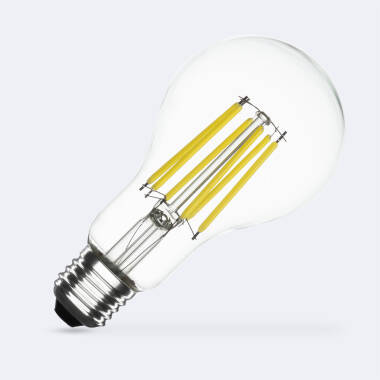
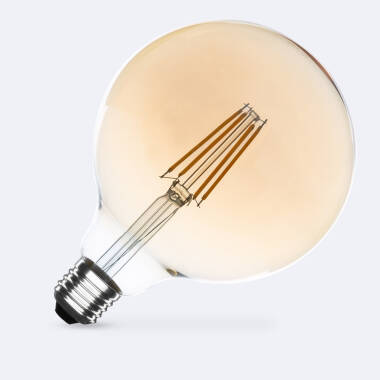
The LED filaments remain visible inside a bulb that may be clear, amber or opal. This configuration allows very wide light emission and is especially suitable for open lamps, glass luminaires, decorative string lights and designs where the bulb itself forms part of the overall appearance.
Standard, globe, pear and other decorative shapes are available. Warm colour temperatures, particularly around 2200 to 2700 K, reinforce the traditional appearance, while 3000 K versions maintain a similar aesthetic with a slightly less yellow-toned white light.
E27 LED PAR20, PAR30 and PAR38 bulbs
E27 LED PAR20, PAR30 and PAR38 bulbs use an integrated reflector to provide more directional lighting than a conventional E27 bulb.
The PAR designation identifies a family of reflector lamps, and the number is related to the diameter of the format. PAR20 is more compact, PAR30 sits in the middle and PAR38 has a larger body capable of housing larger optical systems and higher luminous outputs.
They are used in shops, shop windows, hospitality settings, ceiling spotlights and other applications where light needs to be directed. Rather than focusing only on a high lumen figure, the beam angle is particularly important with these models. A narrow optic concentrates intensity over a smaller area, while a wider beam provides broader coverage.
E27 LED bulbs for street lighting
E27 LED bulbs for street lighting are intended for certain outdoor luminaires where a screw lamp holder is retained and the existing light source is being replaced with LED technology.
They usually differ from domestic E27 bulbs in their dimensions, luminous flux and heat dissipation system. In a street light or enclosed luminaire, it is not enough to check that the thread matches: the bulb must fit correctly, distribute the luminous flux appropriately and be able to dissipate the heat generated.
Protection against water and dust must also be assessed for the luminaire as a whole. An E27 light source installed inside a street light does not automatically acquire the IP rating of the complete assembly if the enclosure, seals or installation do not maintain the intended level of protection.
Philips E27 LED bulbs
Philips E27 LED bulbs cover a range of solutions using this screw base, from standard formats for general lighting to decorative, dimmable or application-specific options.
When comparing models from the same manufacturer, the same technical parameters remain important: lumens, energy consumption, colour temperature, CRI, dimensions and dimming capability. Sharing the same base and brand does not mean that all E27 bulbs produce the same amount or distribution of light.
This makes it possible to choose a light source that is compatible with an existing installation based on the required lighting result, rather than basing the decision solely on nominal wattage.
Frequently asked questions
E27 bulbs share the same connection system, but within this format there are important differences in dimensions, power, electronics and light distribution. These are some of the most common questions when replacing or installing a bulb with this base.
Are all E27 bulbs exactly the same size?
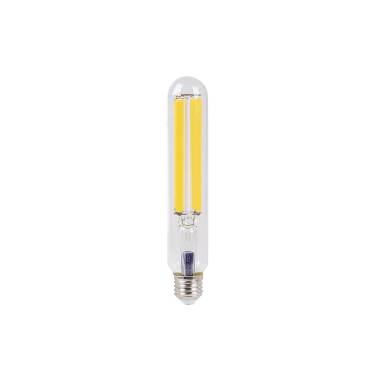
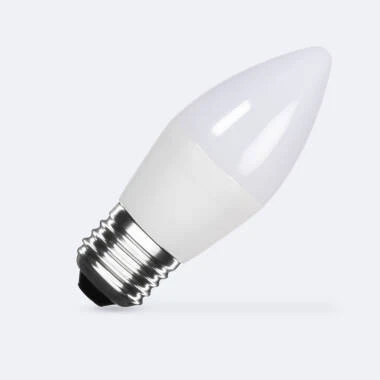
No. Only the 27 mm base is standardised; the body varies depending on the format, such as A60, globe, candle, tubular, PAR and others. Dimensions should therefore always be checked before installation in enclosed luminaires or where space is limited.
Can an E27 bulb be used in an E14 lamp holder?
No. They are not compatible because E27 measures 27 mm while E14 measures 14 mm. Although adapters are available, they are not ideal because of potential issues with fit, heat or safety, so using the correct base is preferable.
Do E27 LED bulbs operate directly at 230 V?
Yes. Although there are models that operate at 12 or 24 V, for example, most are designed for 230 V and include an integrated driver. However, the manufacturer’s voltage range should always be checked because the E27 base itself does not determine the supply voltage.
Can I install an E27 LED bulb with more watts than the original?
You should focus on lumens rather than watts, as lumens indicate the amount of light. An LED bulb can provide the same or more light while consuming less energy than an older bulb. It is therefore possible to achieve more light with lower energy consumption.
How do I know if an E27 bulb is dimmable?
It should be marked as “dimmable” on the packaging, as not all E27 bulbs support dimming. It must also be compatible with the installed dimmer to avoid flickering or a limited dimming range.
Can an E27 bulb be installed in an enclosed luminaire?
Yes, provided it physically fits and is designed for this type of installation. Heat dissipation must still be considered, as excessive temperature can reduce the lifespan of the LED.
Why can an E27 LED bulb remain faintly lit after it is switched off?
This is usually caused by residual currents in the electrical installation, such as those from illuminated switches or dimmers. These small currents can be enough to partially energise the LED and cause a faint glow or flickering.
Can I replace a traditional E27 bulb with LED without changing the lamp?
Yes, if the base and supply voltage are compatible. However, it is advisable to check the dimensions, lumens, type of light and whether the luminaire is enclosed or dimmed to ensure correct operation.