
Industrial Wall Lamps

Pendant
Show All

Table
Show All

Floor
Show All

Wall
Show All

Ceiling
Show All


Our featured products from Industrial Wall Lamps
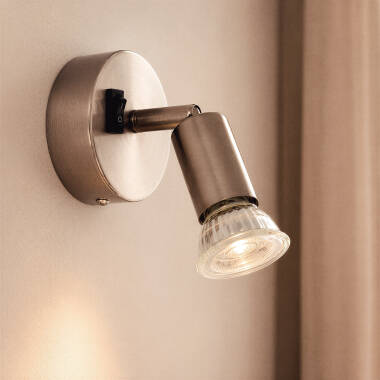
8,09 €
Ref 5369
AluminiumOasis Adjustable Aluminium 1 Spotlight Wall Lamp with Switch in Silver
Silver
In Stock, delivery in 15-20 days






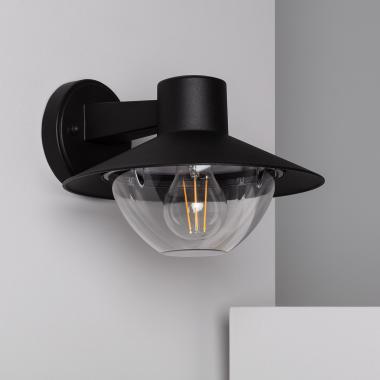
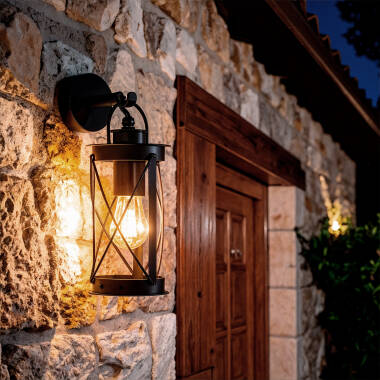
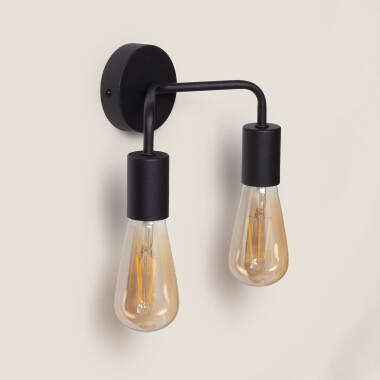
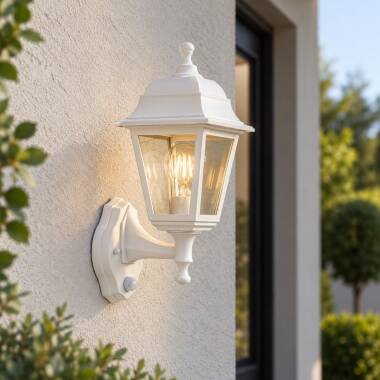
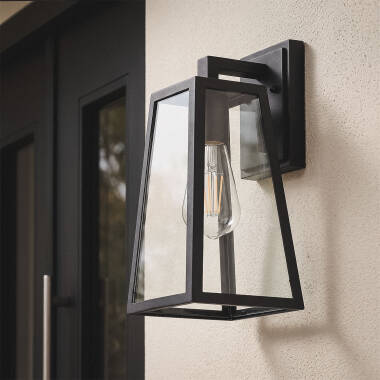
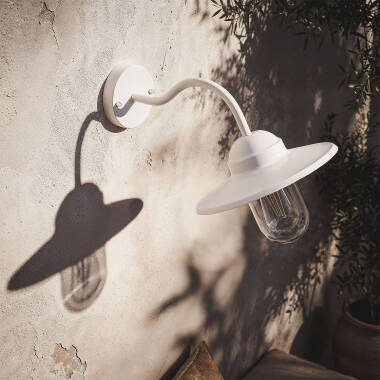
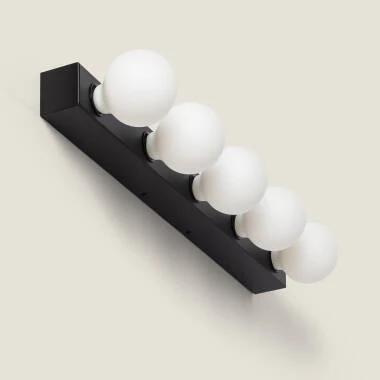
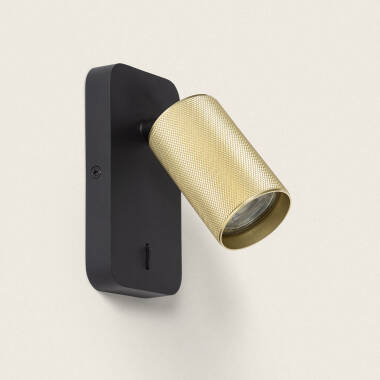
You may also be interested in
About Industrial Wall Lamps
Within the selection of wall lights, this type of wall light stands out for combining decorative design, strong visual presence and practical lighting for different rooms in the home. They can be installed in all types of spaces, providing functional light and, at the same time, a decorative detail with plenty of presence.
What defines industrial wall lights?
Industrial wall lights are characterised by a direct, robust and functional aesthetic. Their design is not intended to go unnoticed, but to become an active part of the décor through materials, shapes and finishes that recall technical luminaires used in workspaces.
Designs inspired by factories, workshops and urban spaces
The visual origin of the industrial style is linked to old factories, warehouses, workshops and production spaces converted into homes or commercial premises. That is why many industrial wall lights incorporate elements that evoke this practical lighting: metal shades, articulated structures, visible screws or supports with geometric shapes.
These designs usually convey a sense of solidity. An industrial wall light does not have to be excessively large, but it usually shows its structure clearly.
It is also common to find models with an exposed bulb. In this case, the light source becomes part of the design and should be chosen carefully. LED filament bulbs work very well in this type of wall light because they reinforce the retro-industrial character without requiring high energy consumption. For ambient use, a bulb between 300 and 500 lumens is usually sufficient; for a reading area or functional support lighting, it may be necessary to move closer to 600 or 800 lumens.
Resistant materials and aesthetic finishes
Metal is the most representative material in industrial wall lights. It can appear in matte black, aged iron, copper or finishes with a rust-effect look. These materials provide a resistant image and allow the luminaire to combine with exposed brick, concrete or natural wood walls.
Finishes are especially important because they define the level of decorative intensity. A black wall light offers a more striking and contemporary result, while an aged finish conveys a warmer look, closer to vintage style. Dark metallic tones work well when looking for an urban aesthetic without too much shine, while copper or aged brass finishes add a more decorative nuance.
Although industrial style is associated with robust materials, it can also incorporate glass, wood or textile details.
Decorative lighting with a functional aesthetic
Industrial lighting has a functional basis: directing light clearly towards a surface, a passage area or a point of use. However, in domestic interior design, industrial wall lights are not limited to lighting; they also add character to the wall.
A wall light in this style can be used to illuminate certain areas and add style to the home. The key is to balance design and visual comfort. If the wall light has an exposed bulb or an open shade, it is important to prevent the light from sitting directly in the line of sight. In living rooms and bedrooms, a warm colour temperature, between 2700 K and 3000 K, helps make the luminaire more comfortable.
It is also worth reviewing the light distribution. Models with a closed shade direct the beam more precisely and are suitable for specific tasks. Wall lights with an open shade create more ambient lighting, although they may produce more defined shadows on the wall.
Where to place industrial wall lights at home
Industrial wall lights can be installed in different rooms, provided the size, light orientation and finish are adjusted to the real use of the space. They work well in areas where the luminaire can be seen and provide decorative value, not just light.
Industrial wall lights for living rooms
In living rooms, industrial wall lights help create secondary light points and reduce dependence on ceiling lighting. A wall light with an industrial aesthetic in the living room can be placed next to the sofa, above a table, beside a shelf or on a wall to create a more enveloping atmosphere.
When the wall light is used for ambient lighting, a softer light may be enough. In living rooms where television is watched, wall lights with indirect light or an opal shade reduce reflections and help create more comfortable side lighting. They can also be combined with floor lamps, table lamps or indirect LED strips to create different layers of light.
Industrial wall lights for bedrooms with urban style
In bedrooms, industrial wall lights are a practical alternative to bedside lamps. They free up space on the bedside surface and add a more distinctive aesthetic to the headboard.
For this use, the installation height should be adjusted to the mattress and headboard. As a reference, the light point can be placed between 95 and 120 cm from the floor, although the exact measurement depends on the design of the wall light and the height of the bed. If it is ambient light beside the headboard, it can be installed slightly higher to distribute the lighting better.
Industrial style can feel intense in a bedroom if used with very dark finishes or large metal shades. To soften it, it is advisable to combine it with warm textiles, bed linen in neutral tones, natural wood or walls in soft colours. A 2700 K light provides a cosier feeling than neutral or cool light.
Industrial wall lights for hallways, entrance areas and passage zones
Hallway wall lights with an industrial design make it possible to illuminate transit areas without taking up floor space or overloading the ceiling. In narrow hallways, it is important to choose models with shallow depth to avoid knocks or a feeling of obstruction. As a guideline, a wall light that protrudes less than 15 cm is usually more comfortable in reduced passage areas.
In entrance areas, industrial wall lights can be placed next to a mirror or on a wall. If the space is small, a single well-positioned light point may be enough to create a warm entrance. If the entrance area is spacious or connects with a hallway, several wall lights can be used to guide the route.
On staircases, wall lights should provide enough light to recognise steps and changes in level. The industrial aesthetic can work very well on staircases with metal railings, wooden steps or brick walls, but visibility should always be prioritised. Lighting that is too decorative, with harsh shadows or very exposed bulbs, can be uncomfortable in a passage area.
Industrial wall lights for kitchens and dining rooms
In kitchens and dining rooms, industrial wall lights fit especially well because of their relationship with functional lighting. Wall lights with metal shades can be installed above support areas, breakfast bars, shelves or side walls, provided they complement the general light and do not create uncomfortable shadows on the work surface.
In a kitchen, the light should make it possible to see food, utensils and worktops clearly. Therefore, if the wall light has a practical function, a temperature of 3000 K or even 4000 K may be recommended in areas where greater visual precision is needed. However, in kitchens open to the living room or dining rooms, a 2700 K or 3000 K light usually integrates better with the overall atmosphere.
In dining rooms, industrial wall lights can accompany a wall close to the table, highlight a display cabinet or balance the lighting with a pendant lamp. If the main lamp already has a strong presence, it is better to choose more discreet wall lights so as not to overload the overall composition. On the other hand, if the table is lit in a simple way, the wall lights can provide the main decorative character.
How to integrate industrial wall lights into the décor
Industrial style can be intense if applied literally, but it can also be integrated subtly. The key is to combine materials, regulate the light temperature and balance the visual strength of metal with warmer elements.
Combining metal and wood
The combination of metal and wood is one of the most effective ways to integrate industrial wall lights into domestic interiors. Metal adds character and a technical aesthetic, while wood offsets that coolness with texture and warmth.
This mix helps maintain the industrial aesthetic without making the space feel too harsh. Colour temperature helps reinforce that integration. With natural wood, warm 2700 K light highlights the grain better and provides a more pleasant feeling. If light that is too cool is used, metal finishes may appear more rigid and the wood may lose part of its visual depth.
Enhancing loft-style atmospheres or urban décor
Loft-style atmospheres usually work very well with industrial wall lights. High ceilings, brick walls, exposed beams, metal structures, and similar elements. In these interiors, the wall light does not need to be hidden; it can become part of the architectural language.
In open living rooms, wall lights can help differentiate zones. The distribution makes it possible to work with layers of lighting and avoid the whole space depending on a single general light.
On brick or concrete walls, wall lights with an upward and downward beam create very interesting effects because they highlight the texture. However, excessive output should be avoided. Lighting that is too intense can produce harsh shadows and reduce visual comfort.
Industrial wall lights according to their finish
The finish largely determines the visual impact of the wall light. In industrial style, dark tones, aged metals and textured surfaces are common because they reinforce the feeling of a functional and resistant piece.
Black wall lights for a more pronounced industrial aesthetic
Black wall lights are one of the most representative options of industrial style. Matte black adds contrast, defines the silhouette of the luminaire and combines very well with wood, brick, concrete, marble and more.
For example, in living rooms, a black wall light can stand out against a light wall and create a focal point next to a shelf or sofa. It is important to consider how much black is already present in the space. If there are already many dark elements, it is advisable to balance them with light walls or warm textiles. If the room is small, a compact black wall light can add character without visually reducing the space.
Industrial wall lights in aged metal or rust-effect finishes
Finishes in aged metal, bronze, dark copper or rust effect provide a warmer interpretation of industrial style. They are suitable for interiors where you want to maintain the urban character, but with a less cold aesthetic than pure black.
An aged finish combines well with dark woods and brick walls. It can also be integrated into eclectic rustic décor, where the industrial wall light acts as a bridge between the functional and the decorative.
The rust effect should be used in moderation so that it does not look excessive. On a wall with a lot of texture, a single wall light with this finish may be enough. In cleaner spaces, two symmetrical pieces can add character without saturating the area.
Industrial wall lights and vintage style: a combination with plenty of personality
Industrial style and vintage style share visible materials, finishes and aesthetics. That is why vintage wall lights can combine very well with industrial designs when looking for décor with more personality and less rigidity.
The difference is usually in the degree of ornamentation. Vintage wall lights may include decorative details or more classic shapes. Industrial wall lights, on the other hand, tend to show a more functional structure, with metal shades or grids. When mixed, they create a balanced aesthetic between decorative and urban.
This combination can be applied to living rooms, dining rooms and bedrooms where functional and decorative lighting is desired. For example, a black industrial wall light can combine with a vintage-inspired ceiling lamp if both share a warm bulb or a similar metal finish.
For the overall look to feel coherent, it is advisable to unify the colour temperature. If some light points are 2200 K and others are 4000 K, the room may look unbalanced. In decorative atmospheres, the most recommended option is to keep wall lights between 2700 K and 3000 K, leaving more neutral temperatures for strictly functional areas.
What type of light to choose for an industrial wall light
The light should be chosen according to the use of the wall light, the room and the design of the luminaire.
Warm light to create a cosier atmosphere
Although industrial style has a technical aesthetic, warm light helps adapt it to the home environment. A temperature of 2700 K is a very suitable option for living rooms, bedrooms and entrance areas, as it adds warmth without tinting colours too much. For a more intimate or decorative effect, 2200 K bulbs can be used.
In dining rooms and open kitchens, 3000 K can be a balanced alternative. It offers slightly more clarity than 2700 K, while maintaining a pleasant feeling. In very specific work areas, such as a worktop or side table used for tasks, neutral light may be considered if the wall light has a practical function.
In addition to temperature, it is worth checking the colour rendering index. A CRI equal to or above 80 is usually enough for general use, but a CRI above 90 makes it possible to perceive wood or textile colours more accurately.
Spot light to highlight specific areas
Industrial wall lights are very effective as spot lighting. For spot lighting, the beam angle is important. A narrow beam, between 25 and 40 degrees, concentrates the light and creates a more defined effect. A medium beam, between 40 and 80 degrees, is more versatile because it lights a specific area without creating such a harsh contrast. If the wall light is used next to the bed or sofa, the orientation should prevent the light from shining directly onto the face.
The luminous flux also needs to be adjusted. To highlight a decorative detail, 200 or 300 lumens may be enough. For reading or functional support lighting, around 500 lumens is usually more useful. If the wall light does not have a diffuser, it is preferable not to exceed the output to avoid glare.
Ambient light for living rooms and bedrooms
When the industrial wall light is used as ambient lighting, the priority is to soften the space. In this case, models with a shade or light emitted towards the wall are more comfortable than designs with a completely exposed bulb.
In living rooms, ambient light can help create a more relaxed atmosphere at night. A pair of wall lights on side walls reduces the contrast between lit and dark areas, and makes it possible to do without general lighting when a lot of intensity is not needed. In bedrooms, this lighting encourages a calmer transition before rest.
How to choose industrial wall lights according to the space
The final choice should combine aesthetics, proportion, installation and type of light. An industrial wall light should integrate properly into the wall and respond to the everyday use of the room.
Proportion of the wall light and size of the wall
The size of the wall light should be in proportion to the available surface. On a large wall, a model that is too small may look visually lost.
In hallways and entrance areas, it is better to prioritise compact models, with little projection from the wall. In living rooms and bedrooms, wall lights with greater presence can be chosen if they accompany a sofa, a headboard or a shelf. When two symmetrical units are installed, the proportion should be analysed as a whole, not just piece by piece.
It is also important to consider ceiling height. In rooms with high ceilings, a small wall light may lose visual strength. In lower spaces, models with vertical lines or very bulky designs may create a heavy feeling.
Installation height and visual comfort
As a general reference, many wall lights are installed between 150 and 170 cm from the floor to the centre of the luminaire. This height usually works well in living rooms, hallways and entrance areas, provided the design does not cause glare and does not interfere with passage.
Next to the bed, the height should be adapted to the intended use. For reading, the light point should be close to shoulder position or slightly above it when the person is sitting. In kitchens or dining rooms, the height will depend on whether the wall light illuminates a surface, a wall or an ambient area.
Visual comfort is important in industrial designs with an exposed bulb. If the bulb sits at eye level, it can be uncomfortable even with few lumens. In these cases, it is advisable to use shades or an orientation that moves the direct light source away from the line of sight.
Installation, switching and maintenance
Before choosing a wall light, it is worth checking the type of installation available. Usually, models are connected to an electrical point in the wall and offer a cleaner finish.
Maintenance should also be taken into account. Open metal shades accumulate less dust than some designs with grids or complex structures, although the latter provide a more pronounced industrial aesthetic. Exposed bulbs are easy to replace, but they should be chosen with a suitable shape and temperature to maintain design coherence.
Frequently asked questions about industrial wall lights
What bulb looks best in an industrial wall light?
In industrial wall lights with an exposed bulb, LED filament bulbs are one of the most aesthetically coherent options. For ambience, models from 250 to 500 lumens can be used. For reading or spot lighting, it is advisable to use 500 lumens, provided the luminaire allows the beam to be well directed. The most common colour temperature is between 2700 K and 3000 K. If a more retro or decorative effect is desired, 2200 K can work very well, although it provides a dimmer light and is less suitable for visual tasks.
Do they fit well in small flats?
Yes, as long as the right proportion is chosen. In small flats, compact models with shallow depth work best. Black or aged finishes can add character, but it is advisable to balance them with light walls or wood so as not to visually overload the space. In narrow hallways or small bedrooms, bulky models are best avoided. A well-placed wall light can help free up space.
What is the difference between an industrial wall light and a vintage one?
An industrial wall light has a more functional aesthetic, inspired by factories and urban spaces. It often uses metal, shades, grids and black or aged finishes. A vintage wall light, on the other hand, may incorporate more decorative shapes and ornamental details or references to classic luminaires. Both styles can be mixed if they share materials, light colour or finishes. In fact, many industrial designs also have a vintage feel when they use filament bulbs, aged metal or shapes inspired by old luminaires.
Can they be used in kitchens?
Yes, industrial wall lights work very well in kitchens, especially on side walls, breakfast areas, bars or open shelving. If they are going to illuminate a work surface, it is advisable to choose adjustable models and sufficient light, normally around 500 to 800 lumens per point, depending on the distance and the support of the general lighting. In kitchens open to the living room, it is recommended to maintain a colour temperature that is coherent with the rest of the space. A 3000 K light is usually a good balance between functionality and warmth.
What height is recommended for installation?
In living rooms, hallways and entrance areas, a height of 150 to 170 cm up to the centre of the wall light usually works well. In bedrooms, if it is used for reading, it can be installed lower, approximately between 95 and 120 cm from the floor, adjusting the position to the bed and headboard. If the light source sits directly in the line of sight, it may cause glare. In these cases, it is better to move the luminaire slightly up or down, orient the beam or choose an opal bulb.