
Industrial LED High Bays DALI
DALI industrial LED high bays allow for the regulation and control of lighting in industrial environments, adapting the light level to every moment and optimizing energy consumption.


Our featured products from Industrial LED High Bays DALI
Expert
78,96 €
Ref 177557
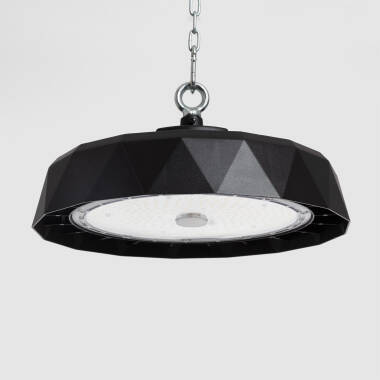
AluminiumAdjustableUFO DALI/Push Dimmable LED High Bay HBM Evo LUMILEDS 200lm/W SOSEN
In Stock, delivery in 16-21 days
- Wattage 100 W
- Voltage Range 220-240V AC
- Lumen 20000 lm
9 options- -21%
Before 15,49 €
12,29 €
Ref 115857
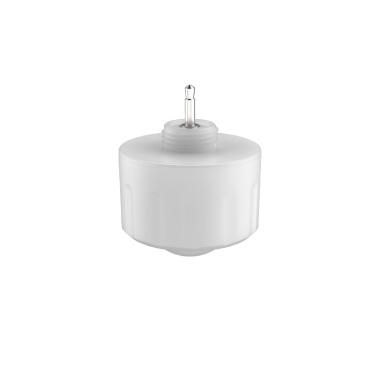
MERRYTEK PIR Sensor for DALI Dimmable UFO HBD MOSO Industrial LED High Bay MC079D IR DI
In Stock, delivery in 16-21 days
- Voltage Range 12V DC
- Diameter 50 mm
- IP Rating IP65
- -20%
Advanced
Before 91,99 €
73,99 €
Ref 115695
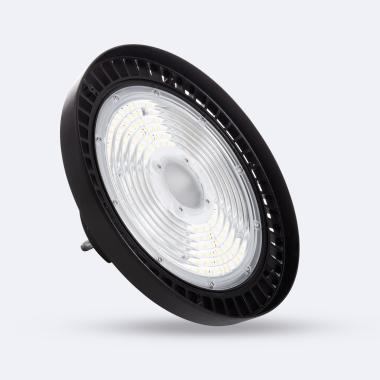
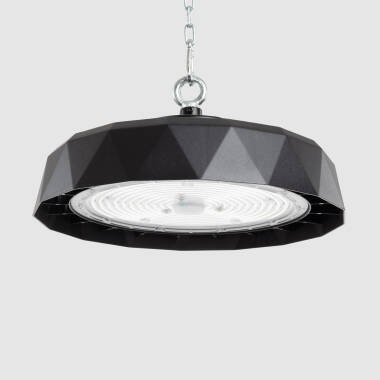
AluminiumAdjustableNew150W MOSO DALI Dimmable Industrial UFO HBD LED High Bay 170lm/W
Pre-Order, estimated delivery from 10 weeks
- Wattage 150 W
- Voltage Range 220-240V AC
- Lumen 25500 lm
Expert
101,99 €
Ref 177557
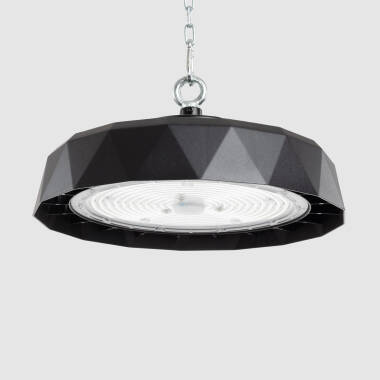
AluminiumAdjustableUFO DALI/Push Dimmable LED High Bay HBM Evo LUMILEDS 200lm/W SOSEN
In Stock, delivery in 16-21 days
- Wattage 200 W
- Voltage Range 220-240V AC
- Lumen 40000 lm
9 options








You may also be interested in
About Industrial LED High Bays DALI
In facilities where lighting remains on for many hours or where activity varies by zone and schedule, the integration of control systems becomes a key factor. Within the category of industrial LED high bays, solutions with the DALI protocol allow for precise light management, improving both efficiency and visual comfort.
What are DALI industrial LED high bays
DALI industrial LED high bays are luminaires that incorporate a driver compatible with the DALI (Digital Addressable Lighting Interface) protocol, a digital control system that allows for the regulation of luminous intensity and the management of each luminaire individually or in groups.
Unlike a conventional ON/OFF installation, where all luminaires operate at full power or are turned off, the DALI system allows for the adjustment of the luminous flux based on the actual needs of the space.
This is especially useful in industrial environments where there are variations in activity, natural light contributions, or zones with different lighting requirements.
How the DALI system works in industrial lighting
The DALI system is based on bidirectional digital communication between luminaires and the controller. Each high bay has a unique address, which allows it to be configured independently within the system.
Intensity regulation
The DALI protocol allows for the adjustment of luminous intensity between 0% and 100% in a progressive and flicker-free manner. This facilitates the adaptation of lighting to different situations, such as shift changes or zones with lower activity.
In an industrial building, for example, it is possible to work at 100% during peak activity hours and reduce it to 30–50% in secondary zones or during periods of low occupancy.
Control by zones and scenes
Luminaires can be grouped into zones and configured into scenes. This allows, for example, for the definition of different lighting levels according to use:
- Production zone: 400–500 lux.
- Storage zone: 150–250 lux.
- Transit zones: 100–150 lux.
Integration with sensors
The DALI system can work alongside presence and natural light sensors. This allows for the automatic adjustment of lighting to maintain constant levels at the work plane.
In facilities with skylights or natural light entries, the system can reduce power to maintain, for example, a constant 300 lux, avoiding over-lighting and reducing consumption.
Advantages of DALI industrial LED high bays
The use of LED high bays with DALI control provides both energy and operational benefits.
Quantifiable energy savings
In industrial facilities with more than 3,000–4,000 hours of annual use, regulation can generate additional savings of 20% to 40% over a standard LED installation.
When combined with presence and natural light sensors, these savings can exceed 50% in certain zones with intermittent use.
Extended system lifespan
By reducing intensity when maximum power is not required, the thermal load on the components is decreased. This contributes to extending the lifespan of the driver and the LED modules.
In practical terms, a regulated installation can extend its effective lifespan by 20% to 30% compared to an installation that is always at 100%.
Operational flexibility
The system allows for the adaptation of lighting to changes in space distribution or activity without the need to modify the electrical installation.
This is particularly useful in logistics or industrial environments where the organization of space may change over time.
How to choose DALI industrial LED high bays
Correctly selecting this type of luminaire involves taking into account both lighting parameters and control system requirements.
Lighting dimensioning
The lighting calculation remains the same as in any industrial installation. It starts from the required lux and the surface area:
lux = lumens / m²
For example, for a 1,200 m² unit with a 300 lux target, 360,000 useful lumens are required. Considering losses (0.6 factor), the installation should be around 600,000 lm.
The DALI system allows for the adjustment of these levels in real time, avoiding constant operation at full power.
System compatibility
It is important to ensure that all luminaires and components are DALI compatible. This includes drivers, controllers, and sensors.
Additionally, it is advisable to foresee the possibility of system expansion or reconfiguration.
Installation type
In new installations, the DALI system can be integrated from the initial design. In renovation projects, it is necessary to evaluate compatibility with the existing installation.
The additional wiring is minimal, as the DALI bus uses only two wires independent of the power supply.
Applications of DALI industrial LED high bays
High bays with DALI control are especially useful in environments where lighting is not constant or where different levels of activity exist.
Industrial units
In facilities with multiple shifts, the system allows for the adaptation of lighting to each moment. For example, reducing levels to 50% in zones with lower activity or without presence, while maintaining the required levels (300-500 lux) in operational areas where work continues.
Logistics centers
In warehouses, activity can vary by zone and schedule. Zone control allows for the maintenance of 200–300 lux levels in active areas and the reduction of lighting in unused zones.
Spaces with natural light
In units with skylights, the system can automatically reduce intensity based on available light, maintaining constant levels and avoiding unnecessary consumption.
Advanced industrial facilities
In environments where precise lighting control is required, the DALI system allows for the integration of lighting into global building management systems (BMS).
Frequently asked questions about DALI industrial LED high bays
When is it worth using DALI LED high bays in an industrial building?
It is particularly profitable in facilities with more than 3,000–4,000 hours of annual use, multiple shifts, or zones with variable activity. In these cases, being able to reduce lighting to 30–50% in secondary areas or during off-peak hours avoids working constantly at 100%, with measurable savings from the first year.
What lighting levels can be managed by zones?
In the same building, different levels can be maintained according to use: 400–500 lux in production, 200–300 lux in picking, and 100–150 lux in aisles. Sectorization allows for the adjustment of each area without oversizing the entire installation.
How much can be saved with DALI high bays in a real case?
In a 2,000 m² warehouse with a 300 lux target, the useful plane requires 600,000 lm, but the actual installation usually requires significantly more when considering a utilization and maintenance factor of 0.5–0.7. In practice, this typically brings the installed flux to an approximate range of 850,000 to 1,200,000 lm. If a portion of that installation can be reduced to 50% for 40% of the operating time, the annual savings can be around 20–30%. With presence and natural light sensors, it is common to reach 30–50% in zones of intermittent use.
How does DALI high bay regulation affect maintenance?
By working for many hours below 100%, the operating temperature is reduced. This can extend the effective lifespan of the assembly (LED + driver) by around 20–30%, decreasing replacements in high-altitude installations.
Can DALI industrial high bays be used in existing installations?
Yes. In retrofit projects, it is common to replace high bays with DALI versions and add the control bus. The return on investment is faster in buildings with extensive schedules, rarely used zones, or significant natural light contribution.