
Solar LED street lights
Solar LED street lights provide an autonomous outdoor lighting solution designed to operate without connection to the electrical grid. Powered by solar energy, they allow outdoor spaces to be illuminated independently, making installation easier in locations where cabling is not feasible or where a more flexible and self-sufficient solution is required.
Our featured products from Solar LED street lights
- -14%
Advanced
Before 76,08 €
65,21 €
 (3)
(3)Ref 108858
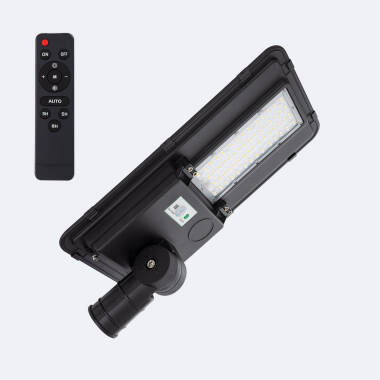
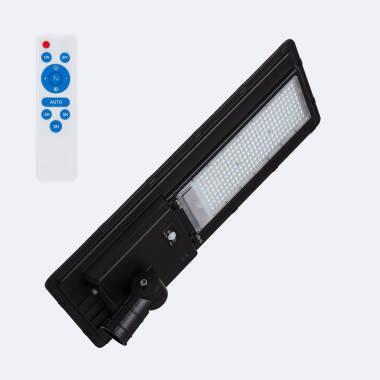
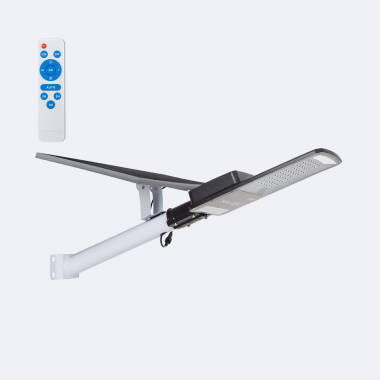
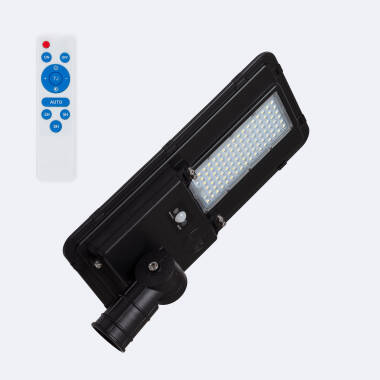
SolarSolar LED Streetlight Sinai 1000 lm 125 lm/W with Motion Sensor
In Stock, delivery in 15-20 days
- Wattage 8 W
- Lumen 1000 lm
- Type Of Dimming Remote Control
3 options - -20%

Advanced
Before 81,52 €
65,21 €
Ref 108859
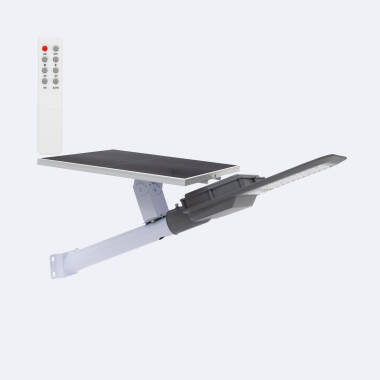
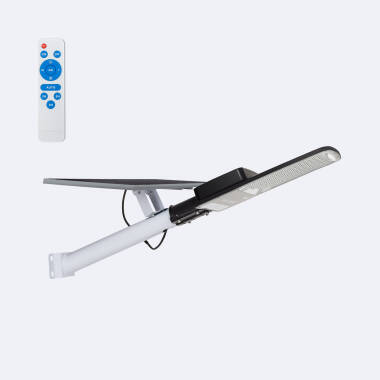
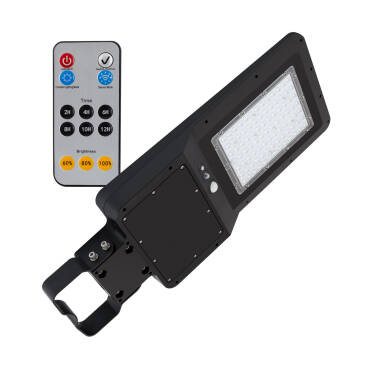
SolarSolar LED Streetlight Sinai 1800 lm 125 lm/W with Motion Sensor
In Stock, delivery in 15-20 days
- Wattage 14.4 W
- Lumen 1800 lm
- Type Of Dimming Remote Control
3 options - -21%
Advanced
Before 129,99 €
102,99 €
Ref 108864
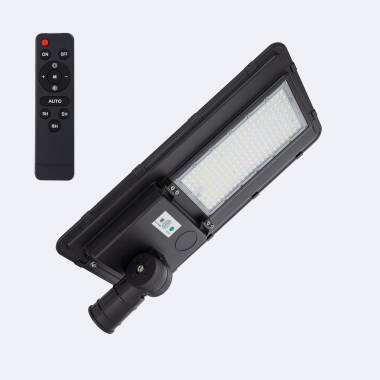
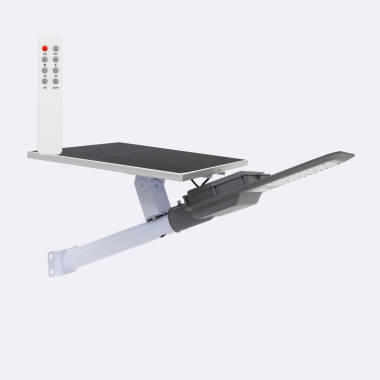
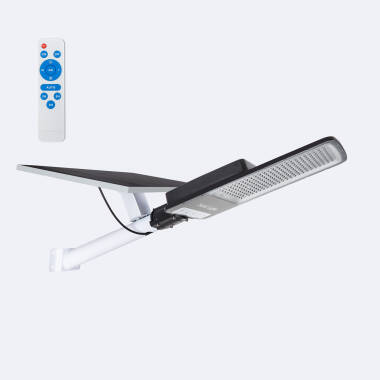
SolarSolar LED Streetlight Sinai 2500 lm 125 lm/W with Motion Sensor
In Stock, delivery in 15-20 days
- Wattage 20 W
- Lumen 2500 lm
- Type Of Dimming Remote Control
3 options 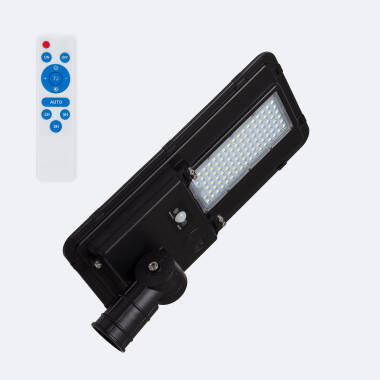
Expert
271,99 €
Ref 105651
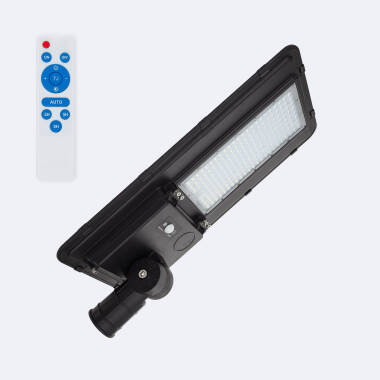
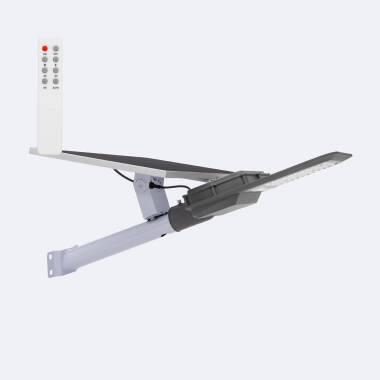
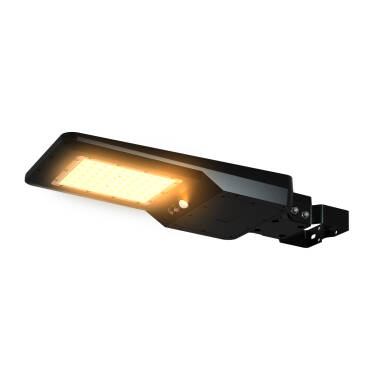
Solar LED Streetlight Sinai 6400 lm 160 lm/W with MPPT & Motion Sensor
In Stock, delivery in 15-20 days
- Wattage 40 W
- Lumen 6400 lm
- Type Of Dimming Remote Control
3 options







Brands related to this category


About Solar LED street lights
Outdoor lighting without the electrical grid: a different approach
The main difference of solar LED street lights lies not in how they illuminate, but in how they are powered. By operating independently from the electrical grid, they introduce a different approach to outdoor lighting design.
Instead of relying on existing electrical infrastructure, this type of street light brings light directly to the space, without the need for trenching, conduits or power connections. This approach is particularly useful in areas where grid access is complex, costly or unnecessary for the intended use.
Within public lighting, solar solutions have gained relevance in specific applications where autonomy and ease of installation are key factors.
How a solar street light works
A solar LED street light integrates all the components required for operation into a single system. During the day, the solar panel captures energy from the sun and stores it in an integrated battery. At night, this stored energy powers the LED luminaire.
This autonomous operation allows:
- Lighting without grid connection
- Automatic switch-on at dusk
- Elimination of conventional electrical consumption
- Reduced installation complexity
The system is designed to follow the natural day–night cycle and operate independently.
Autonomy and infrastructure-free installation
One of the main advantages of solar LED street lights is the freedom to choose where lighting is needed, made possible by their autonomous operation and lack of grid connection. Without the need for cabling, they can be installed in locations where a conventional street light would require complex, costly or unjustified construction work.
This approach makes it possible to bring lighting to paths and walkways, rural or peri-urban areas, parks, natural spaces or locations without prior electrical infrastructure, ensuring that lighting responds solely to the real needs of the environment.
This type of installation reduces execution times, minimises environmental impact and makes future extensions or modifications easier without reworking existing infrastructure.
Solar street lights in urban and residential environments
Although traditionally associated with remote areas, solar LED street lights are also suitable for urban and residential settings. In certain cases, they allow specific lighting points to be resolved without intervening in existing installations.
In this context, they can coexist with grid-connected LED street lights, providing light in areas where extending electrical infrastructure is not justified.
In residential environments, solar street lights are used to illuminate outdoor spaces where ease of installation is a priority. In single-family homes, residential communities or housing developments, they provide lighting solutions without invasive works.
These street lights for residential use offer a functional, discreet outdoor lighting solution that is easy to maintain and simple to expand or adapt in the future without modifying the electrical installation.
Solar street lights and bollard lights: a common combination
In outdoor lighting design, it is common to combine different types of luminaires to better suit the shape and use of the space. In this context, solar street lights can be used alongside lower-height elements such as bollard lights, especially in paths, walkways and pedestrian areas.
The solar street light provides general illumination from a greater height, while bollard lights reinforce lighting at ground level, helping guide movement and define space boundaries. This combination creates well-lit environments without relying on a uniform solution, allowing light to be adjusted more naturally to each area.
The result is a balanced outdoor lighting system designed to accompany pedestrian movement and adapt to the real scale of the environment.
Automatic operation and everyday use
Solar street lights are designed to operate automatically, adapting to the natural day–night cycle. Switching on and off occurs without user intervention, making them suitable for both public and private outdoor spaces.
This autonomous behaviour is ideal for installations where active lighting management is not required.
Performance and location considerations
For optimal performance, solar LED street lights must be installed in locations where the solar panel receives sufficient daylight exposure. Proper orientation and the absence of prolonged shading are key factors in ensuring adequate night-time autonomy.
Careful planning of the installation location ensures reliable system operation, even during periods of reduced solar radiation.
Low maintenance and durability
As they are not connected to the electrical grid, solar street lights eliminate common failure points associated with cabling. Maintenance is mainly limited to keeping the solar panel clean and periodically checking the condition of the components.
This approach reduces the need for frequent interventions and supports long-term system reliability.
Solar lighting as a complementary solution
Solar LED street lights do not always replace conventional lighting systems, but rather complement them. In many projects, they are used to address specific points where grid-connected solutions are not practical.
This complementary use allows existing lighting systems to be extended or improved without modifying the main installation.
Frequently asked questions about solar LED street lights
What advantages do solar LED street lights offer compared to conventional street lights?
Solar LED street lights allow outdoor spaces to be illuminated without connection to the electrical grid. This simplifies installation, reduces construction work and makes lighting possible in areas where conventional street lights would not be viable.
Where are solar LED street lights typically installed?
They are commonly used on paths, walkways, parks, rural areas, natural spaces and residential environments. They are also applied in specific points within urban areas where a flexible, autonomous solution is required without modifying existing infrastructure.
Do solar street lights operate all year round?
Yes, provided they are correctly installed. Reliable operation depends on sufficient solar exposure during the day. Proper orientation and the absence of prolonged shading help maintain adequate autonomy even during periods of lower sunlight.
Do solar LED street lights require a lot of maintenance?
No. Maintenance requirements are low, as there is no cabling or grid connection. Typically, maintenance is limited to periodic cleaning of the solar panel and inspection of the components over time.
Can solar LED street lights be combined with other lighting systems?
Yes. Solar LED street lights can be used alongside grid-connected systems or combined with other outdoor luminaires such as bollard lights. This allows for more flexible lighting solutions adapted to each space.