
Solar LED Wall Lights
Solar wall lights make it possible to illuminate outdoor areas without wiring, using solar energy to provide security, orientation and atmosphere on façades, in gardens, patios and entrances.
Our featured products from Solar LED Wall Lights
- -42%
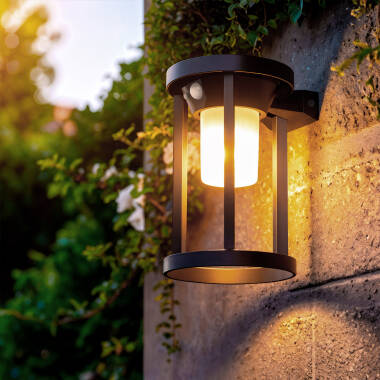
Before 29,99 €
17,49 €
EnekoRef 113457
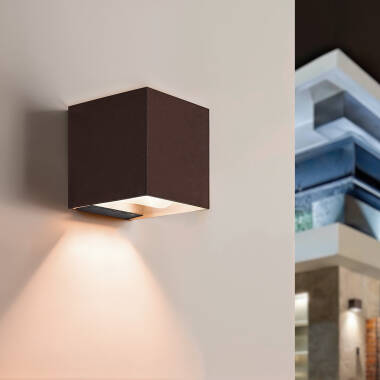
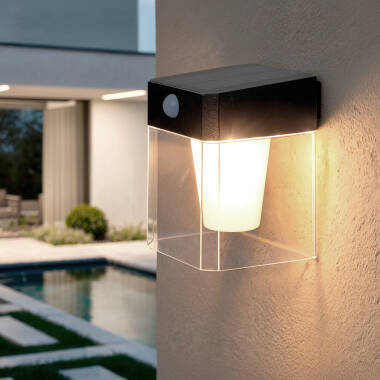
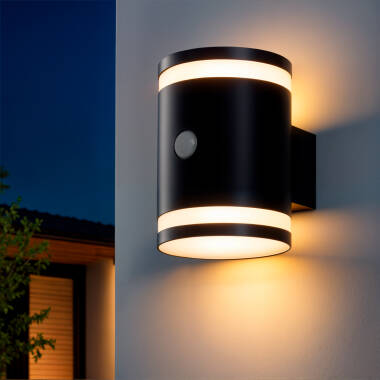
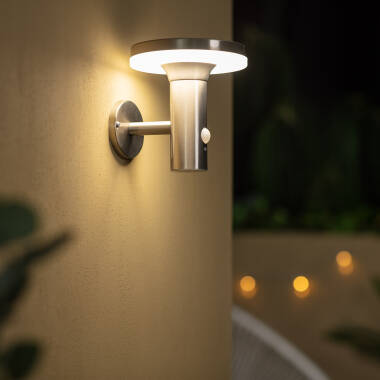
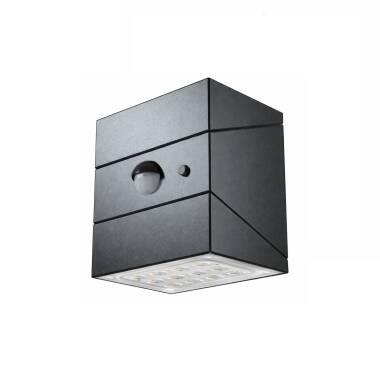
SolarPROMOEneko 2W Aluminium Outdoor Solar LED Wall Lamp with Motion Sensor
Black
In Stock, delivery in 15-20 days
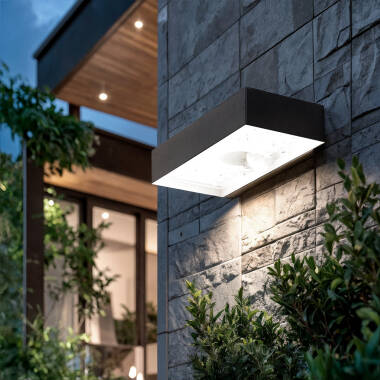
20,49 €
Ref 103378
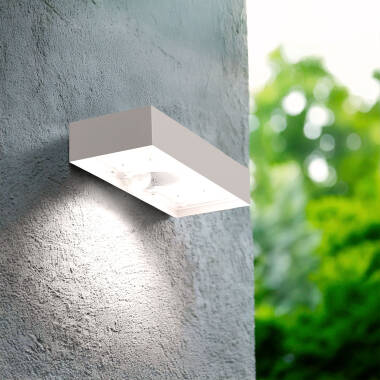
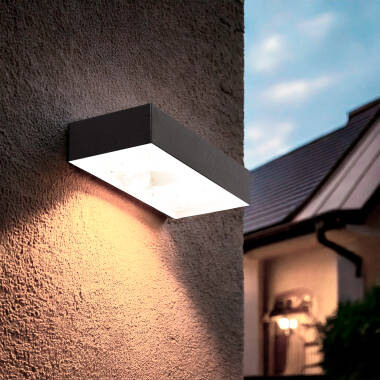
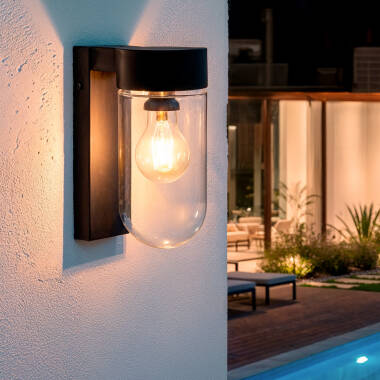
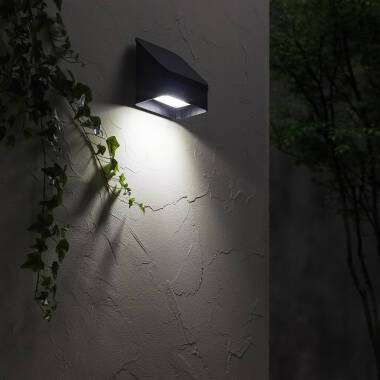
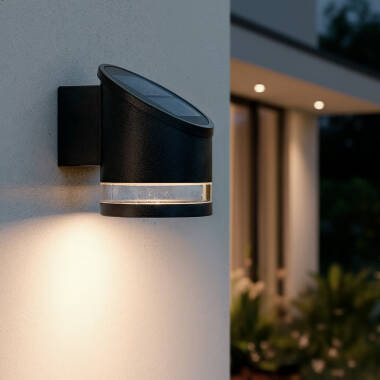
Solar6W Karl Solar Outdoor Wall Lamp in Black
Cool White 4000K
In Stock, delivery in 15-20 days
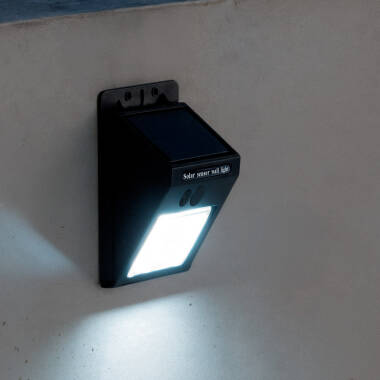
4,19 €
 (13)
(13)Ref 86729
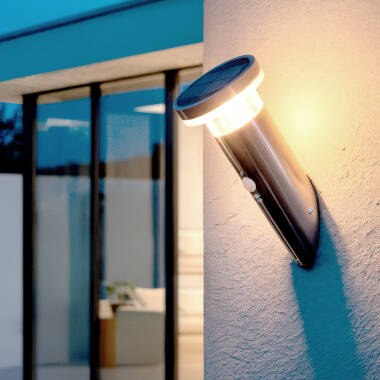
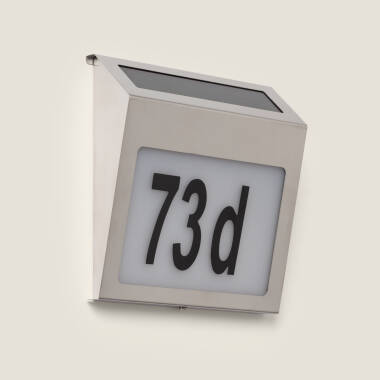
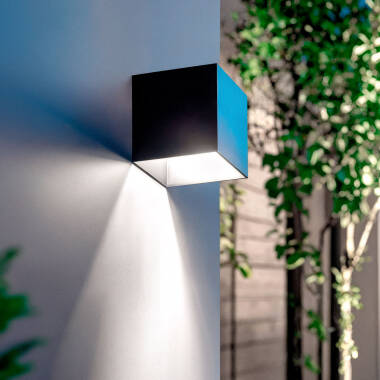
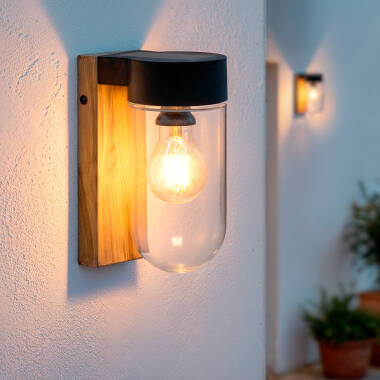
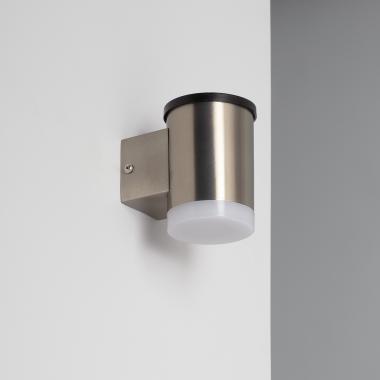
SolarSolar LED Wall Light with Twilight Sensor IP65
Daylight 6500K
In Stock, delivery in 15-20 days
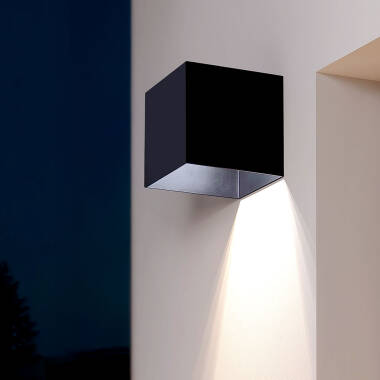
31,79 €
(3)ErosRef 70941
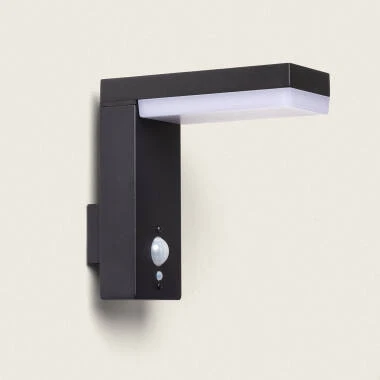
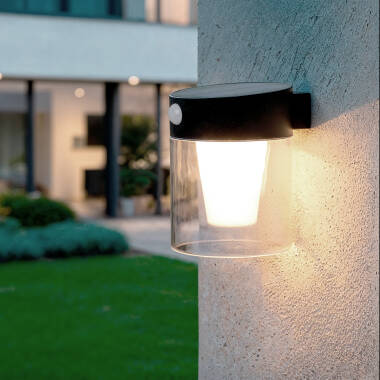
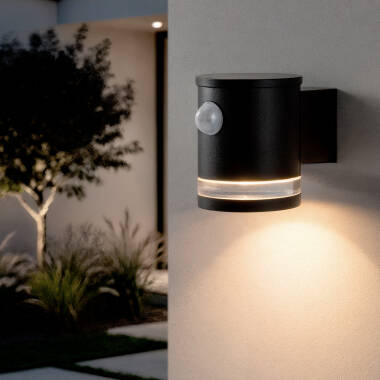
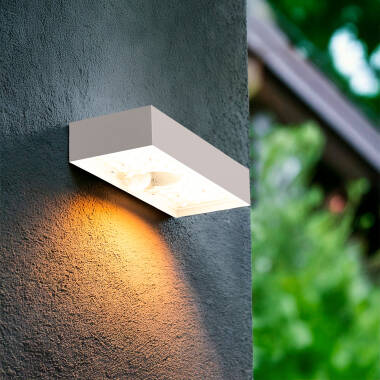
SolarEros 2W Outdoor Aluminium Solar LED Wall Light with Motion Sensor
Warm White 3000K
In Stock, delivery in 15-20 days




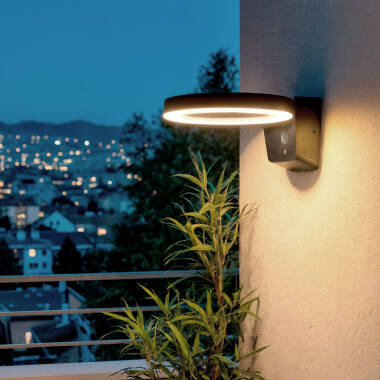
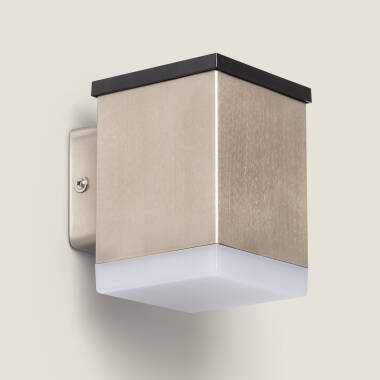
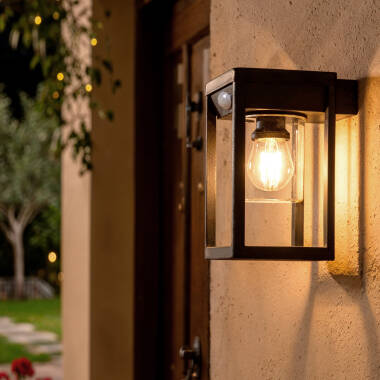
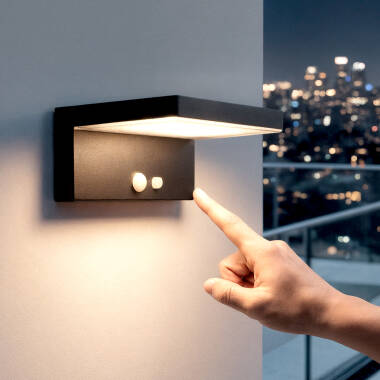
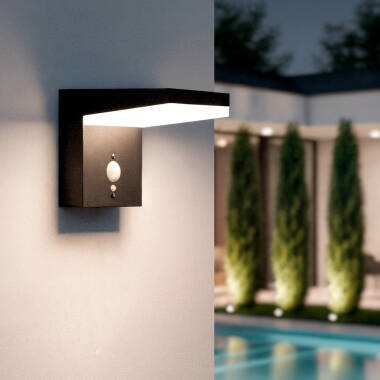
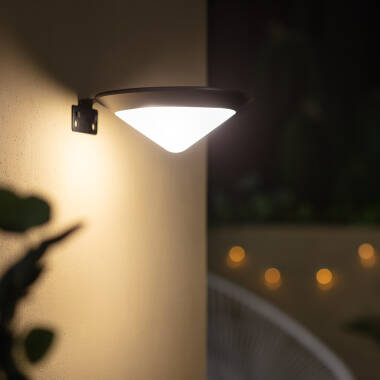
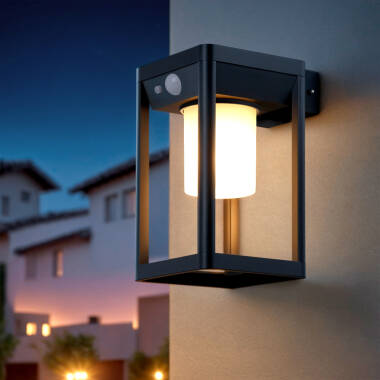
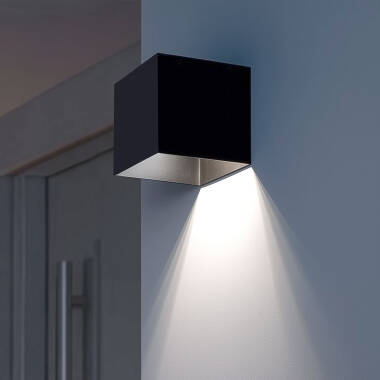
About Solar LED Wall Lights
These wall lights are outdoor luminaires that incorporate a photovoltaic panel, a rechargeable battery and an LED light source. During the day, they capture solar energy and store it so they can operate at night, without needing a direct connection to the electrical grid. This feature makes them a practical solution for areas where there is no pre-installation, where running cables would be complex or where efficient auxiliary lighting that is simple to install is required.
They share applications with other outdoor wall lights, such as entrances, walls, terraces or paths, but differ in their power supply system, autonomy and the importance of solar orientation.
What are solar wall lights
Solar wall lights are luminaires designed mainly to be installed on outdoor walls, boundary walls or façades, using solar radiation as their energy source. They integrate a small solar panel that charges an internal battery during daylight hours and an LED system that switches on automatically at dusk or when movement is detected, depending on the model.
Their installation does not require running an electrical cable to the light point, which makes them very useful in gardens, patios, terraces, outdoor garages, sheds, paths, secondary entrances and circulation areas. This electrical independence makes it possible to add lighting in places where a conventional installation would be more expensive or impractical.
Although they are easy to install, they should not be chosen based on design alone. Their performance depends on specific factors such as solar exposure, battery capacity, LED consumption, operating mode, IP rating and panel orientation. A well-positioned solar wall light can provide comfortable and stable lighting during the night; a poorly oriented one may have little autonomy even if the product itself is suitable.
How they work
Their operation is based on three main elements: solar panel, battery and LED module. During the day, the panel converts solar radiation into electrical energy. This energy is stored in the internal battery and used at night to power the light source.
Most models incorporate a dusk sensor, which detects the lack of natural light and automatically activates the wall light. Others add a motion sensor, so they remain off or at low intensity and increase their power when they detect presence.
This management is important because it helps extend autonomy. A light that stays on all night at full power consumes much more energy than one that works at 10–30% and only rises to 100% when someone passes nearby. For this reason, in many outdoor uses, models with sensors are more efficient and functional.
Difference compared with a conventional outdoor wall light
The main difference lies in the power supply. A conventional outdoor wall light connects to the electrical grid and can provide constant light as long as there is power. A solar wall light depends on the energy accumulated during the day, so its performance varies according to orientation, season and the available hours of sunlight.
This does not mean it is a less useful solution, but rather that it must be applied correctly. For a main entrance that needs intense light for many hours, a mains-connected wall light may be more reliable. For a garden path, an exterior wall, a secondary entrance or an area where light is only needed when someone passes, a solar wall light can be a very practical option.
There are also differences in installation and maintenance. The solar model avoids electrical work, chasing walls and cable routing, but it requires placing the panel in an area with good solar exposure and checking periodically that it does not become dirty.
Advantages of solar wall lights
Solar wall lights stand out because they allow outdoor light points to be added without depending on the electrical installation. This advantage affects both ease of installation and flexibility when lighting areas away from the home.
In addition, as they operate with LED technology, they offer low consumption and a long service life. The combination of solar capture, battery and integrated LED makes it possible to cover many needs for orientation, security and atmosphere with a compact system.
Installation without wiring
The most obvious advantage is that they do not need a mains connection. This simplifies installation on walls, fences, secondary façades, patios, outdoor garages or gardens where there is no electrical point.
In a renovation or an already finished home, avoiding wiring can make a significant difference. There is no need to chase walls, modify finishes or run an electrical line to the installation point. It is enough to fix the light to a suitable surface and ensure that it receives enough sun.
This also makes it easier to place several light points along a route. For example, on a side wall or an access path, several solar wall lights can be installed to mark the way without carrying out a complete electrical installation.
Energy savings and efficient use
Solar wall lights do not consume electricity from the grid during operation. The energy used comes from the charge accumulated during the day, making them an interesting solution for auxiliary outdoor lighting.
The savings depend on what use they replace. If they replace an outdoor luminaire that stayed on for many hours every night, the difference can be significant. In addition, many models incorporate sensors and low-intensity modes that reduce battery consumption and extend operating time.
The efficiency of LED wall lights is key in this type of product. As they require less energy to produce light, the system can work with more compact batteries and make better use of the available solar charge.
Automatic switch-on and convenience
Many solar wall lights incorporate a dusk sensor, which allows the light to switch on automatically at nightfall and switch off at dawn. This function is convenient in circulation areas, gardens and entrances, as it avoids having to operate switches.
Models with a motion sensor add an extra level of practicality. When they detect presence, they increase intensity for a set period and then return to low mode or switch off. This saves battery and provides light exactly when it is needed.
At secondary entrances, garages, patios or shed access points, this automation improves safety and reduces the risk of leaving lights on unnecessarily.
Types of solar wall lights
Not all solar wall lights work in the same way. Some are designed to mark routes, others to illuminate entrances, others to create atmosphere and others to reinforce security through sensors.
Choosing the right type helps avoid unrealistic expectations. A decorative solar wall light will not offer the same light level as a security model with a sensor, and a model with a small panel will not have the same autonomy as one with a larger capture surface.
Solar wall lights with motion sensor
These are one of the most common options for entrances, patios, outdoor garages, stairs and paths. They incorporate a detector that activates the light when it detects presence, usually through PIR technology or a similar system.
These models usually work in several ways: off until motion is detected, with a continuous dim light and an increase in intensity when someone passes, or with automatic switch-on for a set time. The second option is especially practical when you want to maintain a visual reference during the night without using too much battery.
When choosing them, it is worth checking the detection angle, range and switch-on time. In a narrow entrance, a short-range sensor may be enough, while in a garage area or large patio, greater coverage is preferable.
Decorative solar wall lights
Decorative models are designed to add atmosphere to terraces, patios, gardens or façades. They usually offer softer and warmer light, focused more on creating ambience than on providing high-intensity lighting.
They work well in relaxation areas, low walls, porches, gazebos or entrances where a pleasant effect is desired. In this case, colour temperature is very important. Light between 2700K and 3000K usually feels more comfortable and natural than cold light.
They can also create effects on the wall, such as upward and downward beams, grazing light or soft diffusion. These effects add decorative value, but should not be confused with high-power functional lighting.
Solar security wall lights
Solar security wall lights prioritise visibility and motion detection. They are installed in areas where automatic lighting is useful when someone approaches: garage entrances, back doors, patios, entrances to small storage areas or side passages.
They usually offer a higher luminous flux than purely decorative models and work with more direct light. For these uses, it may be appropriate to choose neutral colour temperatures, around 4000K, because they provide a greater sense of clarity.
Placement is essential. The sensor must cover the approach area and the light should be directed towards the circulation plane, avoiding direct glare towards people, neighbours or windows.
Solar wall lights with integrated or separate panel
In many models, the solar panel is integrated into the top or front of the wall light itself. This solution is compact and simple, but it requires the luminaire to be installed in an area where it also receives sun.
Models with a separate panel allow the light point to be placed in a shaded area and the panel to be positioned in a place with better solar exposure. They are useful under porches, eaves, covered entrances or walls where direct sunlight does not reach the exact point where lighting is needed.
This difference is important in real installations. On a north-facing wall, a wall light with an integrated panel may charge very little, while a separate panel placed in a sunnier area can greatly improve autonomy.
How to choose solar wall lights
Choosing a solar wall light means analysing both the lighting and the energy capture. It is not enough to look at the design or the advertised power, because autonomy depends on the relationship between panel, battery, consumption and location.
The choice should start with a simple question: which area needs to be lit and for how long. An orientation light for a path is not the same as a security point at the entrance to a garage.
Location and solar exposure
Location is the most important factor. For the light to work well, the panel should receive several hours of direct sunlight per day. South, south-east or south-west orientations usually offer better charging than north orientations or very shaded areas.
Obstacles such as trees, awnings, cornices, high walls or nearby buildings must also be taken into account. An area that receives sun in summer may be shaded during winter, when the sun is lower and there are fewer daylight hours.
Before installation, it is advisable to observe the wall during the day and confirm how many hours of real sun it receives. If exposure is limited, it may be preferable to choose a model with a separate panel or use a mains-connected luminaire.
Autonomy and battery capacity
Autonomy indicates how long the light can operate with the stored energy. It depends on battery capacity, LED consumption and operating mode.
A model with continuous light at high intensity needs more battery than one with a motion sensor. For this reason, many solar wall lights combine permanent low intensity with powerful switch-on when presence is detected. This system makes it possible to maintain a visual reference without quickly exhausting the charge.
In real conditions, autonomy can vary between summer and winter. Cloudy days, rain, dirt on the panel or low temperatures can reduce the available charge. That is why it is advisable to choose with some margin if operation is required for several hours every night.
Luminous flux and intended use
Luminous flux is measured in lumens and determines how much light the luminaire emits. For orientation in gardens or paths, moderate levels may be sufficient. For an entrance, garage or security area, it is better to choose models with higher flux and good distribution.
In a narrow passage area, a wall light of 200 to 500 lumens can serve as orientation light. For entrances or areas where more visibility is needed, higher ranges may be recommended, especially if the luminaire is activated only by sensor.
More lumens do not always mean a better result. If the light is poorly directed or the sensor does not cover the right area, the wall light may provide little light where it is actually needed. Beam orientation is as important as power.
IP rating and outdoor resistance
As they are installed outdoors, solar wall lights must have protection against dust and water. For protected areas, IP44 may be sufficient, but on façades, walls, gardens or spaces exposed to direct rain, IP54, IP65 or higher is more advisable.
The IP rating should be accompanied by suitable materials. The housing, diffuser, seals and panel should resist humidity, solar radiation and temperature changes. In areas near the sea, it is also worth paying attention to corrosion resistance.
A solar wall light exposed to rain, irrigation or dust needs a well-sealed design. Moisture ingress can affect the LED, the battery and the charging circuit.
Common applications of solar wall lights
Solar wall lights are especially useful outdoors where a simple and autonomous installation is desired. They are commonly used in homes, gardens, patios, residential communities, small businesses and auxiliary areas.
The key is to use them where their autonomy and light level are sufficient. They work very well as support, wayfinding or automatic lighting, but they do not always replace a conventional electrical installation in intensive-use areas.
Entrances and secondary access points
At secondary entrances, back doors, patio access points or side paths, solar wall lights provide light without the need to run wiring. Models with a motion sensor are especially useful because they activate when someone approaches.
For these uses, it is advisable to choose light that is sufficiently directed towards the door, step or circulation area. A temperature of 3000K offers a balance between comfort and visibility, while 4000K may be suitable if a more functional effect is desired.
Gardens, walls and paths
In gardens and paths, solar wall lights help mark routes and improve safety at night. Installed on walls or fences, they make it possible to illuminate the way without placing elements on the ground.
In these applications, distribution is usually more important than high power. Several moderate light points create a more balanced route than a single intense point. They also reduce contrasts and make the space feel more pleasant.
Terraces, patios and porches
On terraces, patios and porches, solar wall lights can be used as ambient light. They are suitable for creating a warm atmosphere in relaxation areas, outdoor dining spaces or gathering areas.
If the main use is decorative, it is best to choose warm light and soft diffusion. If a table or circulation area needs to be lit, it is better to choose models with higher flux or combine several points. On covered porches, a separate panel can be especially useful, as the light point is often protected from direct sun.
Garages, sheds and auxiliary areas
In outdoor garages, garden sheds, outdoor storage rooms or auxiliary areas, solar wall lights provide convenience and safety. They make it possible to illuminate when entering or leaving without depending on an electrical installation.
Models with sensors are the most recommended for these spaces. When they detect movement, they provide light when it is really needed and conserve battery the rest of the time. In manoeuvring areas, it is advisable to check the sensor range and orient the luminaire to avoid shadows on doors or locks.
Installation and maintenance of solar wall lights
Although their installation is usually simple, a poor location can greatly reduce performance. The key is to combine good solar exposure with a useful position for lighting the desired area.
Basic maintenance is also important. The solar panel should be kept clean so it can capture energy correctly, and the luminaire should be checked periodically to ensure there is no dirt, humidity or elements blocking the sensor.
Height and orientation
Height depends on the use. At entrances and on façades, an installation between 160 and 220 cm usually offers a good balance between coverage, safety and visual comfort. On paths or low walls, they can be placed lower if the aim is to mark the route.
The panel should be oriented towards the area with the greatest solar exposure. In the UK, south and south-west orientations are usually favourable, although the specific situation will depend on shadows and obstacles.
The luminaire should point towards the area to be lit, while avoiding directing the light towards windows or rest areas. In models with a sensor, the detector must also be correctly oriented so that it covers the real passage of people.
Panel cleaning and inspection
Dust, leaves, muddy rain or bird droppings can reduce solar capture. Cleaning the panel periodically helps maintain autonomy, especially in dry or very dusty areas.
It is also worth checking the diffuser and sensor. If the sensor is covered by dirt, plants or decorative elements, it may detect movement less effectively. If the diffuser becomes dirty, the perceived light will be lower even if the LED works correctly.
In models with a replaceable battery, it may be necessary to replace it after several years of use if autonomy drops noticeably.
Frequently asked questions about solar wall lights
The most common questions focus on autonomy, the amount of light, operation in winter, the need for direct sun and the difference compared with a mains-connected outdoor wall light.
Choosing correctly means understanding that a solar wall light depends both on the product and on the location. Good orientation and appropriate use can make more difference than the advertised power.
How long do solar wall lights stay on?
Autonomy depends on the battery, solar charge and operating mode. A model with continuous light may last less than one with a motion sensor, as it consumes energy constantly.
In favourable conditions, many solar wall lights can cover several hours of night-time use. However, in winter, on cloudy days or in shaded areas, autonomy can be reduced. That is why it is advisable to choose models with sensors if the goal is to extend operating time.
Do they need direct sun to work well?
Yes, they need good solar exposure to charge correctly. They can work with ambient light, but the charge will be much lower than with direct sun.
If the wall light is installed under an eave, on a north-facing wall or in an area shaded by trees, the battery may not charge enough. In these cases, it is better to choose a model with a separate panel or install it in a sunnier location.
Do they illuminate the same as a mains-connected wall light?
Not always. A mains-connected wall light can provide constant light and higher power throughout the night. A solar wall light depends on accumulated energy and is usually more oriented towards auxiliary lighting, orientation, atmosphere or sensor-based security.
This does not mean they provide little light, but that they should be chosen according to the use. For a path, a secondary entrance or a patio, they can be very practical. For continuous and intense lighting over many hours, a conventional electrical installation may be better.
What IP rating should a solar wall light have?
For covered outdoor areas, IP44 may be sufficient. For façades, gardens, patios or areas exposed to direct rain, IP54, IP65 or higher is recommended.
In addition to the IP rating, it is worth checking the quality of the sealing, the materials and the resistance of the solar panel. Outdoors, humidity can affect both the lighting part and the charging circuit and battery.
Are they suitable for areas with motion sensors?
Yes, in fact many solar wall lights work especially well with a sensor. The sensor allows the light to switch on only when needed or to increase intensity for a few seconds, reducing battery consumption.
They are very useful in entrances, garages, patios, outdoor stairs and paths. For a good result, the sensor should be oriented towards the circulation area and should not be blocked by plants, furniture or decorative elements.
What maintenance do they need?
The main maintenance consists of cleaning the solar panel and checking that the sensor and diffuser are not covered with dirt. It is also advisable to check that no new shadows have appeared due to plants, awnings or elements installed later.
Over the years, the battery may lose capacity. If the wall light greatly reduces its autonomy despite receiving enough sun, this may be due to wear in the battery or charging system.