
Philips Downlights
Philips downlights combine efficient recessed lighting, clean design and dependable performance for homes, retail spaces, offices and any environment where reliable technical lighting is required.
Our featured products from Philips Downlights
16,39 €
PhilipsRef 104194
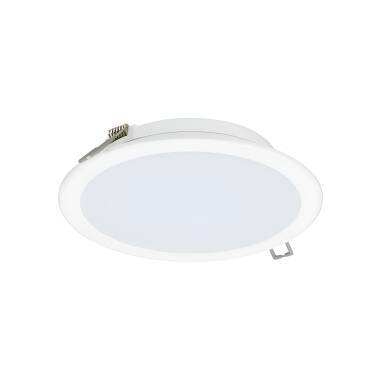
19W PHILIPS Ledinaire Slim Selectable 4000K LED Downlight with Ø 200 mm Cut Out DN065B G4
In Stock, delivery in 15-20 days
- Wattage 19 W
- Voltage Range 220-240V AC
- Lumen 2000 lm
5,89 €
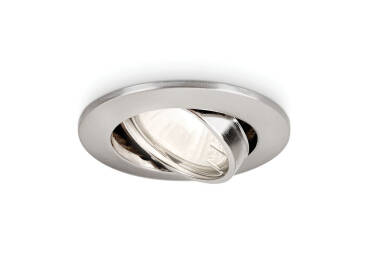
- Voltage Range 220-240V AC
- Cap Code GU10
- Cut Out Dimensions Ø75 mm
2 options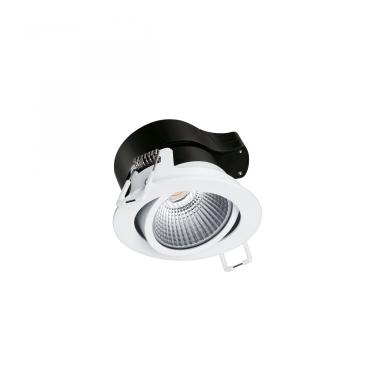
17,39 €
PhilipsRef 89550
PHILIPS Ledinaire ClearAccent Adjustable 6W LED Downlight with Ø70 mm Cut-Out RS060B G2
In Stock, delivery in 15-20 days
- Wattage 6 W
- Voltage Range 220-240V AC
- Lumen 500 lm
12,99 €
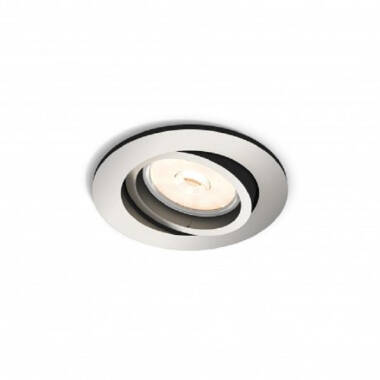
- Voltage Range 220-240V AC
- Cap Code GU10
- Cut Out Dimensions Ø70 mm




Brands related to this category


About Philips Downlights
Philips downlights are a popular choice for projects where lighting consistency, energy efficiency and trusted components are priorities. The range includes solutions for general lighting, residential interiors, wet areas, commercial spaces and replacing older luminaires while maintaining a clean, integrated ceiling appearance.
Why choose a Philips downlight?
Choosing a Philips downlight means installing recessed LED lighting that delivers an excellent balance of performance, reliability and ease of installation.
Within the range of downlights, these models stand out by offering solutions for many different applications, from homes to shops, offices, hotels and shared spaces. This allows the luminaire to be matched to the actual needs of each environment without compromising on consistent light quality.
One of the main reasons to choose this type of downlight is its reliable performance over time. With recessed lighting, it is not enough for a fixture to produce high light output on day one. It should also maintain a stable lumen output, minimise flicker, manage heat efficiently and provide a long service life to reduce maintenance and replacements.
In residential settings, a Philips downlight can illuminate living rooms, kitchens, bathrooms, hallways and bedrooms while maintaining a clean ceiling with no protruding elements. In commercial environments, they are an excellent choice where consistent installations, clear technical documentation and predictable performance across multiple fittings are important.
Another key advantage is the wide range of available formats. Philips offers round and square downlights, fixed and adjustable versions, dimmable models, shallow downlights, multiple cut-out sizes and IP ratings suitable for different environments. This versatility makes them suitable for both new installations and refurbishment projects.
Energy efficiency is another major benefit. Compared with older halogen or fluorescent solutions, LED downlights can significantly reduce electricity consumption. In many residential upgrades, a 50W halogen fitting can be replaced with a 6W to 8W LED downlight while maintaining a similar lighting level, depending on the actual lumen output of the selected model.
Recessed installation also keeps ceilings uncluttered and visually clean. This is particularly attractive in modern homes, renovations, hotels, offices and retail environments where lighting should provide functionality without becoming a dominant design feature.
Philips technology and quality
The quality of an LED downlight depends on several internal components, including the LED chip, driver, optics, diffuser, thermal management and overall electrical stability.
Philips develops its LED technology to provide efficient, stable lighting suitable for long-term operation. This is reflected in reliable start-up, uniform light distribution and improved visual comfort when the product is correctly installed.
The driver is one of the most important components. Its role is to supply stable power to the LED, preventing fluctuations that may cause flickering or shorten service life. In lower-quality downlights, the driver is often one of the weakest components. For installations operating many hours each day, such as offices, apartment buildings or commercial premises, driver quality deserves particular attention.
Thermal management is equally important. Although LED technology consumes less energy than halogen lamps, heat is still generated at the rear of the fitting. If this heat is not dissipated efficiently, performance may decrease and service life may be reduced. Good thermal design helps maintain the stability of both the LED and the driver over time.
Philips downlights are available in different colour temperatures to suit various applications. Warm white options such as 2700K or 3000K are ideal for living rooms, bedrooms, hotels and relaxation areas. Neutral white around 4000K is better suited to kitchens, bathrooms, offices and workspaces where greater clarity is required.
Colour Rendering Index (CRI) should also be considered. For general lighting, a CRI of 80 or higher is usually sufficient. In spaces where colour accuracy is particularly important, such as retail stores, bathrooms with mirrors, display areas or kitchens, choosing a higher CRI can provide noticeable benefits.
Glare control is another important factor. In recessed lighting, excessively direct or poorly distributed light can become uncomfortable, particularly with low ceilings, relaxation areas or workstations. Models featuring opal diffusers, carefully designed optics or recessed trims help soften the light output and improve visual comfort.
LED downlights typically offer service lives between 25,000 and 50,000 hours, depending on the product range and operating conditions. In a home with four hours of daily use, 25,000 hours represents more than 17 years of theoretical operation. In commercial installations operating 10 to 12 hours per day, overall product quality becomes even more important.
Some Philips models are also available in dimmable versions, allowing light levels to be adjusted according to the activity or time of day. To ensure proper dimming performance, compatibility between the downlight, driver and dimmer must always be verified. Otherwise, flickering, buzzing or limited dimming range may occur.
Recommended applications
Philips downlights can be used in a wide variety of spaces, provided the correct model is selected for the installation conditions and required lighting level.
In living rooms and bedrooms, recessed downlights create clean, discreet general lighting. Warm colour temperatures between 2700K and 3000K help create a comfortable atmosphere. Dimmable models are particularly useful for adapting light levels to reading, relaxing, watching television or entertaining.
In kitchens, the priority is providing bright, functional illumination. A colour temperature of 4000K generally offers excellent visibility for food preparation, cleaning and countertop tasks. Work surfaces typically require between 300 and 500 lux, so downlights should be positioned to minimise shadows.
In bathrooms, Philips models with the appropriate IP rating can be installed in suspended ceilings to provide safe, uniform general lighting. A bathroom downlight should be selected according to moisture exposure, splash zones and installation location. IP44 may be sufficient away from direct water exposure, while IP65 is generally recommended near showers or baths, always in accordance with local electrical regulations.
In hallways, corridors and circulation areas, Philips downlights provide continuous illumination without adding visual clutter. Lighting levels of around 100 to 150 lux are generally sufficient for safe movement. Even spacing helps eliminate dark areas and enhances the feeling of spaciousness.
In offices, waiting areas and commercial environments, lighting should remain comfortable and stable throughout long operating hours. Downlights with a 4000K colour temperature, CRI of at least 80 and good uniformity help create productive environments without overwhelming the ceiling design.
In retail stores, hotels and restaurants, Philips downlights can provide general lighting or be combined with adjustable luminaires to create accent lighting. Besides lumen output, it is worth considering beam angle, colour rendering and dimming capability to adapt the atmosphere throughout the day.
For renovation projects, Philips downlights offer a practical solution for replacing older fittings with modern LED technology. Before installation, the ceiling cut-out, available recess depth, connection type and compatibility with existing dimmers should all be checked.
Frequently Asked Questions
What are the advantages of a Philips downlight compared with a generic LED downlight?
The main difference usually lies in the overall quality of the product, including the driver, thermal management, lighting stability, technical documentation and consistency between individual fittings. These factors directly affect visual comfort and long-term durability.
Which colour temperature should I choose for a Philips downlight?
For living rooms, bedrooms and relaxation areas, 2700K or 3000K provides warm, comfortable lighting. For kitchens, bathrooms, offices and workspaces, 4000K generally delivers brighter, more functional illumination.
Can I install a Philips downlight in a bathroom?
Yes, provided the model has the appropriate IP rating for its installation zone. IP44 is usually sufficient away from splash areas, while IP65 is generally recommended near showers or bathtubs.
Are Philips downlights dimmable?
Some models are, while others are not. To adjust brightness, the product must clearly specify that it is dimmable and indicate the compatible dimming system, such as TRIAC, DALI or another protocol.
What cut-out size do I need?
The required ceiling cut-out depends on the specific model. Recessed downlights are available with cut-outs ranging from around 60–90 mm for smaller models to 120–180 mm or larger for medium-sized fittings. During renovations, measure the existing opening and also check the external diameter of the new downlight to ensure it fully covers the cut-out.
How many Philips downlights do I need for a room?
The calculation depends on the room size, the lumen output of each fitting and the desired illuminance. As a guideline, living rooms generally require between 150 and 250 lux, while kitchens and bathrooms often need between 300 and 500 lux in task areas. For example, a 20 m² room with a target of 200 lux requires approximately 4,000 useful lumens. If each downlight produces 800 lumens, around five fittings would normally be required, with their layout adapted to the room and furniture.
How long does a Philips LED downlight last?
Service life depends on the model and installation conditions, but LED downlights commonly provide between 25,000 and 50,000 hours of operation. Effective thermal management and a high-quality driver help maintain performance over the long term.
Are Philips downlights suitable for replacing halogen fittings?
Yes, provided the new downlight is compatible with the existing ceiling cut-out, available installation depth and electrical system. In many cases, upgrading to LED significantly reduces energy consumption and maintenance requirements. If the existing installation includes transformers or dimmers, compatibility should be checked before fitting the new downlights.