
LED Panel lights
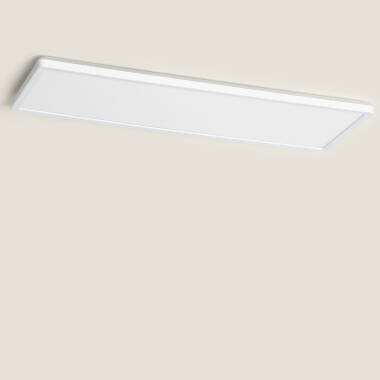
LED panels provide uniform, efficient and discreet lighting for offices, kitchens, retail spaces and all types of rooms with suspended ceilings.


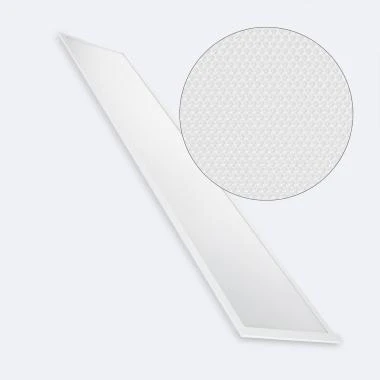
Our featured products from LED Panel lights
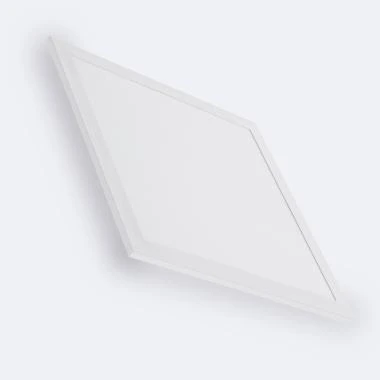
Advanced
11,89 €
 (34)
(34)- Wattage 40 W
- Voltage Range 220-240V AC
- Lumen 4000 lm
6 options
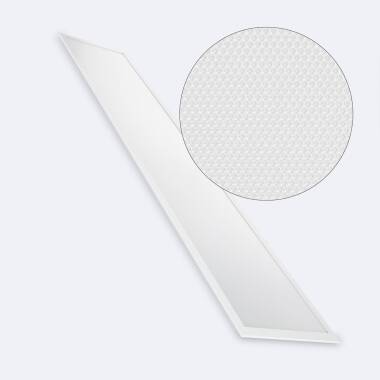
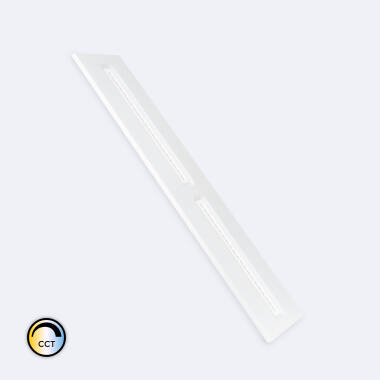
Advanced
10,79 €
(15)- Wattage 42 W
- Voltage Range 220-240V AC
- Lumen 4200 lm
6 options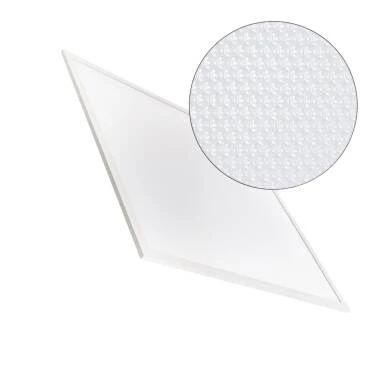
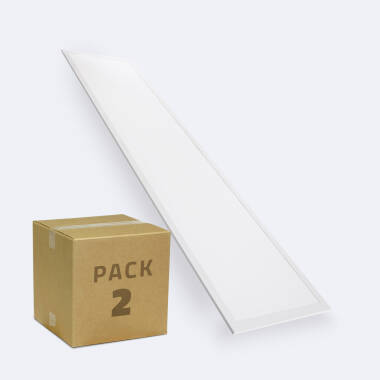
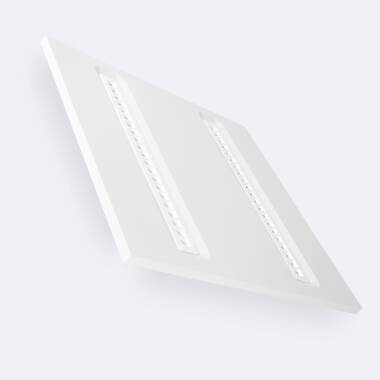
Advanced
16,29 €
Ref 92840
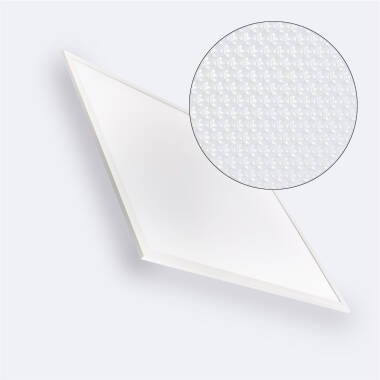
Aluminium600x600mm 40W Microprismatic UGR17 LED Panel 4000lm PHILIPS Certadrive
In Stock, delivery in 15-20 days
- Wattage 40 W
- Voltage Range 220-240V AC
- Lumen 4000 lm
5 options
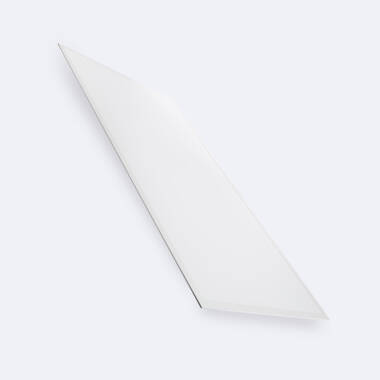
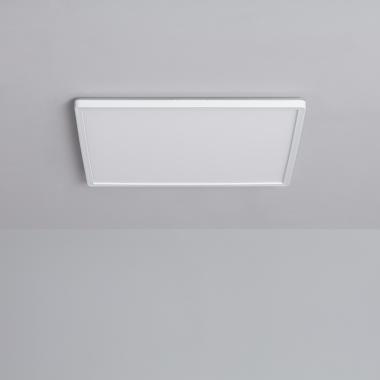
18,49 €
- Wattage 40 W
- Voltage Range 220-240V AC
- Lumen 4800 lm







Brands related to this category


About LED Panel lights
LED panels have become one of the most widely used lighting solutions in professional and residential environments thanks to their ability to provide homogeneous light, low energy consumption and a clean design integrated into the ceiling. Compared with traditional technologies such as fluorescent lighting, they improve energy efficiency, reduce maintenance and adapt lighting to very different spaces, from offices and meeting rooms to kitchens, clinics, educational centres and shops.
In addition to their efficiency, they stand out for the wide variety of formats, sizes and installation systems available. Today, it is possible to find panels for recessed installation in suspended ceilings, surface mounting or suspension with cables, as well as dimmable versions, models with remote control or solutions designed for specific applications where visual comfort and uniformity are especially important.
What is an LED panel and what is it used for?
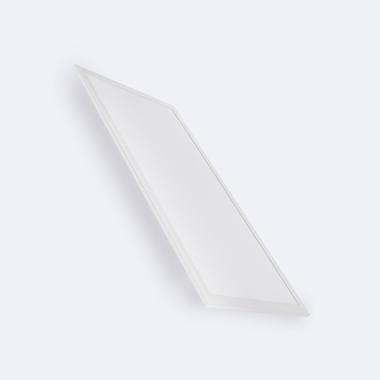
An LED panel is a flat luminaire designed to provide wide, uniform and low-glare lighting. It is usually installed in modular or suspended ceilings, although it can also be surface-mounted or suspended using specific accessories.
Its operation is based on a combination of LED chips and optical diffusers that distribute light evenly across the entire surface of the panel. This helps eliminate dark areas and reduce shadows, which is especially important in workspaces or areas where people spend many hours under artificial lighting.
Compared with other ceiling luminaires, LED panels stand out for their slim profile, visual integration and efficiency. Many current models exceed 110–140 lm/W, making it possible to significantly reduce electricity consumption compared with traditional systems.
LED panel vs fluorescent: advantages of switching
For years, fluorescent luminaires with T8 or T5 tubes were the most common solution in offices, classrooms and commercial spaces. However, the development of LED technology has gradually replaced this type of installation.
One of the main reasons is energy efficiency. A modern LED panel can reduce consumption by 40% to 60% compared with an equivalent fluorescent luminaire while maintaining similar lighting levels. For example, a 36W LED panel can replace a 72W fluorescent luminaire with four conventional tubes.
This is combined with a much longer service life. While a fluorescent tube usually needs replacing after 10,000 to 20,000 hours, many LED panels operate for 50,000 to 70,000 hours L80, reducing maintenance and associated costs.
There is also a clear improvement in visual comfort. LED panels eliminate visible flicker, provide more uniform lighting and are available in UGR<19 versions, which is the standard requirement for offices.
Another relevant aspect is aesthetic integration. LED panels create a cleaner and more modern finish, especially in modular ceilings or contemporary installations.
Most common uses: offices, kitchens and suspended ceilings
LED panels are most commonly used in offices and workspaces. In these environments, it is important to maintain lighting levels between 300 and 500 lux with good uniformity and glare control. LED panels achieve these values with homogeneous distribution and controlled consumption.
They are also increasingly used in kitchens and domestic spaces, especially in modern installations where clean and uniform general lighting is required. In these cases, compact formats or surface-mounted solutions are often used when there is no suspended ceiling.
Modular suspended ceilings remain the natural setting for this type of luminaire. Sizes such as 600x600 mm or 1200x600 mm are specifically designed to fit into Armstrong-type modular ceiling structures, allowing quick installation and a fully flush finish.
They are also common in educational centres, clinics, corridors, meeting rooms, receptions, shops and public spaces where uniform and comfortable lighting is required for many hours of use.
LED panels by size
One of the most important aspects when choosing an LED panel is its size. The format affects both its integration into the ceiling and the distribution of light, as well as the amount of luminous flux available.
Today, there are different sizes adapted to modular installations, elongated spaces or specific applications where a more compact solution is required.
600x600 mm LED Panel
600x600 mm LED Panels are the most widely used format in offices, workspaces, educational centres and standard modular ceilings. Their size matches the usual tiles used in modular suspended ceilings, making installation quick without the need to modify the structure.
They usually operate with power ratings between 36W and 48W and luminous flux levels that can exceed 4,000–5,500 lumens, depending on the model and efficiency.
In offices, they are usually installed to achieve 300–500 lux on the work plane, while in meeting rooms or circulation areas slightly lower levels may be used.
UGR<19 versions are also available, specifically designed for spaces with screens and prolonged use.
Although visually very similar to the 600x600 mm format, those additional centimetres are essential to ensure a correct fit within the ceiling grid.
They are mainly used in offices, administrative centres and professional spaces where a structure adapted to this size already exists.
In terms of lighting performance and efficiency, they offer very similar results to 600x600 mm panels, maintaining homogeneous lighting and low consumption.
1200x300 mm LED Panel
1200x300 mm LED Panels provide a more longitudinal light distribution, making them especially useful in corridors, linear desks, reception areas or spaces where the lighting should follow the geometry of the environment.
Their narrow format allows more discreet and modern visual lines to be created, while maintaining uniform lighting without resorting to conventional linear luminaires.
They are also common in kitchens, domestic work areas and commercial spaces where continuous but visually light lighting is required.
Depending on the model, they usually operate between 30W and 40W, with flux levels of around 3,000–4,500 lumens.
1200x600 mm LED Panel
1200x600 mm LED Panels are used in large spaces where a bigger emitting surface and especially uniform light distribution are needed.
Thanks to their dimensions, they help reduce shadow areas and improve lighting homogeneity in large rooms, open-plan offices, classrooms or commercial spaces.
They usually provide high luminous flux levels, easily exceeding 6,000–8,000 lumens depending on power and efficiency.
In professional installations, they are a widely used solution when the aim is to reduce the number of luminaires while maintaining appropriate lighting levels.
600x300 mm LED Panel
600x300 mm LED Panels are a compact alternative widely used in corridors, toilets, small offices or kitchens.
Their format makes it easy to integrate them into smaller ceilings where a standard 600x600 mm panel would be excessive.
They are also used in residential projects where uniform lighting with a discreet and modern design is required.
Depending on the space, they can be used individually or in combination to create layouts better adapted to the environment.
300x300 mm LED Panel
300x300 mm LED Panels are one of the most compact solutions within this type of luminaire. They are mainly used in toilets, auxiliary areas, small distribution spaces or areas where focused and uniform lighting is required.
In residential projects, alternatives such as round LED panels are also commonly used. These actually work as extra-flat round recessed downlights, especially when the aim is to break away from the traditional geometry of the suspended ceiling.
Despite their reduced size, many models provide sufficient lighting levels for small spaces thanks to high efficiencies and well-distributed optics.
Installation types: recessed, surface-mounted or suspended
The versatility of LED panels does not depend only on size. The installation system also plays an important role, as not every space has a modular suspended ceiling.
Today, there are specific solutions for recessed installation, surface mounting or suspension from the ceiling, adapting to both professional and residential environments.
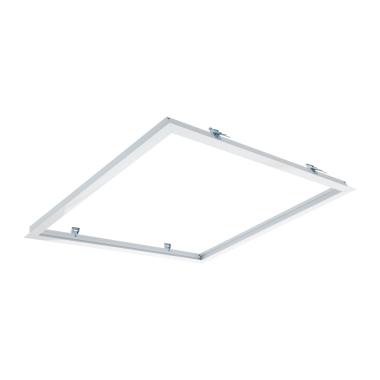
- Recessed LED panels for suspended ceilings. Recessed installation is the most common option. The panels are integrated directly into the modular structure of the suspended ceiling, remaining completely flush. This system provides a clean, discreet finish that is especially suitable for offices, meeting rooms, classrooms and commercial spaces. In addition to aesthetic integration, recessed installation helps achieve uniform light distribution and reduces the visual impact of luminaires on the ceiling. In plasterboard ceilings, panels can also be installed using specific recessed kits, but this requires making the corresponding cut-out and ensuring enough space for the driver and ventilation.
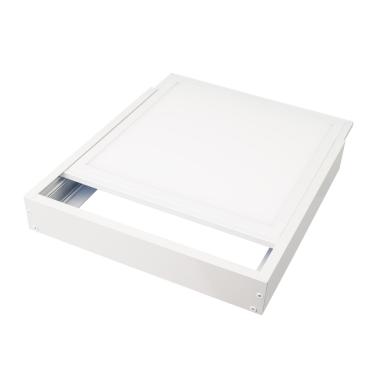
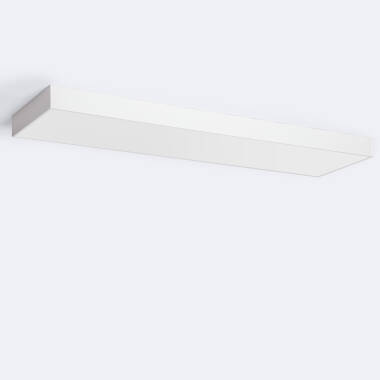
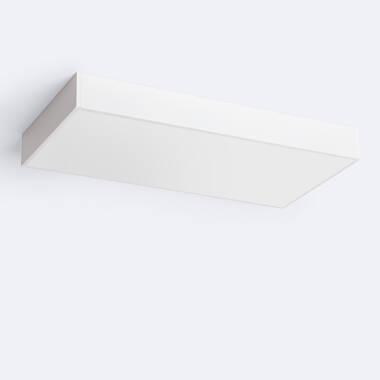
- Surface-mounted LED panels. When there is no modular suspended ceiling, surface-mounted LED panel systems allow this type of luminaire to be installed directly onto the ceiling. Specific frames or structures are used to fix the panel to the surface while maintaining a relatively discreet design. This type of installation is common in kitchens, corridors, retail premises, garages or renovation projects where creating a suspended ceiling is not feasible. Although the panel remains slightly separated from the ceiling, the result is still much cleaner and more uniform than with many conventional luminaires.
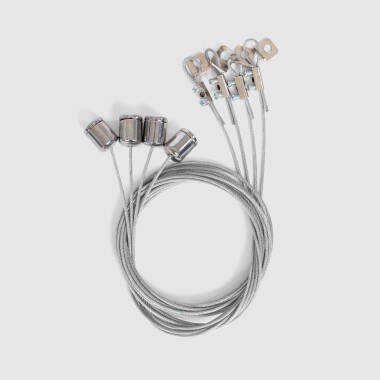
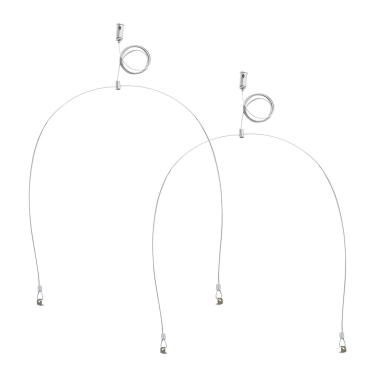
- Suspended LED panels. Suspended LED panels allow the luminaire to be hung using steel cables, creating a floating installation especially used in modern offices, reception areas or contemporary design spaces. In addition to the aesthetic component, this system can improve visual comfort in very high ceilings by bringing the light source closer to the work plane. They are also used over meeting tables, in coworking spaces and open areas where homogeneous lighting is required without directly modifying the ceiling. The suspension height can be adjusted according to the space and the desired lighting level.
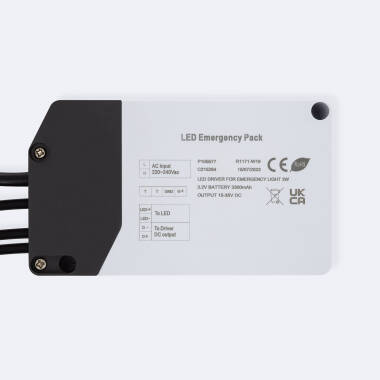
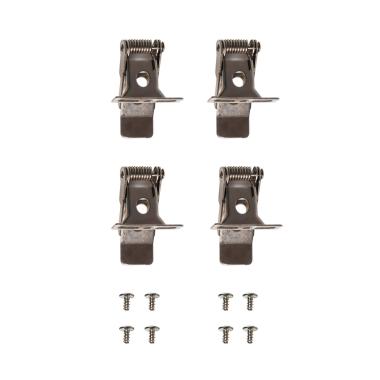
Correct installation of an LED panel largely depends on using the right elements. LED panel accessories include surface frames, suspension kits, recessed clips, drivers, connectors and fixing systems.
Choosing the right accessory makes it possible to adapt the luminaire to different ceiling types and ensure a safe and stable installation. It is also important to consider aspects such as driver ventilation, access for maintenance and compatibility between the panel and the mounting system.
Dimmable LED panels and panels with remote control
The evolution of LED lighting has made it possible to incorporate dimming and control functions that improve both comfort and energy efficiency.
Today, it is possible to adjust intensity, colour temperature and even control the lighting using a remote control or wireless systems.
Light dimming: what it is and how it works
This function allows the light intensity of an LED panel to be modified, adapting it to different situations or needs.
Depending on the system used, dimming can be carried out through protocols such as TRIAC, 0-10V, DALI or wireless RF and Bluetooth control.
In offices and professional spaces, reducing intensity at certain times helps lower consumption and improve visual comfort.
In domestic environments, dimming makes it possible to create warmer atmospheres or adjust lighting according to the time of day.
Not all panels are dimmable, as this function depends mainly on the built-in driver.
Dimmable LED panels
Dimmable LED panels are specifically designed to work with intensity control systems.
This type of solution is especially useful in meeting rooms, multifunctional spaces, restaurants, hotels or areas where lighting must adapt continuously.
In professional applications, they also help optimise energy consumption by reducing power when it is not necessary to work at 100%.
Some models include CCT colour temperature adjustment, allowing users to switch between warm, neutral or cool tones depending on the use of the space.
LED panels with remote control
LED panels with remote control include remote control systems that make it possible to manage intensity, switching on, switching off and, in some cases, colour temperature without any additional installation.
This solution is especially convenient in homes, multipurpose rooms, offices or spaces where greater flexibility of use is required.
In certain models, it is also possible to save scenes or frequently used settings, making it easier to adapt lighting to different activities.
LED panels from the best brands
The quality of an LED light panel depends largely on factors such as the driver, thermal management, diffuser uniformity and stability of the luminous flux.
In professional or intensive-use installations, choosing recognised manufacturers usually results in greater reliability, lower lumen depreciation and better compatibility with dimming systems.
- Philips LED panels. Philips LED panels stand out for offering solutions aimed at professional environments where lighting stability, good colour rendering and glare control are required. Many models incorporate technologies focused on improving visual comfort in offices and educational spaces, with reduced UGR options and high energy efficiencies. They also often offer good compatibility with dimming and control systems used in technical installations.
- LEDVANCE LED panels. LEDVANCE LED panels are widely used in offices, commercial installations and energy renovation projects. Their catalogue includes standard formats, dimmable versions and models aimed at professional applications where a balance between performance, efficiency and durability is required. In many fluorescent replacement projects, this type of panel allows the installation to be upgraded while maintaining simple integration into the suspended ceiling.
Why choose an LED panel for the ceiling?
LED ceiling panels combine efficiency, uniformity and discreet design in a solution capable of adapting to very different spaces.
Their ability to reduce consumption and maintenance, together with improved visual comfort, explains why they have become one of the most widely used luminaires in both professional and residential projects.
Energy efficiency and savings
LED technology makes it possible to convert a larger part of the consumed energy into useful light, reducing thermal losses compared with traditional fluorescent systems.
In practical terms, this translates into consumption reductions of 40% to 60% in many installations, especially when replacing old luminaires.
In addition to energy savings, the long service life reduces maintenance and replacement costs. In offices or buildings with many luminaires, this difference is especially relevant in the medium and long term.
It is also important to consider that many current panels maintain luminous flux better over time, avoiding rapid performance losses.
How to choose the right LED panel for each space
Choosing the right LED panel involves analysing both the space and the intended use.
One of the first aspects to consider is the required lighting level. In offices, 300 to 500 lux is usually recommended, while lower levels may be sufficient in corridors or auxiliary areas.
Colour temperature also affects visual comfort. 4000K is the most widely used standard in offices and professional spaces because it provides balanced neutral light, while 3000K creates warmer and more domestic atmospheres.
In spaces with screens or prolonged work, it is advisable to use low-glare panels (UGR<19), as they help reduce visual fatigue.
The available installation system should also be analysed. Working with a modular suspended ceiling is not the same as working with solid ceilings or plasterboard ceilings, where surface frames or specific kits may be required.
Finally, it is important to assess aspects such as efficiency, driver quality, dimming and warranty, especially in installations with many hours of daily operation.
Frequently asked questions about LED panels
How many lumens does an LED panel need?
It depends on the size of the space and the required lighting level. As a reference, an office usually needs between 300 and 500 lux, while a corridor works properly with 100–200 lux. A standard 600x600 mm LED panel normally provides between 3,600 and 5,500 real lumens, enough to cover between 8 and 15 m² depending on height, distribution and the desired light level. For example, a 20 m² office with a target of 400 lux would require around 8,000 useful lumens, usually covered by two high-efficiency LED panels.
What colour temperature is best?
4000K is the most common option in offices and educational centres because it provides balanced neutral light that supports concentration. In homes, hotels or restaurants, 3000K is usually used to create warmer atmospheres. Above 5000K, the light becomes whiter and more technical, common in clinics or laboratories. It is also worth considering the CRI: CRI>80 is recommended for interiors, while CRI>90 may be preferable in spaces where colour is important.
Do LED panels consume a lot?
No. Their main advantage is energy efficiency. A 36–40W LED panel can replace a traditional 72W fluorescent luminaire while maintaining similar lighting levels, with typical savings of 40% to 60%. In addition, many current models achieve efficiencies of 120–140 lm/W, generating more useful light with less consumption and less heat.
How long does an LED panel last?
Professional LED panels usually offer between 50,000 and 70,000 hours of L80 service life, meaning they retain at least 80% of their initial luminous flux. In an office with average use of 10 hours per day, this can translate into more than 13 years of operation. Durability depends mainly on the quality of the driver, thermal dissipation and the electrical stability of the installation.
Are they suitable for offices?
Yes. They are one of the most widely used solutions in modern offices thanks to their lighting uniformity, efficiency and low glare. In spaces with screens, UGR<19 is recommended to reduce reflections and visual fatigue. For this reason, many panels include specific diffusers and optics to control glare. In addition, their uniform distribution avoids excessive contrasts and improves visual comfort during long working days.
Is the UGR index important?
Yes, especially in offices, classrooms and meeting rooms. The UGR index (Unified Glare Rating) measures perceived glare. The lower the value, the lower the visual discomfort. The UNE-EN 12464-1 standard recommends UGR<19 in offices and areas with screens. In corridors or transit areas, higher values can be used without significantly affecting comfort.
Can they be installed without a suspended ceiling?
Yes. Although recessed installation is the most common option, surface-mounted and suspended options are available. Surface frames allow installation on solid or plasterboard ceilings without a suspended ceiling, while suspension kits are widely used in modern offices and open spaces. This makes them suitable for homes, renovation projects and retail premises.
Do they require maintenance?
Much less than traditional fluorescent luminaires. As they do not use replaceable tubes, starters or conventional ballasts, incidents are considerably reduced. In addition, LED technology maintains more stable performance over time. In professional installations, replacing fluorescent lighting with LED panels can reduce maintenance costs by 50% to 70%, especially in buildings with many luminaires.