
Suspended LED Panels
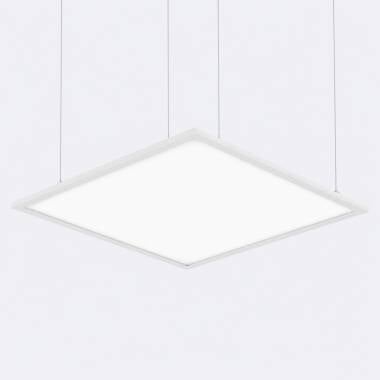
Suspended LED panels make it possible to install technical lighting in spaces where there is no suspended ceiling or where a lighter, more contemporary appearance is desired.
Our featured products from Suspended LED Panels
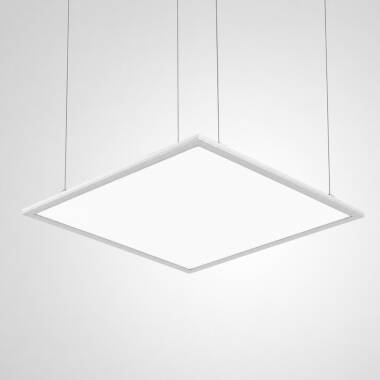
22,49 €
Ref 181098
AluminiumNew600x600mm 42W LED Panel 4200lm Philips Certadrive + Suspension Kit
In Stock, delivery in 15-20 days
- Wattage 42 W
- Voltage Range 220-240V AC
- Lumen 4200 lm
3 options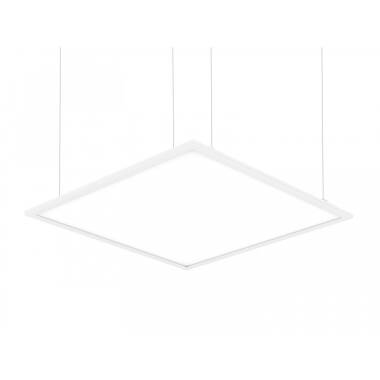
Advanced
24,59 €
 (1)
(1)Ref 77273
Aluminium600x600mm 40W LED Panel 4000lm LIFUD + Suspension Kit
In Stock, delivery in 15-20 days
- Wattage 40 W
- Voltage Range 220-240V AC
- Lumen 4000 lm
3 options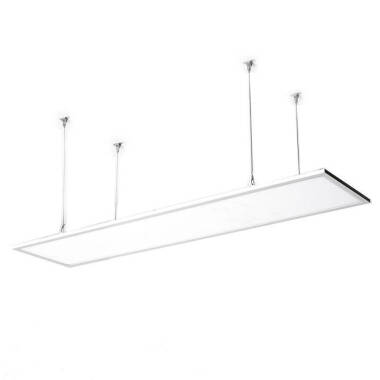
Advanced
71,99 €
Ref 77283
Aluminium120x60cm 63W LED Panel 6300lm LIFUD with Suspension Kit
In Stock, delivery in 15-20 days
- Wattage 63 W
- Voltage Range 220-240V AC
- Lumen 6300 lm
3 options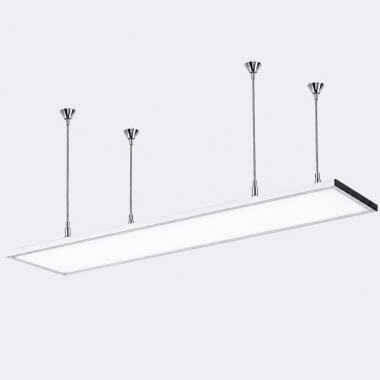
27,09 €
Ref 181149
AluminiumNew1200x300mm 42W LED Panel 4200lm Philips Certadrive + Suspension Kit
In Stock, delivery in 15-20 days
- Wattage 42 W
- Voltage Range 220-240V AC
- Lumen 4200 lm
3 options






About Suspended LED Panels
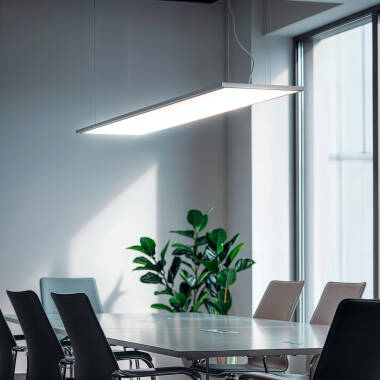
Suspended installation has become one of the most widely used solutions for installing LED panels in modern offices, restaurants, coworking spaces and open areas with high ceilings. In addition to solving lighting needs in places where recessed installation is not possible, suspended panels add significant visual value and help improve lighting comfort by bringing the light closer to the useful plane. Thanks to cable suspension systems, this type of installation offers great flexibility, both functionally and aesthetically.
When to install a suspended LED panel
Suspended LED panels make particular sense in spaces where there is no demountable suspended ceiling or where building work to recess luminaires is to be avoided. They are also widely used in projects where lighting forms part of the visual design of the space and not only its functional aspect.
Open-plan offices and coworking spaces
In open-plan offices and collaborative spaces, suspended panels make it possible to create clean, visually well-ordered lighting lines. In addition, bringing the panel closer to the work plane helps improve lighting uniformity and visual comfort in spaces with high ceilings. In many modern coworking spaces, suspended lighting is also used as an aesthetic element to reinforce a more contemporary and technical image.
Restaurants and hospitality spaces
In restaurants, cafés and hospitality spaces, suspended LED panels make it possible to combine general lighting with visual design. The ability to adjust the height and create suspended compositions helps generate more refined atmospheres adapted to each space. In addition, compared with traditional technical luminaires, suspended panels provide uniform lighting that is visually less harsh.
Spaces without suspended ceilings
When there is no demountable suspended ceiling, suspended installation avoids the need for complex building work or bulkier surface-mounted solutions. This is especially useful in refurbished industrial units, retail premises, industrial-style offices or spaces with exposed services where a more open aesthetic is desired. In addition, suspending the panel makes it possible to manage the useful lighting height more effectively without depending entirely on the total ceiling height.
Installation: height, cable and fixing
Suspended installation requires attention to both the final height of the panel and the fixing system used. Although the system may look simple visually, correct installation directly affects visual comfort, light uniformity and the stability of the luminaire.
At what height should the panel be suspended?
The ideal height mainly depends on the type of space and the total ceiling height. In offices and work areas, the panel is usually positioned close enough to the useful plane to improve lighting without creating the feeling of a visual obstacle. In high ceilings, slightly lowering the luminaire helps reduce light losses and improves visual comfort.
In restaurants and decorative spaces, it is also common to play with different heights to reinforce the design of the environment. As a general reference, many suspended panels are installed leaving between 50 and 150 cm of distance from the ceiling, although the final distance will always depend on the space and the desired effect.
Cable types and suspension systems
Suspension systems usually use adjustable steel cables capable of supporting the weight of the LED panel in a stable and safe way. There are traditional straight cable systems and Y-shaped configurations, mainly used to improve stability in certain formats or to reinforce the visual effect of the installation.
Straight cables are the most common option in offices and technical spaces because they create a clean and discreet installation. Y-shaped systems, by contrast, start from a single fixing point on the ceiling that divides into two support points on the panel, improving stability in certain formats and also adding a more decorative visual effect. In addition to the cable, suspension kits normally include tensioners, anchors and height adjustment systems that make it easy to adjust the final position of the panel.
Dimmable suspended LED panels
The combination of suspended installation and intensity dimming is one of the most widely used solutions today in modern offices, restaurants and multifunctional spaces. Dimmable LED panels allow the light intensity to be adapted according to the activity or desired atmosphere, which is especially useful in spaces where lighting needs change throughout the day.
In offices, for example, more intense lighting can be maintained during working hours and slightly reduced during meetings, video calls or in collaborative areas. In restaurants and hospitality spaces, dimming makes it possible to completely transform the atmosphere without modifying the installation. In addition, combining dimming with suspended panels helps create spaces that are visually more comfortable and flexible.
What advantages does a suspended LED panel offer?
Beyond aesthetics, suspended installation provides very clear functional advantages in certain projects:
- Allows LED panels to be installed without a suspended ceiling: especially useful in refurbished premises, industrial-style offices or spaces with exposed services.
- Improves visual comfort in high ceilings: bringing the luminaire closer to the useful plane helps reduce light losses and improve uniformity.
- Adds aesthetic value: suspended panels create a lighter and more contemporary appearance than many traditional technical luminaires.
- Makes decorative compositions easier: suspension allows you to play with heights, alignments and more flexible layouts.
- Combines very well with dimming: especially in modern offices, restaurants and multipurpose spaces.
Frequently asked questions about suspended LED panels
When does it make sense to install a suspended LED panel?
Mainly in spaces without suspended ceilings, open-plan offices, restaurants, coworking spaces and areas with high ceilings where recessed installation is not viable or desirable.
At what height should a suspended panel be installed?
It depends on the space and the desired effect. In many offices and restaurants, a distance of between 50 and 150 cm from the ceiling is usually left to improve visual comfort and the perception of the space.
What is the difference between a straight cable and a Y-shaped cable?
A straight cable offers a more discreet and technical installation. Y-shaped systems help improve stability in certain formats and are also often used for decorative purposes.
Can suspended LED panels be dimmed?
Yes. Many models are compatible with dimming via remote control, wall dimmers or smart home systems.
Are suspended panels suitable for offices?
Yes. In fact, they are currently one of the most widely used solutions in modern offices and coworking spaces thanks to their clean appearance and improved visual comfort.
Is suspended installation safe?
Yes, provided that fixing and suspension systems compatible with the weight and format of the LED panel are used.