
Stair wall lights
Staircase wall lights improve safety and orientation on changes in level, illuminating steps, landings and routes without creating glare.
Our featured products from Stair wall lights
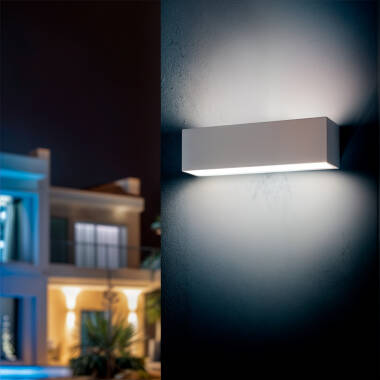
32,59 €
Ref 87915
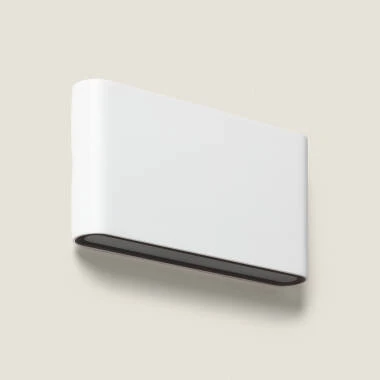
AluminiumLena 10W Rectangular Outdoor Double Sided Aluminium LED Wall Light White
Cool White 4000K
In Stock, delivery in 15-20 days
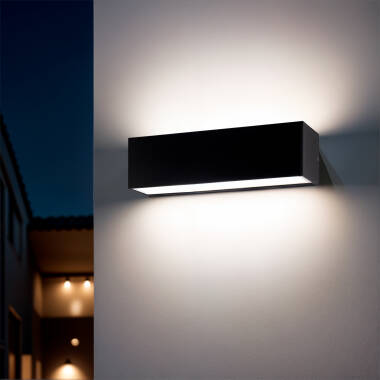
32,59 €
GaleoRef 87917
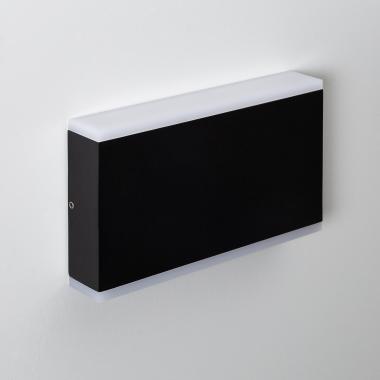
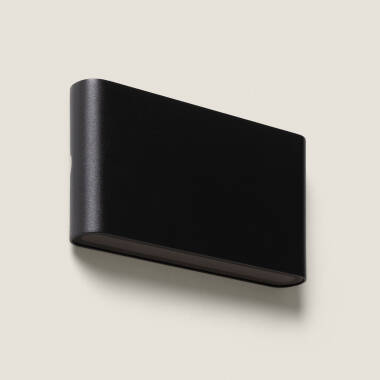
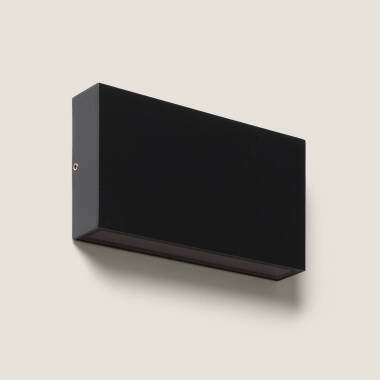
AluminiumLena 10W Rectangular Outdoor Double Sided Aluminium LED Wall Light Black
Cool White 4000K
In Stock, delivery in 15-20 days
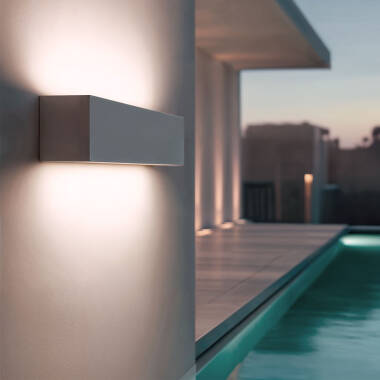
32,59 €
Ref 87915
AluminiumLena 10W Rectangular Outdoor Double Sided Aluminium LED Wall Light White
Warm White 2700K
In Stock, delivery in 15-20 days
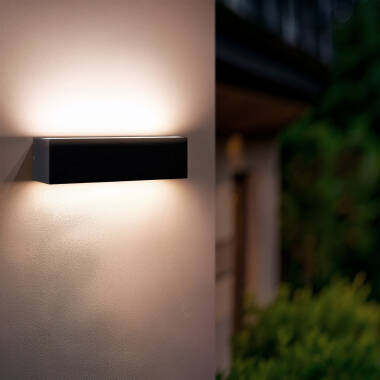
32,59 €
GaleoRef 87917
AluminiumLena 10W Rectangular Outdoor Double Sided Aluminium LED Wall Light Black
Warm White 2700K
In Stock, delivery in 15-20 days





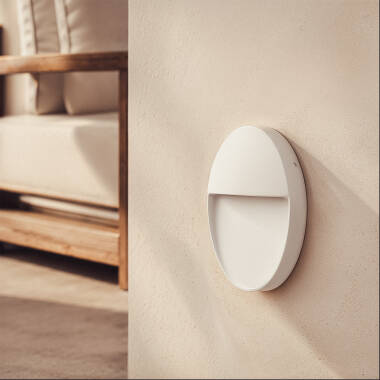
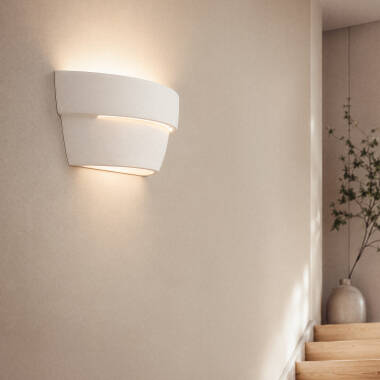
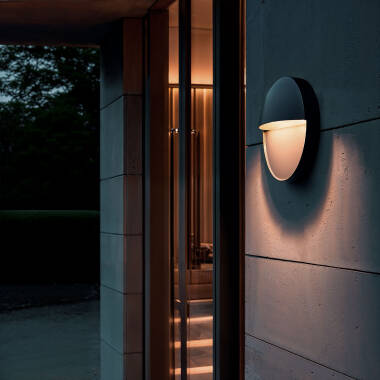
You may also be interested in
About Stair wall lights
On a staircase, lighting does not only serve a decorative purpose. It also helps identify each step, mark changes in level and move safely both during the day and at night. For this reason, staircase wall lights should provide comfortable, well-directed light that is sufficient to avoid shadows that could make the route harder to perceive.
Wall lamps used on staircases stand out for their ability to illuminate from the side, accompanying the ascent or descent without taking up floor space or interfering with movement. They can be used in homes, residential buildings, hotels, commercial premises or indoor staircases where functional, integrated and visually refined lighting is desired.
Safety on staircases
Staircase wall lights mainly help improve route safety, making each flight more visible, readable and easy to use. Unlike a ceiling light located far from the steps, side lighting makes it possible to define volumes, landings and changes of direction more clearly, reducing shadows that could make the space harder to perceive.
Good staircase lighting helps clearly identify where each step begins and ends, preventing trips and improving orientation, especially in low-light conditions. In addition, by distributing light evenly over the wall and walking surface, glare is avoided, which is key to maintaining safety when going up or down.
To achieve this, it is important to use luminaires that direct light towards the circulation area or generate well-distributed indirect lighting. It is not about using very powerful light, but about ensuring constant lighting, without dark areas between flights or harsh contrasts.
On staircases used by children, older people or frequently at night, this aspect becomes even more important. Soft, continuous and well-positioned lighting makes it possible to move with confidence at any time of day, reinforcing safety without feeling intrusive.
Continuity with hallways and landings
Many staircases connect with hallways, entrances or distribution areas. In these cases, the lighting should maintain visual continuity so that the transition between areas does not feel abrupt. Hallway wall lights can follow the same aesthetic line as the staircase lights, maintaining finishes, colour temperature or type of emission.
This continuity helps make the route easier to understand. If the hallway has warm light and the staircase uses very cool light, the change can feel strange and less comfortable. In homes, 2700K or 3000K is usually used to achieve a more pleasant atmosphere.
In residential buildings, offices or more functional-use staircases, 4000K can be used when greater clarity is desired, always keeping glare under control.
Where to place wall lights on staircases
Placement is key for the wall light to illuminate correctly. On a staircase, it is not enough to place light points decoratively; they should accompany the rhythm of the steps and reinforce the areas where the user needs greater visibility.
The most common points are the side walls of the flight, landings, the beginning and the end of the staircase. They can also be installed at mid-height or in a low position, depending on the type of luminaire and the desired effect.
On the side wall of the flight
The side wall is the most common location for staircase wall lights. It makes it possible to illuminate the route from the side and create a sequence of light that accompanies the ascent or descent.
On straight staircases, several evenly distributed points may be enough. On staircases with a turn, it is advisable to reinforce the change-of-direction area to prevent the landing from being left in shadow.
The height will depend on the design. Decorative or indirect-emission wall lights are usually placed at mid-height, while recessed or orientation luminaires can be installed closer to the floor.
On landings and changes of direction
Landings are key points because they mark a pause or a change of flight. If they are poorly lit, the staircase can feel confusing or create uncomfortable shadows.
A wall light located on the landing can reinforce visibility and serve as a transition between flights. On L-shaped or U-shaped staircases, this area deserves special attention, as the user changes direction and needs to recognise the space clearly.
It is also important to illuminate the start and end of the staircase. The first and last steps should be clearly identified to prevent trips.
Low-height wall lights
Low-height wall lights work very well when orientation lighting is desired. Placed close to the steps, they mark the route discreetly and avoid excessive light in the upper part of the staircase.
This type of installation is especially useful for night use. It allows safe movement without switching on intense general lighting. It also provides a modern, architectural aesthetic, especially on staircases with smooth walls or continuous materials.
In this case, wall-integrated lights can be a very interesting alternative, as they sit flush and reduce the risk of knocks or protruding elements.
How to choose staircase wall lights
Choosing staircase wall lights means prioritising safety, light control and proportion. The luminaire should integrate well into the wall, illuminate the route and avoid glare from different viewing angles.
It is also worth taking into account the width of the staircase, the colour of the walls, the material of the steps and the presence of railings, windows or pictures.
- Lumens and intensity: For domestic staircases, it is usually not necessary to use very powerful light. Between 200 and 500 lumens per point may be sufficient if several well-distributed wall lights are installed. For larger spaces, residential buildings or areas of intensive use, it may be advisable to increase the output. The key lies in uniformity, avoiding light points that are too intense and create marked shadows. Night use should also be considered, where low or dimmable intensity may feel more comfortable.
- Colour temperature: In homes, 2700K or 3000K are usually the most pleasant temperatures for indoor staircases, providing warm and comfortable light. In more functional areas, such as residential buildings or service staircases, 4000K can offer greater clarity. It is important to maintain coherence with the connected rooms to achieve a balanced visual transition.
- Light direction: The direction of the light directly influences visual comfort. Models with downward light help illuminate the walking plane, while dual-emission models add a decorative effect. Indirect light reduces glare and creates a softer atmosphere. It is advisable to avoid luminaires with visible bulbs or frontal beams at eye level, prioritising opal diffusers and controlled optics.
- Design and depth: On narrow staircases, it is advisable to choose compact, extra-flat or recessed luminaires to avoid knocks and keep the passage clear. On wide staircases, wall lights with a stronger decorative presence can be used, always maintaining proportion with the space. Finishes should coordinate with other elements such as railings, handrails or flooring to achieve a coherent aesthetic.
Step lights and linear solutions for staircases
Staircase lighting can be solved with different systems. Wall lights provide decorative presence and side light, step lights offer lower and more discreet lighting, and linear solutions create continuous, modern effects.
The choice depends on the desired result. In many projects, the best solution combines several systems to balance safety, aesthetics and comfort.
Step lights
Step lights are designed to mark the route from a low position. They are normally installed close to the steps or on the side wall, providing discreet light that helps recognise the passage.
They are very useful for night use, modern staircases or projects where integrated and minimally invasive lighting is desired. They also reduce glare because the light stays outside the main field of vision.
Compared with a decorative wall light, a step light has less visual presence and a more orientational function. It can be used alone or combined with wall lights on landings or wider areas.
LED strips on staircases
LED strips make it possible to create continuous lines of light in skirting boards, under steps, handrails, profiles or false ceilings. They are a very decorative and useful option for marking routes uniformly.
Installed under the tread or on the side of the step, they can help identify each step. In handrails or skirting boards, they provide indirect light that accompanies the route without glare.
For a good result, they should be installed with an aluminium profile and diffuser, avoiding visible LED points. It is also important to choose a colour temperature that is coherent with the rest of the staircase lighting.
Sensors, two-way switches and dimming
Two-way switches are very important on staircases. The light should be able to be switched on and off from the beginning and end of the flight. In multi-storey homes, it may also be necessary to control the lighting from landings.
Presence sensors are a practical option in passage areas. They allow the light to switch on automatically when someone approaches, which is especially useful at night or in residential buildings. If sensors are used, it is advisable to adjust the switch-on time carefully so the light does not turn off during the route.
Dimming can add comfort. Low intensity can serve as night-time orientation light, while higher intensity can be used when more visibility is needed.
Frequently asked questions about staircase wall lights
At what height should staircase wall lights be placed?
It depends on the type of luminaire. Decorative or indirect-light wall lights are usually placed at mid-height, approximately between 120 and 160 cm in relation to the nearby step. Step lights and low lights can be installed between 20 and 50 cm. The height should avoid glare and allow the light to mark the route well.
How many lumens does a staircase wall light need?
On domestic staircases, between 200 and 500 lumens per point may be sufficient if there are several well-distributed wall lights. In larger or shared-use spaces, it may be necessary to increase the output. More than power, what matters is uniformity and the steps being clearly visible.
Every how many steps should a light be placed?
There is no single valid distance. On short flights, one or two points may be enough, while on long staircases it is advisable to distribute the light regularly. With low step lights, one point can be placed every several steps, always reinforcing the beginning, end and landings.
What colour temperature is best?
In homes, 2700K or 3000K are usually the most pleasant options. In residential buildings or functional-use areas, 4000K can provide greater clarity. It is advisable to maintain coherence with hallways, entrances and connected rooms.
Are wall lights or step lights better for staircases?
Wall lights provide more decorative presence and can illuminate the wall and the route. Step lights are more discreet and are designed to mark the passage from a low height. On many staircases, they work well combined: step lights for orientation and wall lights to reinforce landings or wide areas.
Can LED strips be used on staircases?
Yes. LED strips can be installed under steps, in skirting boards, handrails or profiles to create continuous, modern light. It is advisable to install them with a profile and diffuser to avoid visible points and improve durability.