
Ceiling Spotlights
Ceiling spotlights allow you to illuminate different areas of a room from a single point, combining adjustable lighting, decorative design and everyday practicality.


Our featured products from Ceiling Spotlights
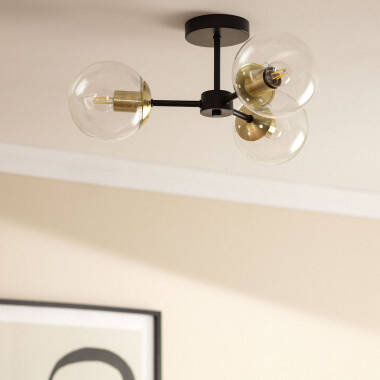
46,99 €
WassilyRef 95383
Wassily Gold 3 Spotlight Metal & Glass Ceiling Lamp
Black
In Stock, delivery in 15-20 days
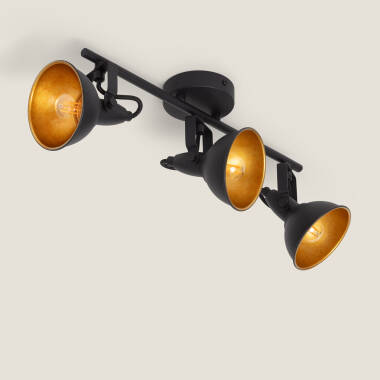
55,99 €




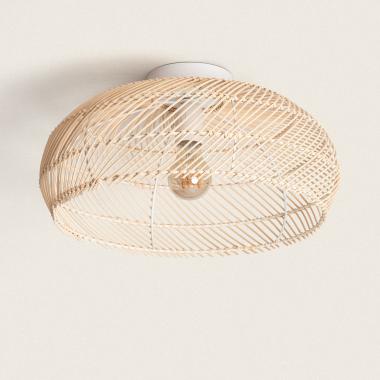

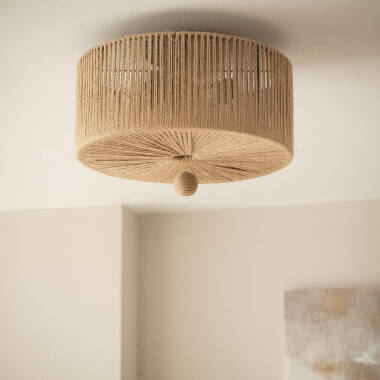













You may also be interested in
Brands related to this category


About Ceiling Spotlights
Ceiling spotlights are a versatile way to distribute light without installing numerous separate lighting points. Compared with other ceiling lights, they stand out for incorporating several spotlights into a single fitting, usually adjustable, allowing the light to be directed towards specific areas. This is particularly useful in living rooms, kitchens, bedrooms and workspaces where different activities take place and adaptable lighting is needed.
What Are Ceiling Spotlights and How Do They Work?
Ceiling spotlights are fittings that incorporate two or more light sources into a single structure. Their design combines general and directional lighting, using one electrical connection to illuminate different areas.
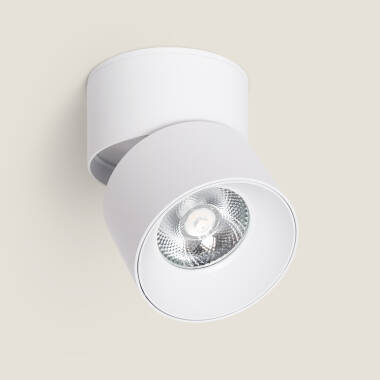
They usually feature a ceiling mounting base and several heads that can be adjusted independently. Depending on the model, the spotlights may rotate horizontally, tilt vertically or remain in a fixed position.
This adjustability allows light to be directed towards a table, worktop, feature wall or reading area, preventing all the illumination from being concentrated directly beneath the fitting.
Types of Ceiling Spotlights
Ceiling spotlights come in different configurations depending on the shape of their structure and the arrangement of the light sources. These features determine how the light is distributed, the area it can cover and how the fitting integrates into the décor.
Bar Ceiling Spotlights
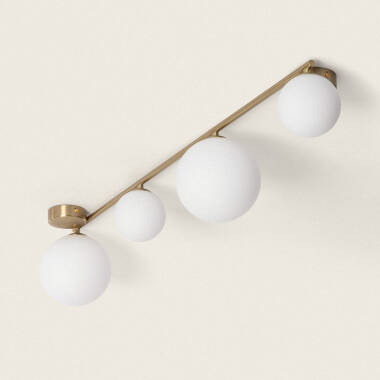
Bar-mounted spotlight fittings feature an elongated structure with several light heads positioned along it. This design distributes the light sources along a single axis, making them particularly practical in rectangular rooms or spaces where several areas arranged in a line need illuminating.
Ceiling Spotlights with Round or Square Bases
This type groups the spotlights around a central base, usually round, square or rectangular. Unlike linear fittings, the light sources are arranged around the centre, allowing the illumination to be directed in different directions within the same room.
Multi-Arm Ceiling Spotlights
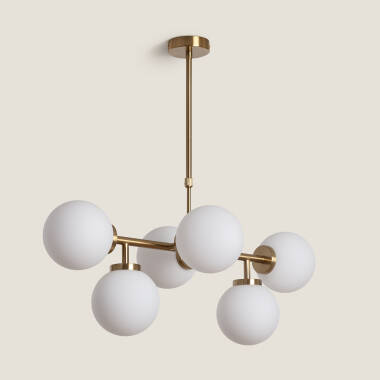
Multi-arm spotlight fittings feature a central structure from which several supports extend. These may be fixed, articulated or of different lengths. Their main characteristic is that the light sources are not necessarily arranged in a line or grouped around a compact base.
Models with articulated arms offer greater adjustability, as both the position and direction of the heads can be changed. Fixed-arm fittings, on the other hand, have a more defined arrangement and generally make a stronger decorative statement.
In both cases, it is important to consider the overall dimensions of the fitting and the available ceiling height, especially when the arms extend considerably beyond the central fixing point.
How to Choose a Ceiling Spotlight Fitting
Choosing a fitting with several spotlights requires consideration of its dimensions, the room layout and how the light is distributed. A properly sized fitting should provide sufficient illumination without causing glare or excessive differences in brightness.
Determining the Number of Spotlights
The right number of spotlights depends on how the space is used and the dimensions of the room.
For bedrooms and relaxation areas, a fitting with 2 to 3 spotlights is usually sufficient in small or medium-sized rooms to provide soft, even light.
In living rooms, kitchens or workspaces, however, it is advisable to choose models with 4 to 6 spotlights or combine a central fitting with supplementary lights to ensure good coverage without shadowy areas.
Beam Angle and Direction
The beam angle determines how the light emitted by each spotlight is distributed. Angles between 24° and 40° produce concentrated beams suitable for highlighting pictures, shelving or specific surfaces. Angles of 60° or more illuminate larger areas and are generally more practical for general lighting.
With standard-height ceilings, overly narrow beams can produce sharply defined circles of light. For balanced distribution, position the spotlights so that their illuminated areas complement one another.
Colour Temperature
Colour temperature affects the atmosphere and how objects are perceived. Lighting between 2700 K and 3000 K provides warm white light suitable for bedrooms, living rooms and dining rooms. A temperature of 4000 K delivers neutral white light commonly used in kitchens, offices and areas where visual tasks are performed.
Ceiling Spotlights by Interior Design Style
Multi-spotlight fittings are not limited to a technical appearance. There are designs that integrate adjustable lighting into contemporary, traditional and industrial-inspired interiors.
Modern and Minimalist Designs
Minimalist ceiling lights with spotlights typically feature geometric structures, straight lines and understated finishes in white, black or metallic tones.
Models with cylindrical heads and narrow bars are suitable for contemporary kitchens, home offices and living rooms where functional lighting without excessive decoration is desired.
Classic and Decorative Designs
Classic ceiling lights with spotlights feature more ornamental finishes, curved structures, metal details or glass shades. This type of fitting preserves a traditional aesthetic while allowing several light sources to be directed individually.
Applications of Ceiling Spotlights
Adjustable lighting is particularly useful in spaces used for different activities. The ability to direct the light makes it possible to meet specific needs with a single fitting.
- Living and dining rooms: spotlights combine general lighting with light directed towards bookcases, pictures, feature walls or dining tables. In living rooms, general lighting of 150 to 300 lux usually provides a suitable base, supplemented by dedicated reading lights. In dining rooms, direct the spotlights towards the table while avoiding glare for people seated around it.
- Kitchens and work areas: they help illuminate worktops, units and food preparation surfaces. Levels of 300 to 500 lux can be considered for these tasks. It is important to position the heads to reduce shadows cast by people and add under-cabinet lighting where necessary.
- Bedrooms and dressing rooms: they allow light to be distributed between the central area, wardrobes and other points of interest. In bedrooms, warm general lighting of 100 to 200 lux is usually comfortable. For dressing rooms, colour temperatures between 3000 K and 4000 K and good colour rendering make it easier to distinguish colours and clothing.
- Hallways and entrance halls: linear models distribute light along narrow passageways, with indicative levels of 100 to 150 lux for domestic circulation areas. In entrances, some of the light can be directed towards mirrors or occasional furniture, combining functional and decorative lighting.
- Home offices and study areas: they allow different work areas to be illuminated and light directed towards specific surfaces. Desks may require around 500 lux for reading and writing, so it is advisable to supplement general lighting with a task light and avoid reflections on screens.
Frequently Asked Questions About Ceiling Spotlights
Before installing a ceiling light with several spotlights, it is common to have questions about its lighting capacity, adjustability and compatibility with LED bulbs.
How Many Spotlights Are Needed to Light a Room?
A small room of 8 to 12 m² can be illuminated with three or four spotlights if they provide sufficient luminous flux and an appropriate beam angle. For example, four 600-lumen bulbs provide a nominal total of 2,400 lumens. The useful amount of light will depend on their direction, the room's geometry and lighting losses.
Are Adjustable or Fixed Spotlights Better?
Adjustable spotlights offer greater flexibility for illuminating different areas and adapting the light distribution when furniture is rearranged. Fixed models can be suitable when consistent lighting is required and the position of furniture and other elements remains unchanged.
What Bulbs Do Ceiling Spotlights Use?
Many use GU10 LED bulbs powered directly by 230 V mains electricity, although models with other cap types and integrated LED systems are also available. Before replacing a bulb, check the connection, dimensions and electrical specifications of the fitting.
Can Ceiling Spotlights Be Installed on Low Ceilings?
Yes. Compact surface-mounted models are suitable for typical domestic ceiling heights of 2.40 to 2.70 metres. Choose low-profile fittings and avoid heads that protrude too far into passageways.
How Can You Avoid Glare from Ceiling Spotlights?
It is advisable to direct spotlights towards surfaces or walls rather than towards people's eyes. Choosing bulbs with suitable optics, recessed light sources and wider beam angles for general lighting also helps reduce glare.
Do Ceiling Spotlights Use More Electricity?
Electricity consumption depends on the total wattage of the light sources, not simply the number of spotlights. A fitting with four 5 W LED bulbs uses 20 W, while another with three 10 W bulbs uses 30 W. To compare efficiency, you should also consider the lumens emitted and how the light is distributed.
Can All the Spotlights Be Adjusted Independently?
Many models allow each head to be adjusted individually, but the range of rotation and tilt varies depending on the design. Some fittings have fixed spotlights or limited movement. It is important to check this feature if you need to illuminate different walls or work areas.