
Industrial LED linear high bay lighting
Linear LED high bays are designed to offer uniform lighting in industrial spaces with longitudinal geometries, optimizing light distribution in aisles, shelving, and work lines.
Our featured products from Industrial LED linear high bay lighting
45,99 €
Ref 121781
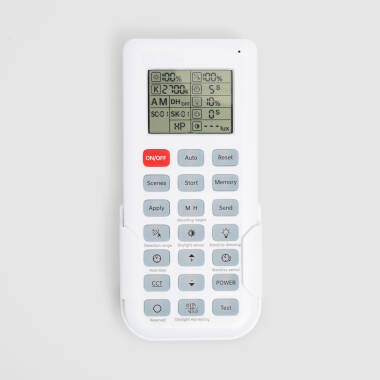
Zhaga Remote Control for Sensors & Controllers
Pre-Order, estimated shipping from 16/06/2026
- IP Rating IP20
- Battery Operated Yes
- Dimensions 147 mm x 69 mm x 25 mm
- -28%
Expert

Before 157,99 €
112,99 €
Ref 115977
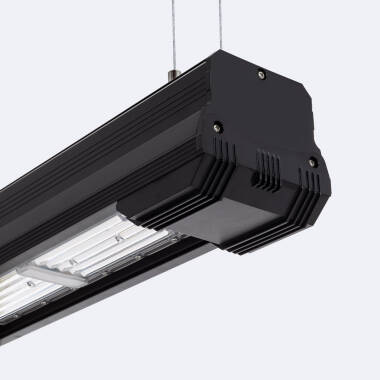
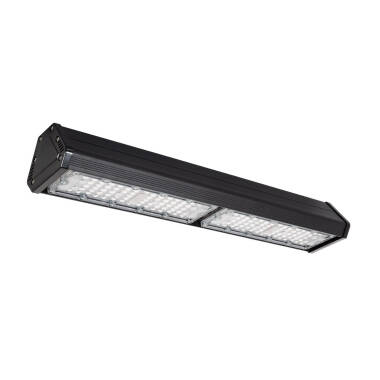
New100W 160 lm/W IP65 Linear Industrial High Bay LED Smart Zhaga Plug and Play
Pre-Order, estimated shipping from 03/09/2026
- Wattage 100 W
- Voltage Range 220-240V AC
- Lumen 16000 lm
2 options - -26%
Expert
Before 174,99 €
129,99 €
Ref 117743
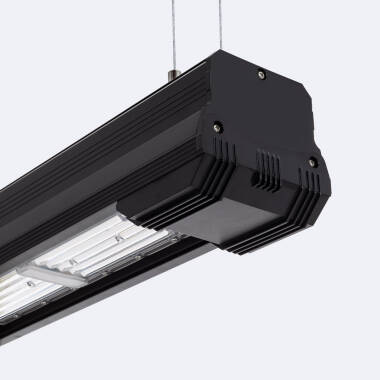
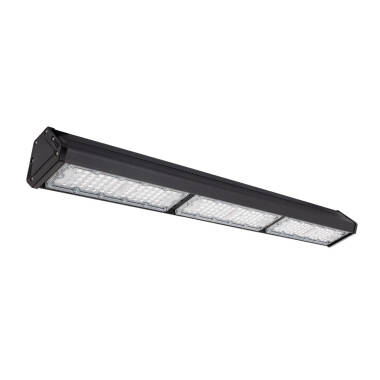
New150W 160 lm/W IP65 Linear Industrial High Bay LED Smart Zhaga Plug and Play
Pre-Order, estimated shipping from 03/09/2026
- Wattage 150 W
- Voltage Range 220-240V AC
- Lumen 24000 lm
- -23%
Expert
Before 191,99 €
146,99 €
Ref 118599
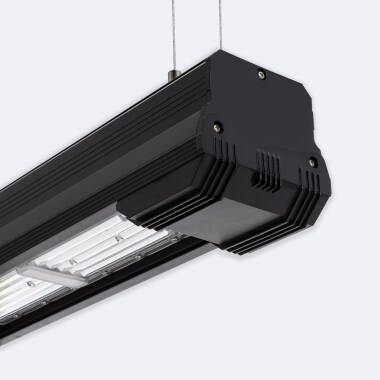
New200W 160lm/W Industrial Smart Zhaga LED Linear High Bay Plug & Play IP65
Pre-Order, estimated shipping from 16/06/2026
- Wattage 200 W
- Voltage Range 220-240V AC
- Lumen 32000 lm
8 options






Brands related to this category


About Industrial LED linear high bay lighting
In environments where the layout of the space dictates the lighting requirements, this type of luminaire has established itself as a key solution within industrial LED lighting. Their design allows the luminous flux to be adapted to elongated structures, improving efficiency and reducing shadows in critical areas.
What are linear LED high bays
These are industrial LED high bays in an elongated format designed to distribute light longitudinally. Unlike UFO-type high bays, which emit light radially, linear ones concentrate the flux in a more controlled direction.
This design allows for better adaptation of lighting to spaces such as logistics aisles, production lines, or areas with high shelving, where a conventional distribution would generate light loss or shadow zones.
Furthermore, their structure usually integrates specific optics that improve light penetration between obstacles, such as racks or machinery.
Technical characteristics of linear LED high bays
Linear LED high bays are designed to maximize efficiency in industrial installations where the geometry of the space is a determining factor.
Luminous flux and efficiency
Current models offer efficiencies between 130 and 160 lm/W. In practical terms, a 120W linear high bay can generate between 16,000 and 20,000 lumens, while 200W versions reach 28,000–32,000 lm.
This performance allows for the coverage of large surfaces with a smaller number of luminaires when distribution is correctly optimized.
Photometric distribution
The main differentiating value of these luminaires is their light distribution. Instead of a circular beam, they work with elongated or asymmetric optics that allow the flux to be directed along aisles or work zones.
This improves uniformity in installations where the length-to-width ratio of the space is high, avoiding areas with excess light and others with a deficit.
Thermal dissipation and lifespan
Like other industrial LED systems, they integrate aluminum heat sinks that guarantee correct thermal management. This allows the luminous flux to remain stable over a longer period.
Their lifespan is usually between 50,000 and 100,000 hours (L80–L70), which reduces maintenance interventions in complex installations.
How to choose linear LED high bays
The choice of linear high bays must be based on an analysis of the space and the distribution of activity, as their performance depends directly on how they are integrated into the installation.
Space type and geometry
This type of luminaire is especially recommended in spaces where aisles or longitudinal zones predominate.
In warehouses with racks over 8 meters high, lighting must penetrate between shelves to guarantee visibility at all levels. In these cases, linear optics allow light to be directed with greater precision.
Lighting level (lux)
Recommended levels vary depending on use:
- Logistics aisles: 150–250 lux.
- Picking zones: 200–300 lux.
- Production lines: 300–500 lux.
For example, in a warehouse aisle 50 m long by 4 m wide (200 m²), to achieve 200 lux, 40,000 useful lumens are required. Considering a loss factor of 0.6, the installation should be around 65,000–70,000 lm, which can be achieved with 3–4 linear luminaires of 20,000 lm correctly distributed.
Installation height
Linear high bays are typically used at heights between 4 and 12 meters. As height increases, it is necessary to adjust the optics to avoid light loss.
At heights above 8 meters, it is advisable to use narrower optics or systems that concentrate the flux toward the work plane.
Separation between luminaires
The distance between luminaires depends on the height and the distribution of the beam. In linear applications, luminous continuity is sought, so luminaires are usually placed in line following the axis of the aisle.
As a reference, the separation is usually between 1 and 1.2 times the installation height to maintain uniformity.
Applications of linear LED high bays
Linear LED high bays stand out in environments where lighting must adapt to longitudinal structures.
Warehouses with high shelving
In logistics warehouses, these luminaires allow for the correct lighting of aisles between racks, guaranteeing visibility at all levels.
Their ability to direct light reduces shadows and improves efficiency in picking operations.
Production lines
In assembly or manufacturing lines, lighting must follow the layout of the production process. Linear high bays allow for the maintenance of constant levels of 300–500 lux throughout the entire line.
Industrial aisles and circulation zones
In transit zones, these luminaires guarantee continuous lighting without interruptions, improving safety and orientation.
Logistics and distribution centers
In large logistics surfaces, they combine efficiency and precision in lighting, especially when integrated with control systems and sensors.
Advantages of linear LED high bays
Linear LED high bays offer clear advantages over other solutions in specific environments.
Their main strength is their adaptation to the geometry of the space, which allows for improved uniformity and reduced light loss. This translates into more efficient installations, with fewer luminaires and lower energy consumption.
Additionally, their design allows for a reduction in shadows in complex environments, improving visibility and safety.
In terms of maintenance, their long lifespan and resistance to industrial conditions reduce interventions, especially in high-altitude installations.
Frequently asked questions about linear LED high bays
When to choose linear high bays instead of UFOs?
Linear high bays are more suitable for elongated spaces or those with shelving, while UFOs work better in open areas.
How many lumens do I need?
The calculation is based on the required lux and the surface area. For example, for 200 lux in 500 m², 100,000 useful lm are needed, which in a real installation becomes about 150,000–180.000 lm considering losses.
What height is appropriate?
They work well between 4 and 12 meters, always adjusting the optics to ensure that the flux correctly reaches the work plane.
Do they really reduce consumption?
Yes. Compared to traditional systems, they allow for a reduction in consumption of between 40% and 60%, especially when light distribution is optimized.
Are they suitable for demanding industrial environments?
Yes. With IP65 protections and robust structures, they are designed to function in environments with dust, moisture, and intensive use.