The modern style favours functional and visually uncluttered interiors, where every element serves a purpose. Spaces are created using clean lines, simple forms, carefully selected materials and décor that avoids excess. Within this approach, lighting plays a key role.

Table of Contents
What characterises the modern style?
The modern style is recognised by its pursuit of functional and uncluttered spaces. In contrast to decorative approaches where ornaments and the accumulation of objects predominate, here greater importance is placed on layout and proportions.
Straight lines and simple geometric shapes are common, although curved forms may also appear to soften the composition. Furniture usually features clean silhouettes and smooth surfaces, whilst décor is used sparingly.
The colour palette may be based on neutral tones such as white, grey, beige or black, but it need not be limited to these. More intense colours may feature in furniture, textiles or small details to create contrast and add character.
Materials also play an important role. Metal, glass, wood, stone and fabrics can coexist within the same room provided there is a sense of coherence between them.
This philosophy carries over directly to lighting. Modern lamps tend to stand out for their clean lines and their ability to blend into the décor without introducing unnecessary elements.
The role of lamps in modern interior design
In a modern interior, lighting must be planned as part of the overall design, rather than as an element that is added once the décor is already complete.
The positioning of a light fitting can alter the perception of an area or draw attention to a particular area.
Therefore, before choosing a model, it is advisable to consider the layout of the furniture and ask yourself what function each light fitting will serve.
How to achieve a modern style in your home
Achieving a modern style in your home involves creating balanced, functional and visually uncluttered spaces, where every element has a purpose. Here’s how to achieve it:
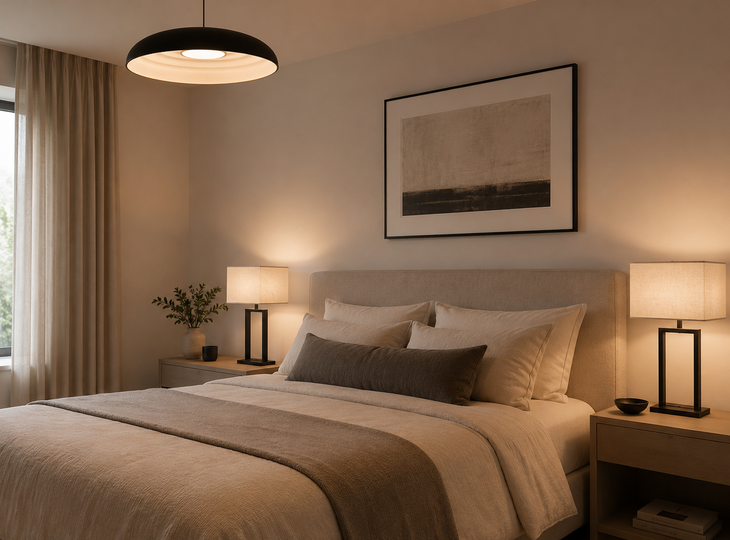
Combining different light sources
A modern space gains depth when it does not rely solely on a single light fitting.
Combining different heights and positions allows for a more flexible distribution of lighting whilst, at the same time, enriching the interior design.
The main lighting can come from a ceiling light or from several points distributed throughout the room. Building on this basis, you can add pendant lights, wall lights or floor lamps. This combination allows you to adapt the atmosphere to suit every occasion.
For certain activities, more comprehensive lighting can be used, whilst at night it will suffice to keep a few secondary lights on to create a more relaxed atmosphere.
Furthermore, distributing the light sources prevents all attention from being focused on the ceiling and also allows you to highlight walls, furniture and corners that might otherwise go unnoticed.
Simple designs and geometric shapes
Shapes are one of the elements that most clearly define a modern lamp.
Circles, spheres, straight lines and slender structures frequently feature in this type of design. These geometric shapes make it possible to create pieces with character without resorting to excessive ornamentation.
A lamp consisting of a single sphere can be just as expressive as a much more complex composition if its proportions and positioning are right.
Linear designs are also common, particularly on rectangular tables, kitchen islands and elongated surfaces. Their geometry complements the dimensions of the furniture and helps to maintain a tidy composition.
Curved shapes can be used to gently break up the rigidity of a space dominated by straight lines. A round lamp on a rectangular table, for example, introduces contrast without straying from the modern aesthetic.
Creating contrast without overwhelming the space
Contrast is a useful tool in modern interior design.
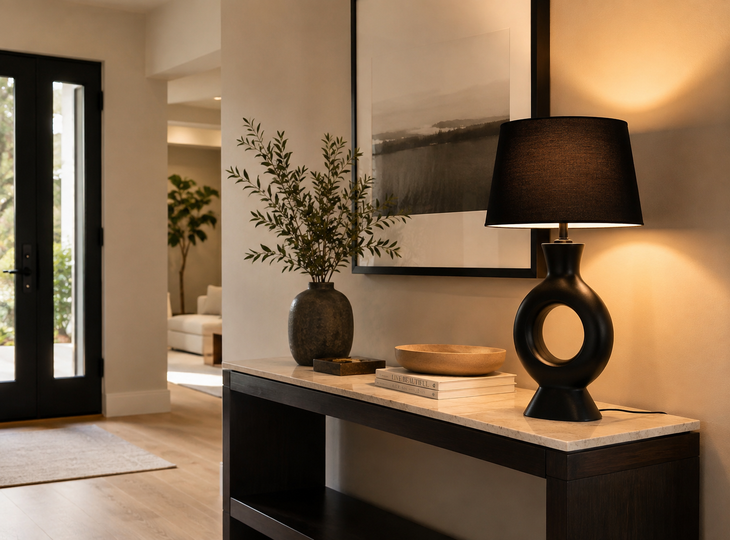
A black lamp against a light-coloured wall can create an instant focal point. Similarly, a metallic light fitting can stand out in a room dominated by matt surfaces.
However, contrast should be used in moderation.
If every light fitting tries to take centre stage, the room loses its visual clarity. It is more effective to select specific focal points and allow other pieces to take on a supporting role.
Contrast can also be achieved through shapes. A spherical lamp can break up a composition dominated by straight lines, whilst a linear design can provide structure in a room with curved furniture.
Integrating lamps with the furniture and architecture
A modern interior design works best when lighting, furniture and architecture are considered as parts of a single whole.
The position of doors, windows and furniture determines where it makes sense to place each light fitting. Ceiling height and the dimensions of the room also play a part.
A light fitting that is too large can overwhelm a small space, whilst one that is too small can get lost visually in a spacious living room.
Proportions are important with pendant lights, as they hang within the field of vision.
With floor and table lamps, it is worth considering how they relate to the surrounding furniture. The aim is not for all pieces to be the same size, but for there to be a balance between them.
Recommended products
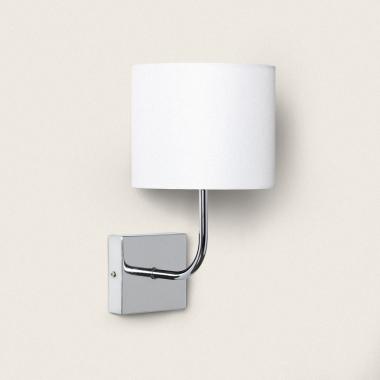
In Stock, delivery in 24/48h
12.69 £
Wollen Metal Wall Lamp in Silver
View product
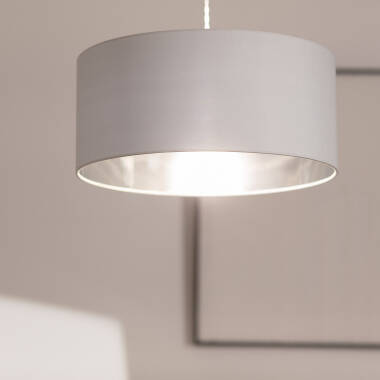
In Stock, delivery in 24/48h
49.99 £
Reflect Linnen Pendant Lamp
View product
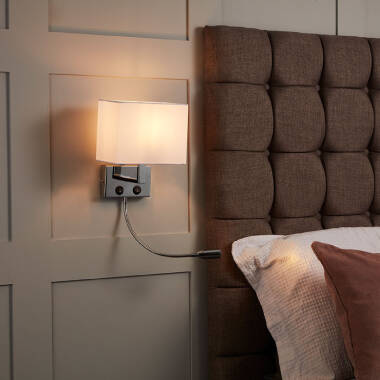
In Stock, delivery in 15-20 days
33.89 £
Waldorf Metal Wall Lamp with Flexo for Reading
View product
In Stock, delivery in 24/48h
23.29 £
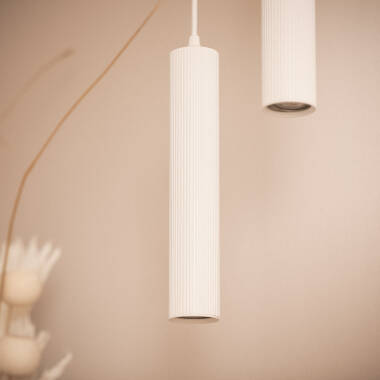
Aritz Aluminium 1 Spotlight Pendant Lamp
View product
Fewer items, but better chosen
The modern style does not need a great many decorative elements to be interesting. A good lamp can have enough presence to transform a room all on its own.
Rather than introducing lots of small objects, it can be more effective to choose a few pieces with a distinctive silhouette and leave space around them.
This principle also applies to lighting. Installing light fittings in every corner does not necessarily guarantee a better result.
Each element should serve a function or contribute something to the composition. If every element has a clear purpose, the overall effect is much more orderly.
Materials and finishes for modern lighting
The finish of a light fitting can completely transform its appearance within a room.
Metal
Metal is one of the most widely used materials in modern lighting due to its ability to create slender structures and a wide variety of designs.
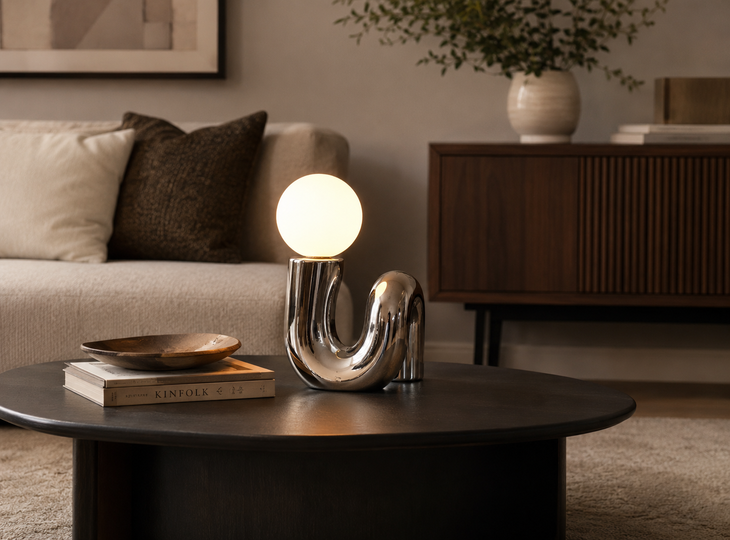
It can be used in black, white, gold or with other finishes, depending on the effect you wish to achieve. A black frame provides contrast, whilst metallic tones can add a more sophisticated touch.
Glass and crystal
Glass lamps allow you to play with transparency and lend a sense of visual lightness.
They are particularly well-suited to rooms where you wish to incorporate a decorative feature without creating a sense of excessive bulk. Transparent shades allow the light source to take centre stage, whilst opalised surfaces provide a more uniform appearance.
Black
Black is one of the most recognisable finishes in many modern interiors.
It can be used to create contrast against light-coloured walls, highlight specific architectural features or tie in with other details in the room, such as furniture legs, frames or handles.
There’s no need to fill the space with black elements. Often, a single lamp is enough to introduce that contrast.
White and neutral tones
When aiming for a more discreet look, white and neutral finishes allow the light fittings to blend into their surroundings.
A white light fitting on a ceiling of the same colour can go virtually unnoticed, allowing the light itself to take centre stage.
Beige, grey and other soft shades can also be used to create modern interiors with less contrast and a more serene feel.
Types of modern light fittings
Modern light fittings offer a wide range of possibilities for lighting and complementing the décor of any room. There are different types of light fittings, each with its own characteristics and uses, allowing them to be adapted both to the needs of the space and to the overall style.
Pendant lights
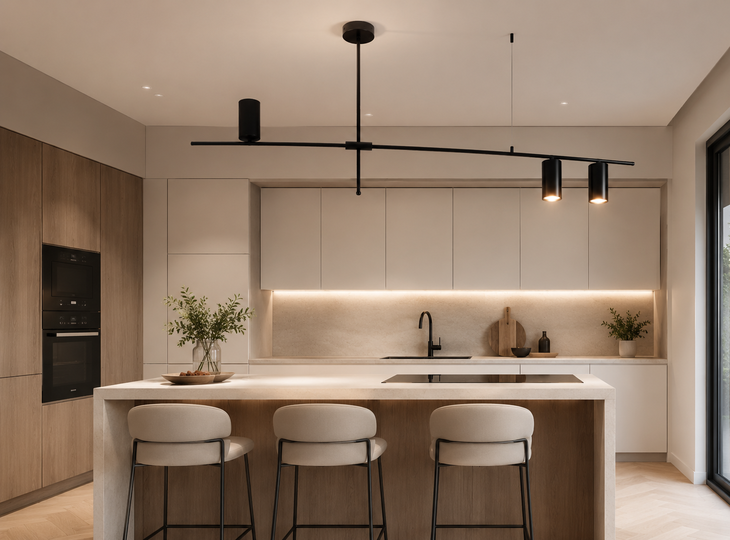
Modern pendant lamps are one of the most effective ways to introduce a statement piece into a simple décor.
Their position makes them a visual focal point, especially when hung above a dining table, a kitchen island or a side table.
In spacious rooms, you might opt for a single, larger piece. Another option is to combine several small light fittings to create your own composition. This works particularly well above long surfaces.
The lamp’s shape should be in harmony with the area it illuminates. Linear designs complement rectangular tables and islands well, whilst a circular arrangement can emphasise the shape of a round table.
It is also worth taking into account the other elements in the room. If the room already features furniture with a strong visual presence, a simple lamp can help maintain balance.
Ceiling lights
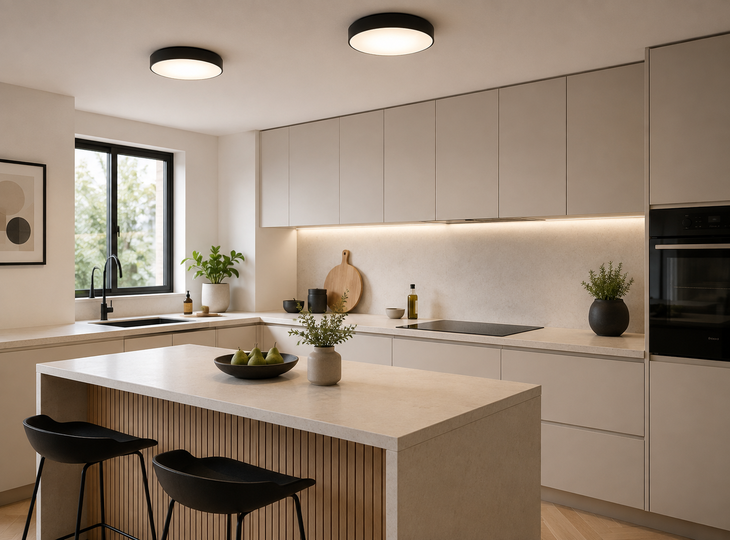
Modern ceiling lights are a particularly versatile option for areas where main lighting is required without necessarily having to use a pendant light.
Their main advantage from a decorative point of view is that they help to keep the space visually uncluttered.
Surface-mounted models with geometric designs can be easily integrated into all kinds of rooms. Circular shapes lend a sense of softness, whilst square or linear designs reinforce a more structured composition.
They can also be combined with other types of light fittings. A ceiling light can provide the general backdrop for a room, whilst a floor lamp or several wall lights create secondary focal points.
Wall lights
Modern wall lamps are particularly useful when you want to incorporate lighting without taking up space on tables or the floor.
As they are built into the wall, they can be used both as a source of light and as part of the décor.
In a bedroom, they can be fitted on either side of the bed to replace traditional bedside lamps. They are also a good choice for hallways and entrance halls, where space is often more limited.
Modern designs allow the lighting effect itself to be used as a decorative feature. Some wall lights project light upwards, downwards or in both directions, creating patterns on the wall even when the light fitting itself is very simple.
Their placement should be carefully considered, as a series of correctly aligned wall lights can emphasise the architecture of the space and add rhythm to a long wall.
Floor lamps
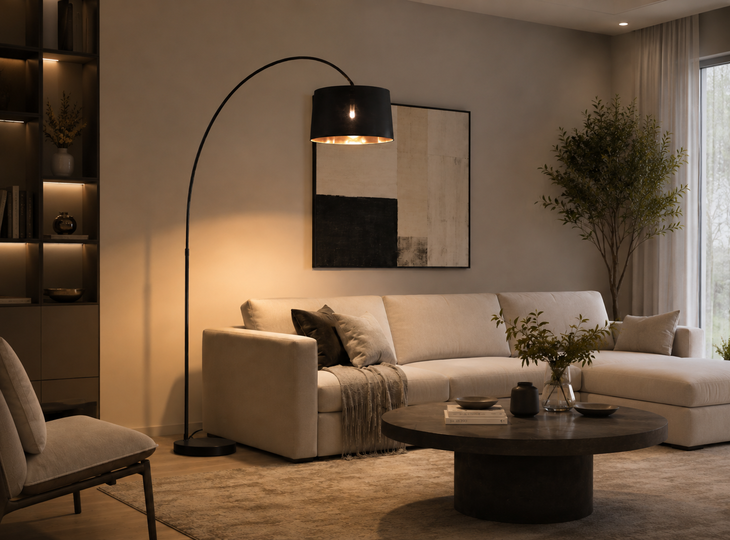
Modern floor lamps allow you to add a light source to virtually any area without the need for major alterations.
In the living room, they can be placed next to the sofa, fill an empty corner or create a dedicated reading area. They can also be used in spacious bedrooms, studies or relaxation areas.
From a decorative point of view, their height introduces a vertical element that helps to balance spaces dominated by low furniture.
Models with slender lines and lightweight frames maintain a sense of spaciousness, whilst larger designs can become a focal point.
Another advantage is its flexibility. If you change the layout of your furniture, the lamp can be easily moved and adapted to the new arrangement.
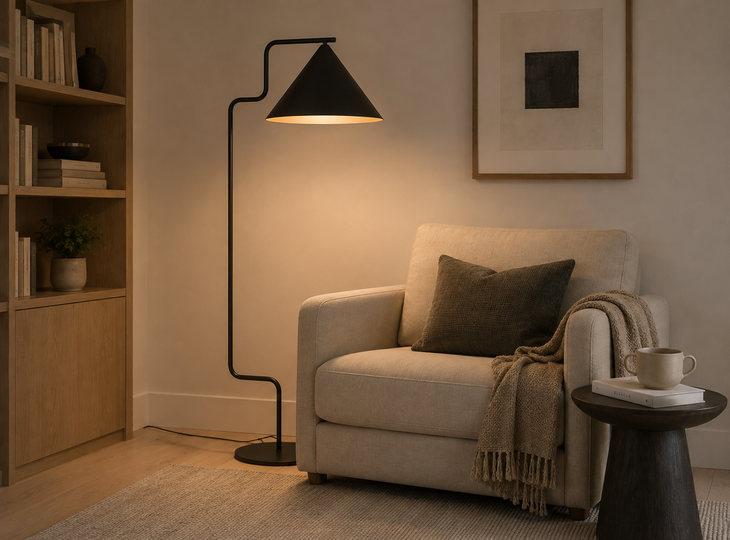
Table lamps
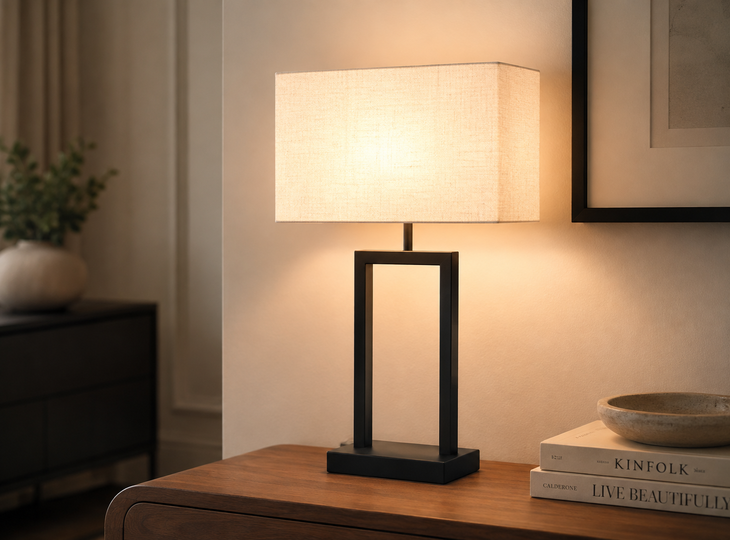
Modern table lamps offer a simple way to incorporate additional lighting and add decorative touches at different heights.
They can be placed on bedside tables, sideboards, desks, etc. Due to their size, they allow you to experiment with shapes, colours or materials without drastically altering the overall look. A black lamp can introduce a subtle contrast in a light-coloured room, whilst a glass model can add a touch of lightness to a sturdy piece of furniture.
They are also useful for creating more intimate lighting when there is no need to keep the main light on.
Find the modern lamp that best suits your space
Creating modern-style lighting isn’t about following a single formula. Choosing lamps that suit the proportions of each room, combining them with the furniture and arranging different light sources allows you to create contemporary and cohesive spaces.
The key lies in striking a balance between functionality and design, selecting pieces that add value without overwhelming the overall look. In this way, the lighting blends naturally into the décor and helps to define the character of each space.